
The Samsung Galaxy S9 was once a flagship powerhouse, praised for its sleek design, excellent camera, and top-tier performance. Released in 2018, it set a high bar for what users expected from premium smartphones. Fast forward to today, and the Galaxy A51 emerged as one of Samsung’s most popular mid-range devices—offering modern features at a fraction of the cost. But if you’re still using an S9, is upgrading to the A51 truly beneficial? Or does the older flagship still hold its ground?
This comparison dives into real-world usability, hardware evolution, software support, and long-term value to determine whether the Galaxy A51 delivers enough improvements to justify leaving behind a proven performer like the S9.
Design and Build Quality: Modern Minimalism vs Premium Craftsmanship
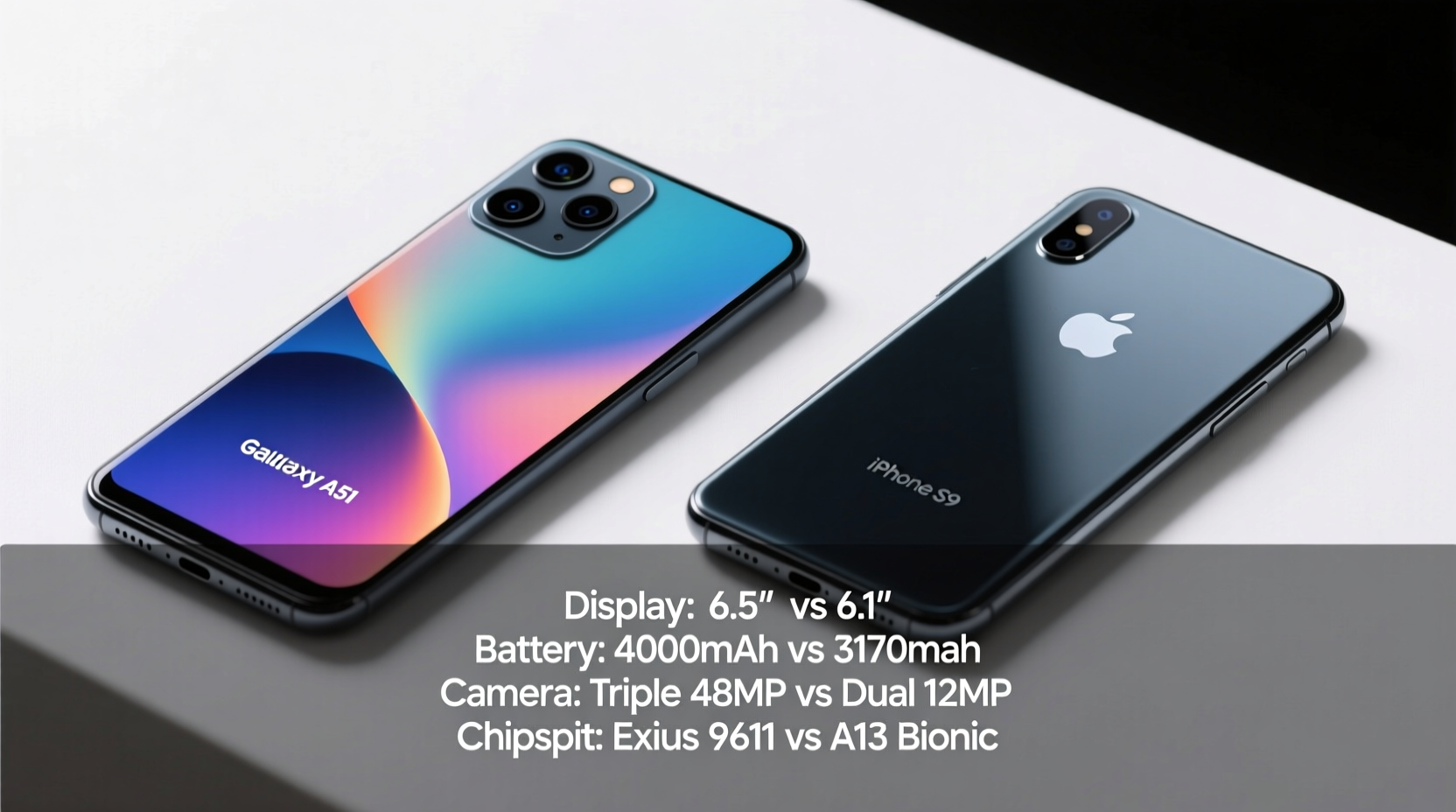
The Galaxy S9 featured a glass-and-metal construction with an IP68 water resistance rating and a compact 5.8-inch display—ideal for single-handed use. Its curved AMOLED screen blended seamlessly into the frame, offering a luxurious feel that defined Samsung’s flagship identity at the time.
In contrast, the Galaxy A51 adopts a more utilitarian approach. It uses a plastic back and frame, which keeps costs down but sacrifices some of the premium tactile experience. However, it compensates with a larger 6.5-inch Super AMOLED Infinity-O display featuring a hole-punch front camera—a modern design trend absent in the S9. While the A51 lacks official IP certification, its larger footprint offers better screen real estate for media consumption and multitasking.
Performance and Software: Flagship Past vs Mid-Range Present
Under the hood, the S9 packed either the Exynos 9810 or Snapdragon 845 (depending on region), both of which were elite processors in 2018. Paired with 4GB of RAM, the phone handled demanding apps and games smoothly—even years after release.
The A51, released in 2020, uses the Exynos 9611—a solid mid-tier chip with 4GB or 6GB RAM options. While not as powerful, it's built on a more efficient 11nm process and benefits from newer architecture optimizations. In daily tasks like browsing, messaging, and streaming, the difference is barely noticeable. However, heavy gaming or prolonged multitasking favors the S9’s superior processing muscle.
Where the A51 pulls ahead decisively is in software longevity. The S9 received three major Android updates (up to Android 10) and security patches until early 2021. The A51 launched with Android 10 but was eligible for two OS upgrades (reaching Android 12) and longer security support due to Samsung’s improved update policy for mid-range devices post-2019.
“Software support has become just as critical as hardware when evaluating smartphone value.” — David Kim, Mobile Analyst at TechPulse Asia
Camera Comparison: Single Lens Excellence vs Quad-Camera Flexibility
The S9’s 12MP rear sensor was revolutionary for its time, featuring variable aperture (f/1.5–f/2.4), optical image stabilization, and exceptional low-light performance. Its single-lens setup focused on quality over quantity, delivering consistently sharp, well-balanced photos.
The A51 introduces a quad-camera array: 48MP main, 12MP ultra-wide, 5MP macro, and 5MP depth sensor. On paper, this seems like a massive leap. In practice, the primary sensor often defaults to 12MP via pixel binning, producing results comparable to the S9—but without OIS. Low-light shots tend to be noisier, and dynamic range lags behind the S9’s tuned processing.
However, the A51 brings new capabilities: ultra-wide photography expands creative framing, and dedicated macro and depth sensors enhance versatility for casual photographers. Video recording remains limited to 30fps at 1080p, while the S9 supports 4K at 60fps—still unmatched in everyday detail and motion clarity.
| Feature | Galaxy S9 | Galaxy A51 |
|---|---|---|
| Main Camera | 12MP, f/1.5-2.4, OIS | 48MP (12MP output), f/2.0, no OIS |
| Secondary Cameras | None | 12MP ultra-wide, 5MP macro, 5MP depth |
| Front Camera | 8MP, f/1.7 | 32MP, f/2.2 |
| Video Recording | 4K @ 60fps, 1080p @ 240fps slow-mo | 1080p @ 30fps max |
Battery Life and Charging: Endurance Over Speed
The S9 came with a modest 3,000mAh battery—sufficient for light-to-moderate use but strained by power-hungry apps. It supported fast charging and wireless charging, though adaptive fast charging required a compatible charger not always included in-box.
The A51 steps up significantly with a 4,000mAh battery—over 30% larger—resulting in noticeably longer endurance. Users report up to two days of standby usage and solid one-day performance under mixed conditions. However, it only supports 15W fast charging (though marketed as \"Fast Charging\") and lacks wireless charging capability.
For those who rely on their phone throughout the day without easy access to outlets, the A51’s battery advantage is one of its strongest selling points.
Real-World Example: Sarah’s Upgrade Dilemma
Sarah had used her Galaxy S9 since launch, appreciating its responsive performance and excellent call quality. By 2022, she noticed slower app launches, declining battery life, and the inability to install newer versions of apps optimized for Android 11+. After researching options, she chose the A51 primarily for its larger screen, longer battery, and continued software updates.
She missed the S9’s compact size and crisper video recording but found the trade-off worthwhile. “I don’t shoot 4K videos anymore,” she said, “but I love being able to take wide-angle shots of my kids’ soccer games and knowing my phone will last all day.”
Should You Upgrade? A Practical Checklist
Deciding whether to move from the S9 to the A51 depends on your priorities. Use this checklist to evaluate your needs:
- ✅ Need longer battery life? → A51 is clearly superior.
- ✅ Want wider photo angles and more camera modes? → A51 adds meaningful flexibility.
- ✅ Still satisfied with small-screen ergonomics and premium build? → S9 holds up well.
- ✅ Rely on 4K video or advanced slow-motion clips? → S9 remains better equipped.
- ✅ Value future-proof software updates? → A51 received newer Android versions and longer patch cycles.
- ✅ Use resource-heavy apps or play graphics-intensive games? → S9’s processor gives it an edge.
Frequently Asked Questions
Can the Galaxy A51 run apps as smoothly as the S9?
In most everyday scenarios—social media, email, navigation, and video streaming—the A51 performs fluidly. However, the S9 handles multitasking and intensive applications (like photo editing or 3D games) more efficiently due to its superior CPU and thermal management.
Is the A51’s camera better than the S9’s?
It depends on how you define “better.” The A51 offers more lenses and shooting options, including ultra-wide and macro photography. But the S9 produces higher-quality images in low light and captures richer video detail. If you prioritize variety and social media selfies (aided by the A51’s 32MP front camera), it may feel like an upgrade. For pure photo fidelity, the S9 still impresses.
Does the lack of water resistance matter on the A51?
Yes, especially if you frequently use your phone near sinks, outdoors, or in humid environments. The S9’s IP68 rating provides peace of mind against spills and rain. The A51 has no official protection, so extra caution—or a rugged case—is recommended.
Final Verdict: Evolution Over Revolution
The Galaxy A51 isn’t a technically superior device across the board compared to the S9. In raw performance and build quality, the older flagship holds its own. Yet, the A51 represents meaningful progress in areas that matter most to average users: screen size, battery life, camera versatility, and software longevity.
If you're clinging to an aging S9 because it “still works,” ask yourself whether it meets your current lifestyle demands. Do you need all-day battery? Are you frustrated by app slowness or update limitations? Does capturing group photos require stepping backward because you lack an ultra-wide lens?
For many users, the answer is yes—and in those cases, the A51 offers a compelling, budget-friendly step forward. It may not dazzle with specs, but it delivers practical improvements where they count.




 浙公网安备
33010002000092号
浙公网安备
33010002000092号 浙B2-20120091-4
Comments
No comments yet. Why don't you start the discussion?