
When the Samsung Galaxy S10 and iPhone XS Max were released, both brands made bold claims about their camera capabilities. Samsung introduced a triple-lens rear setup for the first time in its flagship lineup, while Apple doubled down on computational photography with improved Smart HDR and deeper integration between hardware and software. Two years later, the debate remains relevant: which device truly delivers superior image quality in real-world conditions?
This isn’t just about megapixels or lens count—it’s about how well each phone handles dynamic lighting, color accuracy, portrait depth, low-light performance, and video stability. Let’s break it down with practical insights, expert observations, and real usage scenarios to determine whether Samsung’s multi-camera approach was a game-changer or if Apple’s refined single-and-double-lens system still holds the edge.
Hardware Showdown: Triple Lenses vs Precision Engineering
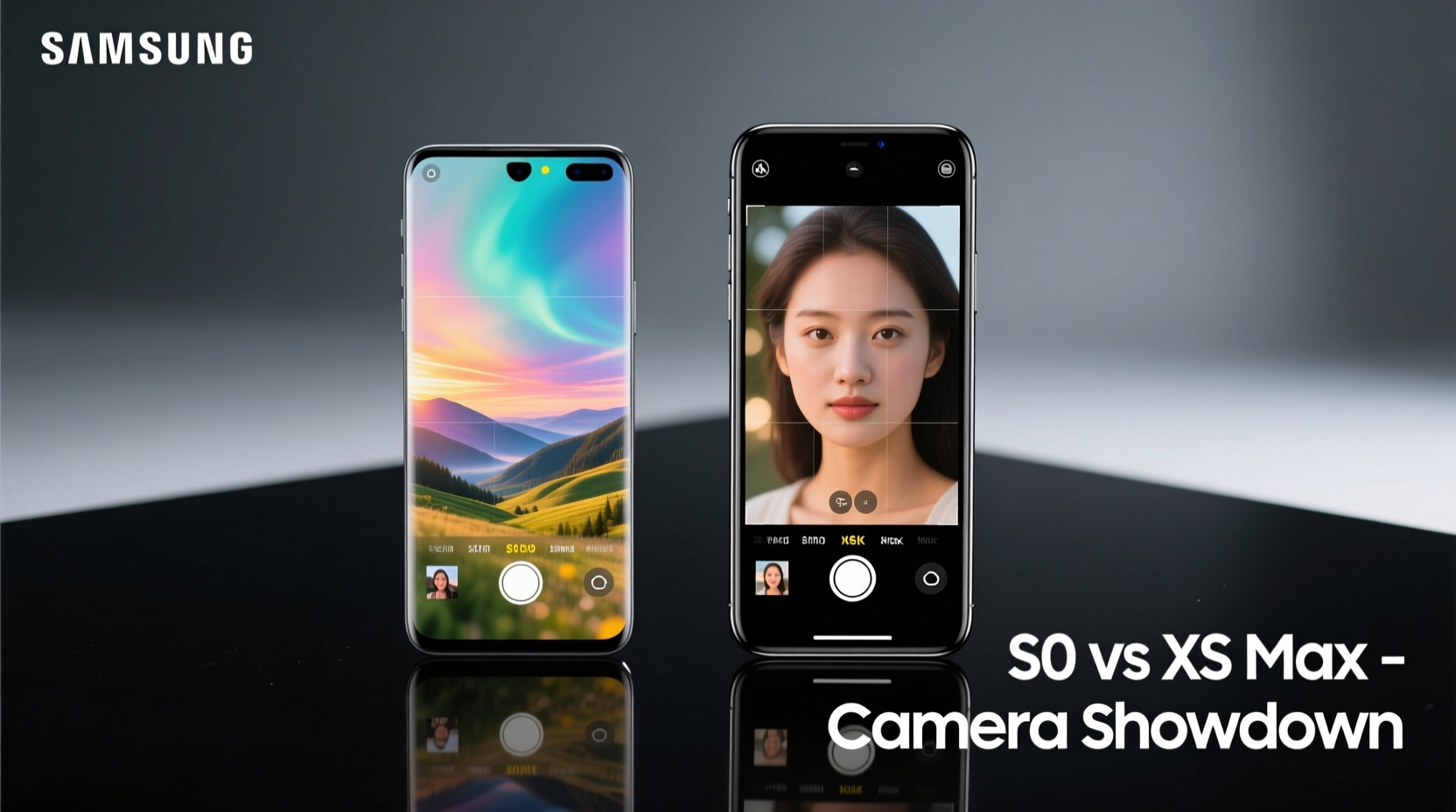
The Galaxy S10 features a versatile triple-camera array on the back: a 12MP wide-angle lens (f/1.5–f/2.4 variable aperture), a 12MP telephoto lens (f/2.4), and a 16MP ultra-wide lens (f/2.2). This configuration allows users to shoot at 1x, 2x optical zoom, and a new 0.5x ultra-wide perspective—something the iPhone XS Max lacks entirely.
In contrast, the iPhone XS Max sticks with a dual 12MP setup: one wide-angle (f/1.8) and one telephoto (f/2.4), supporting 2x optical zoom. No ultra-wide option. While Apple doesn’t offer the same breadth of focal lengths, its sensors are tuned for consistency across lenses, and its software processing compensates for hardware limitations.
| Feature | Samsung Galaxy S10 | iPhone XS Max |
|---|---|---|
| Rear Cameras | Triple: 12MP (wide) + 12MP (tele) + 16MP (ultra-wide) | Dual: 12MP (wide) + 12MP (telephoto) |
| Front Camera | 10MP (f/1.9) | 7MP (f/2.2) |
| Zoom | 2x optical, up to 10x digital | 2x optical, up to 10x digital |
| Ultra-Wide Lens | Yes | No |
| Variable Aperture | Yes (f/1.5–f/2.4) | No (fixed f/1.8 and f/2.4) |
| Video Recording | 4K @ 60fps, stereo audio | 4K @ 60fps, spatial audio, extended dynamic range |
Photo Quality: Daylight, Low Light, and Dynamic Range
In daylight, both phones produce excellent results, but with distinct philosophies. The Galaxy S10 tends to oversaturate colors slightly, giving photos a more “vibrant” look that stands out on social media. Skin tones can lean warm, and skies often appear artificially blue—a hallmark of Samsung’s traditional tuning.
The iPhone XS Max, by comparison, prioritizes natural color reproduction. Greens look like grass, not neon paint. Whites stay true without yellowing. This fidelity makes iPhone images feel more trustworthy, especially for professional use or print.
“Apple’s focus on tonal accuracy gives photographers a reliable baseline. Samsung pushes punchiness, which works great for Instagram—but not always for realism.” — David Kim, Mobile Photography Consultant
Low-light performance reveals deeper differences. The Galaxy S10’s variable aperture (f/1.5 in dark settings) lets in more light than the iPhone’s fixed f/1.8 lens. In practice, this means brighter night shots with less noise—on paper. However, aggressive noise reduction sometimes blurs fine details like eyelashes or fabric texture.
Apple uses Smart HDR to balance shadows and highlights in challenging scenes. It doesn’t capture as much raw light, but it preserves more detail in midtones. Shadows lift cleanly without introducing grain, and highlights rarely blow out. For mixed lighting—like a person standing near a window—the iPhone often produces a more balanced exposure.
Portrait Mode and Depth Control
Both phones support portrait mode with adjustable bokeh after capture. The Galaxy S10 uses data from its dual-pixel autofocus and depth sensor, while the iPhone relies on machine learning and facial mapping via the TrueDepth front camera and dual rear sensors.
Front-facing portraits favor the iPhone. Its 7MP selfie cam may have lower resolution than the S10’s 10MP shooter, but Apple’s skin smoothing is subtle and edge detection around hair is far more precise. The S10 sometimes creates halos around curly hair or fails to separate close objects in the background.
For rear portraits, the Galaxy S10 offers more flexibility thanks to its telephoto lens covering 2x zoom, ideal for flattering face framing. The iPhone matches this with strong edge recognition and natural blur gradients. Neither introduces artificial artifacts as often as mid-tier phones, but the iPhone edges ahead in consistency.
Mini Case Study: Wedding Guest Photography
Alex, a frequent traveler and amateur photographer, brought both phones to a friend’s outdoor wedding. Under bright sun, he used the Galaxy S10’s ultra-wide lens to capture the entire ceremony setup—including guests, decor, and landscape—in a single shot. Later, during golden hour, he switched to the iPhone for individual portraits.
“The S10 gave me dramatic, colorful shots that looked amazing on Instagram,” Alex said. “But when I printed a few for a gift album, the iPhone photos held up better. Skin tones weren’t orange, and the sunset didn’t look overcooked.”
His takeaway: the Galaxy excels in creative flexibility; the iPhone wins in reliability.
Video Performance: Stability and Audio Fidelity
For videographers, stabilization and audio matter as much as resolution. Both phones record 4K at 60fps, but Apple includes extended dynamic range for video (up to 60fps) and spatial audio recording using multiple mics. This creates an immersive experience when viewed on AirPods or compatible speakers.
Samsung counters with stereo audio and decent OIS, but video clips tend to exhibit more “jello effect” during fast pans. Electronic stabilization helps, but it crops the frame noticeably. The iPhone applies cinematic-grade stabilization with minimal crop, making handheld footage usable without a gimbal.
Expert Checklist: Choosing Based on Your Needs
Use this checklist to decide which camera better fits your lifestyle:
- ✅ Need ultra-wide shots for landscapes or interiors? → Galaxy S10
- ✅ Prioritize natural colors and accurate skin tones? → iPhone XS Max
- ✅ Shoot often in low light without a tripod? → Galaxy S10 (brighter aperture)
- ✅ Record videos frequently, especially handheld? → iPhone XS Max (better stabilization)
- ✅ Post heavily to Instagram and want vibrant visuals? → Galaxy S10
- ✅ Print photos or share with clients? → iPhone XS Max
- ✅ Want seamless ecosystem integration (editing, iCloud, AirDrop)? → iPhone XS Max
Frequently Asked Questions
Can the Galaxy S10 really beat the iPhone in low light?
It captures brighter images due to its f/1.5 aperture, but often sacrifices fine detail through over-processing. The iPhone may appear darker initially, but retains more usable information in shadows and highlights, making it better for editing.
Does the lack of an ultra-wide lens hurt the iPhone XS Max?
Yes, creatively. You can’t achieve the same expansive field of view without third-party apps or accessories. However, most users don’t miss it daily. For architectural or adventure photography, though, it’s a noticeable limitation.
Which phone has better long-term camera software support?
Apple leads here. iPhones receive iOS updates for 5+ years, including camera improvements. Samsung provides major OS upgrades for about 3 years, meaning newer AI enhancements may skip older models like the S10.
Conclusion: Hype vs. Reality — Who Wins?
The Samsung Galaxy S10’s triple-lens system was a bold step forward, offering tangible benefits like ultra-wide shooting and adaptive aperture control. For users who value versatility and creative options, it delivers real advantages. The hype around its camera innovation is, in many ways, justified.
Yet, the iPhone XS Max proves that fewer lenses don’t mean inferior results. Apple’s tight integration of hardware, software, and machine learning yields consistent, natural-looking photos and class-leading video. It may not wow with specs, but it impresses with reliability.
If you’re drawn to experimentation and social-first photography, the Galaxy S10 is the more exciting choice. But if you value accuracy, long-term support, and polished video performance, the iPhone XS Max still wins where it counts.




 浙公网安备
33010002000092号
浙公网安备
33010002000092号 浙B2-20120091-4
Comments
No comments yet. Why don't you start the discussion?