
In 2019, two flagship smartphones stood at the pinnacle of mobile technology: the Samsung Galaxy S10 Plus and the Apple iPhone XS Max. At the time, choosing between them wasn’t just about specs—it was a decision steeped in ecosystem loyalty, user experience preferences, and long-term value. Fast forward to today, with both devices now retired from active support cycles, it’s possible to look back with clarity. Was switching from one platform to the other truly worth it? For many users, the answer depends on more than battery life or camera quality—it hinges on lifestyle integration, software longevity, and personal priorities.
Design and Build: A Tale of Two Philosophies
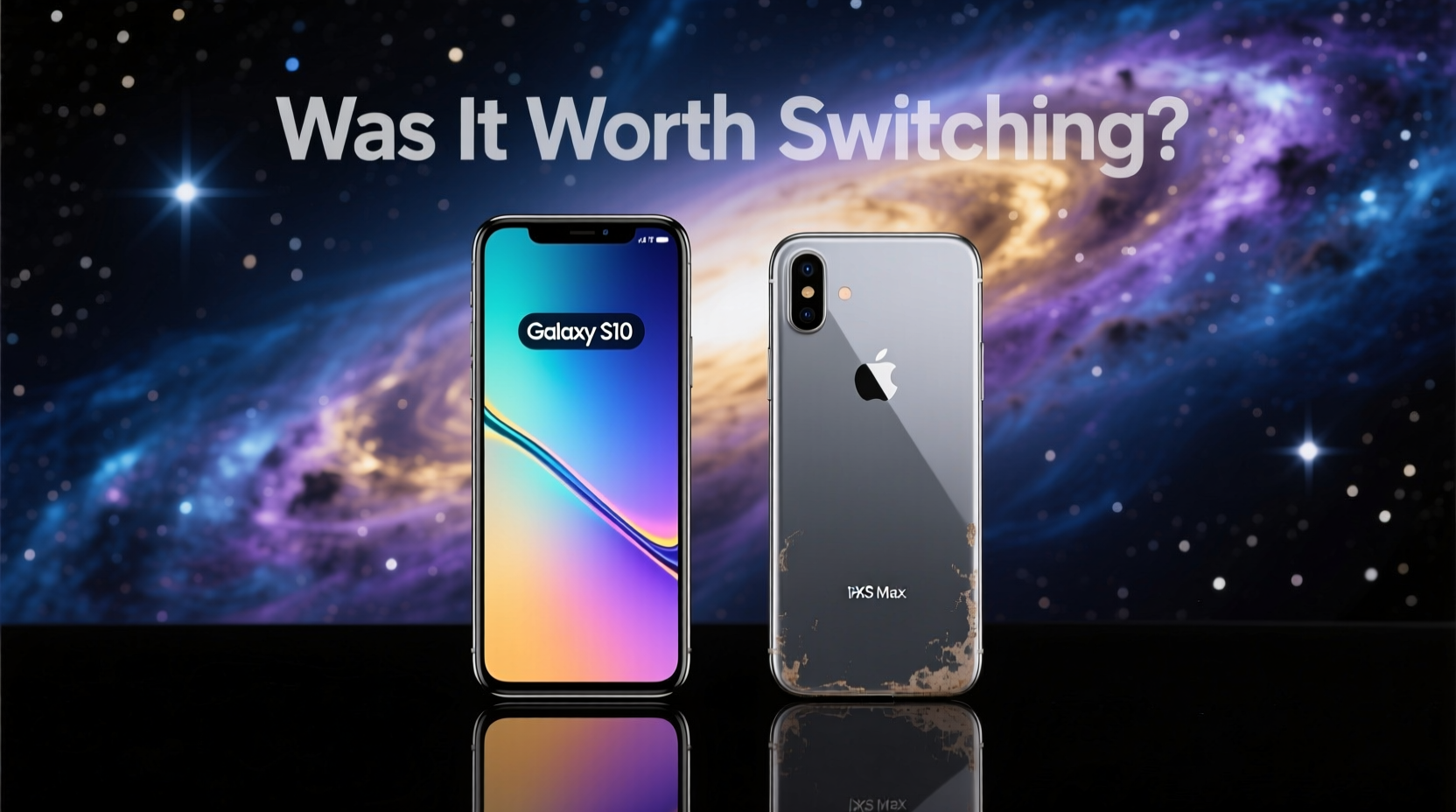
The Galaxy S10 Plus and iPhone XS Max represented contrasting approaches to smartphone design. The S10 Plus embraced a sleek, symmetrical dual-curved AMOLED display with a dynamic punch-hole front camera—a bold move that maximized screen real estate while maintaining usability. Its glass-and-metal construction felt premium, and the inclusion of a headphone jack (a rarity among flagships) was a nod to practicality.
In contrast, the iPhone XS Max doubled down on Apple’s minimalist aesthetic. It featured a notch-centric OLED display, surgical-grade stainless steel frame, and a focus on refined simplicity. While slightly heavier, the build exuded durability and elegance. However, its lack of a headphone jack and reliance on Lightning for charging frustrated users seeking modern convenience.
Performance and Software Experience
Under the hood, both phones were powerhouses. The Galaxy S10 Plus used Samsung’s Exynos 9820 or Qualcomm Snapdragon 855 (depending on region), paired with up to 12GB of RAM. The iPhone XS Max ran Apple’s A12 Bionic chip—still one of the most efficient processors of its era. In day-to-day tasks, both handled multitasking, gaming, and app launches with ease.
Where they diverged significantly was in software philosophy. Android 9 Pie on the S10 Plus delivered deep customization: split-screen multitasking, secure folder encryption, DeX desktop mode, and support for third-party launchers. Meanwhile, iOS 12 on the XS Max emphasized stability, security, and seamless integration with other Apple devices like the iPad, MacBook, and Apple Watch.
“Switching ecosystems isn’t just changing phones—it’s changing how you interact with all your devices.” — David Lin, Mobile Ecosystem Analyst
For longtime iPhone users, the shift to Android often meant relearning habits. Features like AirDrop were missed, and iMessage continuity didn’t translate. Conversely, Android loyalists found FaceTime and iCloud syncing less intuitive when moving to iOS.
Camera Comparison: Real-World Results Over Benchmarks
Both devices boasted triple-camera setups, but their photography philosophies differed. The Galaxy S10 Plus combined a 12MP wide, 12MP telephoto, and 16MP ultra-wide lens, offering versatility in framing. Its processing leaned toward saturation and contrast, ideal for social media sharing. Low-light performance improved dramatically thanks to “Night Mode,” introduced mid-cycle via update.
The iPhone XS Max stuck with a dual 12MP system (wide + telephoto), lacking an ultra-wide lens. This was a notable omission compared to Samsung’s offering. However, Apple’s computational photography excelled in dynamic range and color accuracy. Videos remained unmatched—stabilization, audio capture, and HDR rendering gave the XS Max an edge for content creators.
| Feature | Galaxy S10 Plus | iPhone XS Max |
|---|---|---|
| Rear Cameras | Triple: Wide, Telephoto, Ultra-Wide | Dual: Wide, Telephoto |
| Front Camera | Dual: 10MP + 8MP depth | Solo: 7MP TrueDepth |
| Video Recording | 4K@60fps, HDR10+ | 4K@60fps, Extended Dynamic Range |
| Night Mode | Yes (added via update) | No native mode; low-light improved via Smart HDR |
| Zoom Capability | 2x optical, up to 10x digital | 2x optical, up to 10x digital |
Longevity and Ecosystem Lock-In
One of the most overlooked factors when switching platforms is long-term software support. Apple provided five years of iOS updates for the XS Max, with iOS 16 being the final supported version. This extended lifecycle ensured continued security patches and feature parity with newer models.
Samsung, historically weaker in this area, improved with the S10 series. The Galaxy S10 Plus received four major Android OS upgrades (up to Android 13) and monthly security updates until early 2023. While commendable progress, it still lagged behind Apple’s consistency.
Ecosystem integration proved decisive for many switchers. Users invested in AirPods, Apple Watch, or MacBooks found losing Handoff, Universal Clipboard, and Instant Hotspot too disruptive. On the flip side, those embracing smart home devices, multi-window workflows, or microSD expansion found Samsung’s flexibility liberating.
Mini Case Study: From iPhone to Galaxy – One Year Later
Jamie, a graphic designer and longtime iPhone user since 2012, switched to the Galaxy S10 Plus in 2019 after frustration with slow innovation and high accessory costs. Initially thrilled by the edge display and DeX mode—allowing her to connect to a monitor for light editing work—she quickly missed iMessage. Clients who relied on read receipts and Animoji reactions assumed she’d gone silent. After six months, she reverted to an iPhone 11 Pro, citing communication friction as the primary reason.
“The hardware was better on paper,” she said, “but the human layer—the way people communicate within ecosystems—that’s what I underestimated.”
Was It Worth Switching? A Balanced Verdict
For tech enthusiasts eager to explore new features, the Galaxy S10 Plus offered compelling innovations: ultrasonic fingerprint sensor, reverse wireless charging, and broader format support. Power users appreciated the freedom to customize, sideload apps, and manage files like a mini-computer.
But for mainstream consumers prioritizing reliability, app optimization, and long-term resale value, the iPhone XS Max held stronger appeal. Even today, used XS Max units command higher prices than S10 Pluses, reflecting market confidence in Apple’s retention of value.
Ultimately, the worth of switching depended on individual needs:
- If you valued **ecosystem cohesion**, staying with iPhone made sense.
- If you wanted **hardware innovation** and customization, Galaxy was the bolder choice.
- If you used **Windows PCs or Google services**, Android integration flowed naturally.
- If you relied on **Apple-exclusive apps** (e.g., Final Cut Pro, iMovie, HomeKit), switching created workflow gaps.
Frequently Asked Questions
Did the Galaxy S10 Plus last as long as the iPhone XS Max?
In terms of daily performance, both phones lasted around 2–3 years before noticeable slowdowns. However, the XS Max received one additional major OS update and generally maintained smoother performance into later years due to tighter hardware-software integration.
Which phone had better battery life?
The Galaxy S10 Plus edged ahead with its 4,100mAh battery versus the XS Max’s 3,174mAh. Real-world usage showed the S10 Plus lasting 4–6 hours of screen time, compared to 3.5–5 for the iPhone. However, iOS optimization helped the XS Max feel more efficient despite the smaller capacity.
Can I still use either phone in 2024?
Yes, but with caveats. Both lack official update support, making them vulnerable to new security threats. They run most current apps, though some developers are beginning to drop support for older OS versions. For light use—calls, messaging, browsing—they remain functional, but not recommended for primary banking or sensitive data.
Action Checklist: Evaluating a Platform Switch Today
- Inventory your ecosystem: List all Apple/Android-linked devices and services.
- Test messaging dependencies: Ask friends or colleagues if they rely on iMessage or RCS.
- Check app availability: Ensure critical apps (banking, productivity, health) function well on the target OS.
- Assess update policy: Research how long each brand supports its devices with OS upgrades.
- Try before committing: Use a friend’s device for a full day to simulate real-world use.
Conclusion: Beyond Specs Lies the User Experience
Looking back, the Galaxy S10 Plus vs iPhone XS Max debate wasn’t settled by megapixels or benchmark scores. It came down to how each device fit into a person’s digital life. Samsung pushed boundaries with features that anticipated future trends—like under-display sensors and multi-lens flexibility. Apple focused on refinement, consistency, and invisible seamlessness across devices.
Switching was worth it for those ready to trade familiarity for innovation. But for others, especially those embedded in Apple’s ecosystem, the friction outweighed the benefits. Technology evolves fast, but habits evolve slowly. The real lesson isn’t which phone was better—it’s that the best device is the one that disappears into your routine, not the one that demands adaptation.




 浙公网安备
33010002000092号
浙公网安备
33010002000092号 浙B2-20120091-4
Comments
No comments yet. Why don't you start the discussion?