
In 2024, flagship smartphones have evolved dramatically—faster processors, better cameras, and longer software support are now standard. Yet, many users still consider older premium devices like the Samsung Galaxy S10 and Apple iPhone X for budget-conscious upgrades or secondary phones. Both launched to acclaim in 2018, these devices represented cutting-edge design and performance at the time. But nearly six years later, how do they stack up against each other—and more importantly, are they still viable choices today?
The answer depends on what you value: ecosystem loyalty, long-term software updates, camera performance, or raw hardware flexibility. Let’s break down both devices across key categories to determine whether the iPhone X remains a worthwhile option in 2024 compared to its Android counterpart.
Design and Build Quality
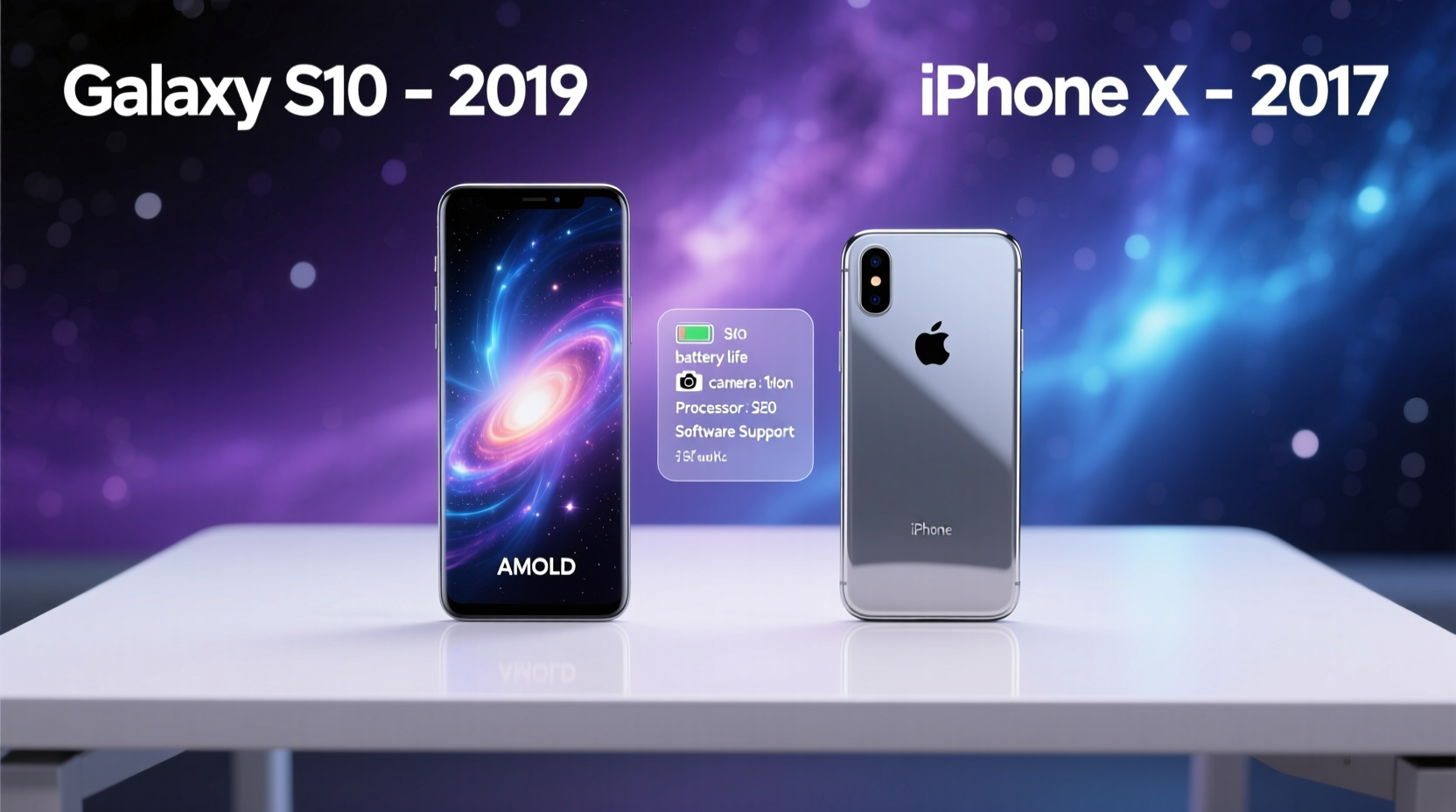
The Galaxy S10 and iPhone X both feature premium designs with glass backs and aluminum frames, making them feel luxurious in hand. The S10 has a slightly curved edge-to-edge Dynamic AMOLED display measuring 6.1 inches with a hole-punch front camera—a modern look even by 2024 standards. In contrast, the iPhone X introduced Apple’s signature \"notch\" design, housing Face ID sensors and the front camera within a 5.8-inch OLED panel.
While the S10 offers more screen real estate and an under-display fingerprint sensor, the iPhone X relies solely on Face ID for biometric authentication. Some users still prefer Touch ID, but Face ID remains impressively fast and secure—even in low light. However, wearing masks or using the phone at odd angles can occasionally disrupt recognition.
Performance and Software Support in 2024
This is where the most significant divergence occurs. The Galaxy S10 runs on Samsung’s Exynos 9820 (or Snapdragon 855 in some regions), paired with 8GB of RAM. Meanwhile, the iPhone X uses Apple’s A11 Bionic chip with 3GB of RAM. On paper, the S10 appears superior—but real-world longevity hinges more on software optimization than raw specs.
Apple’s iOS update policy shines here. The iPhone X received updates all the way up to iOS 16, released in 2022. It does not support iOS 17, meaning it’s no longer receiving major feature updates or security patches as of late 2023. Still, iOS 16 remains functional and secure for basic tasks through 2024.
Samsung promised four years of OS upgrades for the S10 series. Most models shipped with Android 9 and were updated to Android 13—their final version. Like the iPhone X, the S10 will not receive Android 14. While both devices are now at the end of their official software lifecycles, Samsung’s One UI offers more customization and multitasking features than iOS 16.
“Even outdated, iPhones often feel smoother due to tight hardware-software integration. But once off supported iOS versions, security becomes a real concern.” — Mark Tran, Mobile Security Analyst at TechShield Labs
Camera Comparison: Photos That Last
Both phones featured advanced dual-camera systems in their era, but their approaches differ significantly.
| Feature | Galaxy S10 | iPhone X |
|---|---|---|
| Rear Cameras | 12MP main + 12MP telephoto + 16MP ultra-wide | 12MP wide + 12MP telephoto |
| Front Camera | 10MP | 7MP TrueDepth |
| Video Recording | 4K @ 60fps | 4K @ 60fps |
| Night Mode | Yes (via software update) | No native night mode |
| Low-Light Performance | Moderate improvement with Night Mode | Good dynamic range but limited brightness |
The S10’s triple-lens setup gives it greater versatility, especially with the ultra-wide lens ideal for landscapes and group shots. Its Night Mode, added post-launch, helps in darker environments, though results can be inconsistent by modern standards. The iPhone X lacks night photography entirely, relying on computational HDR processing that prioritizes color accuracy and detail retention over brightness.
In daylight, both produce sharp, well-balanced images. The iPhone tends to favor natural skin tones and realistic contrast, while the S10 applies slight saturation boosts, which some find appealing for social media sharing.
Battery Life and Charging Options
The Galaxy S10 packs a 3,400mAh battery, while the iPhone X has a smaller 2,716mAh unit. Real-world usage reflects this difference: the S10 typically lasts a full day with moderate use, whereas the iPhone X often requires midday charging under similar conditions.
Charging capabilities also diverge. The S10 supports 15W wireless charging and reverse wireless charging—allowing it to power accessories like earbuds. The iPhone X supports only 7.5W wireless charging via Qi and lacks reverse charging. Neither device includes fast charging in the box, though both support it via optional adapters (up to 15W for iPhone, 15W+ for S10).
By 2024, battery degradation is expected in both models unless they’ve been meticulously maintained. Replacing aging batteries costs around $60–$80 for either phone and can restore near-original endurance.
Real-World Example: Sarah’s Upgrade Dilemma
Sarah, a freelance writer based in Portland, needed a reliable backup phone for travel without investing in a new flagship. She found both a used Galaxy S10 and iPhone X priced at $120 each. After testing both for a week, she chose the S10—not because it was faster, but because its expandable storage (via microSD) allowed her to carry audiobooks and research materials offline. She also appreciated the headphone jack, which let her use noise-canceling wired headphones during flights.
“I knew neither phone would get updates,” she said, “but the S10 just gave me more freedom. I didn’t have to worry about running out of space or carrying dongles.”
Her experience highlights a crucial point: functionality beyond specs often determines long-term satisfaction.
Checklist: Is This Phone Right for You in 2024?
Before buying either device secondhand, ask yourself the following:
- Do I need current software updates and security patches? → Neither qualifies
- Will I use this for banking, messaging, or sensitive apps? → Outdated OS increases risk
- Do I prefer Android’s customization or iOS simplicity? → Ecosystem lock-in matters
- Is expandable storage or a headphone jack important? → S10 wins here
- Am I buying as a temporary solution or long-term device? → Limit usage to light tasks
- Has the battery been replaced recently? → Critical for daily usability
Frequently Asked Questions
Can the iPhone X run iOS 17?
No. The iPhone X is not compatible with iOS 17. It maxes out at iOS 16.7, which means it no longer receives feature updates or regular security patches from Apple.
Which phone has better app performance in 2024?
Surprisingly, the iPhone X often feels snappier in everyday apps despite older hardware. iOS optimization allows smooth performance in core functions like Safari, Messages, and Apple Mail. However, newer versions of Instagram, TikTok, or Google apps may run slower or lack features due to minimum OS requirements.
Is it safe to use an unsupported smartphone in 2024?
Possible, but not recommended for primary use. Without ongoing security updates, both phones are vulnerable to emerging threats, especially when downloading files, clicking links, or using financial apps. Use strong passwords, avoid suspicious sites, and consider using these devices offline or for media only.
Final Verdict: Should You Buy Either in 2024?
The Galaxy S10 edges ahead in practicality. Its expandable storage, headphone jack, larger battery, and broader camera system make it more adaptable for varied use cases. While both devices are technically obsolete, the S10 offers more physical flexibility and user control—traits that remain valuable even in older hardware.
The iPhone X excels in build quality and ecosystem integration. If you're already invested in iCloud, AirPods, or MacBooks, the seamless pairing might justify keeping it as a secondary device. But its lack of future-proofing features like night mode, small battery, and discontinued software support limit its appeal.
If you’re considering either phone, ensure it has been well-maintained, ideally with a replaced battery and clean boot. Avoid devices with swollen batteries or cracked screens, and always factory reset before first use to eliminate potential data risks.




 浙公网安备
33010002000092号
浙公网安备
33010002000092号 浙B2-20120091-4
Comments
No comments yet. Why don't you start the discussion?