
When the Samsung Galaxy S10e and Apple iPhone XR launched in 2019, they represented two dominant philosophies in smartphone design: Android’s customization and hardware diversity versus iOS’s tight integration and performance optimization. One of the most persistent claims from Apple fans was that the iPhone XR, despite using a single-core CPU and lower RAM than many Android competitors, outperformed them significantly—especially the Galaxy S10e. But was the iPhone really that much faster?
This article dissects the real-world differences between these two phones, evaluates benchmark data, explores software efficiency, and considers long-term usability to answer whether the iPhone XR's speed advantage was as decisive as it seemed.
Benchmark Numbers Don’t Tell the Whole Story
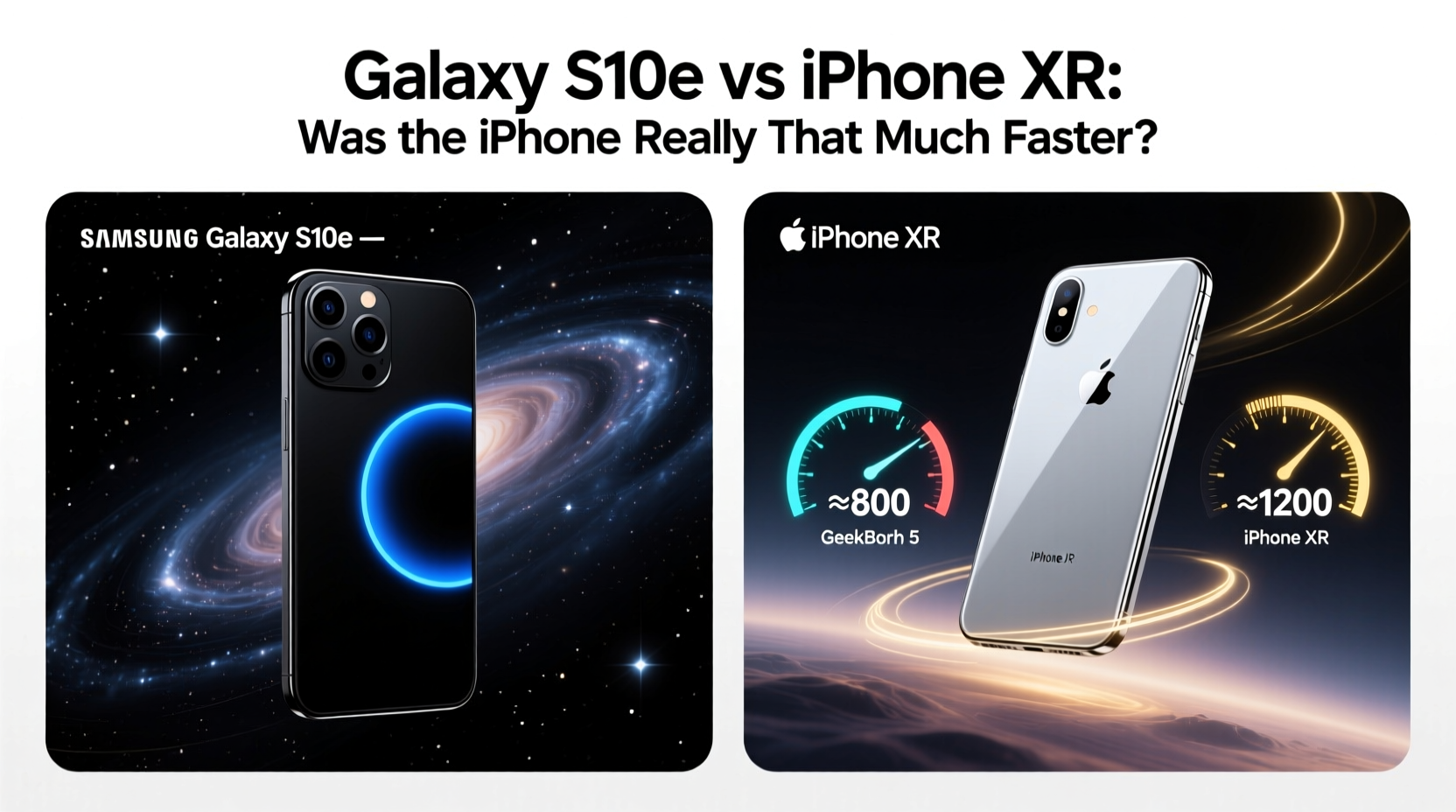
Benchmarks like Geekbench, AnTuTu, and 3DMark often placed the iPhone XR at the top of performance charts in 2019. Powered by Apple’s A12 Bionic chip, the iPhone XR scored higher on single-core tasks than nearly all Android devices, including the Galaxy S10e with its Qualcomm Snapdragon 855 (or Exynos 9820 in some regions).
| Device | Processor | RAM | Geekbench 5 (Single/Multi) | AnTuTu v8 Score |
|---|---|---|---|---|
| iPhone XR | Apple A12 Bionic | 3GB | 1140 / 2760 | ~450,000 |
| Galaxy S10e | Snapdragon 855 / Exynos 9820 | 6GB / 8GB | 990 / 2720 | ~430,000–470,000 |
The numbers suggest a modest edge for the iPhone XR in single-core performance, which heavily influences app launch times and UI responsiveness. However, multi-core scores were surprisingly close, and the S10e sometimes surpassed the XR depending on the chipset variant and thermal conditions.
Real-World Performance: Smoothness vs Speed
Where the iPhone XR consistently impressed was in perceived smoothness. Scrolling through lists, switching apps, and opening system menus felt fluid and instantaneous. This wasn’t magic—it was the result of Apple’s vertically integrated ecosystem: the A12 chip was designed specifically for iOS, allowing deeper hardware-software synergy.
In contrast, the Galaxy S10e ran on Android, an operating system built to run across hundreds of device configurations. While Samsung’s One UI improved responsiveness over stock Android, there were still micro-stutters during animations or after prolonged use when background processes piled up.
However, in practical tasks—opening large files, multitasking between Chrome, WhatsApp, and Spotify, or editing photos—the difference was less dramatic. The S10e handled heavy workloads efficiently, especially with its extra RAM. Users rarely experienced lag unless pushing the device to extreme multitasking limits.
“Apple’s chips give iOS an edge in consistency, but modern Android flagships are optimized enough that most users won’t notice a meaningful slowdown.” — David Kim, Mobile Systems Analyst at TechInsight Group
Long-Term Performance and Software Updates
One area where the iPhone XR pulled ahead meaningfully was long-term performance retention. Thanks to iOS’s memory management and Apple’s aggressive update support, the XR remained snappy even after three years of use. iOS updates are delivered directly from Apple, ensuring timely security patches and performance improvements.
The Galaxy S10e, while receiving four major Android updates (up to Android 13), faced fragmentation issues. Samsung’s update rollout was slower, and each new OS version introduced heavier visual effects that occasionally impacted older hardware. After two years, some S10e users reported longer app reload times and occasional hiccups when clearing background apps.
This divergence highlights a key truth: raw speed at launch is only part of the story. Sustained performance over time depends heavily on software support and system-level optimization.
Checklist: Evaluating Long-Term Phone Performance
- ✅ Check how many OS updates the manufacturer promises
- ✅ Look at historical update delivery speed for the brand
- ✅ Consider storage type (UFS vs eMMC) and RAM size
- ✅ Read user reports about slowdowns after 18+ months of use
- ✅ Test app-switching behavior in-store if possible
Gaming and Multitasking: Where Hardware Matters
For gamers and power users, the S10e had tangible advantages. Its higher RAM capacity allowed more apps to stay open in the background without reloading. When playing graphics-intensive games like Genshin Impact or PUBG Mobile at high settings, the Snapdragon 855 offered better sustained performance due to superior thermal design in the S10e’s aluminum frame.
The iPhone XR, while capable, used a metal-and-glass body that retained heat more easily. Under extended gaming sessions, the A12 would throttle slightly to manage temperatures, leading to minor frame drops. Additionally, the XR lacked 3D Touch (replaced by Haptic Touch), which some games used for contextual controls.
On the flip side, iOS had fewer compatibility issues and more consistent frame rates thanks to tighter developer guidelines. Many games launched faster and ran more predictably on the XR—even if peak performance wasn’t always higher.
Mini Case Study: Two Users, Two Priorities
Consider Sarah and James, both buying phones in early 2019.
Sarah, a social media manager, used her phone for Instagram editing, messaging, and browsing. She chose the iPhone XR. Over three years, she appreciated how quickly apps opened, how smoothly videos rendered, and how reliably her phone received updates. Even in 2022, her XR felt responsive for daily tasks.
James, a mobile gamer and tech enthusiast, picked the Galaxy S10e. He valued the ability to expand storage, use dual apps, and keep multiple games loaded in memory. While he noticed occasional stutters in animations, he never felt held back during gameplay. After two years, he upgraded not because of slowness, but because of battery degradation.
Their experiences show that “faster” depends on usage patterns. For casual and productivity-focused users, the iPhone XR felt quicker. For those needing flexibility and multitasking, the S10e delivered comparable real-world speed.
FAQ
Did the iPhone XR really beat the Galaxy S10e in everyday use?
In terms of app launch speed and interface smoothness, yes—the iPhone XR often felt more responsive. However, for most common tasks like web browsing, messaging, or streaming, the difference was subtle and unlikely to be noticed by average users.
Why did the iPhone feel faster with less RAM?
iOS manages memory differently than Android. Instead of keeping all background apps alive, it aggressively suspends them while preserving state. This allows efficient operation with less RAM. Combined with Apple’s custom silicon, this creates a perception of speed even with lower specs.
Which phone aged better over time?
The iPhone XR aged more gracefully due to longer software support and consistent performance tuning. Most XR units remained usable into 2023, whereas S10e devices showed signs of slowdown earlier, particularly when running newer versions of Android with heavier UI elements.
Conclusion: Speed Is More Than Specs
The claim that the iPhone XR was “much faster” than the Galaxy S10e holds partial truth—but context is everything. In synthetic benchmarks and UI responsiveness, the iPhone won clearly. Its A12 chip and iOS optimization created a seamless, jank-free experience that felt premium.
Yet the S10e was no slouch. With more RAM, better multitasking, and competitive multi-core performance, it matched the XR in most real-world scenarios. For users who valued customization, expandable storage, and headphone jacks, the S10e offered a compelling alternative without sacrificing meaningful speed.
In the end, the “faster” phone depended on what you prioritized: polished consistency (iPhone XR) or balanced versatility (S10e). Both devices exemplified their platforms’ strengths in 2019—and proved that raw speed alone doesn’t define user satisfaction.




 浙公网安备
33010002000092号
浙公网安备
33010002000092号 浙B2-20120091-4
Comments
No comments yet. Why don't you start the discussion?