
The Samsung Galaxy S20 and S20 Plus sit just one tier apart in 2020’s flagship lineup, yet they serve very different user needs. While both share core features like 5G support, a 120Hz refresh rate display, and a powerful triple-camera system, the key difference lies in size—particularly screen real estate and battery capacity. For many buyers, the decision boils down to whether that extra inch of display and longer battery life justify the higher price tag. The answer isn’t universal—it depends on how you use your phone.
Display: Size and Viewing Experience
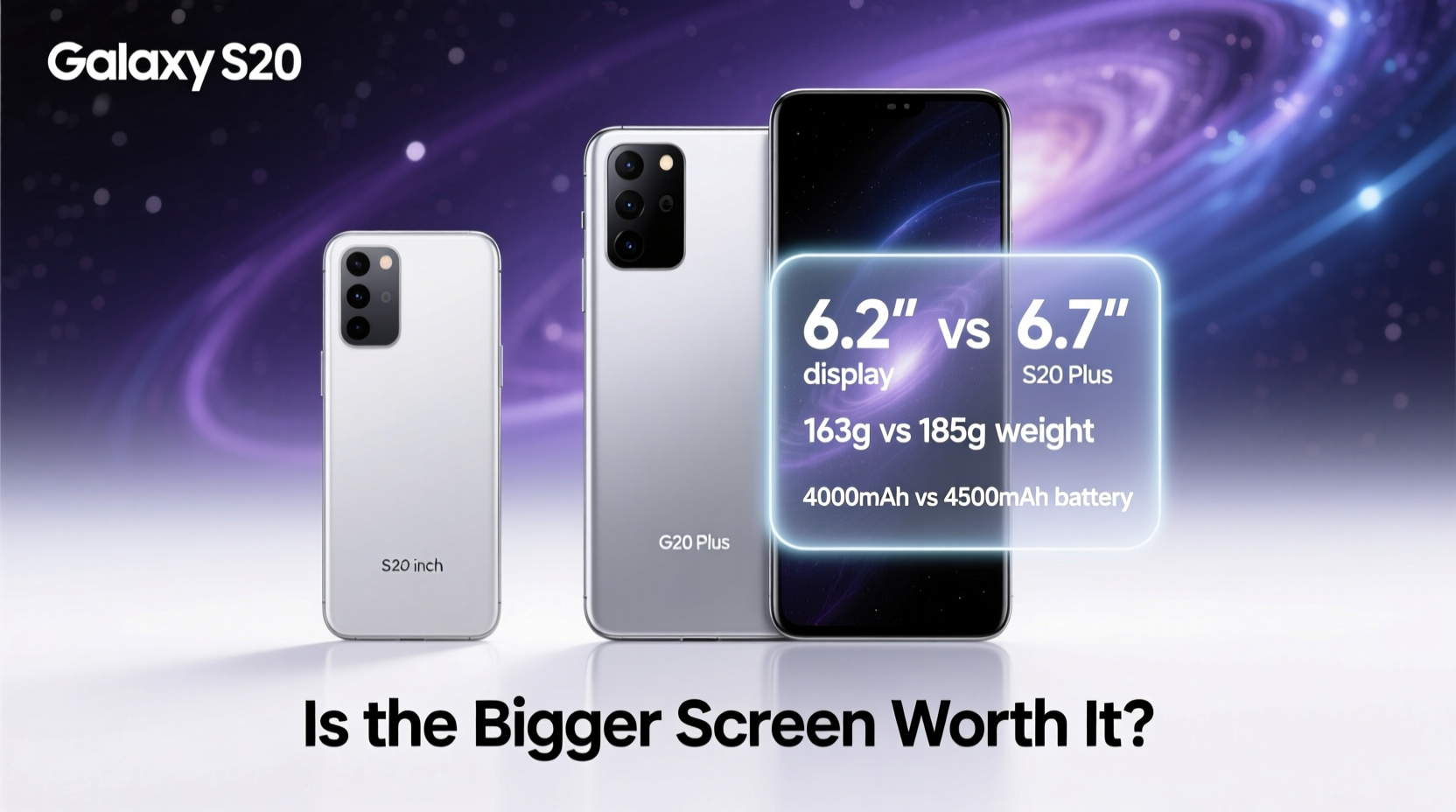
The most immediate difference between the S20 and S20 Plus is the display. The Galaxy S20 features a 6.2-inch Dynamic AMOLED 2X panel, while the S20 Plus expands to a 6.7 inches. Both offer Quad HD+ resolution (3200 x 1440) and a 120Hz refresh rate, meaning smooth scrolling and vibrant colors across the board. But the larger screen makes a noticeable impact during media consumption.
Watching videos, reading long articles, or multitasking with split-screen apps feels significantly more comfortable on the S20 Plus. The additional vertical space reduces the need for constant scrolling, and side-by-side app usage becomes genuinely practical. For users who frequently consume content on their phones, this upgrade enhances daily usability.
Battery Life: Real-World Differences
Battery capacity is where the S20 Plus pulls ahead decisively. The standard S20 packs a 4000mAh battery, whereas the S20 Plus houses a 4500mAh unit—a 12.5% increase. In practice, this translates to tangible gains in endurance.
Under moderate use—browsing, messaging, music, and about an hour of video—the S20 typically lasts a full day with around 20–30% remaining by bedtime. The S20 Plus, under identical conditions, often ends the day with 40–50% left. For heavy users or those who travel without easy access to charging, this buffer can eliminate midday anxiety.
Both devices support 25W fast charging, 15W wireless charging, and reverse wireless charging. However, because the S20 Plus starts with more juice, it benefits more from fast charging—going from 0 to 50% in roughly 30 minutes.
“Battery longevity isn’t just about capacity—it’s about peace of mind. The S20 Plus gives users breathing room they didn’t know they needed.” — David Kim, Mobile Tech Analyst at TechPulse Weekly
Camera Performance: Are They Identical?
On paper, both models feature the same rear camera setup: a 12MP main sensor, a 64MP telephoto lens with 3x hybrid zoom, and a 12MP ultra-wide lens. Video recording supports 8K at 24fps, and both include AI scene optimization and Single Take mode.
In real-world testing, image quality is nearly indistinguishable. Low-light performance, dynamic range, and zoom capabilities are consistent across both devices. The front-facing camera is also identical—a 10MP shooter with excellent detail and reliable autofocus.
However, there’s one subtle distinction: the S20 Plus includes a depth sensor for improved bokeh effects in portrait mode, though in practice, this makes minimal difference compared to software-based depth mapping used in the S20. Most users won’t notice any gap in photo output.
Physical Design and Usability
Size affects more than just screen and battery—it influences ergonomics. The S20 weighs 163g and measures 151.7 x 69.1 x 7.9 mm, making it one of the more compact flagships of its time. It fits comfortably in one hand, slips easily into pockets, and is less fatiguing during extended use.
In contrast, the S20 Plus (186g, 161.9 x 73.7 x 7.8 mm) is noticeably larger and heavier. While still manageable, single-handed operation requires more thumb stretching. Users with smaller hands may find it cumbersome, especially when navigating the top of the screen.
The trade-off is clear: enhanced media immersion and battery life versus portability and comfort. There’s no right answer—only what aligns with your lifestyle.
Detailed Comparison Table
| Feature | Galaxy S20 | Galaxy S20 Plus |
|---|---|---|
| Display Size | 6.2 inches | 6.7 inches |
| Resolution | 3200 x 1440 | 3200 x 1440 |
| Battery Capacity | 4000 mAh | 4500 mAh |
| Weight | 163 g | 186 g |
| Rear Cameras | 12MP + 64MP + 12MP | 12MP + 64MP + 12MP + Depth Sensor |
| Front Camera | 10MP | 10MP |
| Fast Charging | 25W | 25W |
| Storage Options | 128GB (expandable) | 128GB/512GB (expandable) |
| Price (Launch) | $999 | $1,199 |
Real-World Use Case: Travel Photographer's Choice
Sophia, a freelance travel photographer based in Lisbon, uses her smartphone for quick edits, client previews, and social media uploads. She initially leaned toward the S20 for its compactness but ultimately chose the S20 Plus after testing both. “When I’m reviewing photos on the go, the extra screen space helps me spot details I’d miss on the smaller display,” she explains. “And on long days shooting outdoors, knowing I won’t run out of battery by 3 PM is huge.”
For Sophia, the larger screen doubled as a portable editing station, reducing her reliance on carrying a tablet. The added weight was a minor compromise compared to the productivity gains. Her story illustrates how professional or creative workflows can benefit significantly from the Plus model’s advantages.
Step-by-Step: How to Decide Which Model Fits You
- Evaluate your daily usage: Do you stream videos, read e-books, or work on documents? If yes, prioritize screen size and battery—opt for the S20 Plus.
- Consider pocketability: If you wear tight jeans or prefer minimalist carry, the S20’s smaller footprint may be more convenient.
- Assess battery habits: Do you charge multiple times a day or forget to plug in at night? The S20 Plus offers greater flexibility.
- Think long-term: Flagships are often kept for 2–3 years. Will your usage trends shift toward heavier consumption over time?
- Test in person: Visit a retailer to hold both models. Ergonomics matter more than specs suggest.
Frequently Asked Questions
Is the S20 Plus worth the extra $200?
It depends on your priorities. If you value screen space, longer battery life, and slightly better camera depth sensing, then yes. For casual users or those preferring compact devices, the S20 delivers the same core experience at a lower cost.
Can both phones record 8K video?
Yes, both the Galaxy S20 and S20 Plus support 8K video recording at 24fps. This feature was groundbreaking at launch, allowing users to capture high-resolution footage and extract 33MP stills from video frames.
Do both models have expandable storage?
Yes, both include a microSD card slot supporting up to 1TB, which is increasingly rare in flagship smartphones. This is valuable for photographers, videographers, or anyone storing large media libraries.
Final Verdict: Who Should Upgrade?
The Galaxy S20 remains an excellent choice for users who want flagship performance in a more manageable form factor. Its camera, display quality, and processing power are all top-tier. However, the S20 Plus isn’t just a larger version—it’s a more complete package for power users.
The bigger screen enhances every visual task, and the extra battery capacity provides meaningful relief from charging fatigue. If you’re someone who uses your phone as a primary entertainment device, mobile workstation, or travel companion, the S20 Plus justifies its premium. But if you value one-handed use, portability, or are budget-conscious, the S20 delivers exceptional value without compromise on core features.




 浙公网安备
33010002000092号
浙公网安备
33010002000092号 浙B2-20120091-4
Comments
No comments yet. Why don't you start the discussion?