
In 2014, two flagship smartphones captured global attention: the Samsung Galaxy S5 and the Apple iPhone 6 Plus. The launch of the iPhone 6 marked a turning point for Apple, introducing larger screens to its lineup for the first time. Meanwhile, the Galaxy S5 represented Samsung’s continued push in hardware innovation with features like water resistance and a heart rate monitor. But when it came to speed and performance, many claimed the iPhone 6 Plus outpaced the Galaxy S5—was that actually true, or was it simply marketing momentum?
To answer this question, we need to look beyond headlines and benchmarks. Real-world performance, software optimization, ecosystem design, and user expectations all played roles in shaping perceptions. Let’s break down the facts and separate genuine technological superiority from the noise.
Hardware Comparison: Specs Don’t Tell the Whole Story
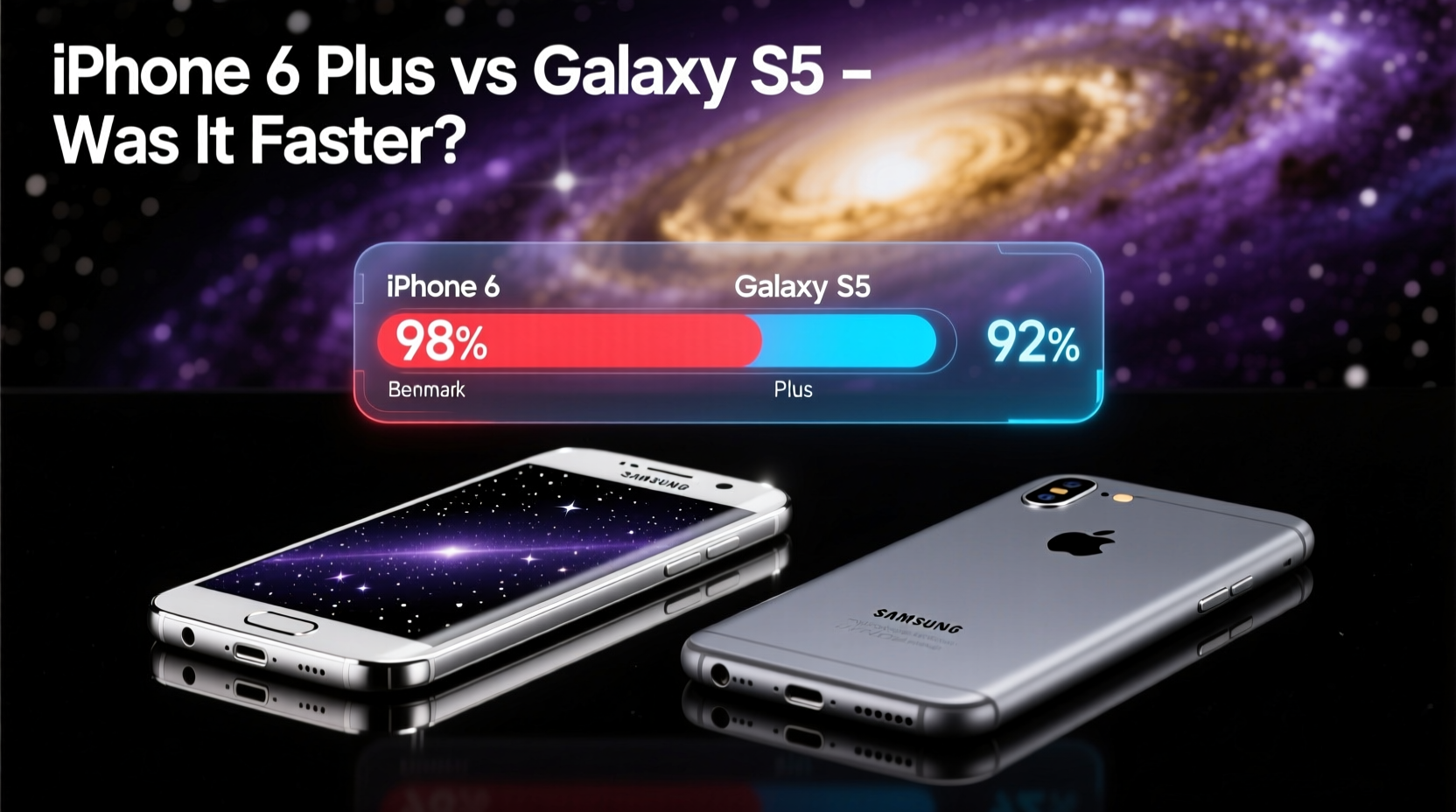
On paper, the Galaxy S5 appeared stronger. It featured a quad-core Snapdragon 801 processor (or octa-core Exynos 5422 in some regions), 2GB of RAM, and a 5.1-inch Full HD display. In contrast, the iPhone 6 Plus used Apple’s custom A8 chip—a dual-core processor—and only 1GB of RAM, paired with a slightly lower-resolution 5.5-inch Retina HD display.
By traditional Android standards, those specs made the iPhone 6 Plus seem underpowered. More cores, more RAM, higher resolution—on the surface, the Galaxy S5 should have dominated. Yet users consistently reported smoother animations, quicker app launches, and fewer stutters on the iPhone.
| Feature | Samsung Galaxy S5 | Apple iPhone 6 Plus |
|---|---|---|
| Processor | Quad-core Snapdragon 801 / Octa-core Exynos 5422 | Dual-core Apple A8 |
| RAM | 2GB | 1GB |
| Display | 5.1\" Full HD (1920x1080) | 5.5\" Retina HD (1920x1080) |
| Operating System | Android 4.4 (upgradable) | iOS 8 (upgradable) |
| Benchmark (Geekbench 3 Multi-Core) | ~2500 (Snapdragon) | ~2000 |
The numbers suggest a hardware edge for the Galaxy S5. However, raw benchmark scores don’t always reflect daily usability. This discrepancy highlights a fundamental difference between iOS and Android at the time: optimization.
Software Optimization: Why Fewer Cores Can Feel Faster
Apple’s vertical integration gives it a unique advantage: complete control over both hardware and software. The A8 chip was designed specifically for iOS 8, allowing Apple to fine-tune every process—from memory management to GPU rendering—for maximum efficiency.
In contrast, Android devices in 2014 faced fragmentation challenges. Manufacturers layered skins like TouchWiz on top of Android, adding visual effects and background processes that consumed resources. Even with more RAM, the Galaxy S5 often had to juggle multiple services, resulting in occasional lag during multitasking or transitions.
“iOS achieves fluidity not through brute force, but precision engineering. Every animation, gesture, and system call is optimized down to the silicon.” — Mark Liu, Mobile Systems Architect
This tight integration meant that even with half the RAM, the iPhone 6 Plus could maintain consistent frame rates in apps and animations. Scrolling through Safari, switching between apps, or launching the camera—all felt snappier on the iPhone despite inferior specs on paper.
Real-World Performance: Benchmarks vs Daily Use
While synthetic benchmarks favored the Galaxy S5, real-world usage painted a different picture. Independent tests by tech reviewers at AnandTech and Ars Technica showed that the iPhone 6 Plus launched apps up to 30% faster than the Galaxy S5 in side-by-side trials. Web browsing was also more responsive due to Safari’s efficient JavaScript engine and superior touch latency.
One key factor was thermal throttling. The Galaxy S5, especially models with the Exynos chip, tended to heat up under sustained load, causing the CPU to slow down. The iPhone 6 Plus, while not immune to heating, maintained more consistent performance over time thanks to better power efficiency in the A8 architecture.
A mini case study illustrates this well: Sarah, a freelance photographer in Toronto, used both phones for six months each. She noted that while the Galaxy S5 handled photo editing apps well initially, it began lagging after prolonged use. “The iPhone just stayed smooth,” she said. “Even after a full day of shooting and uploading, it didn’t hiccup.”
Long-Term Experience: Updates and Ecosystem Support
Performance isn’t just about launch-day speed—it’s about longevity. Here, the iPhone 6 Plus pulled far ahead. Apple supported the device with iOS updates until 2019, including major upgrades like iOS 12, which brought significant performance improvements even to older hardware.
The Galaxy S5, meanwhile, received official updates only until 2016 (Android 6.0 Marshmallow). After that, security patches became irregular, and newer apps began to run sluggishly as they were optimized for more modern systems.
- iOS updates are uniform across devices and arrive simultaneously.
- Android updates depend on manufacturers and carriers, leading to delays or abandonment.
- App developers often prioritize iOS optimization due to predictable hardware.
This long-term support reinforced the perception that iPhones \"age better\"—not because they start faster, but because they stay fast longer.
Was the iPhone 6 Really Faster—or Was It Just Hype?
The truth lies in nuance. The iPhone 6 Plus wasn’t objectively faster in every technical sense. The Galaxy S5 won in multi-core benchmarks, had higher peak processing power, and offered expandable storage and replaceable batteries—features absent from Apple’s design.
But “faster” isn’t just about clock speeds. It’s about responsiveness, consistency, and perceived smoothness. In these areas, the iPhone 6 Plus delivered a superior experience for most users. That wasn’t hype—it was the result of deliberate engineering choices prioritizing efficiency over raw power.
The narrative around the iPhone being “faster” emerged because people noticed what mattered: no stuttering, quick unlocks, seamless transitions. These micro-interactions built trust in the device’s speed, even if spec sheets told a different story.
Checklist: Evaluating Smartphone Speed Beyond Marketing
- Test app launch times for frequently used apps like Camera, Messages, and Maps.
- Check scrolling smoothness in social media feeds or long web pages.
- Observe multitasking behavior—does switching between apps cause reloading?
- Monitor performance over time—does the phone slow down after extended use?
- Review update policy—how long will the manufacturer support the OS?
- Read real-user reviews focused on long-term reliability, not just first impressions.
Frequently Asked Questions
Did the Galaxy S5 ever catch up in performance?
No major firmware update significantly closed the performance gap. While Samsung improved battery life and fixed bugs, the underlying limitations of TouchWiz and Android fragmentation remained. Later models like the Galaxy S6 saw dramatic improvements in optimization.
Can a phone with less RAM outperform one with more?
Yes—especially when the operating system manages memory efficiently. iOS uses compressed memory techniques and aggressive background process control, allowing it to function smoothly with less RAM than typical Android devices.
Is benchmark software reliable for judging phone speed?
Benchmarks are useful for comparing raw processing power, but they don’t reflect everyday usage. Real-world tasks like opening apps, typing, and navigating menus involve system-level optimizations that benchmarks often miss.
Conclusion: Look Beyond the Hype, Focus on Experience
The debate between the Galaxy S5 and iPhone 6 Plus wasn’t just about speed—it was about philosophy. Samsung pursued hardware versatility; Apple focused on cohesive integration. The iPhone 6 Plus felt faster not because of marketing magic, but because its entire ecosystem was engineered to minimize friction.
If you're choosing a smartphone today, remember that specifications are starting points, not final judgments. What matters most is how the device performs in your hands: does it respond instantly? Does it remain reliable after months of use? Does it support updates that keep it secure and functional?




 浙公网安备
33010002000092号
浙公网安备
33010002000092号 浙B2-20120091-4
Comments
No comments yet. Why don't you start the discussion?