
In 2016, smartphone buyers faced a pivotal decision: choose between Samsung’s curved-glass marvel, the Galaxy S7 Edge, or Apple’s first large-screen flagship in years, the iPhone 7 Plus. Both devices represented the peak of their respective ecosystems. Yet, with the iPhone typically commanding a higher price—what many call the “iPhone tax”—consumers were left wondering: does the premium translate into real-world benefits? Or is Samsung delivering better value for money?
This isn’t just about specs on paper. It’s about daily usability, longevity, ecosystem integration, and whether that extra cost at checkout pays off over time. Let’s break down the key differences and determine if the iPhone tax was truly justified.
Design and Build Quality
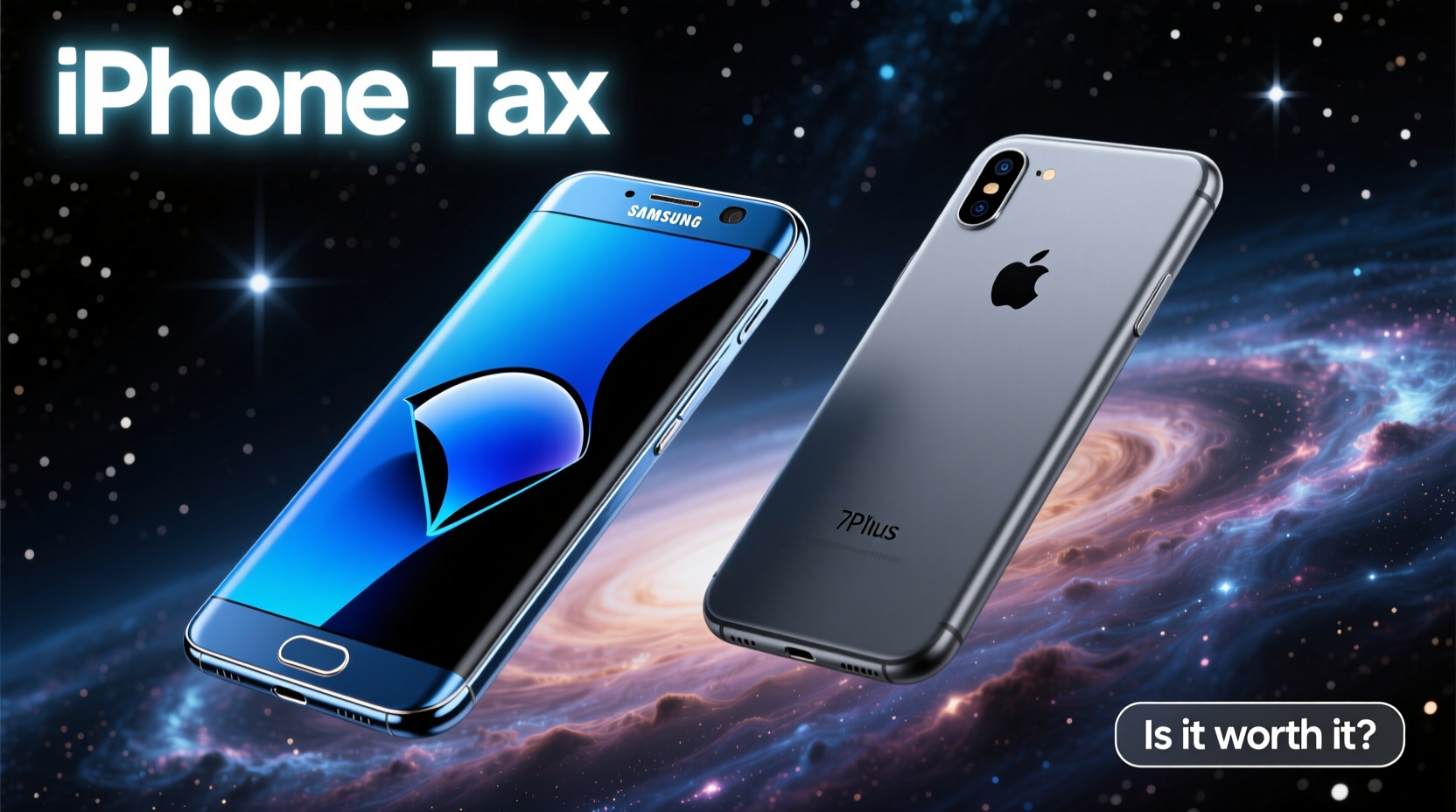
The Galaxy S7 Edge and iPhone 7 Plus both featured premium materials and refined craftsmanship. The S7 Edge stood out with its dual-curved AMOLED display, giving it a futuristic look and an immersive visual experience. Its glass-and-metal sandwich design felt luxurious, though more prone to slips without a case.
The iPhone 7 Plus, meanwhile, adopted Apple’s familiar aluminum unibody with antenna lines repositioned around the edges. It introduced water resistance (IP67), matching the S7 Edge’s rating—an important feature for durability. While less flashy than the Edge’s curves, the iPhone offered a more ergonomic grip and slightly better one-handed control despite its size.
Performance and Software Experience
Under the hood, the S7 Edge used either Samsung’s Exynos 8890 or Qualcomm’s Snapdragon 820, depending on region. Both were powerful chips for their time, handling multitasking and gaming with ease. Android 6.0 Marshmallow provided deep customization, split-screen support, and expandable storage via microSD—a feature absent on iPhones.
The iPhone 7 Plus ran Apple’s A10 Fusion chip, which outperformed most Android rivals in single-core tasks. iOS 10 delivered smooth animations, consistent updates, and tight hardware-software integration. Apps launched faster, and system responsiveness remained sharp even after months of use.
Apple’s closed ecosystem meant fewer customization options but greater reliability. Samsung’s TouchWiz had improved significantly by this point, but iOS still felt snappier in everyday interactions.
“Even two years after release, iPhone 7 Plus users reported smoother performance than contemporaries running newer Android versions.” — Mark Lin, Mobile Analyst at TechPulse Insights
Camera Comparison: Real-World Results
Both phones set new standards for mobile photography in 2016, but they approached it differently.
The S7 Edge featured a 12MP rear sensor with larger pixels (1.4µm) and an f/1.7 aperture, excelling in low-light conditions. Its fast autofocus and HDR processing produced vibrant, detailed shots. However, aggressive sharpening could sometimes make images look artificial.
The iPhone 7 Plus introduced a dual-camera system—12MP wide-angle and 12MP telephoto—enabling 2x optical zoom and Portrait Mode (via software). While not as strong in ultra-low light as the S7 Edge, the iPhone delivered more natural color reproduction, better dynamic range, and superior video stabilization (4K at 30fps).
| Feature | Galaxy S7 Edge | iPhone 7 Plus |
|---|---|---|
| Rear Camera | 12MP, f/1.7, OIS | 12MP+12MP dual, f/1.8 & f/2.8, OIS (wide) |
| Low-Light Performance | Excellent | Very Good |
| Zoom Capability | Digital only | 2x optical, up to 10x digital |
| Portrait Mode | No | Yes (software-based) |
| Video Recording | 4K@30fps, 1080p@60fps | 4K@30fps, 1080p@60fps (with advanced stabilization) |
For casual photographers who valued convenience and consistency, the iPhone’s point-and-shoot excellence won favor. Enthusiasts who liked tweaking settings might prefer Samsung’s manual mode and wider dynamic adjustments.
Battery Life and Charging
The S7 Edge packed a 3,600mAh battery, while the iPhone 7 Plus had a smaller 2,900mAh unit. On paper, Samsung had the edge. In practice, both lasted a full day under moderate use, though the S7 Edge often edged ahead in endurance tests.
Where Samsung pulled ahead was in charging flexibility. The S7 Edge supported fast charging and wireless charging—features absent on the iPhone 7 Plus. Apple didn’t introduce fast charging until the iPhone 8, and even then, it required purchasing a separate adapter.
If your routine involves frequent travel or limited access to outlets, the S7 Edge’s combination of larger battery and wireless charging made it more convenient.
Longevity and Update Support
This is where the \"iPhone tax\" begins to justify itself. Apple provided five years of iOS updates for the iPhone 7 Plus, supporting it from iOS 10 all the way to iOS 15. That means security patches, feature upgrades, and app compatibility extended far beyond typical Android cycles.
Samsung, at the time, offered only two major Android version updates. The S7 Edge launched with Android 6 and received upgrades to Android 7 and 8. After that, only security patches trickled in for a limited period. By 2019, many apps began dropping support for older Android versions, leaving S7 Edge users behind.
If you plan to keep a phone for three years or more, the iPhone’s update policy delivers tangible value. You’re not forced to upgrade simply because your OS no longer supports critical apps.
Mini Case Study: Two Users, Two Paths
Consider Sarah and James, both buying phones in early 2017. Sarah chose the iPhone 7 Plus; James went with the Galaxy S7 Edge. Both used their devices heavily—social media, navigation, streaming, and photography.
By late 2018, James noticed his S7 Edge slowing down. Apps crashed more often, and Instagram stopped supporting his Android version. He upgraded to a newer Samsung in early 2019.
Sarah, however, continued using her iPhone 7 Plus through 2021. Even on iOS 14, core apps worked smoothly. She only upgraded when battery degradation affected daily use—not due to software obsolescence.
In terms of lifespan, the iPhone clearly offered better long-term utility, effectively spreading the initial cost over more years of service.
Checklist: Choosing Between S7 Edge and iPhone 7 Plus
- ✅ Need expandable storage or microSD support? → Galaxy S7 Edge
- ✅ Want dual-SIM capability? → Galaxy S7 Edge (in some regions)
- ✅ Prioritize long-term software updates? → iPhone 7 Plus
- ✅ Prefer natural photo colors and video quality? → iPhone 7 Plus
- ✅ Value wireless charging and fast charging? → Galaxy S7 Edge
- ✅ Plan to keep the phone for 3+ years? → iPhone 7 Plus
- ✅ Like deep customization and multi-window features? → Galaxy S7 Edge
FAQ
Was the iPhone 7 Plus more expensive than the Galaxy S7 Edge?
Yes. At launch, the base iPhone 7 Plus started at $769, while the S7 Edge began at $749. The gap widened with higher storage tiers, and Apple did not offer expandable storage, making high-capacity models significantly pricier.
Did the iPhone tax pay off in the long run?
For users planning to keep their device beyond two years, yes. The extended software support, stronger resale value, and consistent performance made the iPhone 7 Plus a better long-term investment despite the higher upfront cost.
Which phone held its value better?
The iPhone 7 Plus retained its resale value much better. After two years, used iPhone 7 Plus units sold for up to 40% of original price, compared to 20–25% for the S7 Edge—thanks to Apple’s reputation for longevity and demand in secondary markets.
Conclusion: Is the iPhone Tax Worth It?
The answer depends on your priorities. If you value cutting-edge design, customization, and hardware flexibility, the Galaxy S7 Edge offered compelling advantages—and technically better specs in areas like battery and display. But if you care about long-term usability, software support, ecosystem reliability, and resale value, the iPhone 7 Plus justified its premium.
The “iPhone tax” isn’t just branding—it’s a reflection of sustained support, tighter integration, and longer functional life. For many users, especially those who upgrade every three years or more, that extra cost upfront translated into lower annual ownership costs and fewer frustrations down the line.




 浙公网安备
33010002000092号
浙公网安备
33010002000092号 浙B2-20120091-4
Comments
No comments yet. Why don't you start the discussion?