
In 2017, the Samsung Galaxy S8 launched as a flagship powerhouse with edge-to-edge display technology, advanced biometrics, and a refined Android experience. Meanwhile, the Apple iPhone 6 Plus—released in 2014—was still widely used by millions due to iOS longevity and brand loyalty. For users considering an upgrade from the iPhone 6 Plus to the Galaxy S8, the decision wasn’t just about new features; it was about whether the shift in ecosystem, design philosophy, and daily usability justified the change. This article breaks down the key differences and evaluates whether making the switch truly delivered meaningful improvements.
Design and Build: From Curved Glass to Infinity Display
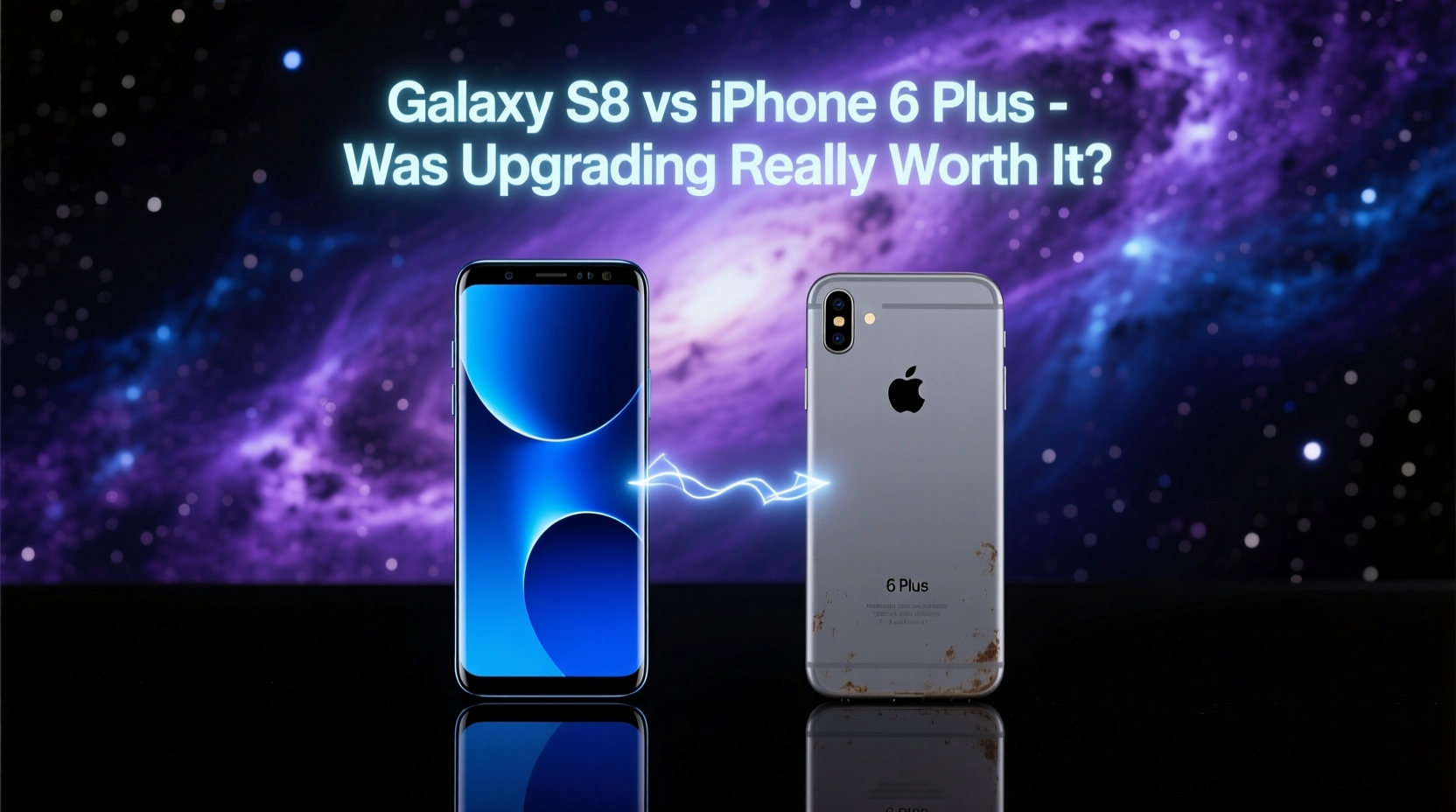
The iPhone 6 Plus represented Apple’s first major move into larger-screen smartphones. Its aluminum unibody design felt solid and familiar, with rounded edges and physical buttons that prioritized ergonomics over visual innovation. At 158.1 x 77.8 x 7.1 mm and 172 grams, it was considered large at the time but manageable for most hands.
In contrast, the Galaxy S8 introduced Samsung’s “Infinity Display”—a nearly bezel-less front with curved glass on both sides. Measuring 148.9 x 68.1 x 7.9 mm and weighing 155 grams, the S8 was actually smaller than the iPhone 6 Plus despite having a larger 5.8-inch screen (vs. 5.5 inches). The difference in screen-to-body ratio was stark: 83% on the S8 versus just 65.8% on the 6 Plus.
However, the S8’s glass back made it more fragile and slippery than the 6 Plus’s metal body. Users upgrading needed to consider cases more seriously, especially since the S8 lacked water resistance certification at launch (later confirmed IP68, but not advertised initially).
Performance and Software Experience
The iPhone 6 Plus ran on Apple’s A8 chip with 1GB of RAM. By 2017, even with iOS updates, it struggled with multitasking, app loading times, and newer games. While iOS optimized performance well, aging hardware showed its limits—especially after iOS 10 updates slowed many older devices.
The Galaxy S8, powered by either the Exynos 8895 or Snapdragon 835 (depending on region), came with 4GB of RAM and significantly faster processing speeds. Apps launched quicker, background tasks were smoother, and high-end mobile gaming became seamless. Android 7.0 Nougat (upgradable to later versions) offered deeper customization, split-screen mode, and always-on display—a feature absent from iPhones at the time.
“Switching from the iPhone 6 Plus to the Galaxy S8 felt like moving from dial-up to broadband. Everything was instant.” — Marcus Tran, Mobile Tech Analyst at GadgetScope
But ecosystem loyalty played a role. Users deeply invested in iCloud, iTunes, and Apple Watch integration faced friction when migrating. Contacts, messages, and media required careful transfer via tools like Smart Switch, and some services (like iMessage) didn’t transition cleanly.
Camera Comparison: Evolution in Mobile Photography
The iPhone 6 Plus featured an 8MP rear camera with f/2.2 aperture, optical image stabilization (OIS), and 1080p video recording. It produced reliable, color-accurate photos in daylight but faltered in low light and lacked manual controls.
The Galaxy S8 upgraded to a 12MP dual-pixel sensor with f/1.7 aperture—the widest available at the time—delivering dramatically better low-light performance. Features like Pro Mode allowed shutter speed and ISO adjustments, appealing to photography enthusiasts. Video recording reached 4K, doubling the resolution of the 6 Plus.
| Feature | iPhone 6 Plus | Galaxy S8 |
|---|---|---|
| Rear Camera | 8MP, f/2.2 | 12MP, f/1.7 (Dual Pixel) |
| Front Camera | 1.2MP | 8MP, f/1.7 |
| Video Recording | 1080p@30fps | 4K@30fps, 1080p@60fps |
| Low-Light Performance | Moderate noise, slower focus | Excellent detail retention |
| Manual Controls | No | Yes (Pro Mode) |
For social media users and casual photographers, the S8’s front-facing camera alone was a game-changer. Selfies were sharper, brighter, and more consistent—even in dim environments.
Real User Transition: A Mini Case Study
Linda M., a long-time iPhone user since the iPhone 4, held onto her iPhone 6 Plus until early 2017. Her battery degraded to 72%, apps crashed frequently, and she found herself waiting several seconds between actions. After researching alternatives, she switched to the Galaxy S8.
Initially, she missed the simplicity of iOS and struggled with Android’s notification shade and app permissions. But within two weeks, she adapted. She appreciated the Always-On Display showing time and notifications without unlocking, the speed of the fingerprint and iris scanner (once calibrated), and the ability to expand storage via microSD.
Most impactful? “I took a photo at my nephew’s birthday party in a dark room,” Linda said. “On my old iPhone, it would’ve been a blurry mess. The S8 captured clear faces, bright colors—it felt like I had a real camera.”
She did return the phone briefly thinking it was too fragile, but after buying a rugged case, she hasn’t looked back.
Battery Life and Charging: Practical Daily Impact
The iPhone 6 Plus packed a 2915 mAh battery. With moderate use, it lasted a full day, though heavy users often needed midday charging by 2017 due to battery degradation.
The Galaxy S8 had a smaller 3000 mAh cell but benefited from more efficient hardware and software optimization. In real-world testing, it matched or slightly exceeded the 6 Plus in endurance. However, the S8 supported fast charging and wireless charging—two conveniences the 6 Plus lacked entirely.
- Fast charging: ~50% in 30 minutes (with compatible charger)
- Wireless charging: Qi-compatible pads enabled cable-free top-ups
- No native power-saving mode on 6 Plus vs. multiple profiles on S8
Was the Upgrade Worth It? A Step-by-Step Evaluation
To determine if switching from the iPhone 6 Plus to the Galaxy S8 was worthwhile, consider this timeline-based assessment:
- Assess Current Device Condition: Is your 6 Plus experiencing slowdowns, frequent crashes, or poor battery health? If yes, an upgrade is likely overdue.
- Evaluate Usage Needs: Do you take lots of photos, use navigation heavily, or rely on multitasking? The S8 excels in all three.
- Test Ecosystem Flexibility: Can you live without iMessage, AirDrop, or seamless Mac integration? These are lost when leaving iOS.
- Compare Physical Comfort: Try holding both devices. The S8 is narrower but taller—does it fit your grip?
- Consider Long-Term Support: The S8 received three major Android updates; the 6 Plus stopped receiving iOS updates in 2019.
Frequently Asked Questions
Can I transfer my data easily from iPhone 6 Plus to Galaxy S8?
Yes. Samsung’s Smart Switch app allows seamless migration of contacts, messages, photos, calendars, and even app data over Wi-Fi or cable. Some iMessages may not transfer, but SMS and multimedia do.
Is the Galaxy S8 more durable than the iPhone 6 Plus?
Not inherently. While the S8 has Corning Gorilla Glass 5 and IP68 rating (dust/water resistance), its glass back is prone to cracking if dropped. The 6 Plus’s aluminum body is more impact-resistant but lacks water protection.
Does the S8 feel like a premium upgrade?
Subjectively, yes. The immersive display, smooth performance, and modern features like facial recognition and Bixby make it feel like a significant leap forward—especially after using a three-year-old device.
Final Verdict: When the Upgrade Makes Sense
For users whose iPhone 6 Plus was still functioning well in 2017, the jump to the Galaxy S8 offered substantial gains in display quality, camera capability, performance, and modern features. However, the value depended on individual priorities.
If you valued ecosystem continuity, simplicity, and durability, staying with iOS—or upgrading to an iPhone 7 or 8—might have been wiser. But if you wanted cutting-edge design, superior low-light photography, and future-ready hardware, the Galaxy S8 was absolutely worth the switch.
Ultimately, technology upgrades should enhance—not complicate—daily life. For many, the Galaxy S8 didn’t just offer new specs; it delivered a noticeably faster, more engaging smartphone experience that justified stepping outside the Apple bubble.




 浙公网安备
33010002000092号
浙公网安备
33010002000092号 浙B2-20120091-4
Comments
No comments yet. Why don't you start the discussion?