
In 2017, smartphone buyers faced a pivotal decision: stick with Apple’s polished ecosystem or embrace Samsung’s bold new direction with the Galaxy S8. The iPhone 8 and Galaxy S8 represented two distinct philosophies in mobile design and functionality. For many users, especially those upgrading from older models, the choice wasn’t just about specs—it was about lifestyle alignment, future-proofing, and whether the perceived advantages of switching brands were real or merely imagined. Years later, with both devices out of mainstream use, we can assess objectively: was upgrading from one to the other—or choosing between them—truly worth it?
Design and Build: Two Visions of Premium
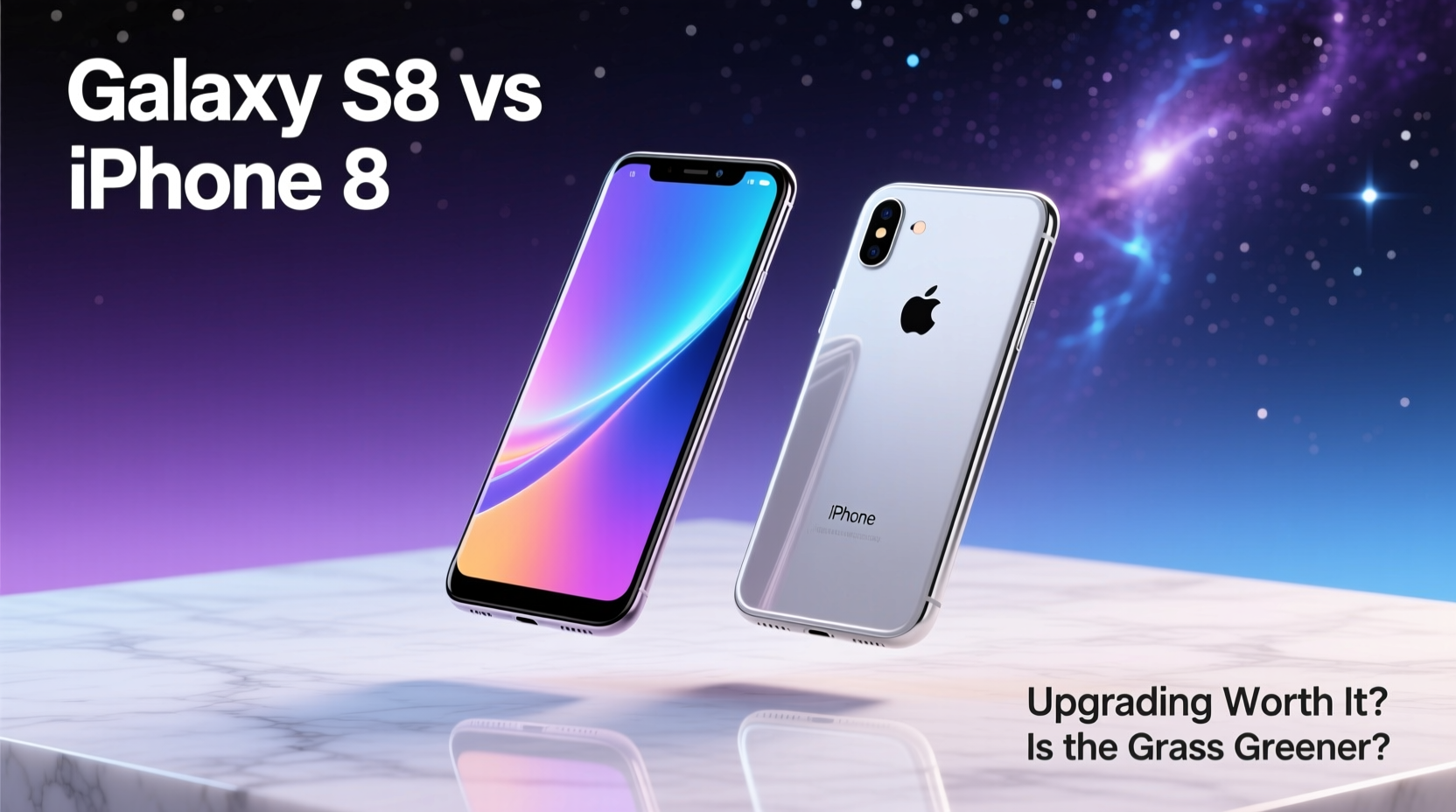
The Galaxy S8 redefined Android aesthetics with its edge-to-edge Infinity Display, minimal bezels, and sleek glass-and-metal body. Measuring 148.9 x 68.1 x 8 mm and weighing just 143g, it felt futuristic in hand. Its 5.8-inch Quad HD+ AMOLED screen offered vibrant colors and deep blacks, setting a benchmark for display quality.
In contrast, the iPhone 8 stayed true to Apple’s conservative design language. It featured a 4.7-inch Retina HD LCD screen with noticeable top and bottom bezels. While less flashy than the S8, the iPhone 8 introduced a durable glass back for wireless charging—a first for iPhones in that generation. At 138.4 x 67.3 x 7.3 mm and 148g, it was slightly smaller and lighter, but its compactness appealed to users who preferred one-handed operation.
Performance and Software Experience
Under the hood, both phones packed capable hardware. The Galaxy S8 ran on either the Exynos 9810 (international) or Snapdragon 835 (U.S.), paired with 4GB of RAM. The iPhone 8 used Apple’s A11 Bionic chip with 3GB of RAM. Despite fewer gigabytes, the A11’s optimized architecture allowed iOS to run smoothly, often matching or exceeding the S8 in app launch speed and multitasking efficiency.
iOS 11, launched alongside the iPhone 8, focused on stability and incremental improvements. Samsung’s Android 7.0 Nougat (upgradable to Android 9) offered greater customization, split-screen apps, and Samsung DeX support—an early attempt at desktop-like productivity.
“Hardware matters, but software longevity defines a phone’s real lifespan.” — David Lin, Mobile Analyst at TechPulse
Apple’s track record of five years of OS updates gave the iPhone 8 a clear edge in long-term usability. Most Galaxy S8 units stopped receiving major Android updates after three years, limiting their relevance in the evolving app ecosystem.
Camera Comparison: Quality Over Quantity
Both phones featured single rear cameras—a rarity by today’s standards. The Galaxy S8 had a 12MP f/1.7 dual-pixel sensor with optical image stabilization (OIS), producing richly detailed photos with excellent dynamic range. Its low-light performance was particularly strong, aided by the wide aperture and advanced noise reduction.
The iPhone 8 also sported a 12MP f/1.8 rear sensor with OIS and Apple’s computational photography enhancements. While not as aggressive in saturation, its images leaned toward natural color reproduction and superior video stabilization—key for vloggers and casual filmmakers.
| Feature | Galaxy S8 | iPhone 8 |
|---|---|---|
| Display Size | 5.8” AMOLED | 4.7” LCD |
| Processor | Snapdragon 835 / Exynos 9810 | A11 Bionic |
| Rear Camera | 12MP f/1.7, OIS | 12MP f/1.8, OIS |
| Fingerprint Sensor | Rear-mounted (awkward placement) | Front Touch ID |
| Water Resistance | IP68 | IP67 |
| Software Support | 3 major updates | 5 major updates |
| Wireless Charging | Yes | Yes |
Real-World User Experience: A Mini Case Study
Consider Mark, a long-time iPhone user since the iPhone 4. By 2017, he was on an iPhone 6s and frustrated by battery life and storage limits. He considered the iPhone 8 but was drawn to the Galaxy S8’s expansive screen and newer design. After switching, Mark loved the immersive display and multitasking features but struggled with inconsistent app behavior and slower update delivery.
Within 18 months, some third-party apps began dropping support for his S8 due to Android fragmentation. Meanwhile, his friend Lisa, who upgraded from an iPhone 5 to the iPhone 8, continued using her device seamlessly into 2022, receiving security patches and app compatibility well beyond Mark’s S8.
Mark eventually returned to iPhone with the iPhone 11, admitting, “The grass looked greener, but I missed the reliability.” His experience highlights a critical truth: innovation means little without sustained support.
Upgrade Value: Was It Worth It?
For Android loyalists moving from older Samsung models like the S6 or S7, the Galaxy S8 was a definitive upgrade—offering a modern design, improved camera, and IP68 water resistance. The leap in screen technology alone justified the switch.
For iPhone users, however, the jump from iPhone 6/6s to iPhone 8 felt incremental. Same form factor, similar camera, modest performance gains. Those hoping for a radical change were better served waiting for the iPhone X, released the same year. Conversely, switching from iPhone to Galaxy S8 meant embracing a steeper learning curve, potential app inconsistencies, and shorter software support.
- Worth upgrading from S7 to S8? Yes—significant design and display improvements.
- Worth switching from iPhone 6s to iPhone 8? Only if you needed wireless charging or better durability.
- Worth jumping from iPhone to S8? Only if you prioritized screen size and customization over long-term reliability.
Checklist: Should You Have Upgraded in 2017?
- Are you upgrading from a phone older than 3 years?
- Do you value screen size and immersive media consumption?
- Is long-term software support important to you?
- Do you rely heavily on ecosystem integration (e.g., AirPods, iCloud)?
- Are you open to learning a new interface if switching platforms?
If you answered “yes” to 1, 2, and 5, the S8 made sense. If 3 and 4 resonated more, the iPhone 8—or holding out for the iPhone X—was the smarter move.
FAQ
Did the Galaxy S8 have a better screen than the iPhone 8?
Objectively, yes. The S8’s Quad HD+ AMOLED panel offered higher resolution, deeper blacks, and superior contrast compared to the iPhone 8’s 750p LCD screen. Media consumption and outdoor visibility were noticeably better on the S8.
Which phone lasted longer with updates?
The iPhone 8 received iOS updates up to iOS 16 (security updates until 2023), while the Galaxy S8 topped out at Android 9 (security patches ended around 2020). Apple’s longer support cycle gave the iPhone 8 significantly better long-term viability.
Was Face ID on iPhone X better than S8’s iris scanner?
Yes. While the S8 introduced iris scanning, it was slow and unreliable in low light. The iPhone X’s Face ID, powered by TrueDepth camera and machine learning, proved faster, more secure, and more consistent—setting a new standard for biometric authentication.
Conclusion: The Grass Isn’t Always Greener
The Galaxy S8 and iPhone 8 each represented the peak of their respective ecosystems in 2017—but they catered to different priorities. The S8 dazzled with innovation: an edgeless screen, refined materials, and ambitious features. The iPhone 8 prioritized refinement, consistency, and longevity within a tightly controlled environment.
Upgrading was worth it only if the benefits aligned with your actual usage. For tech enthusiasts craving novelty, the S8 delivered. For pragmatists valuing stability and long-term function, the iPhone 8—or staying put—was often the wiser choice.




 浙公网安备
33010002000092号
浙公网安备
33010002000092号 浙B2-20120091-4
Comments
No comments yet. Why don't you start the discussion?