
The Samsung Galaxy Z Fold series represents the pinnacle of foldable smartphone innovation—offering a tablet-sized display in a pocketable form. But with its advanced engineering comes a critical vulnerability: the hinge and ultra-thin glass screen are inherently more delicate than traditional smartphones. This raises a pressing question for users: Is investing in a heavy-duty shockproof case an unnecessary overreaction, or are standard cases leaving your expensive device dangerously exposed?
At $1,799 and up, the Galaxy Z Fold isn’t just another phone—it’s a long-term investment. Protecting it means making informed choices about what kind of case truly matches its risk profile. Let’s examine the realities of foldable durability, compare case types, and determine whether rugged protection is justified or excessive.
Durability Challenges of the Galaxy Z Fold
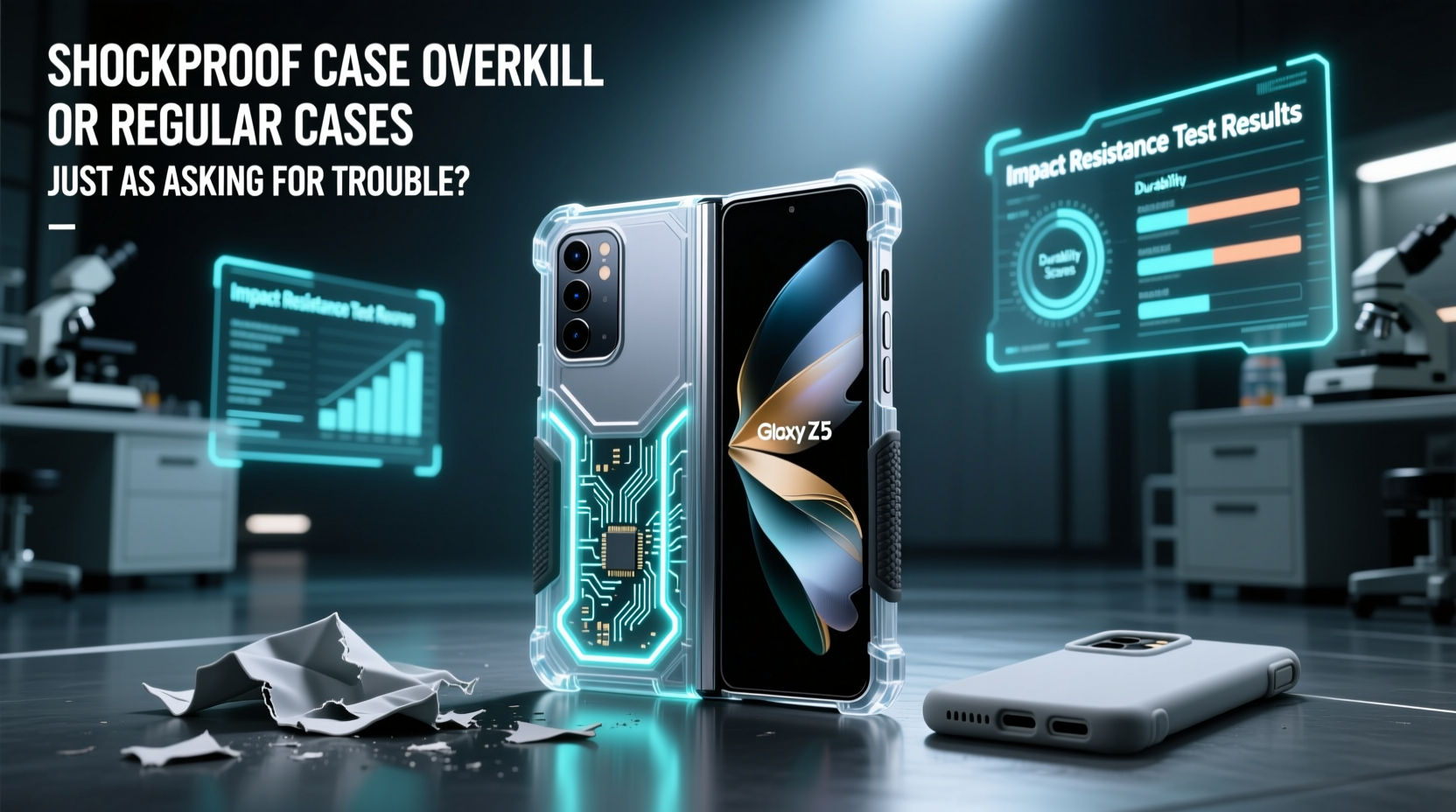
Foldable phones like the Galaxy Z Fold rely on precision mechanics and flexible materials that are fundamentally less resilient than rigid slabs. The main points of concern include:
- Hinge mechanism: Thousands of open-close cycles can lead to wear, debris accumulation, and misalignment.
- Inner folding display: Despite improvements, the crease remains a structural weak point vulnerable to punctures and pressure damage.
- Ultra-thin glass (UTG): While stronger than early plastic screens, UTG still scratches more easily and lacks the impact resistance of Gorilla Glass on flat phones.
- Outer cover screen: Smaller but still fragile, often made with Gorilla Glass Victus—but thinner due to design constraints.
Samsung officially rates the Z Fold for around 200,000 folds—equivalent to five years of average use. However, real-world conditions like dust, drops, and uneven pressure can drastically shorten that lifespan.
“Foldables require a new mindset in protection. You’re not just guarding against drops—you’re preserving mechanical integrity.” — David Chen, Mobile Device Durability Analyst at TechShield Labs
Shockproof vs. Regular Cases: A Practical Comparison
To understand whether a shockproof case is overkill, we need to compare what each type offers—and where they fall short.
| Feature | Regular Case | Shockproof Case |
|---|---|---|
| Drop Protection | Limited; may cushion minor falls from pocket height | High; reinforced corners, elevated edges, multi-layered padding |
| Hinge Coverage | Rarely covers or seals the hinge | Often includes partial shielding or dust deflectors |
| Screen Protection | No inner screen coverage; outer screen only | May include inner flap guards or raised bezels |
| Bulk & Weight | Minimal added thickness | Noticeably thicker, heavier feel |
| Price Range | $20–$50 | $40–$90+ |
| Dust Resistance | Poor; gaps around hinge invite debris | Moderate; better sealing reduces particle entry |
The data shows a clear trade-off: regular cases preserve aesthetics and slimness but offer minimal defense against the most common threats—drops and particulate damage. Shockproof models prioritize survival over sleekness.
A Real-World Scenario: One User’s Experience
Consider Mark, a field engineer who uses his Galaxy Z Fold 5 daily for site reports, video calls, and blueprint reviews. He initially opted for a minimalist leather folio case for its premium look. Within three months, he noticed a persistent flicker on the inner screen after accidentally setting the phone down on a concrete ledge. Upon inspection, a tiny grain of sand had lodged in the hinge, causing micro-scratches across the fold line.
He switched to a rugged OtterBox Defender-style case with full-wrap protection and sealed hinge coverage. Six months later, despite two accidental drops—one from waist height onto asphalt—the phone remained fully functional. The case absorbed impact, and the improved seal kept dust out.
Mark’s story illustrates a broader truth: context matters. For desk-bound users, a lightweight case might suffice. For anyone in dynamic environments, skimping on protection risks costly repairs or premature replacement.
When Is a Shockproof Case Overkill?
It’s fair to ask whether extreme protection undermines the very appeal of the Z Fold—its sleek, futuristic design. For some users, yes. Here’s who might find shockproof cases excessive:
- Home or office workers who rarely expose their phone to physical stress.
- Style-focused users prioritizing aesthetics and thinness over ruggedness.
- Those using the phone as a secondary device with limited daily handling.
However, “overkill” depends on behavior, not just environment. Even indoor users drop phones—on tile floors, stairs, or while closing bags. And unlike flat phones, foldables suffer compounding damage: a cracked outer screen might be replaceable, but internal display damage due to unsealed hinges can render the device unusable.
Step-by-Step Guide: Choosing the Right Case for Your Lifestyle
- Assess your daily routine: Do you work outdoors, commute heavily, or handle tools? High-risk environments demand higher protection.
- Evaluate past phone damage: Have you broken previous devices? If yes, assume the same habits apply.
- Check case features: Look for raised bezels, hinge shielding, MIL-STD-810G certification, and inner screen protection.
- Test fit and function: Ensure the case doesn’t interfere with folding, stylus storage, or wireless charging.
- Balance cost vs. risk: A $70 case is cheaper than a $400 screen repair. Weigh the investment accordingly.
Expert-Recommended Protection Checklist
Whether you choose a rugged or regular case, follow these best practices to maximize your Z Fold’s lifespan:
- ✅ Always use a screen protector (especially on the inner display)
- ✅ Clean the hinge weekly with a soft brush or compressed air
- ✅ Avoid placing the phone face-down or under pressure
- ✅ Keep the device away from sand, dust, and liquids
- ✅ Close the phone before putting it in pockets or bags
- ✅ Invest in Samsung Care+ or third-party insurance for screen coverage
Frequently Asked Questions
Can I use my Galaxy Z Fold without any case?
Technically, yes—but it’s strongly discouraged. Without a case, the phone has zero drop protection, and the hinge is fully exposed to lint and debris. Even minor impacts can cause permanent crease damage.
Do shockproof cases affect the folding mechanism?
Poorly designed ones might. However, reputable brands like OtterBox, Spigen, and Catalyst engineer their cases specifically for foldables, ensuring smooth opening and closing while maintaining protection.
Are screen protectors necessary if I have a good case?
Absolutely. Cases don’t prevent direct contact with keys, coins, or sharp objects inside pockets. A high-quality inner screen protector adds a crucial sacrificial layer, especially since the folding display cannot be replaced easily.
Final Verdict: Protection Isn’t Paranoia—It’s Prudence
Calling a shockproof case “overkill” for the Galaxy Z Fold overlooks the fundamental fragility built into its revolutionary design. While regular cases offer basic scratch resistance and modest drop cushioning, they do little to guard the hinge or inner screen—where failure is most likely and most costly.
For most users, especially those with active lifestyles, a well-engineered shockproof case isn’t excess—it’s a rational safeguard. It extends the usable life of a premium device, prevents avoidable damage, and preserves resale value. Yes, it adds bulk. But when weighed against the risk of a $400 repair or a bricked device, that trade-off becomes easy to justify.
The Galaxy Z Fold is a marvel of modern engineering. Treating it like a disposable phone defeats its purpose. Whether you opt for full ruggedization or a mid-tier hybrid case, one principle holds: consistent, intelligent protection is not optional—it’s part of responsible ownership.




 浙公网安备
33010002000092号
浙公网安备
33010002000092号 浙B2-20120091-4
Comments
No comments yet. Why don't you start the discussion?