
In the world of competitive multiplayer gaming, every advantage counts. From reflexes to strategy, players constantly seek ways to gain an edge. One often-debated topic is whether a dedicated gaming headset truly outperforms regular high-end headphones when it comes to sound quality and in-game performance. While both can deliver crisp audio, their design, functionality, and application differ significantly—especially in fast-paced online environments. Understanding these differences helps determine if upgrading to a gaming headset is worth it or if your premium music-focused headphones are already doing the job.
Understanding the Core Differences
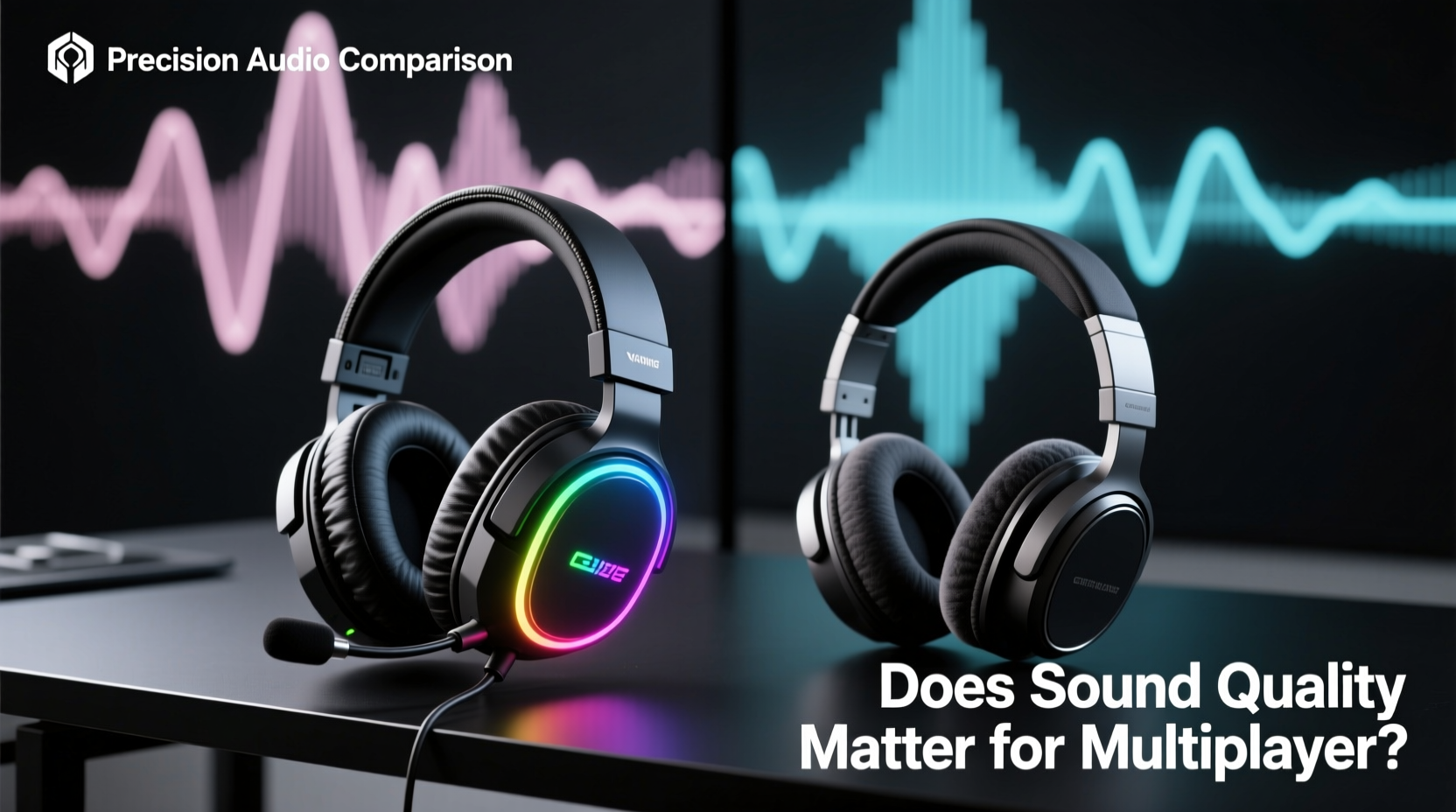
Gaming headsets and regular headphones serve overlapping purposes but are optimized for different experiences. Regular headphones—particularly audiophile-grade models—are engineered for accuracy, depth, and tonal balance. They aim to reproduce music as faithfully as possible, emphasizing frequency response, soundstage, and instrument separation. In contrast, gaming headsets prioritize spatial awareness, microphone integration, durability, and comfort during long sessions.
The key distinction lies in intent. A pair of high-fidelity headphones might reveal subtle nuances in a symphony, but that doesn’t always translate into hearing an enemy’s footsteps three rooms away in a first-person shooter. Gaming headsets are built with positional audio technologies like Dolby Atmos, DTS:X, or proprietary software enhancements that simulate 3D soundscapes—critical for detecting directionality in games.
Sound Quality: What Matters Most in Multiplayer?
When discussing \"sound quality\" in multiplayer contexts, it's essential to redefine what that means. For casual listeners, sound quality typically refers to richness, clarity, and dynamic range. But in gaming, especially competitive multiplayer, sound quality becomes about information retrieval—how accurately and quickly you can interpret auditory cues.
- Positional Accuracy: Can you tell if gunfire is coming from above, behind, or slightly to the left? This depends on stereo imaging and virtual surround processing.
- Clarity Under Load: During chaotic firefights with explosions, voice chat, and ambient noise, can you still distinguish critical sounds?
- Latency: Wired connections generally offer lower latency than Bluetooth, which is crucial for real-time reactions.
- Mic Monitoring: The ability to hear your own voice through the headset prevents shouting and improves team communication.
Many audiophile headphones excel in isolation but lack built-in support for surround simulation or mic integration. Conversely, even mid-tier gaming headsets often include software suites that enhance spatial perception—making them functionally superior in gameplay scenarios despite technically inferior drivers.
“Competitive gaming isn't about how good the music sounds—it's about how much tactical information you can extract from audio cues.” — Daniel Park, Audio Engineer at Competitive Gaming Labs
Feature Comparison: Gaming Headset vs Regular Headphones
| Feature | Gaming Headset | Regular Headphones |
|---|---|---|
| Integrated Microphone | Yes (often detachable or retractable) | Rarely; requires separate purchase |
| Surround Sound Support | Common (virtual or hardware-based) | Limited; may require third-party software |
| Comfort for Long Sessions | Designed for extended wear (memory foam, breathable materials) | Varies; some models cause ear fatigue |
| Durability & Build Quality | Reinforced hinges, flexible mics, rugged cables | Often delicate; focused on aesthetics |
| On-Ear Controls | Frequent (volume wheel, mute button, EQ toggle) | Sometimes present; less standardized |
| Audio Fidelity (Music/Non-Gaming Use) | Good to very good; not always reference-grade | Excellent; designed for critical listening |
| Platform Compatibility | Broad (PC, console, mobile via adapters) | May require dongles or DACs for full compatibility |
This comparison highlights a fundamental trade-off: versatility versus specialization. Regular headphones shine outside of gaming, offering unmatched listening pleasure for music, podcasts, or movies. However, they fall short when seamless voice communication and immersive 3D audio are required simultaneously—a standard expectation in modern multiplayer titles.
Real-World Example: The Tournament Scenario
Consider Alex, a semi-professional player competing in an online CS2 tournament. He owns a pair of Sennheiser HD 6XX audiophile headphones known for their expansive soundstage and neutral tuning. At home, he pairs them with a standalone boom mic and uses a high-end audio interface. His setup delivers studio-quality input and output—but introduces complexity.
During a crucial match, his teammate calls out an enemy flank from the right side. Due to slight latency between his audio chain and game engine, combined with suboptimal virtual surround configuration, Alex misjudges the direction by nearly 30 degrees. He turns too late and gets eliminated—costing his team the round.
Meanwhile, another player on the same team uses a mid-range wireless gaming headset with native 7.1 surround and low-latency USB transmission. Despite lower raw driver quality, the integrated system ensures precise directional cues and zero sync issues. That player consistently identifies threats earlier and contributes more kills.
This scenario illustrates that while pure sound fidelity is impressive, real-time performance under pressure often favors integrated, purpose-built solutions—even if they aren’t “better” in technical specs.
When Regular Headphones Make Sense
Not all gamers need a dedicated gaming headset. For those who value multi-functionality and already invest in high-quality audio gear, combining regular headphones with external accessories can be effective—provided certain conditions are met:
- You use a high-quality external microphone (e.g., Shure MV7 or Rode NT-USB).
- Your audio interface or sound card supports real-time spatial processing (like SteelSeries Sonar or NVIDIA Broadcast).
- You’re willing to manage multiple devices and software layers.
- You primarily play on PC, where customization options are abundant.
For console players, however, this approach becomes impractical. Most consoles don’t support plug-and-play combinations of third-party headphones and mics without adapters. Even then, surround processing is limited compared to PC platforms. In such cases, a compatible gaming headset remains the simplest and most reliable solution.
Actionable Checklist: Choosing the Right Option for You
- Do I play competitive multiplayer games where positioning is critical?
- Do I prefer a single-device solution with no extra peripherals?
- Am I playing mostly on console or PC?
- Do I also use my headphones heavily for music or media?
- Is microphone quality important for team coordination?
- Can I afford additional hardware (mic, interface, software)?
If you answered “yes” to the first three, a gaming headset is likely your best bet. If the last three resonate more, consider high-end headphones paired with professional audio tools.
Expert Tips for Maximizing Performance
Regardless of your choice, optimizing your setup enhances results. Here are proven strategies used by top-tier players and streamers:
- Use EQ Presets Wisely: Boosting mids and highs can make footsteps clearer without overwhelming bass-heavy explosions.
- Enable Mic Monitoring: Hearing your voice prevents yelling and keeps comms civil during intense matches.
- Update Firmware and Drivers: Manufacturers frequently release updates improving latency, battery life, and audio rendering.
- Test Surround Modes: Some virtual surround profiles add artificial reverb that distorts realism. Try toggling between stereo and 7.1 modes to see what feels most natural.
Frequently Asked Questions
Can I use regular headphones for gaming effectively?
Yes, especially on PC with proper software support. Pair them with a good microphone and spatial audio software (like Voicemeeter or Windows Sonic) to achieve near-gaming-headset performance. However, convenience and plug-and-play reliability favor dedicated headsets.
Does higher price mean better performance in multiplayer?
Not necessarily. A $300 audiophile headphone may sound richer in music, but a $100 gaming headset with accurate surround simulation and low latency will give you a competitive advantage. Prioritize features over brand prestige.
Are wireless gaming headsets laggy?
High-end wireless models (using 2.4 GHz RF or Bluetooth LE Audio) have negligible latency—often under 30ms, which is imperceptible in gameplay. Avoid standard Bluetooth for gaming, as it introduces delays unsuitable for fast-paced action.
Final Thoughts: Purpose Over Prestige
The debate isn’t about which device has “better” sound—it’s about which one serves your specific needs. In multiplayer gaming, situational awareness, communication efficiency, and consistent performance outweigh audiophile-grade fidelity. A gaming headset offers an all-in-one package tailored for interaction, immersion, and endurance. It bridges the gap between hearing and reacting—where milliseconds define victory or defeat.
That said, dismissing regular headphones entirely would ignore their strengths. For hybrid users who game occasionally and listen critically otherwise, investing in versatile, high-quality open-back or planar magnetic models makes sense—especially when augmented with external tools.
Ultimately, your choice should reflect how you play, communicate, and experience sound. Don’t chase specs blindly. Instead, test configurations, tweak settings, and prioritize responsiveness over resonance.




 浙公网安备
33010002000092号
浙公网安备
33010002000092号 浙B2-20120091-4
Comments
No comments yet. Why don't you start the discussion?