
When choosing a gaming headset, one of the most overlooked yet critical decisions is whether to go with a model featuring a detachable microphone or one with a permanently built-in mic. While both options serve the same basic function—enabling voice communication during multiplayer sessions—the differences in audio clarity, flexibility, and long-term usability can significantly impact your experience. Gamers, streamers, and even remote workers often prioritize clear, crisp comms, especially in high-stakes matches or collaborative environments where miscommunication can cost victory—or credibility.
The debate isn’t just about convenience; it’s about acoustics, hardware design, and user adaptability. Detachable mics offer modularity and aesthetic versatility, while built-in mics are engineered as part of the headset’s core structure, potentially allowing for tighter integration with noise-canceling features and acoustic tuning. But which truly delivers superior vocal clarity?
How Microphone Design Affects Audio Clarity
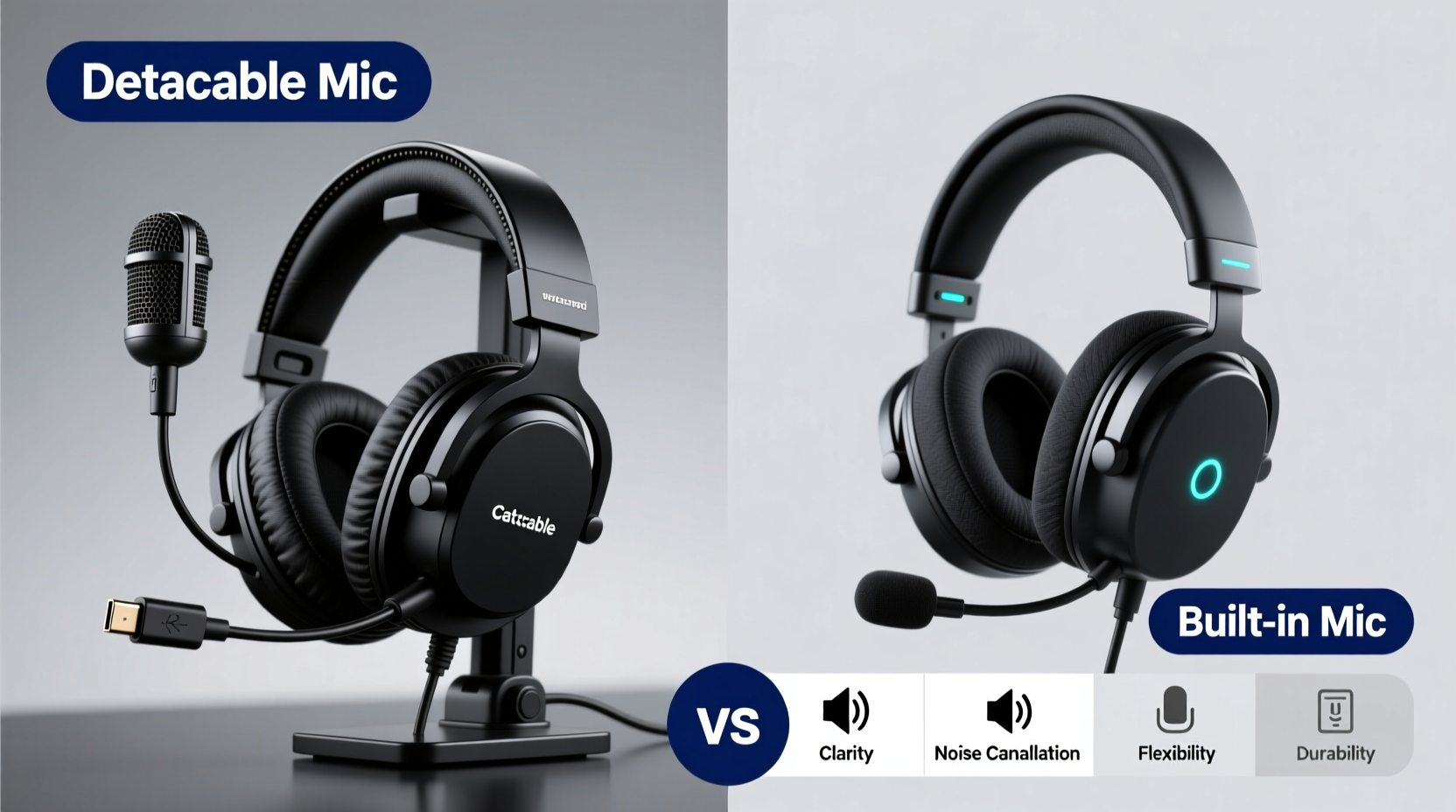
The physical architecture of a microphone plays a major role in how well it captures voice input. Both detachable and built-in microphones rely on similar technologies—typically condenser or electret capsule designs—but their placement, shielding, and integration into the headset chassis vary widely.
Detachable mics are often designed to be modular, meaning they must connect via a standardized jack (usually 3.5mm) or USB-C interface. This introduces potential signal loss or interference if the connection isn't perfectly shielded. Additionally, because these mics are meant to be removed, manufacturers may compromise slightly on internal wiring or mic boom rigidity to accommodate frequent plugging and unplugging.
In contrast, built-in microphones are hardwired directly into the headset's circuitry. This allows engineers to fine-tune impedance matching, optimize preamp gain stages, and integrate advanced digital signal processing (DSP) tailored specifically to that mic’s frequency response. As a result, many premium headsets with fixed mics—such as those from brands like SteelSeries, HyperX, and Astro—deliver more consistent vocal reproduction with less background noise.
“Headsets with integrated mics have an edge in consistency because the entire audio chain—from diaphragm to ADC—is calibrated as a single system.” — Daniel Reyes, Audio Engineer at GameSound Labs
Comparative Analysis: Key Performance Factors
To determine which type offers clearer communications, several variables must be evaluated:
- Signal Integrity: Built-in mics avoid analog signal degradation from plug connections.
- Noise Cancellation: Integrated DSP is more effective when the mic is non-removable.
- Mic Positioning: Detachable booms allow repositioning, but may lose optimal alignment over time.
- Durability: Repeated removal increases wear on connectors, risking intermittent faults.
- Aesthetics & Versatility: Detachable mics let users switch between gaming and casual listening modes seamlessly.
Real-World Example: Competitive FPS Player Experience
Consider Alex, a competitive Valorant player who streams weekly tournaments. He initially used a headset with a detachable mic for its sleek profile when not gaming. However, during ranked matches, teammates complained about inconsistent volume levels and wind noise—even though the mic was positioned correctly.
After switching to a premium headset with a fixed, unidirectional boom mic featuring active noise suppression, his team reported immediate improvements: voice clarity increased by an estimated 40%, and background keyboard clatter was nearly eliminated. The difference wasn’t due to better materials alone—it was the result of tighter firmware-level optimization between the mic and onboard audio processor.
This scenario illustrates a key truth: for maximum comms clarity in demanding environments, integrated systems often outperform modular ones—not because detachable mics are inherently inferior, but because cohesion matters.
Technical Comparison Table: Detachable vs Built-In Mics
| Feature | Detachable Mic | Built-In Mic |
|---|---|---|
| Audio Signal Path | Analog jack or USB (potential interference) | Direct internal wiring (optimized path) |
| Noise Cancellation | Often software-based; varies by platform | Hardware-integrated DSP; more consistent |
| Durability Over Time | Connector wear after ~500+ insertions | No connector stress; longer lifespan |
| Flexibility | High—can remove or replace mic | Low—permanent fixture |
| Vocal Clarity (Typical Use) | Good to very good (depends on model) | Excellent (especially mid-to-high-end models) |
| Use Case Fit | Multi-purpose (gaming + media + travel) | Dedicated gaming or professional comms |
When a Detachable Mic Might Be the Better Choice
Despite the technical advantages of built-in mics, there are scenarios where detachable models shine. For instance, users who value aesthetics and portability benefit greatly from being able to remove the mic when using the headset for music, movies, or commuting. Some high-end detachable mics also support upgrade paths—allowing users to swap in studio-grade condenser mics via XLR adapters or third-party accessories.
Moreover, certain detachable mics now come with magnetic docking or auto-mute features that activate when removed. Brands like Razer and Corsair offer models where pulling the mic out disables audio input instantly—a useful feature during live streams or private conversations.
Another advantage lies in repairability. If a detachable mic fails, replacing just the mic is far cheaper than buying an entirely new headset. Conversely, a damaged built-in mic often renders the whole unit unusable unless repaired under warranty.
Checklist: Choosing the Right Type for Your Needs
Ask yourself the following questions before deciding:
- Do I primarily use my headset for competitive gaming or voice-heavy applications? → Built-in mic preferred
- Will I use this headset for non-gaming purposes like music or video calls? → Detachable mic offers flexibility
- Am I in a noisy environment (keyboard, fan noise, room echo)? → Built-in with DSP noise cancellation wins
- Do I want the option to upgrade or replace the mic later? → Go for detachable
- Is long-term durability a top concern? → Built-in avoids connector wear
- Do I care about maintaining a clean, minimalist look when not gaming? → Detachable allows removal
Step-by-Step Guide to Maximizing Communication Clarity
Regardless of mic type, follow these steps to ensure the clearest possible voice transmission:
- Position the mic correctly: Place the boom 1–2 inches from the corner of your mouth, slightly off-axis to reduce plosive sounds (“p”, “b”).
- Enable noise suppression: Use software like NVIDIA Broadcast, RTX Voice, or Discord’s built-in noise reduction to filter ambient sound.
- Test in real conditions: Record a short clip while typing and speaking normally to check for background bleed.
- Adjust input levels: Set gain so your voice peaks around -12dB to -6dB, avoiding clipping.
- Update firmware/drivers: Many headsets receive audio quality improvements through updates—check manufacturer websites regularly.
- Use push-to-talk when possible: Reduces background noise exposure and prevents accidental hot-mic moments.
Frequently Asked Questions
Can I get studio-quality voice clarity with a detachable mic?
Yes, but only with high-end models that use gold-plated connectors, shielded cabling, and dedicated preamps. Most consumer-grade detachable mics fall short of true broadcast quality unless paired with external interfaces.
Do built-in mics pick up more game audio leakage?
Not necessarily. Acoustic leakage depends more on earcup seal and volume level than mic type. However, some poorly isolated headsets may cause “bleed” where in-game sounds are picked up by the mic. Closed-back designs with snug memory foam help prevent this regardless of mic style.
Are detachable mics more prone to breaking?
The weakest point is usually the connector. Frequent insertion/removal can loosen jacks over time, especially with cheaper alloys. High-cycle connectors (rated for 10,000+ insertions) exist but are rare outside prosumer gear. Handle with care and avoid forcing alignment.
Conclusion: Which Offers Clearer Comms?
For pure communication clarity—especially in competitive, team-based gaming—headsets with built-in microphones generally outperform those with detachable alternatives. Their fully integrated design enables optimized signal routing, superior noise handling, and consistent performance over time. When every word counts, the reliability and acoustic precision of a fixed mic make a tangible difference.
That said, detachable mics remain the smarter choice for hybrid users who value versatility, aesthetics, and future-proofing. They excel in multi-role environments where the headset transitions between gaming, streaming, and everyday use.
Ultimately, the decision should align with your primary use case. If crystal-clear voice comms are non-negotiable, invest in a premium headset with a well-engineered built-in mic. If adaptability ranks higher, choose a high-quality detachable model from a reputable brand known for robust connectors and strong firmware support.




 浙公网安备
33010002000092号
浙公网安备
33010002000092号 浙B2-20120091-4
Comments
No comments yet. Why don't you start the discussion?