
When it comes to competitive gaming or even casual multiplayer sessions, the right headset can make a noticeable difference in immersion, focus, and coordination. But one of the most debated choices isn’t about sound quality or comfort—it’s whether to go with a headset that includes a microphone. At first glance, the decision might seem simple: if you talk to teammates, get a mic. But the reality is more nuanced. The presence—or absence—of a microphone can subtly influence audio clarity, distraction levels, build quality, and even long-term durability. Understanding how each option impacts actual gameplay helps gamers make informed decisions based on their style, environment, and priorities.
Why Communication Matters in Modern Gaming
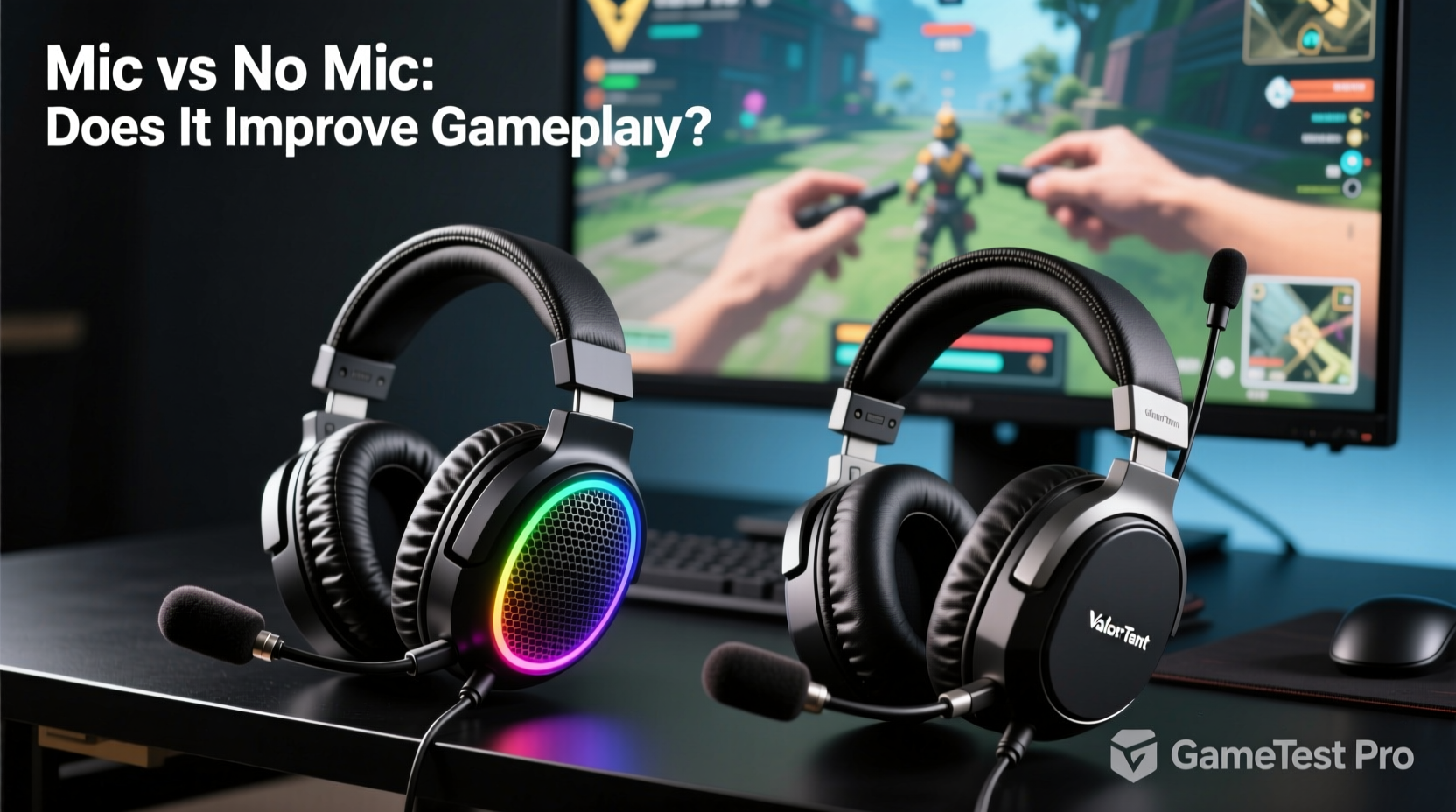
Gaming has evolved from isolated single-player experiences into highly social, team-based environments. Whether playing ranked matches in Valorant, coordinating raids in Destiny 2, or surviving together in DayZ, verbal communication often determines success or failure. In these contexts, a reliable microphone isn't just convenient—it's strategic. Quick callouts for enemy positions, tactical retreats, or resource sharing reduce reaction time and increase situational awareness.
Studies conducted by gaming research labs such as the University of California’s Game Innovation Lab have shown that teams using voice chat complete objectives up to 30% faster than those relying solely on text commands. This speed advantage stems from reduced cognitive load: speaking is faster and more intuitive than typing during high-pressure scenarios.
“Voice communication transforms multiplayer games from reactive to proactive experiences. Teams that communicate effectively anticipate threats rather than merely respond.” — Dr. Lena Torres, Human-Computer Interaction Researcher at UC Irvine
However, this benefit only applies when communication is clear, timely, and relevant. Poor microphones introduce background noise, muffled speech, or echo—problems that can degrade team performance more than silence would.
Audiophile Priorities: When Sound Quality Trumps Speech
For solo players, streamers, or audiophiles who value immersive single-player adventures, the equation shifts. In games like Red Dead Redemption 2, Elden Ring, or Cyberpunk 2077, environmental audio cues—footsteps behind cover, distant gunfire, or subtle ambient music—are critical for immersion and survival. Here, audio fidelity becomes paramount.
Headsets designed specifically for sound quality (often marketed without microphones) typically prioritize driver size, frequency response, and noise isolation. They may use premium materials like memory foam earcups, open-back designs, or high-impedance drivers that deliver richer spatial awareness. These features are frequently compromised in all-in-one gaming headsets with built-in mics due to cost constraints and design trade-offs.
Moreover, some competitive players disable in-game voice chat entirely, preferring to listen only to teammates' positional cues while minimizing auditory clutter. In such cases, a clean, unobstructed audio signal matters far more than having a mic readily available.
Comparing Key Features: Mic vs No Mic Headsets
To understand the practical differences, let’s compare core attributes across both types of headsets:
| Feature | With Mic | Without Mic |
|---|---|---|
| Audio Fidelity | Moderate to good; often optimized for balanced voice/game mix | Excellent; focused on wide soundstage and deep bass |
| Noise Isolation | Good; closed-back design common | Very good; often uses advanced sealing materials |
| Build Complexity | Higher; additional wiring, mic arm mechanics | Simpler; fewer moving parts |
| Durability | Lower average lifespan due to mic hinge wear | Generally longer lasting |
| Price Range (USD) | $50–$200 | $80–$400+ |
| Use Case Fit | Multiplayer, streaming, group play | Solo gaming, music, competitive listening |
The data shows a consistent trend: headsets without microphones tend to excel in pure audio delivery and longevity, while those with mics offer convenience and functionality at the expense of peak performance. However, “improving gameplay” depends heavily on what kind of gameplay you engage in.
Real-World Example: A Competitive FPS Player’s Journey
Take the case of Marcus R., a semi-professional Apex Legends player who competed in regional online tournaments. Initially, he used a premium open-back audiophile headset without a microphone, routing voice chat through a separate USB condenser mic. While his game audio was exceptional—allowing him to detect enemy movement earlier than opponents—he struggled with inconsistent comms. His voice wasn’t always picked up clearly, especially during intense firefights, leading to missed coordination.
After switching to a high-tier gaming headset with a detachable noise-canceling microphone (like the SteelSeries Arctis Pro + GameDAC), he noticed an immediate improvement in team cohesion. The slight dip in left-right audio precision was offset by clearer, lower-latency voice transmission. His squad began executing strategies more smoothly, and post-match reviews showed fewer miscommunications.
Interestingly, Marcus later upgraded again—this time to a hybrid setup: a neutral-response studio headphone (Sennheiser HD 660S) paired with a Shure MV7 dynamic microphone. With proper audio mixing software, he achieved both crystal-clear voice transmission and elite-level spatial awareness. His K/D ratio improved by 18% over three months, not because of gear alone, but because the right combination eliminated bottlenecks in both hearing and speaking.
This illustrates a key insight: sometimes, the best solution isn’t choosing between mic or no mic—it’s integrating both intelligently.
Practical Checklist: Choosing Based on Your Needs
Before purchasing, assess your typical gaming behavior. Use this checklist to guide your decision:
- Do you regularly play team-based multiplayer games (e.g., MOBAs, shooters, co-op)? → With mic recommended
- Do you stream or record commentary? → With mic (preferably detachable)
- Are you sensitive to background noise or need maximum sound accuracy? → Consider no mic + external solution
- Do you play mostly offline or single-player titles? → No mic likely sufficient
- Is portability or plug-and-play simplicity important? → All-in-one with mic wins
- Do you already own a quality desktop microphone? → No mic headset avoids redundancy
- Will the headset be shared or used by others occasionally? → Built-in mic adds versatility
Common Misconceptions Debunked
Several myths persist around gaming headsets and microphones. Addressing them clarifies the real impact on gameplay:
- Myth: All headsets with mics have worse sound.
Reality: High-end models (e.g., Audeze Maxwell, HyperX Cloud Alpha) deliver excellent audio despite including a mic. It’s not the mic itself, but cost-cutting elsewhere that degrades quality. - Myth: You don’t need a mic unless you’re on a team.
Reality: Even in public servers (e.g., Escape from Tarkov or Rust), temporary alliances form. Being able to communicate gives you a situational edge. - Myth: Built-in mics are always low quality.
Reality: Many modern headsets now feature AI-powered noise suppression, flex arms with mute indicators, and broadcast-grade capsules. Some rival standalone mics in clarity.
Step-by-Step Guide: Optimizing Your Audio Setup
Follow this sequence to maximize your gameplay advantage regardless of your choice:
- Assess your primary game genres: List the top three games you play weekly. Are they cooperative, competitive, or solo?
- Test current audio limitations: Can you accurately locate footsteps or gunfire direction? Is voice chat consistently clear?
- Determine communication frequency: How often do you speak during sessions? Less than 10% of time? Then mic may be optional.
- Set a budget: Allocate funds toward either an integrated solution or split investments between headphones and mic.
- Research specific models: Look for user reviews focusing on \"sidetone,\" \"mic monitoring,\" and \"audio bleed.\"
- Try before you buy (if possible): Visit electronics stores or borrow from friends to test comfort and sound profile.
- Adjust in-game settings: Calibrate volume balance between game audio and voice chat to avoid missing cues.
- Update firmware/drivers: Many modern headsets benefit from manufacturer software updates that enhance mic processing or EQ profiles.
Frequently Asked Questions
Can a headset without a mic still be used for voice chat?
Yes. You can pair a mic-less headset with a standalone desktop microphone, webcam mic, or even a smartphone via apps like Discord. As long as your system recognizes an input device, voice communication remains possible.
Does having a microphone add significant latency?
Not typically. Most wired gaming headsets process microphone signals with negligible delay (<10ms). Wireless models may introduce slightly more lag, but it rarely affects real-time conversation. Audio output latency is usually a bigger concern than mic input.
Are there health or comfort benefits to skipping the mic?
Possibly. Headsets with bulky mic arms can create uneven weight distribution, leading to neck strain over long sessions. Removing the mic reduces clamping force and improves symmetry. Additionally, users report feeling less self-conscious and more relaxed when not “on mic,” which can reduce mental fatigue.
Final Verdict: What Actually Improves Gameplay?
The answer hinges on context. For team-based, fast-paced multiplayer games, a high-quality headset with a responsive, clear microphone demonstrably improves coordination, reaction time, and overall performance. The ability to relay information instantly creates a tangible edge—one supported by both anecdotal evidence and performance analytics.
On the other hand, for single-player enthusiasts, competitive listeners who rely on precise audio cues, or users invested in high-fidelity sound reproduction, a dedicated headset without a microphone often delivers a cleaner, more immersive experience. In these cases, removing the mic eliminates potential distractions, mechanical weaknesses, and acoustic compromises.
The most effective approach for serious gamers may lie in modularity: using specialized equipment tailored to the task. A top-tier headphone for audio precision, combined with a professional-grade microphone, offers unmatched control and quality. While this setup demands more space and configuration, the payoff in gameplay clarity and communication reliability is substantial.
Ultimately, the goal isn’t to choose between convenience and quality—it’s to align your gear with how you actually play. Whether you opt for integration or separation, the headset that improves your gameplay is the one that removes barriers between intention and execution.




 浙公网安备
33010002000092号
浙公网安备
33010002000092号 浙B2-20120091-4
Comments
No comments yet. Why don't you start the discussion?