
A malfunctioning garage door is more than just an inconvenience—it can disrupt your morning routine, compromise home security, and even pose safety risks. Whether your door refuses to budge, only opens partially, or makes strange noises, most issues stem from a handful of recurring mechanical, electrical, or environmental causes. The good news: many common garage door problems can be diagnosed and resolved with basic tools and a bit of know-how. This guide breaks down the most frequent reasons your garage door won’t open, offers practical troubleshooting steps, and helps you decide when to call a professional.
1. Check the Power Source and Remote Operation
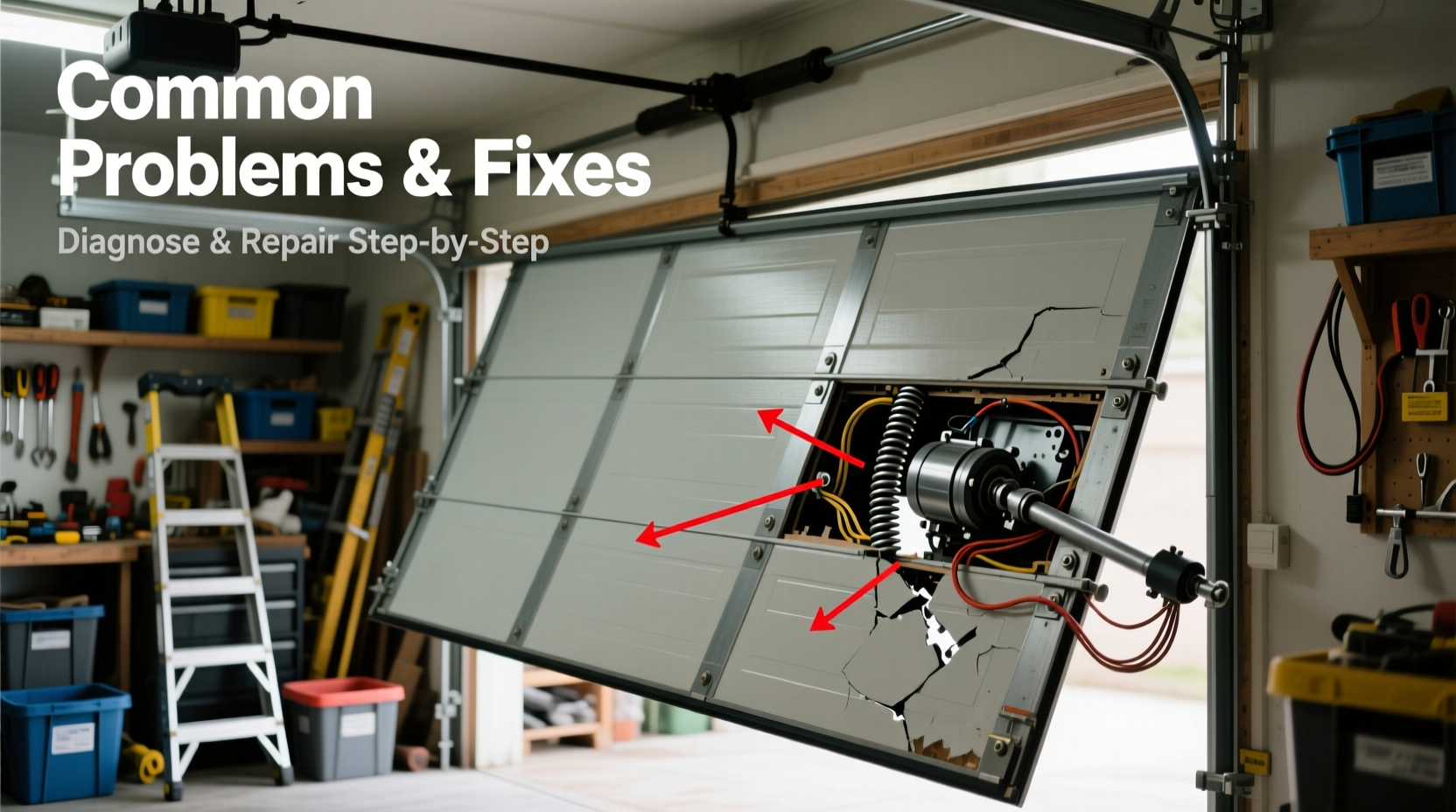
If your automatic garage door doesn’t respond to the remote or wall switch, the issue may lie in the power supply or control system. Start by verifying that the opener is receiving electricity. Check if the outlet powering the unit is functional—plug in a lamp or phone charger to confirm. If the opener has no lights or sound, the circuit breaker may have tripped.
Next, test the remote controls. Replace the batteries even if they seem to be working. Dirt or corrosion on the battery contacts can prevent proper connection. Press the remote button and watch for a response from the opener’s LED light. No reaction? Try reprogramming the remote according to the manufacturer’s instructions—this often resolves signal syncing issues.
Also inspect the wall-mounted control panel. A stuck or faulty button can prevent the door from opening. Press it firmly and listen for a click. If nothing happens, disconnect the opener from power, remove the cover, and check for loose wires or visible damage.
2. Inspect the Safety Sensors
Modern garage door openers are equipped with infrared safety sensors located near the base of each side of the door. These sensors detect obstructions and prevent the door from closing—or sometimes opening—if the beam is interrupted.
If one sensor’s indicator light is off or blinking, the alignment may be off. Misaligned sensors are one of the top reasons an automatic door won’t operate. Use a level or straight edge to ensure both sensors are pointing directly at each other. Clean the lens with a soft cloth to remove dust, cobwebs, or snow buildup.
| Sensor Light Status | Meaning | Action Required |
|---|---|---|
| Both green | Proper alignment | None |
| One red or off | Misalignment or obstruction | Realign or clean lenses |
| Flashing rapidly | Electrical fault or wiring issue | Check wiring or consult technician |
After adjusting, test the door. If the sensors still don’t communicate, inspect the connecting wires for cuts or rodent damage. Damaged wiring should be replaced immediately.
3. Manually Operate the Door to Diagnose Mechanical Issues
Disconnect the garage door opener using the pull cord (usually red) to switch to manual mode. Attempt to lift the door by hand. If it’s extremely heavy or won’t move at all, the problem is likely mechanical.
Common culprits include:
- Broken torsion or extension springs: These counterbalance the door’s weight. A broken spring makes the door nearly impossible to lift manually and dangerous to operate.
- Off-track rollers: If the door jumps the track, it will bind and stop moving. Never force it back—misaligned tracks require careful realignment.
- Worn rollers or hinges: Over time, plastic rollers crack and metal hinges corrode, increasing resistance.
“Over 70% of emergency garage door service calls involve spring failure or misalignment. These components carry extreme tension and should only be handled by trained technicians.” — Mark Reynolds, Certified Garage Door Technician with 15 years of field experience
If the door moves smoothly in manual mode but not with the opener, the issue is likely with the motor, gear assembly, or limit settings. Reconnect the opener and observe whether it attempts to run. A humming sound without movement suggests a stripped gear or binding mechanism.
4. Step-by-Step Troubleshooting Guide
Follow this logical sequence to identify and resolve the root cause:
- Verify power: Confirm the opener is plugged in and the circuit breaker is on.
- Test remotes and wall switch: Replace batteries and reprogram if needed.
- Check safety sensors: Ensure both lights are steady and aligned.
- Disconnect opener and test manually: Assess weight and smoothness of operation.
- Inspect tracks and rollers: Look for dents, debris, or misalignment.
- Listen for unusual sounds: Grinding may indicate gear wear; loud banging could mean spring failure.
- Examine weather conditions: Ice, snow, or extreme cold can freeze components or increase resistance.
5. Environmental and Seasonal Factors
Temperature fluctuations and moisture play a bigger role than many homeowners realize. In winter, ice can form along the bottom seal or inside the tracks, effectively locking the door in place. Snow piled against the door prevents it from lifting properly. Clear any accumulation before attempting to open.
In summer, high humidity can cause wooden doors to swell, increasing drag. Metal components may expand slightly, leading to binding. Regular maintenance—such as sealing wood doors and checking hardware tightness—can mitigate these seasonal challenges.
One homeowner in Minnesota reported her garage door failing every January. After inspection, it was discovered that meltwater from the roof refroze under the door overnight, creating a solid ice bond. Installing a small heat cable along the threshold eliminated the issue.
Real Example: The Case of the Silent Opener
Jamie noticed her garage door wouldn’t respond to the remote one Tuesday morning. The wall switch light was on, but pressing it did nothing. She checked the circuit breaker—fine. Tried a new battery in the remote—still no response. Then she looked up and saw the opener’s LED was blinking in a pattern: two flashes, pause, two flashes.
Consulting the manual, she learned this indicated a sensor communication error. She found that a spider had built a web across the left sensor. After cleaning both lenses and ensuring alignment, the door opened normally. A five-minute fix saved a $150 service call.
When to Call a Professional
While many garage door issues are DIY-friendly, some situations demand expert intervention:
- Visible signs of spring damage (gap in torsion spring or sagging extension spring)
- Door falls abruptly when disengaged
- Opener runs but chain or belt doesn’t move
- Electrical issues beyond reset or fuse replacement
- Repeated sensor errors after realignment
Torsion springs are under high tension—up to 150 pounds of force—and improper handling can result in serious injury. According to the U.S. Consumer Product Safety Commission, thousands of garage door-related injuries occur annually, many involving do-it-yourself spring repairs.
FAQ
Why does my garage door only open halfway?
This is often due to misaligned sensors, worn rollers, or incorrect travel limits in the opener settings. Adjust the \"open limit\" setting on the motor unit or inspect for obstructions in the track.
Can I open the garage door if the power is out?
Yes. Most automatic systems include a manual release cord. Pull it to disengage the opener, then lift the door by hand. Keep the door balanced and never attempt this if springs are damaged.
How often should I maintain my garage door?
Perform a full inspection every six months. Lubricate moving parts, tighten hardware, test balance, and clean sensors. An annual professional tune-up can extend the system’s lifespan by years.
Conclusion
A garage door that won’t open is rarely a total mystery. By systematically checking power, sensors, mechanical components, and environmental factors, most homeowners can restore function quickly and safely. Regular maintenance not only prevents breakdowns but also enhances reliability and security. Don’t wait for a freezing morning or a late-night return to discover a hidden flaw. Take action now—inspect your system, perform basic upkeep, and keep your garage accessible year-round.




 浙公网安备
33010002000092号
浙公网安备
33010002000092号 浙B2-20120091-4
Comments
No comments yet. Why don't you start the discussion?