
When it comes to premium multisport GPS watches, Garmin’s Fenix 7 and Epix stand at the top of the lineup. Both are built for endurance athletes, outdoor adventurers, and tech-savvy users who demand precision, durability, and advanced health tracking. The key difference? The Epix features a vibrant AMOLED display, while the Fenix 7 uses a high-resolution memory-in-pixel (MIP) transflective LCD. This distinction sparks a critical debate: Is the superior visual experience of the AMOLED screen worth the noticeable reduction in battery life?
The answer isn’t straightforward. It depends on your priorities—whether you value crisp visuals and deep blacks over extended runtime, especially during long hikes, ultra-marathons, or backcountry expeditions where charging isn’t an option.
Display Technology: AMOLED vs MIP LCD
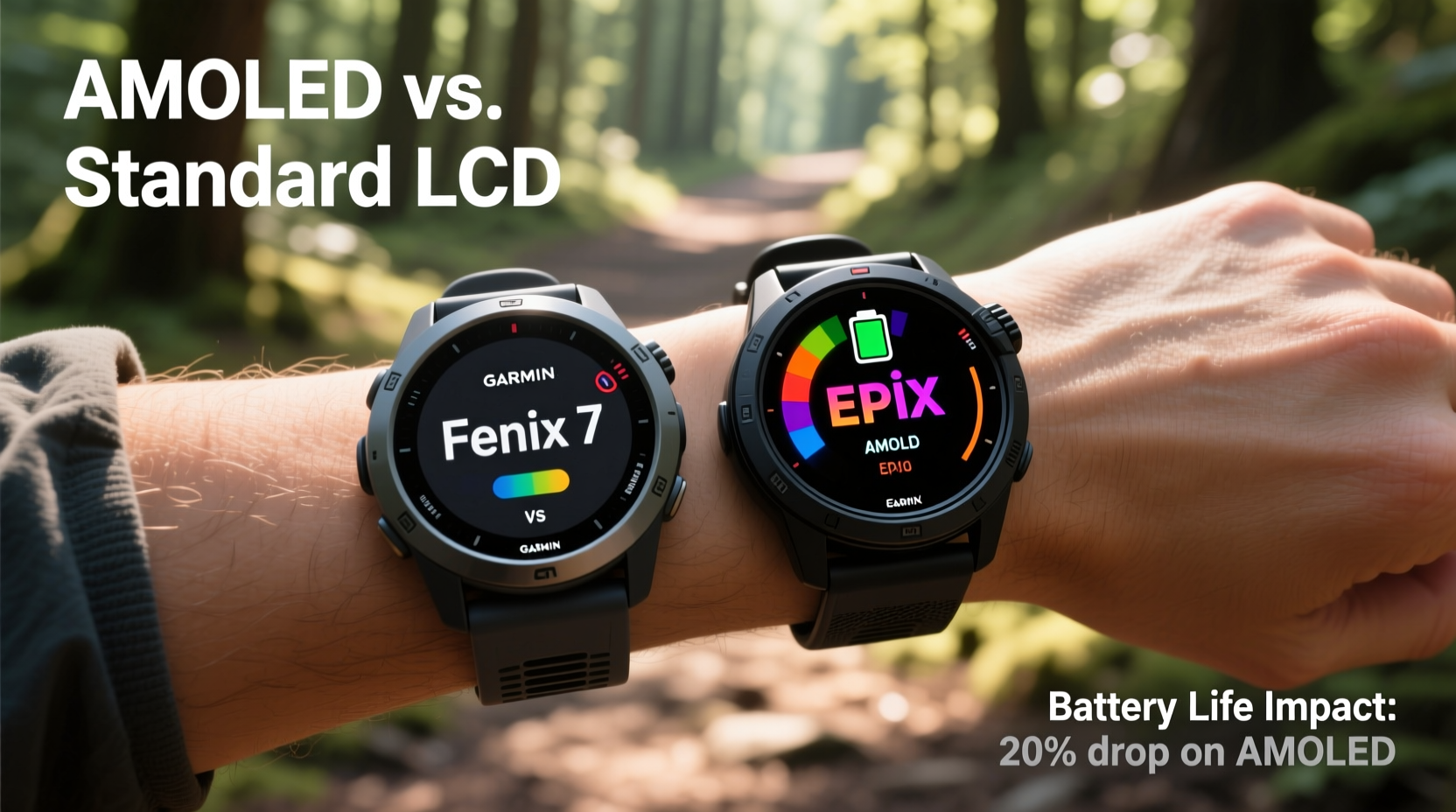
The most significant difference between the Garmin Fenix 7 and Epix lies in their displays. The Epix uses an AMOLED (Active-Matrix Organic Light-Emitting Diode) screen, known for its rich colors, true blacks, and excellent contrast. AMOLED pixels emit their own light, meaning black pixels are completely off, enhancing both image quality and energy efficiency in dark-themed interfaces.
In contrast, the Fenix 7 relies on a MIP LCD with a transflective design. While not as vivid, this screen is engineered for maximum sunlight readability and low power consumption. It reflects ambient light rather than relying solely on a backlight, making it exceptionally clear in direct sun—ideal for mountain climbers and trail runners.
AMOLED screens deliver a smartphone-like experience on your wrist—perfect for users who appreciate aesthetics and enjoy customizing watch faces with bold visuals. However, that luxury comes at a cost: higher power draw, particularly when displaying bright content or using always-on mode.
Battery Life Comparison: Real-World Implications
Garmin officially rates the Fenix 7 and Epix with similar dimensions and feature sets, but battery performance diverges sharply due to the display type.
| Model | Smartwatch Mode | GPS Mode (Typical) | UltraTrac Mode |
|---|---|---|---|
| Fenix 7 (Large) | Up to 25 days | Up to 37 hours | Up to 76 hours |
| Epix (Gen 2, Large) | Up to 16 days | Up to 24 hours | Up to 48 hours |
These numbers reveal a consistent 30–40% reduction in battery life across all modes for the Epix. For daily users who charge nightly, this may not matter. But for thru-hikers, expedition leaders, or ultrarunners covering 100-mile races, every hour counts.
Consider a real-world scenario: A runner preparing for the Western States 100, a grueling 100-mile trail race through the Sierra Nevada. They plan to use GPS, music storage, and continuous heart rate monitoring. With the Fenix 7, they could complete the race without recharging. The Epix, however, might require a mid-race charge via a portable battery pack—an added logistical burden.
“Battery reliability can be the difference between staying on course and losing navigation in remote terrain.” — Dr. Lena Torres, Outdoor Safety Researcher, National Institute of Wilderness Medicine
Performance and Feature Parity
Outside the display and battery, the Fenix 7 and Epix are nearly identical. Both models include:
- Multi-band GNSS for precise location tracking
- Advanced training metrics (Training Status, Load Focus, Recovery Time)
- Satellite communication compatibility (via Garmin satiq)
- Music storage and Bluetooth headphones support
- Health monitoring: Pulse Ox, HRV, sleep score, stress tracking
- TopoActive maps, ski resorts, and golf course data
- Same rugged titanium or stainless steel build options
The software experience is also indistinguishable. You get the same menu layout, widget system, Connect IQ support, and voice assistant integration. Custom watch faces appear more vibrant on the Epix, but functionality remains unchanged.
This parity means the decision ultimately hinges on two factors: how much you value screen quality, and how often you can realistically charge your device.
Who Benefits Most from the Epix’s AMOLED Screen?
Urban professionals, fitness enthusiasts with regular charging access, and users who prioritize aesthetics will likely prefer the Epix. The AMOLED display enhances readability in low-light environments—like dimly lit gyms or evening commutes—and supports deeper personalization.
Additionally, those who use their watch as a lifestyle device—checking messages, viewing calendar alerts, or navigating city streets—will appreciate the modern look and feel of the AMOLED interface.
Who Should Stick with the Fenix 7?
Athletes engaged in multi-day adventures, military personnel, search-and-rescue operators, and anyone venturing beyond cell service should lean toward the Fenix 7. Its extended battery provides peace of mind when resupply isn’t possible.
Moreover, the MIP display performs better under polarized sunglasses and maintains clarity even at extreme viewing angles—critical during fast-paced activities like cycling or skiing.
Charging Habits and Lifestyle Fit
Your daily routine plays a major role in determining which watch suits you best. Consider the following checklist to evaluate your needs:
Choose the Epix if you:
- Charge your devices every night
- Spend significant time indoors or in urban settings
- Prioritize screen vibrancy and modern aesthetics
- Use your watch primarily for workouts under 6 hours
- Enjoy rotating custom watch faces with animations
Choose the Fenix 7 if you:
- Go days without charging access
- Train or travel in direct sunlight
- Participate in ultras, bikepacking, or backpacking trips
- Value maximum GPS longevity
- Wear polarized lenses frequently
For many users, the Fenix 7 offers a more resilient tool, while the Epix leans into being a premium wearable experience. Neither is objectively better—it’s about alignment with your lifestyle.
Mini Case Study: Trail Guide in Patagonia
Javier Mendez, a certified wilderness guide based in Chilean Patagonia, tested both watches during a 10-day trek across the Dientes Circuit on Navarino Island. Conditions included fog, wind, rain, and limited daylight.
He wore the Epix for the first five days, relying on TopoActive maps and GPS navigation. Despite loving the screen clarity in camp, he noticed the battery dropped faster than expected—especially when using pulse oximeter tracking at high elevation. By day four, he was conserving power by disabling wrist-based heart rate.
On the return leg, he switched to the Fenix 7. Though the screen lacked the pop of AMOLED, it remained perfectly readable in misty conditions and consumed far less power. He completed the journey with 30% battery remaining, compared to the Epix, which would have died by day six under the same settings.
“I’ll keep the Epix for city use and shorter hikes,” Javier said. “But when I’m deep in the backcountry, the Fenix 7 gives me confidence I won’t lose navigation halfway through.”
Step-by-Step: How to Decide Which Watch Is Right for You
Follow this timeline to make an informed choice:
- Week 1: Assess Your Typical Usage
Track how often you charge your current watch, what activities you log, and whether you rely on GPS duration. - Week 2: Simulate Real-World Scenarios
Plan a weekend trip without charging access. Use your current device in GPS mode to gauge typical drain. - Week 3: Evaluate Display Preferences
Compare AMOLED vs MIP screens in person if possible. Visit a retailer or borrow from a friend. - Week 4: Define Your Priorities
List what matters most: battery, brightness, color depth, or weight. Rank them. - Final Decision
If battery and reliability rank above screen beauty, go Fenix 7. If you want a luxury smartwatch feel and charge daily, choose Epix.
FAQ
Can I turn off the AMOLED screen on the Epix to save battery?
No, you cannot disable AMOLED technology itself, but you can switch to a simpler watch face, reduce screen brightness, and disable the always-on display to significantly improve battery life.
Is the AMOLED screen more fragile than the Fenix 7’s display?
Both screens are protected by sapphire glass on higher-end models and are equally scratch-resistant. However, AMOLED panels can suffer from burn-in over time if static elements (like digital watch faces) are used constantly. Garmin mitigates this with pixel shifting, but it’s still a consideration for long-term ownership.
Does the Fenix 7 have any advantages beyond battery life?
Yes. The MIP display is more energy-efficient in bright environments, requires no backlight in daylight, and maintains readability at extreme angles. It also generates less heat and performs better in sub-zero temperatures where AMOLED responsiveness can lag.
Expert Insight: Balancing Innovation and Utility
“The outdoor tech market is split between utility-first and experience-first users. The Fenix represents the former; the Epix, the latter. There’s no right path—only the right fit for your environment.” — Mark Renlund, Senior Product Analyst at Wearable Insights Group
This duality reflects a broader trend in wearable design. As consumers demand more from their devices, manufacturers must balance innovation with practicality. Garmin has chosen not to force a compromise by offering two distinct models within the same ecosystem.
Conclusion: Making the Choice That Suits Your Journey
The Garmin Fenix 7 and Epix represent two philosophies of outdoor technology. The Fenix 7 is a tool—rugged, efficient, and dependable. The Epix is a statement—sleek, vivid, and immersive. Whether the AMOLED screen is worth the battery hit depends entirely on how and where you use your watch.
If your adventures span multiple days without access to power, or if you operate in harsh lighting conditions, the Fenix 7’s superior battery and sunlight-readable display make it the smarter choice. But if you value visual richness, modern design, and daily charging convenience, the Epix delivers a premium experience that justifies its trade-offs.
Rather than chasing specs, consider your actual usage. Align your purchase with your real-life patterns, not hypothetical ones. The best watch isn’t the one with the highest numbers—it’s the one that stays powered, functional, and useful when you need it most.




 浙公网安备
33010002000092号
浙公网安备
33010002000092号 浙B2-20120091-4
Comments
No comments yet. Why don't you start the discussion?