
When choosing a smartwatch for hiking, two names dominate the conversation: the Garmin Fenix series and the Apple Watch Ultra. Both are premium devices built with outdoor adventurers in mind, but they serve different philosophies. The Garmin Fenix prioritizes endurance, ruggedness, and dedicated outdoor metrics, while the Apple Watch Ultra brings seamless integration, modern design, and rich app support to the wilderness. But for hikers, one question keeps resurfacing: Do you really need the multi-day battery life of the Fenix, or is the Apple Watch Ultra’s 36-hour charge sufficient?
The answer depends not just on your hiking style, but on how deeply you rely on technology during your time in the backcountry.
Battery Life: The Core Difference
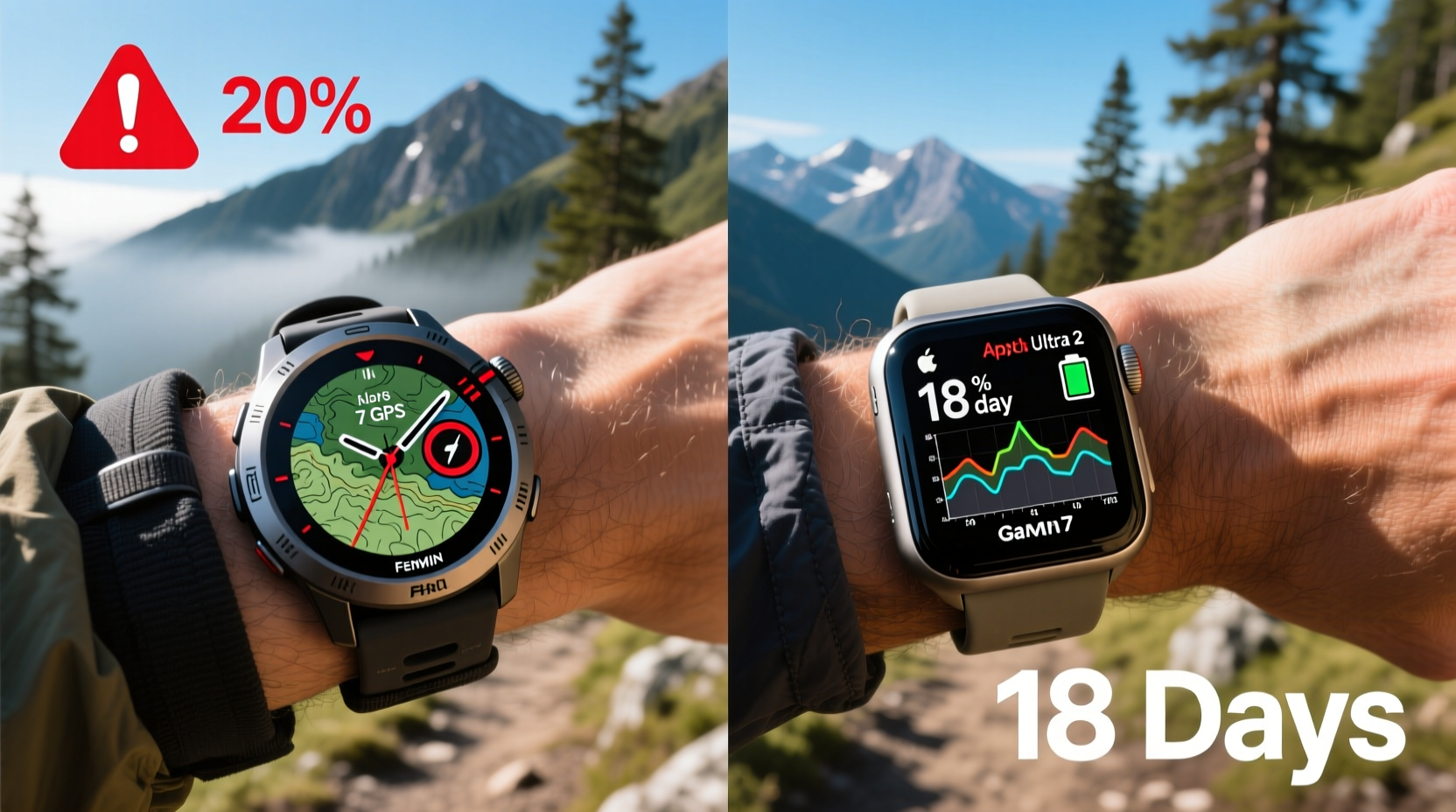
The most glaring difference between the Garmin Fenix and the Apple Watch Ultra lies in battery longevity. The Garmin Fenix 7 (and newer models like the Fenix 7 Pro) can last up to 21 days in smartwatch mode and 57 hours using GPS-only tracking. In expedition mode—where only essential data is logged—it can stretch beyond two weeks. This kind of endurance makes it ideal for thru-hikers, backpackers, and those venturing into remote areas without access to power.
In contrast, the Apple Watch Ultra promises up to 36 hours under normal use, dropping to about 13–18 hours when actively using GPS and cellular. While that’s impressive for an Apple device, it pales next to the Fenix. For weekend hikes or day trips, this may be more than enough. But for anything longer, the Ultra demands planning—and often a portable charger.
Design and Durability: Built for the Elements
Both watches are engineered for tough conditions, but their construction reflects different priorities. The Garmin Fenix uses a fiber-reinforced polymer case with sapphire glass and titanium bezels on higher-end models. It's MIL-STD-810 rated for thermal, shock, and water resistance (up to 100 meters), making it resilient in extreme environments.
The Apple Watch Ultra, meanwhile, features a custom titanium case, flat sapphire front crystal, and a deeper water rating (up to 100 meters). Its design includes a unique Action button, useful for quickly starting workouts or triggering flashlight functions mid-trail. While both survive drops and downpours, the Fenix feels more like a field instrument; the Ultra, though rugged, retains the sleekness of consumer electronics.
For long-term reliability in harsh terrain—think alpine ridges, river crossings, or desert scrambles—the Fenix’s no-nonsense build offers peace of mind. The Ultra holds up well but carries a slightly higher risk of cosmetic damage due to its polished finish and protruding screen edges.
Navigation and Trail Features
Hikers depend on accurate navigation, especially when trails disappear or weather turns. Here, Garmin shines. The Fenix includes full-color topographic maps, route planning with turn-by-turn directions, breadcrumb tracking, and advanced waypoint management. It supports multiple GNSS systems (GPS, GLONASS, Galileo), improving location accuracy in dense forests or deep canyons.
The Apple Watch Ultra runs third-party apps like Gaia GPS and AllTrails for offline maps, but lacks native topographic mapping. You must preload routes via iPhone, and navigation cues are less detailed. While functional, it doesn’t offer the same level of autonomous trail guidance as the Fenix.
Garmin also provides specialized modes for hiking, climbing, skiing, and even wildlife tracking. These include altitude acclimatization alerts, storm predictors based on barometric pressure changes, and sunrise/sunset timers—all accessible without touching your phone.
“On extended backcountry trips, having predictive weather and elevation profiles saved directly on my watch has prevented several dangerous situations.” — Daniel Reyes, Wilderness Guide and NOLS Instructor
Smart Features and Ecosystem Integration
If you value connectivity, the Apple Watch Ultra excels. It supports cellular calling, messaging, emergency SOS via satellite (on compatible plans), and seamless handoff with your iPhone. Notifications, music streaming, and health tracking sync instantly. For urban hikers or those who stay within range of civilization, this ecosystem is unmatched.
The Fenix, while capable of basic notifications and music storage, operates more independently. It doesn’t support voice calls or real-time messaging. However, its strength lies in self-sufficiency: once you leave service, the Fenix continues logging every metric, navigating complex routes, and monitoring vital signs without missing a beat.
Apple’s Health app offers richer insights into recovery, sleep, and heart rate variability, integrating seamlessly with other Apple devices. Garmin Connect is robust but less intuitive, requiring more manual interpretation. That said, Garmin’s Body Battery energy monitor and hydration logging are purpose-built for endurance athletes.
Real-World Use Case: A Week-Long Trek in the Sierra Nevada
Consider Sarah, an experienced backpacker embarking on a seven-day loop through the John Muir Trail. She carries minimal gear and relies on her watch for navigation, safety alerts, and fitness tracking.
With the Apple Watch Ultra, she preloads maps via Gaia GPS and brings a compact solar charger. On day three, clouds roll in early. Her watch battery drops below 30% by afternoon. She disables non-essential features—no heart rate monitoring, dimmed screen, no notifications. By day five, despite careful conservation, she’s forced to skip GPS logging during a critical off-trail section to preserve battery for emergencies.
Her friend Mark uses a Garmin Fenix 7 Pro. He starts the trip at 100%, uses full GPS + multi-band tracking throughout, checks weather forecasts daily, and still has 40% left on day seven. No charging required. His route logs remain continuous, and he receives a storm alert 90 minutes before rain hits—time enough to secure his tent.
This scenario illustrates a key truth: battery life isn’t just convenience—it’s operational integrity. When decisions hinge on accurate location and environmental data, consistent power matters.
Feature Comparison Table
| Feature | Garmin Fenix 7 Pro | Apple Watch Ultra |
|---|---|---|
| Battery Life (Smartwatch Mode) | Up to 21 days | Up to 36 hours |
| GPS-Only Tracking | Up to 57 hours | Up to 18 hours |
| Topo Maps (Offline) | Yes, full-color, preloaded | Limited (via third-party apps) |
| Cellular Calling | No | Yes (on cellular model) |
| Emergency SOS | Satellite messaging (via partner services) | SOS via satellite (U.S./Canada) |
| Durability | MIL-STD-810 certified | Rugged titanium, splash/water resistant |
| Health & Recovery Metrics | Body Battery, HRV status, Hydration | Advanced sleep, mindfulness, cycle tracking |
| Ecosystem Sync | Garmin Connect (cross-platform) | iOS only, deep Apple integration |
Who Should Choose Which Watch?
Choose the Garmin Fenix if:
- You hike for multiple days without access to power.
- You want standalone navigation with topographic maps.
- You prioritize battery longevity over smart features.
- You engage in mixed outdoor sports (climbing, skiing, swimming).
- You prefer a tool-first mentality: function over form.
Choose the Apple Watch Ultra if:
- You primarily day-hike or take short overnight trips.
- You’re deeply embedded in the Apple ecosystem.
- You value cellular connectivity and emergency texting.
- You want a stylish watch that transitions from trail to town.
- You already carry a power bank or aren’t worried about charging.
Step-by-Step: How to Decide Based on Your Hiking Style
- Assess your typical trip length: Day hikes? Weekend trips? Multi-week expeditions? Longer trips favor the Fenix.
- Evaluate charging access: Will you have solar panels, hostels, or car access? Frequent charging reduces the Ultra’s disadvantage.
- Map your navigation needs: Do you follow well-marked trails, or do you navigate off-route frequently? Off-trail demands better onboard mapping.
- Consider safety requirements: Are you alone in remote areas? Satellite communication capability becomes critical.
- Review your tech habits: Do you need texts and calls, or can you disconnect? The Ultra blurs work-life-trail boundaries.
- Set your budget: Both start around $700–$900, but accessories (solar chargers, bands, map updates) add up differently.
Frequently Asked Questions
Can I extend the Apple Watch Ultra’s battery life on hikes?
Yes, but with trade-offs. Turn off Always-On Display, disable heart rate monitoring between intervals, lower brightness, and avoid background refresh. Using Workout mode with GPS-only (not cellular) extends life. Still, expect no more than 20–24 hours max under optimized settings.
Does the Garmin Fenix lack modern smartwatch features?
It does, intentionally. No voice assistant, limited app store, no native music streaming. But it supports music downloads from Spotify and Deezer for offline playback. Notifications work but require an iPhone/Android phone nearby. If you want a true “smart” experience, the Fenix won’t replace your phone.
Is the Apple Watch Ultra worth it for casual hikers?
Absolutely. For weekend trails, gym sessions, and city walks, the Ultra delivers excellent value. Its bright display, crash detection, and seamless iOS integration make it a versatile companion. Just don’t expect it to replace a dedicated outdoor GPS unit on serious treks.
Final Verdict: Do You Really Need the Battery Life?
Yes—if you spend more than two days away from power sources, venture off-grid, or rely on continuous GPS tracking. The Garmin Fenix’s battery isn’t just a number; it enables uninterrupted data collection, safer navigation, and reduced cognitive load. When your watch dies mid-ascent, you lose more than convenience—you lose situational awareness.
No—if your hikes are short, well-connected, and supported by regular charging. The Apple Watch Ultra offers a compelling blend of ruggedness and smart functionality. For many modern hikers who treat the trail as part of a broader active lifestyle, it strikes the right balance.
The deeper question isn’t about specs—it’s about philosophy. Do you see your watch as a survival tool or a lifestyle extension? The Fenix answers the former; the Ultra, the latter. Neither is wrong. But in the mountains, where margins are thin and conditions shift fast, extra battery isn’t luxury—it’s insurance.




 浙公网安备
33010002000092号
浙公网安备
33010002000092号 浙B2-20120091-4
Comments
No comments yet. Why don't you start the discussion?