
Patterns do more than decorate—they shape perception. When choosing between geometric and floral dresses, many assume it’s purely about personal taste. But in reality, the pattern type influences silhouette, proportion, and even psychological impression. The right choice can elongate your frame, draw attention to your best features, or create balance where needed. Understanding how geometric and floral prints interact with the body allows for smarter styling decisions that go beyond trend-chasing.
The Psychology of Pattern Perception
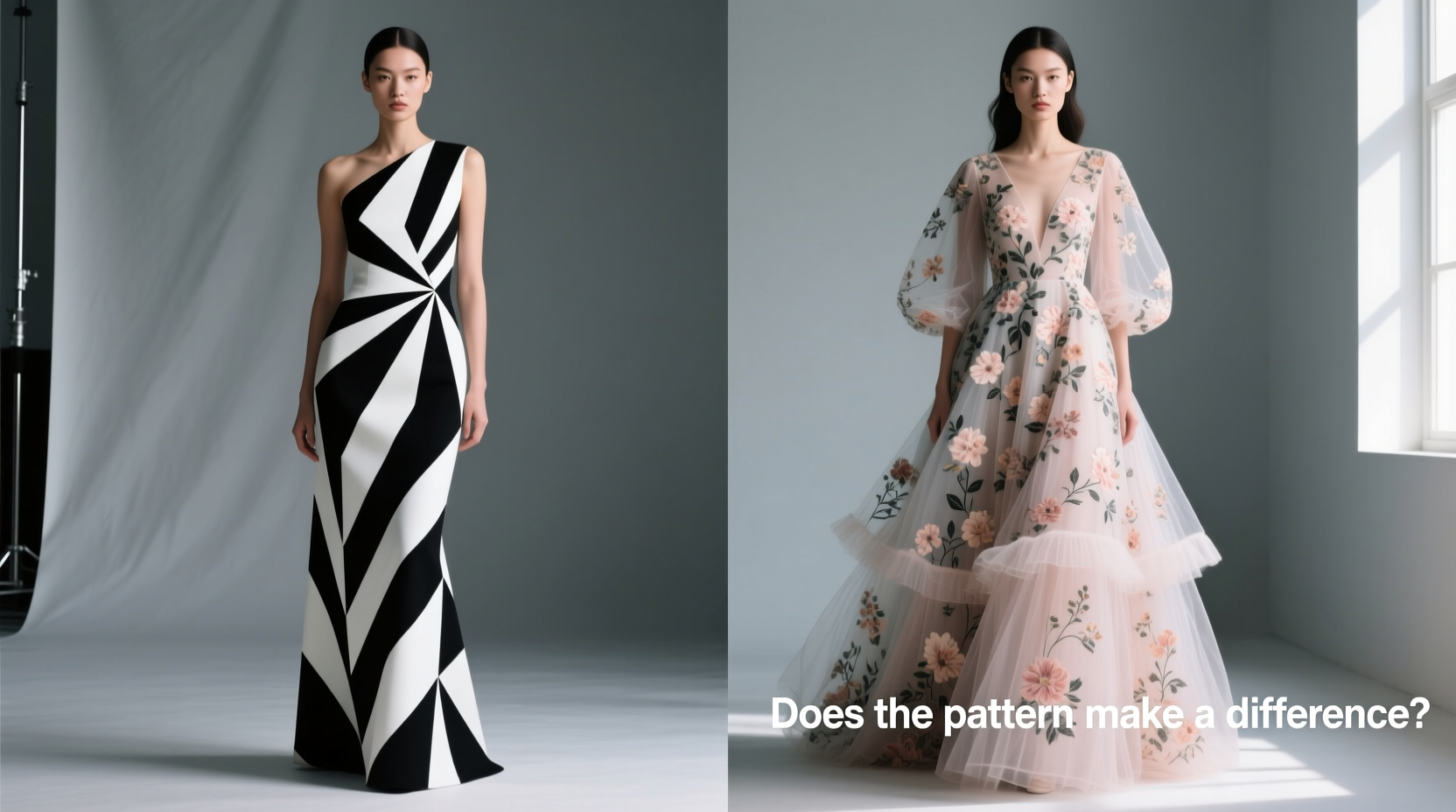
Visual processing begins before we’re consciously aware of what we see. Patterns trigger immediate associations—order, chaos, softness, structure—that influence how others perceive us and how we feel in our clothing. Geometric patterns, with their clean lines and repetition, suggest precision and control. They signal modernity and intentionality. Floral prints, by contrast, evoke nature, romance, and fluidity. These emotional cues subtly shift the narrative around your presence.
But beyond mood, patterns affect spatial perception. Vertical stripes lengthen; horizontal ones widen. Large florals can dominate a small frame, while tiny geometrics might get lost on taller figures. It’s not just about aesthetics—it’s optical engineering.
“Pattern isn’t decoration—it’s directional language. It tells the eye where to go, what to emphasize, and how to interpret shape.” — Lila Nguyen, Fashion Psychologist and Author of *The Visual Self*
How Geometric Patterns Shape the Silhouette
Geometric designs—think chevrons, polka dots, angular grids, or abstract symmetry—are inherently structured. Their predictability creates visual rhythm, which the brain follows instinctively. This makes them powerful tools for manipulating proportions.
For example, diagonal lines (like those in zigzag or herringbone motifs) create dynamic movement across the body. A dress with strong diagonal geometrics can visually slim the torso by drawing the eye along a slanted path rather than straight down. Similarly, concentric circles or repeated ovals can add volume to flat areas, such as the bust or hips, when strategically placed.
Polka dots are a unique hybrid—round and playful, yet orderly. Small, evenly spaced dots offer subtle texture without distortion. Larger dots, however, act like focal points. Placed on the hips or shoulders, they expand those areas visually. For balanced proportions, opt for smaller-scale geometric prints if you want understated definition.
The Soft Architecture of Floral Dresses
Floral patterns operate differently. Their organic shapes lack rigid alignment, creating a softer, more diffused visual field. This diffusion can be flattering because it blurs edges and reduces emphasis on specific body zones. A well-designed floral print doesn’t highlight flaws—it distracts from them.
The scale of the floral matters immensely. Tiny florals spread densely over fabric provide gentle texture and work well for petite frames. They maintain proportion without overwhelming. Large, bold blooms, especially when clustered asymmetrically, become centerpieces. If placed near the neckline or waist, they draw attention precisely where intended.
Color distribution within the floral also plays a role. A dark background with light flowers creates depth and recedes visually, offering a slimming effect. Conversely, a light base with dark florals brings elements forward—ideal for accentuating curves.
Real Example: Choosing Between Prints for an Hourglass Figure
Consider Maria, 5’5”, with a defined waist and balanced bust-to-hip ratio. She often feels her hips appear too wide in structured clothing. At a recent event, she tried two dresses: one with bold horizontal geometric blocks across the lower half, and another with cascading medium-scale florals starting at the waist and flowing downward.
The geometric dress emphasized width due to its repetitive horizontal lines, making her hips appear broader. The floral dress, however, used the organic flow of petals to guide the eye diagonally and downward, creating a sense of movement that softened her lower half. Despite both being similar in cut, the floral version was perceived as more balanced—and felt more comfortable to wear.
Comparing Pattern Effects: A Style Decision Matrix
| Pattern Type | Best For Body Types | Visual Effect | When to Choose |
|---|---|---|---|
| Small Geometrics (dots, micro-checks) | All, especially petite | Subtle texture, minimal distortion | Office wear, minimalist styling |
| Large Geometrics (bold stripes, angular prints) | Taller, athletic builds | Strong directionality, adds structure | Statement looks, architectural fashion |
| Dense Small Florals | Petite, narrow frames | Softens angles, adds warmth | Spring events, romantic styles |
| Large, Scattered Florals | Curvy, hourglass, pear-shaped | Draws focus, creates flow | Garden parties, summer outings |
| Asymmetrical Geometrics | Rectangular, straight silhouettes | Adds dimension, breaks monotony | Artistic settings, creative industries |
Choosing the Right Pattern: A Step-by-Step Guide
- Assess your dominant body shape: Identify whether you’re pear, apple, hourglass, rectangular, or inverted triangle. This determines where visual balance is needed.
- Determine your goal: Do you want to elongate, minimize, accentuate, or soften? Each objective aligns with different pattern behaviors.
- Test scale against height: If under 5’4”, avoid oversized prints that can overwhelm. Taller individuals can carry larger patterns more easily.
- Hold swatches near your face: Observe how the color and contrast complement your skin tone. High-contrast geometrics may harshen warm complexions; softer florals often harmonize better.
- Mirror check in motion: Move around in the dress. Does the pattern stay cohesive, or does it distort when seated or walking?
Frequently Asked Questions
Can a pattern make me look heavier or thinner?
Yes. Horizontal lines and large, high-contrast motifs tend to widen the appearance. Vertical lines, darker backgrounds, and smaller repeating units create a slimming illusion. Florals with inward-flowing designs can contour the body, while scattered large prints may add visual weight.
Are geometric dresses less forgiving than floral ones?
Not inherently—but they are more precise. Geometrics reveal asymmetry and fit issues faster due to their rigid structure. A slightly uneven hemline or misaligned seam is more noticeable. Florals, with their irregularity, naturally camouflage minor imperfections.
Do seasonal trends dictate whether I should wear geometric or floral?
While florals dominate spring/summer and geometrics lean toward modern or fall aesthetics, personal style should outweigh seasonality. A black-and-white geometric dress works year-round, and dark-toned floral dresses suit autumn and winter. Focus on fabric weight and color palette rather than assuming pattern = season.
Final Checklist Before You Buy
- ✅ Does the pattern scale match my height and frame?
- ✅ Is the print placement aligned with my focal points (e.g., waist, shoulders)?
- ✅ Does the color contrast enhance or wash out my complexion?
- ✅ Will the pattern show wrinkles or pilling easily? (High-contrast geometrics often do.)
- ✅ Can I style this with my existing wardrobe?
Conclusion: Pattern With Purpose
The difference between a geometric and floral dress goes far beyond theme or mood. One commands attention through order; the other disarms through natural rhythm. Both have the power to transform how you’re seen—not by magic, but by visual science. When you understand how lines, scales, and repetitions interact with the human form, you stop guessing and start choosing with intention.
Your next dress shouldn’t just look good—it should work for you. Whether you reach for the precision of geometry or the grace of blooming florals, let the pattern serve your shape, your setting, and your self-expression. That’s when fashion becomes truly personal.




 浙公网安备
33010002000092号
浙公网安备
33010002000092号 浙B2-20120091-4
Comments
No comments yet. Why don't you start the discussion?