
Geothermal energy is often hailed as a clean, renewable alternative to fossil fuels, offering consistent baseload power with a small carbon footprint. However, like all energy sources, it comes with trade-offs. While its advantages—low emissions, high reliability, and minimal land disruption compared to solar or wind farms—are well documented, a balanced understanding requires examining its less-discussed drawbacks. From subsurface disturbances to chemical emissions, geothermal energy presents environmental and logistical challenges that must be managed responsibly.
Land Use and Surface Instability
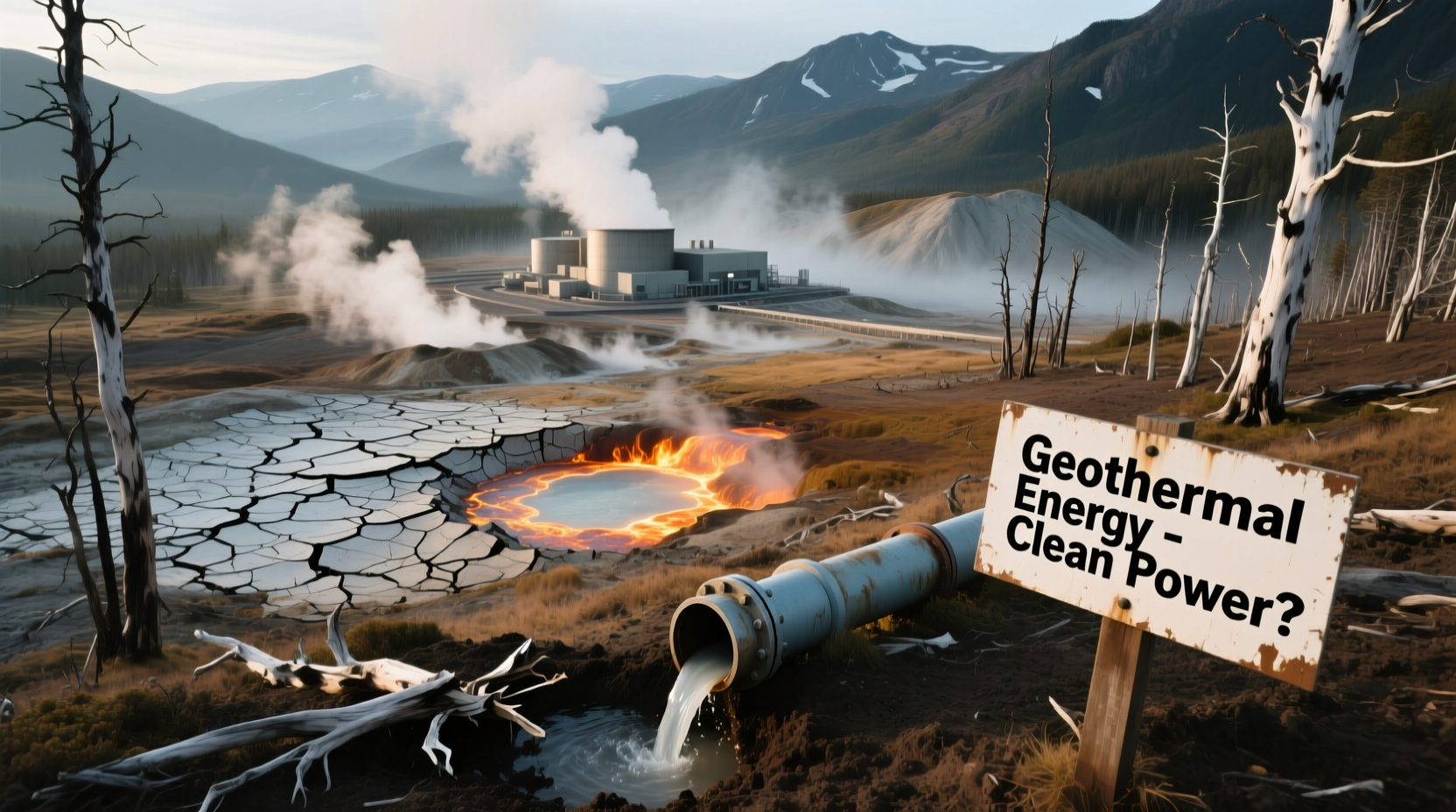
One of the most significant physical impacts of geothermal development is surface disturbance. Power plants, drilling pads, access roads, and pipeline networks require clearing land, which can fragment habitats and disrupt local ecosystems—especially in ecologically sensitive areas such as volcanic zones or protected wilderness regions.
Beyond land clearing, geothermal operations can induce minor seismic activity. Enhanced Geothermal Systems (EGS), which involve injecting water into hot rock formations to create steam, have been linked to induced earthquakes. Though typically low in magnitude, these tremors raise public concern and regulatory scrutiny.
In regions like Basel, Switzerland, an EGS project was halted in 2006 after triggering over 3,500 detectable tremors, some strong enough to damage buildings. This case underscores the importance of site selection and community engagement when deploying deep geothermal technologies.
Emissions and Subsurface Chemical Release
Despite being labeled “clean,” geothermal plants are not entirely emission-free. Steam extracted from underground reservoirs often contains gases such as hydrogen sulfide (H₂S), carbon dioxide (CO₂), methane (CH₄), and ammonia. Hydrogen sulfide, in particular, poses health and environmental risks due to its rotten-egg odor and toxicity at high concentrations.
While modern scrubbing systems capture up to 99% of H₂S emissions by converting them into elemental sulfur, older or poorly maintained facilities may release harmful levels into the atmosphere. In Kenya’s Olkaria geothermal field, for example, elevated H₂S levels have occasionally led to respiratory complaints among nearby communities.
“Even renewable energy systems carry ecological footprints. The key is transparency, monitoring, and continuous mitigation.” — Dr. Lena Torres, Environmental Geoscientist, International Renewable Energy Agency (IRENA)
Additionally, brines brought to the surface contain dissolved solids, heavy metals (like arsenic, mercury, and boron), and radioactive elements such as radon. If not properly reinjected or treated, these substances can contaminate soil and groundwater.
Water Consumption and Thermal Pollution
Geothermal plants rely heavily on water, both for cooling and in binary cycle or flash systems where water is used to transfer heat. While closed-loop systems recycle most of this water through reinjection, losses occur due to evaporation, leakage, or incomplete recovery.
In arid regions, such as parts of Nevada or California, water scarcity makes even moderate consumption a point of contention. A typical 50 MW geothermal plant may consume between 260 and 780 acre-feet of water annually—equivalent to the yearly needs of 500–1,500 households.
Moreover, discharged cooling water, though cleaner than industrial effluent, is often warmer than ambient temperatures. When released into rivers or streams, this thermal discharge can alter aquatic ecosystems, reducing oxygen levels and affecting fish populations.
| Impact Type | Description | Mitigation Strategy |
|---|---|---|
| Hydrogen Sulfide Emissions | Toxic gas with foul odor; affects air quality | Scrubbers, sulfur recovery units |
| Induced Seismicity | Minor earthquakes from fluid injection | Microseismic monitoring, pressure control |
| Brine Contamination | Heavy metals and salts in waste fluids | Reinjection, advanced filtration |
| Water Use | High withdrawal in dry climates | Air-cooling systems, recycling |
| Habitat Disruption | Infrastructure alters natural landscapes | Site planning, restoration programs |
Resource Depletion and Long-Term Viability
Unlike solar or wind, geothermal energy depends on localized underground reservoirs of heat and steam. These resources are renewable only if managed sustainably. Over-extraction without adequate reinjection can cool the reservoir or reduce pressure, leading to diminished output over time.
The Wairakei geothermal field in New Zealand serves as a cautionary tale. After decades of operation, production declined significantly due to falling reservoir pressure and temperature. Engineers had to implement large-scale reinjection programs to stabilize performance—a costly intervention that could have been avoided with earlier conservation measures.
Furthermore, suitable geothermal sites are geographically limited. High-temperature resources necessary for commercial electricity generation are typically found along tectonic plate boundaries, restricting widespread deployment. Countries like Iceland and the Philippines benefit greatly, but others lack viable access.
Mini Case Study: The Salton Sea Geothermal Field, California
The Salton Sea in Southern California hosts one of the most productive geothermal regions in the U.S., generating over 400 MW of electricity. However, it also illustrates the complex trade-offs involved. The brines here are exceptionally rich in lithium—an asset for battery production—but also contain high levels of arsenic, lead, and other toxins.
In recent years, companies have begun extracting lithium from geothermal brine, turning waste into value. Yet, managing the residual fluids remains challenging. Accidental spills in the past have raised concerns about contamination of the already fragile Salton Sea ecosystem, which supports migratory birds and endangered species.
This dual role—as both an energy source and a mining frontier—highlights the need for integrated regulation. Without strict oversight, the push for green tech materials could inadvertently harm the environment it aims to protect.
Checklist: Minimizing Environmental Impact in Geothermal Projects
- Conduct comprehensive environmental impact assessments (EIAs) before drilling
- Use closed-loop systems to reduce water loss and emissions
- Install real-time gas monitoring and scrubbing technology
- Implement full brine reinjection to maintain reservoir pressure and prevent contamination
- Engage local communities early to address seismic and health concerns
- Adopt air-cooled condensers in water-scarce regions
- Monitor microseismic activity continuously during EGS operations
- Restore disturbed land post-construction with native vegetation
Frequently Asked Questions
Is geothermal energy completely renewable?
It can be, but only if reservoirs are managed sustainably. Overuse without reinjection can deplete the resource faster than it naturally recharges. With proper engineering and monitoring, many geothermal fields remain productive for decades.
Can geothermal plants cause earthquakes?
Yes, particularly Enhanced Geothermal Systems (EGS) that involve hydraulic fracturing. While most induced quakes are too small to feel, larger events have occurred. Careful site selection and pressure control minimize this risk.
How does geothermal compare to solar and wind in terms of environmental impact?
Geothermal has a smaller land footprint per megawatt than solar farms and doesn’t depend on weather conditions. However, it carries unique risks like subsurface pollution and induced seismicity, which solar and wind do not. Overall, its lifecycle emissions are lower than fossil fuels but slightly higher than wind and solar.
Conclusion: Balancing Promise with Responsibility
Geothermal energy holds immense potential in the transition to a low-carbon future, especially for regions with abundant subsurface heat. Its ability to provide stable, around-the-clock power makes it a valuable complement to intermittent renewables. Yet, its environmental costs—emissions, water use, seismic risks, and chemical hazards—demand careful management.
The path forward lies not in rejecting geothermal energy, but in refining how we develop and regulate it. By investing in cleaner extraction technologies, enforcing rigorous environmental standards, and involving communities in decision-making, we can harness Earth’s heat without compromising its health.




 浙公网安备
33010002000092号
浙公网安备
33010002000092号 浙B2-20120091-4
Comments
No comments yet. Why don't you start the discussion?