
Navigating the path to a gifted program can be both exciting and daunting for parents and children alike. These programs offer enriched curricula, intellectual stimulation, and opportunities to learn alongside peers with similar abilities. However, gaining admission often hinges on performance in standardized assessments that measure cognitive ability, reasoning skills, and academic potential. With thoughtful preparation and the right support, your child can approach these tests with confidence and perform to their full potential.
Understanding Gifted Program Assessments
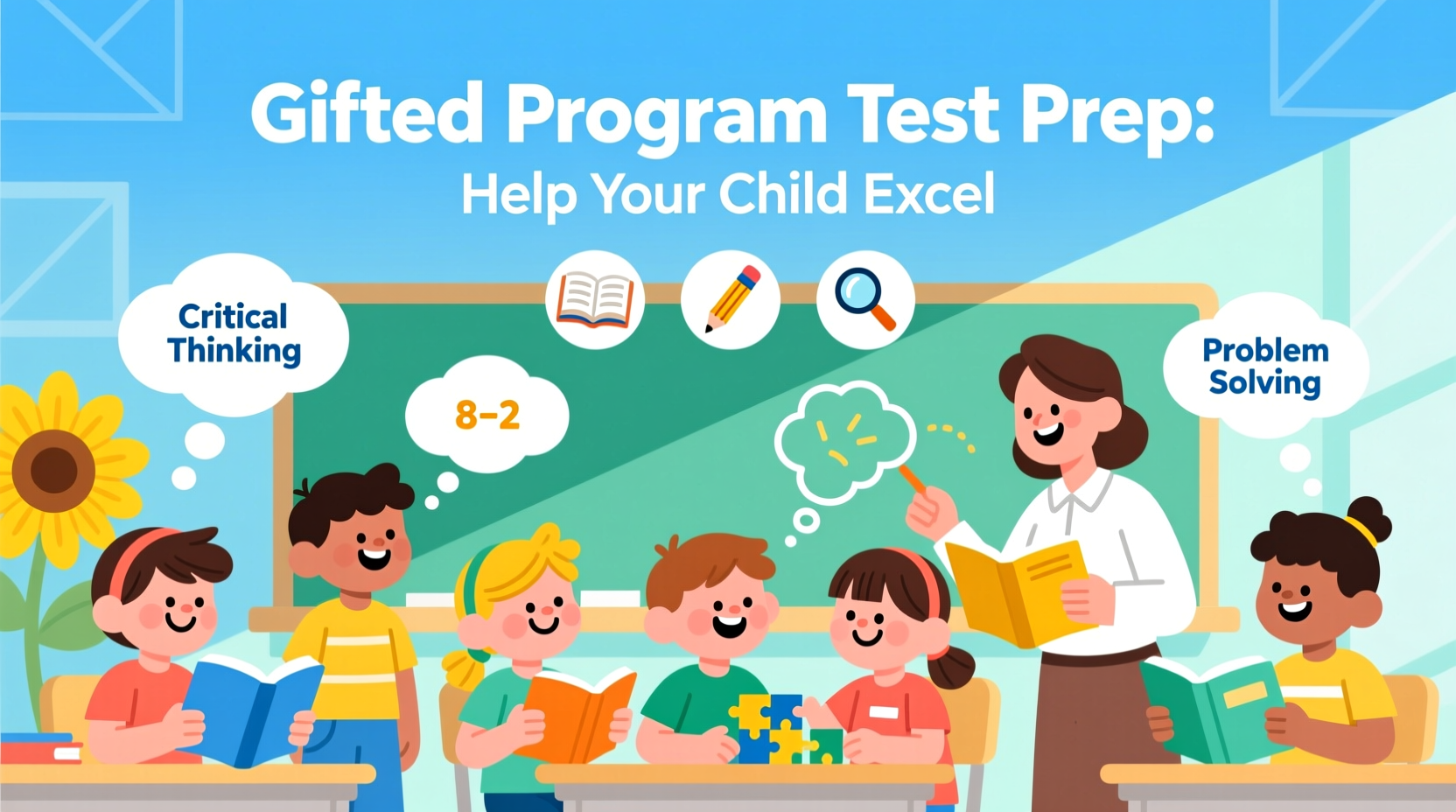
Gifted program entrance exams vary by school district but commonly include tools like the Cognitive Abilities Test (CogAT), Naglieri Nonverbal Ability Test (NNAT), Otis-Lennon School Ability Test (OLSAT), or the Wechsler Intelligence Scale for Children (WISC). These assessments evaluate different domains:
- Verbal reasoning: Understanding relationships between words, analogies, and verbal classification.
- Quantitative reasoning: Number patterns, sequences, and mathematical logic.
- Nonverbal reasoning: Pattern recognition, spatial visualization, and figure matrices.
Unlike traditional academic tests, gifted assessments focus less on memorization and more on abstract thinking and problem-solving under time constraints. This means preparation should emphasize skill development over rote learning.
“High-ability learners benefit not from being labeled, but from being challenged appropriately. Preparation ensures they demonstrate their true capabilities.” — Dr. Joanne Foster, Child Development and Gifted Education Expert
Effective Study Strategies for Young Learners
Children preparing for gifted exams are typically in grades K–6, so study methods must align with their developmental stage. The goal is to build familiarity without creating stress. Here’s how to structure effective preparation:
Start Early and Build Gradually
Begin preparation at least 8–12 weeks before the test. Short, consistent sessions (15–20 minutes, 3–4 times per week) work better than infrequent marathon study periods. This spaced repetition strengthens retention and reduces anxiety.
Use Practice Materials Aligned with the Test
Not all practice books are created equal. Choose resources specifically designed for the exam your child will take. For example:
| Test Type | Recommended Practice Resources | Focus Areas |
|---|---|---|
| CogAT | Fat Brain Toys CogAT Prep, TestingMom.com | Verbal, quantitative, and nonverbal batteries |
| NNAT | Naglieri Official Practice Guide, Smarty Buddy | Patterning, spatial reasoning, geometric designs |
| OLSAT | Barron’s OLSAT, Origins Tutoring | Following directions, classification, analogies |
Building Core Cognitive Skills
Success on gifted tests depends on well-developed cognitive abilities. Parents can nurture these skills through everyday activities:
- Analogical thinking: Play “What goes with this?” games—e.g., “Just as a caterpillar becomes a butterfly, a seed becomes a ______?”
- Patterning: Use colored blocks or beads to create and extend sequences. Ask your child to predict the next item.
- Spatial reasoning: Encourage building with LEGO, solving jigsaw puzzles, or drawing maps of familiar spaces.
- Working memory: Try memory card games or ask your child to repeat increasingly long sequences of numbers or instructions.
These exercises don’t feel like studying but lay the foundation for strong test performance.
Mini Case Study: How Emma Improved Her NNAT Score
Emma, a first-grader in Chicago, initially struggled with nonverbal pattern questions on NNAT practice tests. Her mother introduced a nightly 15-minute puzzle routine using shape-based apps and printable worksheets. Within six weeks, Emma began recognizing rotation and symmetry patterns intuitively. On test day, she felt calm and completed each section confidently. She scored in the 98th percentile and was accepted into her district’s gifted magnet program.
The key wasn’t cramming—it was consistent exposure and positive reinforcement.
Step-by-Step 10-Week Prep Plan
A structured timeline helps families stay on track without last-minute stress. Follow this plan to optimize readiness:
- Weeks 1–2: Diagnostic & Familiarization
Take a full-length practice test to identify strengths and weaknesses. Review question types and format. - Weeks 3–4: Focus on Weak Areas
Dedicate extra time to lower-scoring sections (e.g., verbal analogies or number series). - Weeks 5–6: Skill-Building Activities
Incorporate daily brain games, reading comprehension, and logic puzzles. - Weeks 7–8: Timed Practice
Simulate real testing conditions with shorter, timed drills to improve pacing. - Weeks 9–10: Full-Length Simulations
Complete two to three full practice tests on separate days. Review mistakes calmly and constructively.
Avoiding Common Pitfalls
Even well-intentioned preparation can backfire if mismanaged. Watch out for these mistakes:
| Do’s | Don’ts |
|---|---|
| Encourage effort, not just results | Pressure your child to “pass” or compare them to siblings |
| Maintain regular sleep and routines | Allow late nights or screen binges before the test |
| Use positive, growth-focused language | Say things like “You have to get in” or “This determines your future” |
| Balance prep with play and downtime | Over-schedule or eliminate extracurriculars |
Remember, the goal is to help your child showcase their natural abilities—not transform them into a different learner.
FAQ
Can my child prepare too much for a gifted test?
Yes. Over-preparation can lead to burnout, anxiety, and diminished motivation. Stick to short, engaging sessions and monitor your child’s emotional well-being. If they resist practice or seem stressed, scale back and reintroduce material playfully.
What if my child doesn’t qualify for the gifted program?
Not qualifying does not reflect on your child’s intelligence or potential. Many factors influence test performance, including mood, environment, and attention span on test day. Some children mature cognitively later. Continue nurturing curiosity at home, and consider retesting in a year if allowed.
Are private tutors worth it for gifted test prep?
For some families, yes—especially if parents lack time or confidence in guiding preparation. Look for tutors with experience in cognitive assessments, not just academic tutoring. However, many children succeed with consistent parental involvement and quality practice materials.
Conclusion: Empower, Don’t Pressure
Helping your child excel in a gifted program test isn’t about turning them into a perfect test-taker. It’s about empowering them to show what they’re capable of in a calm, supported environment. With early planning, skill-building activities, and emotional reassurance, you can make the process educational, confidence-boosting, and even enjoyable.
Every child has unique strengths. Whether they score in the 90th or 99th percentile, the habits formed during preparation—critical thinking, focus, resilience—will serve them far beyond any single test.




 浙公网安备
33010002000092号
浙公网安备
33010002000092号 浙B2-20120091-4
Comments
No comments yet. Why don't you start the discussion?