
Identifying gifted children is a critical step in ensuring they receive appropriate educational opportunities that match their intellectual and creative potential. While IQ tests are commonly used, they don't always capture the full spectrum of a child's abilities. The Gifted Rating Scales (GRS) offer a complementary approach by evaluating observable behaviors and traits associated with giftedness in real-world settings. This article explores how the GRS works, its components, interpretation methods, and practical applications for educators and parents.
What Is the Gifted Rating Scale?
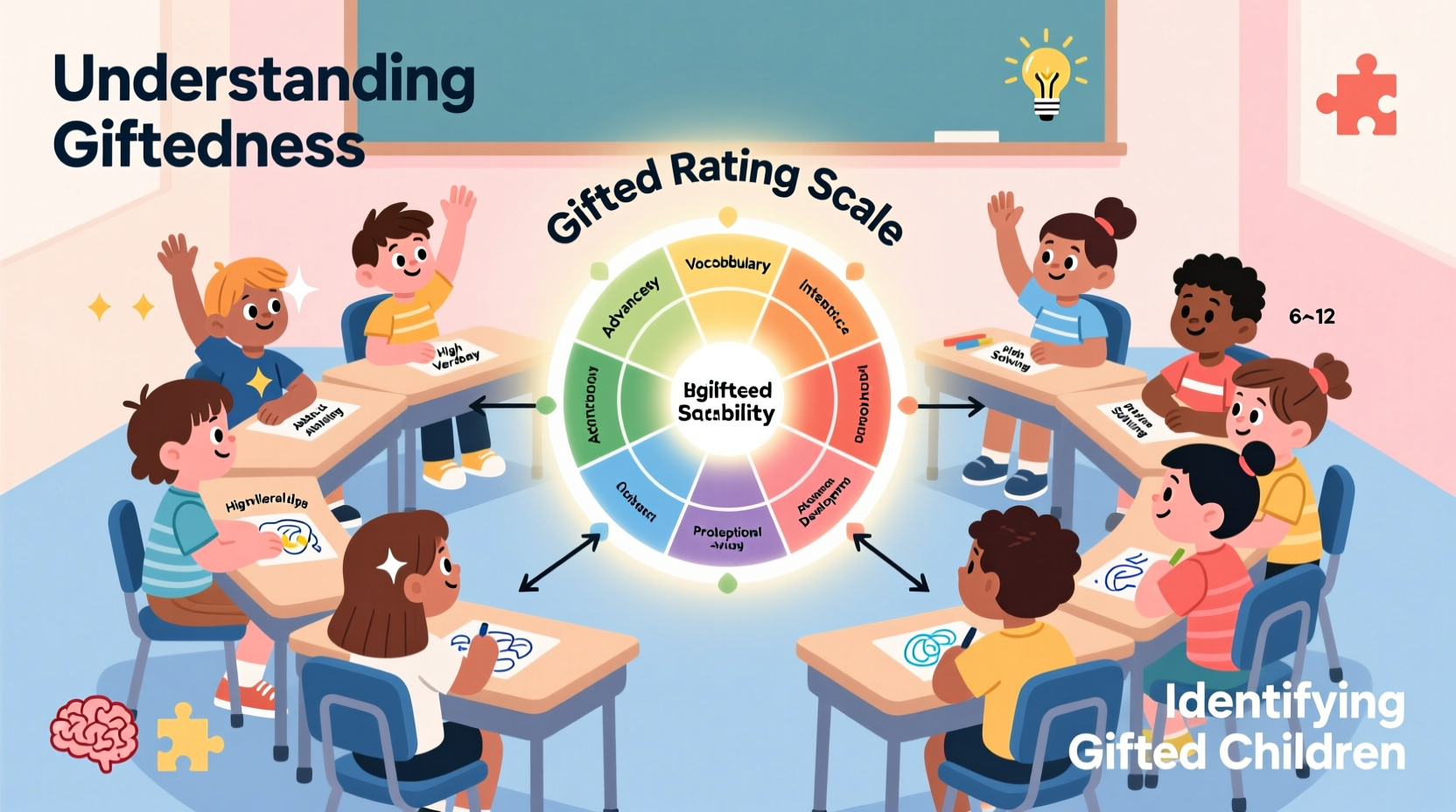
The Gifted Rating Scales (GRS), developed by Steven Ira Pfeiffer and Tania Jarosewich, is a standardized assessment tool designed to help professionals identify children who may qualify for gifted education programs. Unlike traditional intelligence tests that rely solely on cognitive performance, the GRS uses teacher or parent observations to rate specific behaviors linked to giftedness across multiple domains.
The scale is based on a multi-dimensional model of giftedness, incorporating not just intellectual ability but also academic achievement, creativity, leadership, motivation, and artistic talent. It’s typically administered by teachers who know the child well, although a parent version is also available.
The GRS comes in two forms: the GRS-P (Parent Form) and the GRS-T (Teacher Form), each tailored to the rater’s perspective. Both versions are norm-referenced and psychometrically sound, providing reliable data when used as part of a comprehensive identification process.
Key Domains Assessed by the Gifted Rating Scale
The GRS evaluates children across five core domains, each reflecting a different aspect of giftedness. These domains allow for a more holistic view than IQ scores alone can provide.
- Intellectual Ability – Measures problem-solving skills, curiosity, abstract reasoning, and verbal fluency.
- Academic Ability – Focuses on mastery of grade-level content, learning speed, and retention of information.
- Creativity – Assesses original thinking, imagination, flexibility in ideas, and interest in unconventional solutions.
- Motivation – Evaluates persistence, task commitment, goal-setting behavior, and intrinsic drive to learn.
- Artistic Talent – Observes aptitude in music, visual arts, drama, or dance, including expression and technical skill.
Ratings are made on a 5-point Likert scale ranging from “Never” to “Always,” allowing raters to reflect frequency and intensity of observed behaviors. Each item is carefully worded to minimize bias and focus on concrete, observable actions rather than subjective impressions.
Sample Items from the GRS-T (Teacher Form)
| Domain | Sample Item | Scoring Range |
|---|---|---|
| Intellectual Ability | Asks probing questions beyond the scope of the lesson. | 1 (Never) – 5 (Always) |
| Academic Ability | Completes assignments quickly and accurately. | 1 (Never) – 5 (Always) |
| Creativity | Generates unique ideas during brainstorming activities. | 1 (Never) – 5 (Always) |
| Motivation | Pursues independent projects without prompting. | 1 (Never) – 5 (Always) |
| Artistic Talent | Uses color and form expressively in artwork. | 1 (Never) – 5 (Always) |
How to Interpret GRS Results
After completion, raw scores from each domain are converted into standard scores using normative tables based on age and gender. A composite score is then calculated, which indicates the likelihood that a child exhibits characteristics typical of gifted students.
- Standard Score of 130+: Indicates strong evidence of giftedness; often meets criteria for gifted programs.
- Score between 115–129: Suggests above-average potential; may benefit from enrichment.
- Score below 115: Typically falls within the average range; further observation may be warranted if other indicators exist.
It’s important to note that high scores do not automatically confirm giftedness but serve as strong indicators when combined with other data such as achievement test results, portfolios, and interviews.
“Behavioral rating scales like the GRS fill a crucial gap in gifted identification by capturing what happens in classrooms every day—curiosity, engagement, and creative insight—that standardized tests often miss.” — Dr. Susan Assouline, Director, Belin-Blank Center for Gifted Education
Practical Steps for Using the GRS in Schools
Integrating the GRS into a school’s gifted identification process requires planning and training. Here’s a step-by-step guide for effective implementation:
- Select Qualified Raters: Choose teachers who have had consistent, daily interaction with the student over several months.
- Provide Training: Ensure raters understand the meaning of each item and avoid halo effects or personal biases.
- Administer the Scale: Distribute the GRS-T during a quiet period so raters can complete it thoughtfully.
- Score and Analyze: Use the manual’s conversion tables to calculate standard scores and composite totals.
- Combine with Other Data: Integrate GRS results with achievement scores, work samples, and input from parents or counselors.
- Make Placement Decisions: Use the full profile to determine eligibility for gifted services.
Mini Case Study: Identifying Maya Through the GRS
Maya, a third-grader, consistently finished math assignments early but rarely spoke up in class. Her teacher noticed she spent free time drawing intricate geometric patterns and once solved a fifth-grade logic puzzle independently. Standardized test scores were good but not exceptional (93rd percentile).
The school’s gifted coordinator administered the GRS-T. Maya received high ratings in Intellectual Ability (138) and Creativity (135), moderate in Academic Ability (120), and lower in Motivation due to her quiet demeanor. Despite average motivation scores, the overall composite was 132.
Further review revealed Maya avoided speaking due to anxiety, not lack of interest. With targeted support and placement in a small-group enrichment program, she began thriving. This case illustrates how the GRS can uncover hidden strengths that might otherwise go unnoticed.
Common Pitfalls and Best Practices
While the GRS is a valuable tool, misuse can lead to misidentification. Below is a comparison of recommended practices versus common mistakes.
| Best Practices | Common Mistakes |
|---|---|
| Use GRS as one component of a multifaceted assessment | Using GRS scores alone to determine gifted eligibility |
| Train raters on objective observation | Allowing popularity or behavior issues to influence ratings |
| Consider cultural and linguistic background | Expecting all gifted children to display verbal precocity |
| Review discrepancies across domains | Ignoring low motivation scores in highly capable students |
Frequently Asked Questions
Can the GRS be used for children with learning disabilities?
Yes. The GRS is particularly useful for identifying twice-exceptional (2e) learners—those who are both gifted and have conditions like ADHD or dyslexia. Since it relies on observed behaviors rather than test performance alone, it can highlight strengths that might be masked by academic struggles.
Is the GRS valid for preschoolers?
The GRS is normed for children ages 6 to 14 (K–8). While some educators use it with advanced kindergarteners, caution is advised. Younger children vary widely in development, and behaviors may not yet stabilize enough for reliable scoring.
How long does it take to complete the GRS?
The teacher form takes approximately 15–20 minutes per student. The parent form may take slightly longer, especially if detailed notes are included.
Final Thoughts and Call to Action
Understanding and applying the Gifted Rating Scale empowers educators and parents to see beyond test scores and recognize the diverse ways giftedness manifests. When used thoughtfully, the GRS becomes a bridge between potential and opportunity—helping children access the challenges and support they need to grow.
If you’re involved in education or parenting a bright child, consider how observational tools like the GRS could enhance your approach to nurturing talent. Explore professional development resources, advocate for balanced identification policies in your district, or simply start documenting behaviors that signal deep curiosity and insight. Gifted minds are everywhere—often quieter, subtler, and more complex than we expect. Recognizing them begins with looking closely.




 浙公网安备
33010002000092号
浙公网安备
33010002000092号 浙B2-20120091-4
Comments
No comments yet. Why don't you start the discussion?