
When people refer to a \"ginger cat,\" they often picture a bright orange feline with bold stripes or swirls—features that align closely with what is known as the tabby pattern. This frequent overlap raises an important question: Is there a biological reason why nearly all ginger cats also appear to be tabbies? The answer lies not in coincidence but in feline genetics, where coat color and pattern are governed by specific gene interactions. Understanding the connection between ginger (orange) fur and the tabby pattern reveals how deeply intertwined these traits are at the DNA level. For cat owners, breeders, and enthusiasts, recognizing this relationship enhances appreciation for feline diversity and informs breeding decisions, health considerations, and even behavioral assumptions tied to appearance.
Definition & Overview
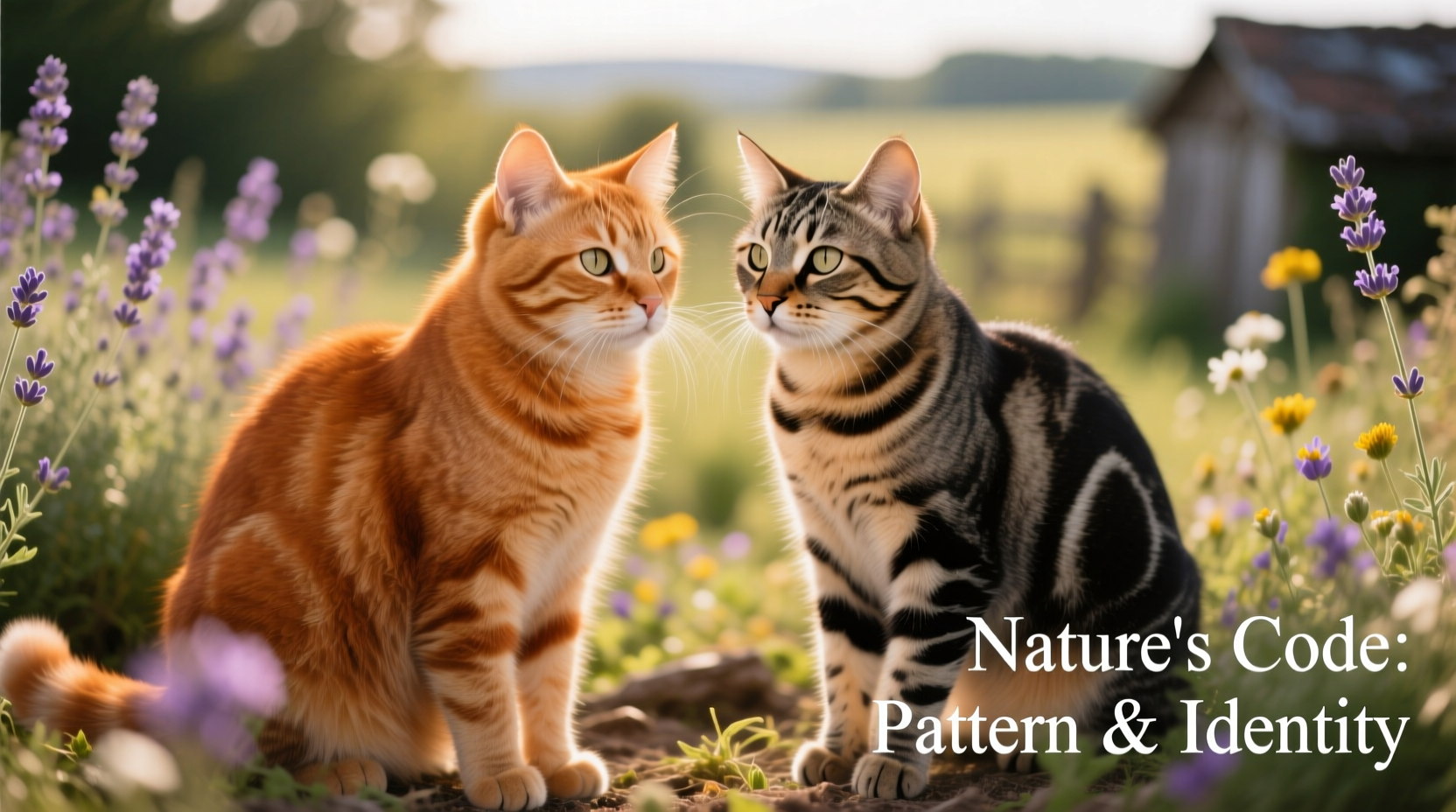
The term ginger cat refers to any domestic cat displaying a reddish-orange to deep amber coat color, commonly called “orange” or “red” in formal feline genetics. This hue results from the presence of the O (orange) allele on the X chromosome, which converts black pigment (eumelanin) into red pigment (pheomelanin). Because this gene is sex-linked, its expression differs between males and females, explaining why male ginger cats are more common than females.
A tabby cat, by contrast, describes a coat pattern rather than a color. Tabbies exhibit distinctive markings such as stripes, whorls, dots, or ticked bands, typically accompanied by an “M” shape on the forehead, dark lines along the cheeks, and banding on legs and tail. There are five primary tabby patterns: mackerel (narrow vertical stripes), classic (broad swirling patterns), spotted (distinct spots), ticked (agouti hairs with minimal visible pattern), and patched (a mix of tabby and solid patches, often seen in females).
Crucially, the vast majority of ginger cats display tabby patterning—not because they are a separate breed, but because the gene responsible for orange pigmentation masks non-tabby patterns. In essence, the so-called “ginger tabby” isn’t a hybrid type; it’s the default expression of orange fur in domestic cats. A solid orange cat without any trace of striping or spotting is extremely rare and usually only occurs due to extreme dilution or masking effects from other genes.
Key Characteristics
| Attribute | Ginger (Orange) Cats | Tabby Pattern |
|---|---|---|
| Nature | Coat color (phenotype) | Coat pattern (design) |
| Genetic Basis | O allele on X chromosome | Taqpep gene (mackerel vs. classic); Agouti signaling protein (A/a) |
| Color Range | Cream, apricot, flame, deep orange | Black, brown, gray, silver, orange-based |
| Pattern Visibility | Always shows tabby markings when fully expressed | Visible across multiple colors and breeds |
| Sex Bias | ~80% of orange cats are male | No sex bias in pattern alone |
| Shelf Life / Stability | Color may fade in sunlight; consistent throughout life | Pattern established at birth; does not change |
Practical Usage: Identifying and Interpreting the Ginger-Tabby Link
For pet owners and breeders, understanding the ginger-tabby connection aids in identifying lineage, predicting offspring traits, and managing expectations about appearance. When adopting or breeding cats, knowing that orange fur almost always includes tabby patterning prevents misconceptions about \"solid\" orange cats.
In home environments, recognizing subtle tabby features—even under dense or pale orange coats—can help distinguish individual cats, especially in multi-cat households. Some light-colored ginger cats may appear nearly uniform in color under indoor lighting, but direct sunlight often reveals faint striping, particularly on the legs, tail, and head.
Tip: To confirm tabby patterning in a pale ginger cat, examine the kitten’s early coat. Most kittens express clear tabby markings within weeks of birth, even if they later seem to fade. Also, check the ears, face, and tail base in natural light—these areas retain pattern details best.
Breeders working with Maine Coons, Persians, or British Shorthairs frequently select for vibrant orange tabby coats due to their popularity. However, ethical breeding requires attention to genetic diversity, avoiding excessive inbreeding to maintain robust health alongside aesthetic goals. Responsible programs test for hereditary conditions like hypertrophic cardiomyopathy (HCM), which can co-occur independently of coat traits.
Culinarily speaking—an analogy sometimes drawn metaphorically in lifestyle writing—the combination of ginger and tabby is akin to pairing saffron with rice: one provides color, the other structure. Just as saffron imparts golden hue but doesn't define grain texture, the O gene delivers orange tone while the tabby genes sculpt the visual rhythm of the coat.
Variants & Types of Ginger Tabby Cats
While all ginger cats inherently carry tabby patterning, the visible expression varies significantly based on genotype. Below are the main variants observed:
- Mackerel Ginger Tabby: Narrow, fishbone-like stripes running vertically down the sides. Most common form; seen in random-bred populations worldwide.
- Classic Ginger Tabby: Broad, swirling patterns resembling marble cakes or bullseyes on the flanks. Often associated with American Shorthairs and some pedigreed lines.
- Spotted Ginger Tabby: Broken stripes forming distinct spots. Seen in certain selective breeds like Egyptian Maus or Ocicats, though spontaneous spotting occurs in domestics too.
- Ticked Ginger Tabby: Minimal visible patterning due to alternating light-dark bands on each hair (agouti effect). Rare in orange cats because pheomelanin dominance reduces contrast, but possible in diluted forms (e.g., cream ticked).
- Patched (Torbie) Ginger Tabby: Combines orange patches with black or blue (gray) patches, all showing underlying tabby striping. Almost exclusively female due to X-inactivation.
The intensity of orange coloration also varies. Factors influencing shade include:
- Density of pheomelanin production – controlled by modifier genes.
- Dilution gene (d): Turns bright orange into cream or buff tones.
- Age: Kittens often have darker, richer hues that lighten slightly with maturity.
- Nutrition and sun exposure: UV rays can bleach orange fur over time, especially on outdoor cats.
Comparison with Similar Coat Patterns
It's easy to confuse ginger tabbies with other orange-toned or striped cats. Clarifying distinctions ensures accurate identification and informed discussion.
| Feature | Ginger Tabby | Solid Orange (Rare) | Red Point Siamese | Fawn or Cream Cat |
|---|---|---|---|---|
| Pattern | Clear tabby markings (stripes/swirls) | No visible pattern | Light body, dark orange points | May lack contrast; low visibility pattern |
| Genetics | O allele + agouti (A) + tabby gene | O allele + non-agouti (a) – very rare in orange) | O allele + temperature-sensitive albinism (cs) | dilute O allele (o/d) |
| Face Markings | “M” on forehead, cheek stripes | Uniform facial color | Dark orange mask, ears, limbs | Faint or absent “M” |
| Sex Ratio | Male-dominated (~80%) | Likely skewed same as ginger | No strong bias | Female slightly more common |
| Example Breeds | Domestic Shorthair, Maine Coon | Extremely rare outside labs | Siamese, Ragdoll | British Shorthair, Norwegian Forest Cat |
One key takeaway: true solid orange cats are genetically improbable because the O gene overrides the non-agouti (a) gene’s ability to suppress tabby patterns. Even cats appearing uniformly orange still possess agouti-level banding on individual hairs—a hallmark of the tabby genotype.
“All orange cats are tabbies at the genetic level. You might not see the stripes, but they’re there in the code.” — Dr. Leslie Lyons, Feline Geneticist, University of Missouri
Practical Tips & FAQs
Why do all ginger cats have tabby stripes?
The orange color is produced by the O allele, which interacts with the agouti gene (A) to allow banded hair growth. Unlike black or gray cats, where the non-agouti (a) gene can create solid coats, the O allele effectively negates the solid-coat effect. As a result, even if a cat carries the non-agouti gene, the orange pigment remains visibly patterned.
Can a ginger cat be solid-colored?
True solid orange cats do not exist in practical terms. What may appear solid is usually a heavily shaded or washed-out tabby, especially in older cats or those with dilute genes. These are sometimes called “ghost tabbies” when faint patterns emerge under sunlight.
Are female ginger cats rare?
Yes. Since the O gene resides on the X chromosome, males (XY) need only one copy to become orange, while females (XX) require two—one from each parent. Approximately 1 in 5 orange cats is female, making them less common but not exceptionally rare.
Do ginger tabby cats have specific personalities?
No scientific evidence confirms that coat color determines personality. However, anecdotal reports suggest ginger cats—particularly males—are often perceived as friendly, bold, or food-motivated. These perceptions may stem from socialization biases rather than genetics. Individual temperament depends more on early handling, environment, and maternal behavior than fur color.
How can I predict if my cat’s kittens will be ginger tabbies?
Use basic Mendelian genetics:
- If the mother is tortoiseshell or calico (O/o), half her male kittens could be orange.
- If the father is orange (O/Y), all his daughters will carry the O gene.
- Two orange parents can produce only orange offspring.
- A black male and non-carrier female will never produce orange kittens.
What health issues are linked to ginger tabby cats?
No inherent health problems are caused by the ginger or tabby genes themselves. However, some breeds popular for orange coats—like Maine Coons—have breed-specific risks (e.g., HCM, hip dysplasia). Additionally, light-colored cats, including pale ginger individuals, may be more susceptible to solar dermatitis and skin cancer on ears and nose if exposed to prolonged sunlight.
Preventive Care Tip: Apply pet-safe sunscreen to sparsely furred areas during peak sun hours if your ginger cat spends time outdoors. Consider UV-blocking window film for indoor cats who bask near sunny windowsills.
Summary & Key Takeaways
The phrase “ginger and tabby cat” reflects a fundamental truth in feline biology: orange coat color and tabby patterning are genetically inseparable in nearly all cases. While “ginger” refers to pigment and “tabby” to design, the two consistently coexist due to the way the O gene functions within the feline genome. This means that when someone sees an orange cat, they are, by definition, observing a tabby—even if the stripes seem faint or blurred.
Understanding this connection empowers cat caregivers with deeper insight into genetics, improves accuracy in describing pets, and supports informed breeding practices. It also dispels myths about solid orange cats and highlights the role of X-linked inheritance in shaping visible traits.
Ultimately, every ginger cat carries a story written in DNA—one where color and pattern unite to create some of the most recognizable and beloved felines in homes around the world.
Observe your own cat in natural daylight. Look closely at the tail, legs, and forehead. Chances are, you’ll discover the hidden architecture of the tabby blueprint beneath that warm orange glow.




 浙公网安备
33010002000092号
浙公网安备
33010002000092号 浙B2-20120091-4
Comments
No comments yet. Why don't you start the discussion?