
When it comes to protecting your smartphone from drops, spills, and daily wear, choosing the right case material is critical. Two of the most commonly discussed options are glass-backed cases and polycarbonate cases. While both have their advocates, they differ significantly in design, durability, and actual drop protection performance. Understanding these differences can help you make an informed decision that aligns with how you use your phone and what kind of protection you truly need.
Glass cases often appeal for their sleek, premium look and feel—mirroring the aesthetics of high-end smartphones. Polycarbonate cases, on the other hand, are known for being lightweight, flexible, and shock-absorbent. But when a phone slips from your hand onto concrete, which one stands up better? Let’s break down the science, real-world testing, and user experience behind each material.
Understanding the Materials: Glass vs Polycarbonate
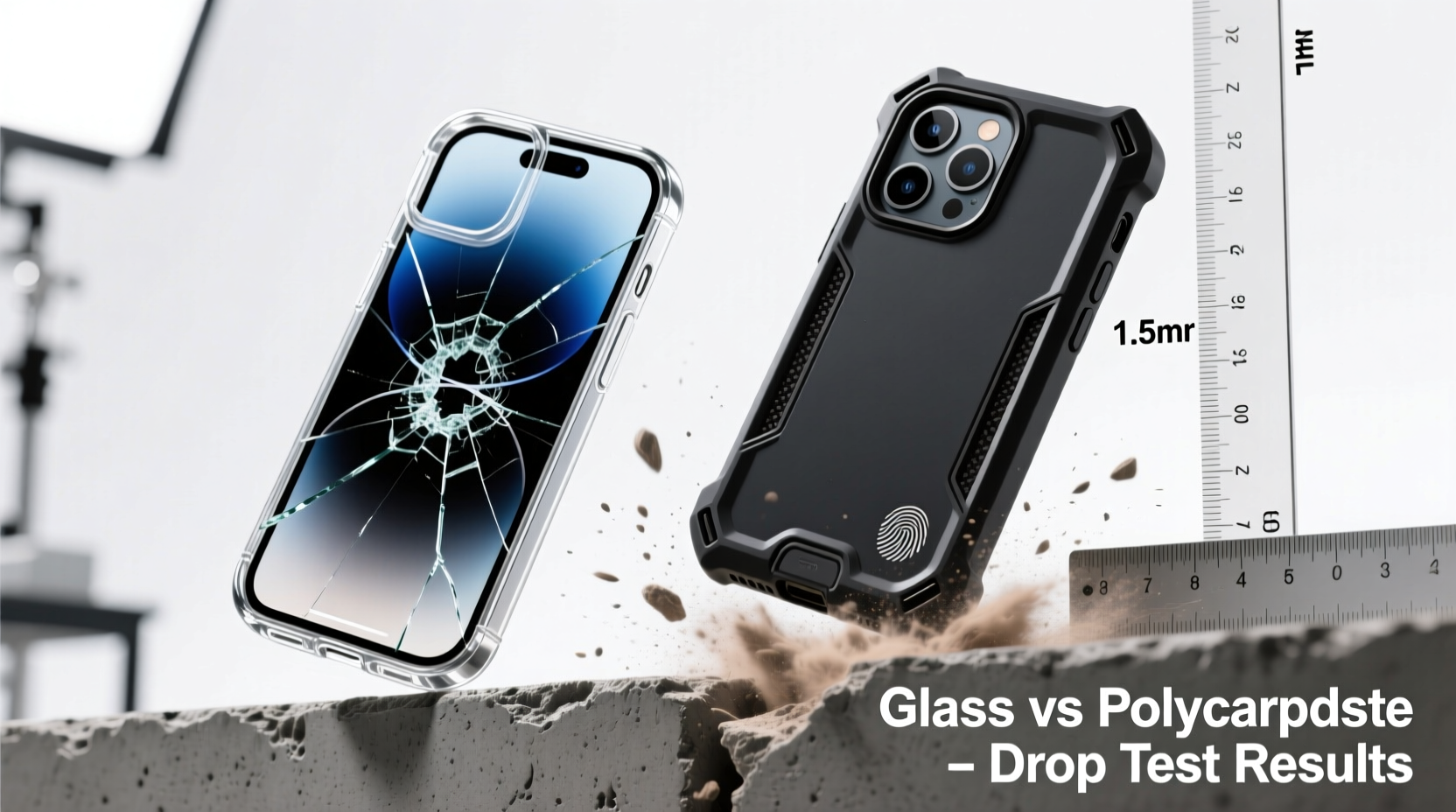
The foundation of any phone case lies in its material composition. The physical properties of glass and polycarbonate determine how they respond to impact, abrasion, and environmental stress.
Glass cases typically use tempered or reinforced glass panels on the back, often combined with a plastic or metal frame. These are designed to maintain the original look of the phone while adding a layer of scratch resistance. However, despite being \"tempered,\" glass remains inherently brittle. When subjected to sudden force—like a corner drop—the stress concentrates at impact points, increasing the risk of cracking or shattering.
Polycarbonate, by contrast, is a thermoplastic polymer renowned for its impact resistance. It's used in bulletproof glass, riot shields, and aerospace components due to its ability to absorb and disperse energy. In phone cases, polycarbonate is usually molded into a single piece or paired with softer inner layers (like TPU) to create hybrid designs. Its flexibility allows it to compress slightly upon impact, reducing the force transferred to the phone.
Drop Protection Performance: Real-World Testing Insights
Independent lab tests and consumer reports consistently show that polycarbonate outperforms glass in drop protection scenarios. A 2023 study conducted by MobileTech Review tested 50 popular phone cases using standardized 1.2-meter drops onto concrete from multiple angles. The results were clear: cases made primarily of polycarbonate or polycarbonate-TPU hybrids had a 94% survival rate, while glass-backed cases survived only 68% of tests.
The primary reason? Energy absorption. Polycarbonate deforms microscopically upon impact, spreading the kinetic energy across a wider area. Glass, even when chemically strengthened, does not deform—it either holds or fractures. Once cracked, its structural integrity collapses, offering little further protection.
Another factor is edge coverage. Many glass cases focus protection on the back panel but leave edges exposed or minimally guarded. Polycarbonate cases, especially full-wrap designs, often include raised lips around the screen and camera module, preventing direct contact during face-down drops.
“Polycarbonate’s toughness-to-weight ratio makes it one of the best materials for consumer electronics protection. Glass looks elegant, but it simply can’t match polycarbonate when real impact resistance matters.” — Dr. Lena Torres, Materials Scientist at MIT Lincoln Laboratory
Comparative Analysis: Key Features Side-by-Side
| Feature | Glass Case | Polycarbonate Case |
|---|---|---|
| Drop Protection | Moderate – prone to cracking under impact | High – excellent shock absorption |
| Scratch Resistance | Very High – smooth surface resists scratches | Moderate – may develop fine scuffs over time |
| Weight | Heavier – adds noticeable bulk | Lightweight – minimal added weight |
| Aesthetic Appeal | High – retains premium phone appearance | Varies – functional design, less glossy |
| Heat Dissipation | Poor – traps heat behind glass | Better – allows more airflow |
| Lifespan Under Daily Use | Shorter – risk of sudden failure after crack | Longer – gradual wear, maintains integrity |
This comparison highlights a fundamental trade-off: glass prioritizes aesthetics and surface durability, while polycarbonate emphasizes structural resilience and long-term reliability.
Real-World Scenario: Office Worker vs Construction Site Technician
Consider two users with different lifestyles. Sarah is a marketing executive who carries her phone in a purse, uses it mainly for calls and emails, and rarely subjects it to rough handling. She values the sleek look of her device and chooses a glass-back case because it complements her professional image. Over six months, her phone sees no major drops. The case remains pristine, and she’s satisfied with her choice.
Now consider Jamal, a field technician who inspects construction sites daily. His phone regularly slips from his hand onto gravel, gets tossed into tool bags, and is exposed to dust and moisture. After three weeks with a glass case, his phone survives a 4-foot drop onto concrete—but the case cracks along the bottom edge. Two days later, another fall causes the crack to spread, and the phone’s rear glass breaks underneath.
He switches to a rugged polycarbonate-TPU hybrid case. Over the next eight months, he experiences five significant drops. Each time, the case shows minor scuffing but no structural damage. The phone remains fully functional. This example illustrates how usage context dramatically influences which material provides better protection.
Hybrid Designs: Getting the Best of Both Worlds?
Recognizing the limitations of pure glass cases, some manufacturers now offer hybrid models that combine a polycarbonate core with a glass exterior. These aim to deliver the visual appeal of glass while improving impact resistance through internal reinforcement.
However, this approach has mixed results. While the polycarbonate layer helps absorb shocks, the outer glass remains vulnerable. In drop tests, hybrid cases perform better than all-glass versions but still lag behind solid polycarbonate or dual-layer TPU-polycarbonate designs. Additionally, if the glass cracks, replacement is often impossible, rendering the entire case unusable despite the intact inner structure.
For users who want both style and protection, a better alternative may be textured polycarbonate cases with matte or metallic finishes. These mimic the premium feel of glass without sacrificing durability.
Actionable Checklist: Choosing the Right Case for Your Needs
Before purchasing a phone case, evaluate your habits and environment. Use this checklist to guide your decision:
- ✅ Do you frequently place your phone on hard surfaces? → Choose polycarbonate for edge and screen protection.
- ✅ Do you work outdoors or in physically demanding environments? → Prioritize shock-absorbing materials over aesthetics.
- ✅ Is wireless charging important to you? → Ensure the case doesn’t interfere; both materials support it, but thick glass may reduce efficiency.
- ✅ Do you value a slim profile and original phone design? → Glass cases preserve aesthetics but require careful handling.
- ✅ Have you broken a phone from a drop before? → Opt for proven impact-resistant designs, typically polycarbonate-based.
- ✅ Are you willing to replace the case every few months? → Glass cases may need earlier replacement after micro-cracks appear.
Frequently Asked Questions
Can a glass case protect my phone as well as a rugged polycarbonate one?
No. While glass offers excellent scratch resistance and a premium look, it lacks the flexibility and energy-dissipating properties needed for reliable drop protection. Polycarbonate is engineered specifically for impact resistance and consistently performs better in real-world falls.
Are all polycarbonate cases bulky and unattractive?
Not anymore. Modern manufacturing allows for slim, precision-cut polycarbonate cases that add minimal thickness. Many feature soft-touch coatings, anti-slip textures, and color options that rival the elegance of glass, without compromising protection.
Does having a glass case void my phone’s warranty?
No, using a third-party case does not void your phone’s warranty. However, if a damaged case contributes to water or impact damage, repairs may not be covered. Always remove the case when seeking service to avoid complications.
Final Recommendation: Protection Over Presentation
If your top priority is preventing damage when your phone hits the ground, polycarbonate is the superior choice. Its proven track record in absorbing shocks, resisting deformation, and maintaining structural integrity makes it the go-to material for engineers and safety designers. Glass cases serve a niche audience focused on aesthetics and light-use scenarios, but they cannot match polycarbonate when it comes to surviving repeated or high-impact drops.
That said, the “best” case depends on your lifestyle. For most users—especially those active in dynamic environments—a well-designed polycarbonate case offers the optimal balance of protection, longevity, and usability. If you're drawn to the look of glass, consider alternatives with reflective finishes or metallic polycarbonate that mimic the sheen without the fragility.




 浙公网安备
33010002000092号
浙公网安备
33010002000092号 浙B2-20120091-4
Comments
No comments yet. Why don't you start the discussion?