
Choosing the right pendant isn’t just about aesthetics—it’s a decision that blends personal expression, occasion suitability, and long-term wearability. In recent years, glitter pendants have surged in popularity, especially in fashion-forward jewelry lines. Their shimmering surfaces catch light and attention alike. But how do they truly compare to classic plain pendants? Is the extra sparkle a statement of confidence or a step into visual overload? The answer depends on context, craftsmanship, and personal style.
The Aesthetic Impact: Sparkle as a Statement
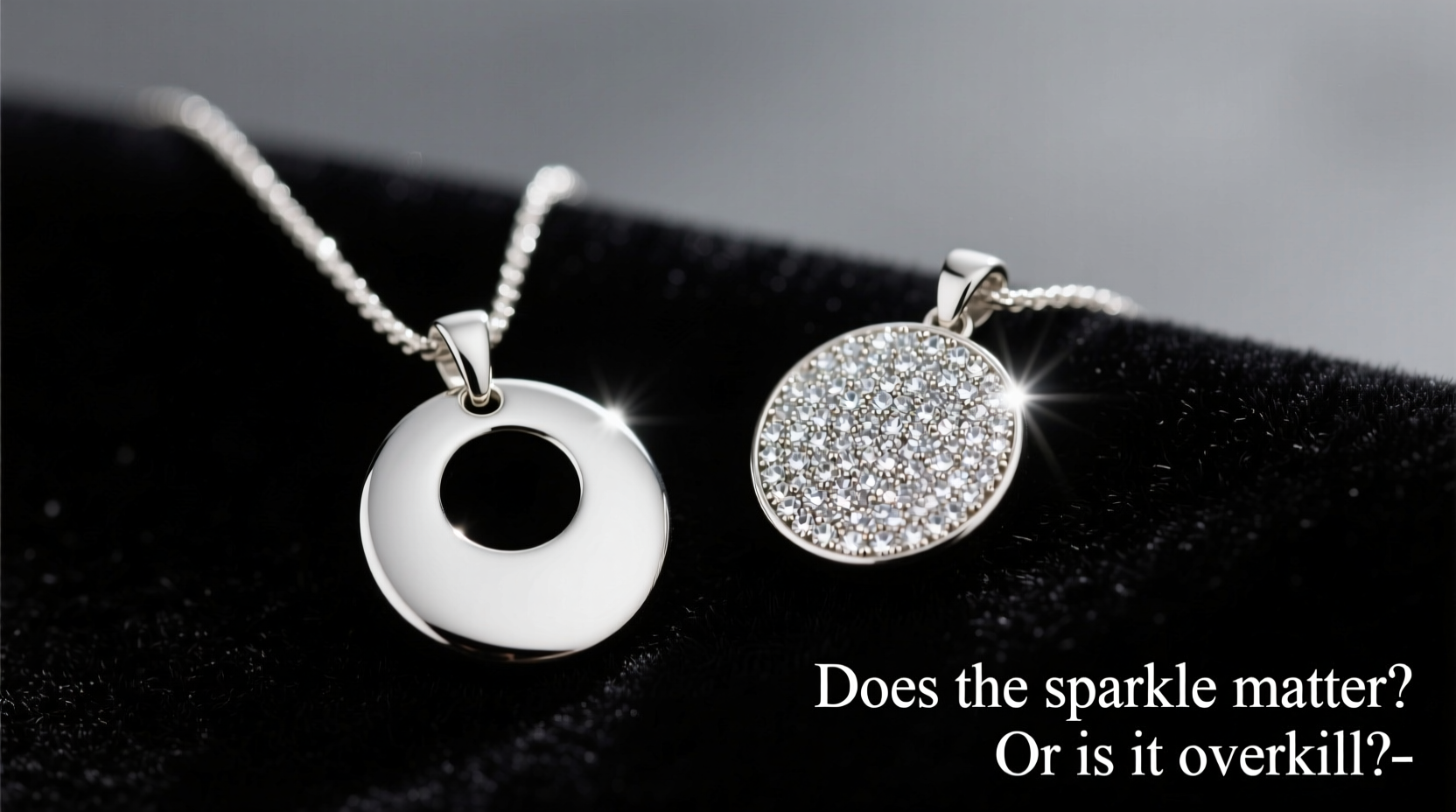
Glitter pendants are designed to stand out. Whether encrusted with micro-crystals, rhinestones, or coated with holographic finishes, their primary function is visual impact. They draw the eye, elevate casual outfits, and often serve as conversation starters. This makes them ideal for events where you want to be seen—weddings, parties, holiday gatherings.
In contrast, plain pendants offer subtlety. Crafted from solid metals like sterling silver, gold, or platinum, or featuring minimalist designs in wood or stone, they project elegance through restraint. A simple geometric shape, engraved locket, or smooth gemstone can convey sophistication without demanding attention.
Designers often use glitter elements to tap into emotional appeal. “Sparkle triggers joy,” says jewelry designer Lena Moretti.
“It’s not just decoration—it’s an extension of celebration. People don’t just wear glitter; they feel uplifted by it.” — Lena Moretti, Founder of Lumina Jewelry Co.
Durability and Maintenance: Practical Considerations
Beyond looks, longevity matters. Glitter pendants often involve delicate materials. Adhesives used to attach tiny crystals may degrade over time, especially when exposed to moisture, lotions, or friction. Once stones begin to loosen or fall out, the pendant loses its luster—literally and figuratively.
Plain pendants, particularly those made from solid metals or single-stone settings, are generally more durable. They resist tarnishing (with proper care), withstand daily wear better, and require less maintenance. Polishing a silver bar pendant takes seconds; re-gluing dozens of micro-rhinestones is neither practical nor cost-effective.
If you lead an active lifestyle or work in environments with frequent hand movement (healthcare, fitness, hospitality), a glitter pendant may not be the most functional choice. Sweat, sanitizer, and constant contact accelerate wear on fragile embellishments.
Style Versatility: When and Where Each Shines
Versatility determines how often you’ll actually wear a piece. A plain pendant transitions seamlessly from day to night, office to dinner, spring to winter. It pairs easily with other jewelry and adapts to changing trends without looking dated.
Glitter pendants, while stunning, are often situational. They dominate an outfit rather than complement it. Wearing one to a formal gala? Perfect. To a business meeting or morning coffee run? Potentially excessive.
| Feature | Glitter Pendant | Plain Pendant |
|---|---|---|
| Visual Impact | High – draws immediate attention | Moderate to low – understated elegance |
| Durability | Low to moderate – sensitive to wear and environment | High – resilient with basic care |
| Versatility | Limited – best for special occasions | High – suitable for daily wear |
| Maintenance | High – risk of stone loss, cleaning complexity | Low – occasional polishing, wipe-down |
| Cost Efficiency (Long-Term) | Moderate – may need repair or replacement | High – lasting value |
Real-Life Scenario: Choosing for a Client
Jenna, a marketing executive in her early 30s, wanted a meaningful pendant to mark her promotion. She initially leaned toward a rose-gold heart with scattered cubic zirconia—eye-catching and celebratory. Her stylist advised considering both short-term impact and long-term relevance.
After discussion, Jenna opted for a two-piece strategy: a subtle plain pendant (a small engraved \"R\" for her late mentor) for daily wear, and a limited-edition glitter pendant for milestone events. This approach allowed her to express gratitude quietly while still enjoying moments of glamour. Over six months, she wore the plain pendant four times weekly; the glitter piece appeared only three times—but each occasion was memorable.
This case illustrates a growing trend: intentional layering of jewelry roles rather than relying on one “statement” piece for all contexts.
Finding Balance: How to Decide What Works for You
The question isn’t whether sparkle matters—it clearly does in certain settings. The real issue is overuse. Just as wearing bold makeup every day can dull its effect, constantly choosing glitter risks diminishing its power when you really need it.
Consider your wardrobe baseline. If your style leans minimalist, a glitter pendant can act as a focal point. If your closet already includes sequins, metallic fabrics, and layered chains, adding more sparkle might tip the balance into sensory overload.
Ask yourself: Do I want my jewelry to speak softly or shout confidently? There’s no wrong answer, but clarity here guides smarter choices.
Step-by-Step Guide: Choosing Your Next Pendant
- Evaluate your lifestyle: Do you work in a high-movement job or prefer low-maintenance accessories?
- Assess your current collection: Are you missing a standout piece, or do you need something versatile?
- Identify key occasions: List events where you’d want to make a visual impression.
- Try both styles: Wear a glitter and a plain pendant for a week each. Note compliments, comfort, and frequency of wear.
- Consult a jeweler: Ask about material quality, setting security, and care requirements—especially for glitter designs.
FAQ: Common Questions About Pendant Choices
Can I wear a glitter pendant every day?
Possibly, but not ideally. Daily exposure to oils, sweat, and friction increases the risk of stone loss and finish degradation. Reserve glitter pendants for evenings or special days unless they’re exceptionally well-constructed.
Are plain pendants boring?
Not at all. Simplicity often enhances elegance. A well-crafted plain pendant reflects confidence in subtlety. Think of it like a tailored blazer—minimalist, yet powerful in execution.
Do glitter pendants lose their sparkle over time?
Yes, especially if the glitter comes from adhesive-backed materials or low-grade plating. High-quality electroplated or permanently set crystal designs retain shine longer but still require careful handling.
Checklist: Before Buying Any Pendant
- ✅ Determine primary use (daily, occasional, ceremonial)
- ✅ Check metal type and hypoallergenic properties
- ✅ Inspect stone setting security (for glitter styles)
- ✅ Assess chain compatibility and length
- ✅ Verify cleaning instructions and warranty
- ✅ Try it with multiple outfits before finalizing
Conclusion: Let Your Style Lead, Not the Sparkle
The debate between glitter and plain pendants isn’t about which is better overall—it’s about alignment with your life. Sparkle has its place, and when used intentionally, it amplifies joy and confidence. But permanence, versatility, and quiet elegance give plain pendants enduring value.
Instead of choosing one and rejecting the other, consider building a balanced jewelry collection. Own a glitter pendant for nights when you want to shine—and a plain one for the days when your presence speaks louder than any adornment.




 浙公网安备
33010002000092号
浙公网安备
33010002000092号 浙B2-20120091-4
Comments
No comments yet. Why don't you start the discussion?