
When it comes to decorating for the holidays, one of the most visually striking techniques is outlining a Christmas tree—whether on a wall, window, or freestanding structure. The goal is to create a glowing silhouette that captures the spirit of the season. Two popular options for achieving this effect are glow wire (also known as rope light or LED neon flex) and traditional string lights. While both can produce beautiful results, they differ significantly in flexibility, brightness, energy efficiency, and overall impact. Choosing the right one depends on your specific project, location, and aesthetic goals.
Understanding the Basics: What Are Glow Wire and String Lights?
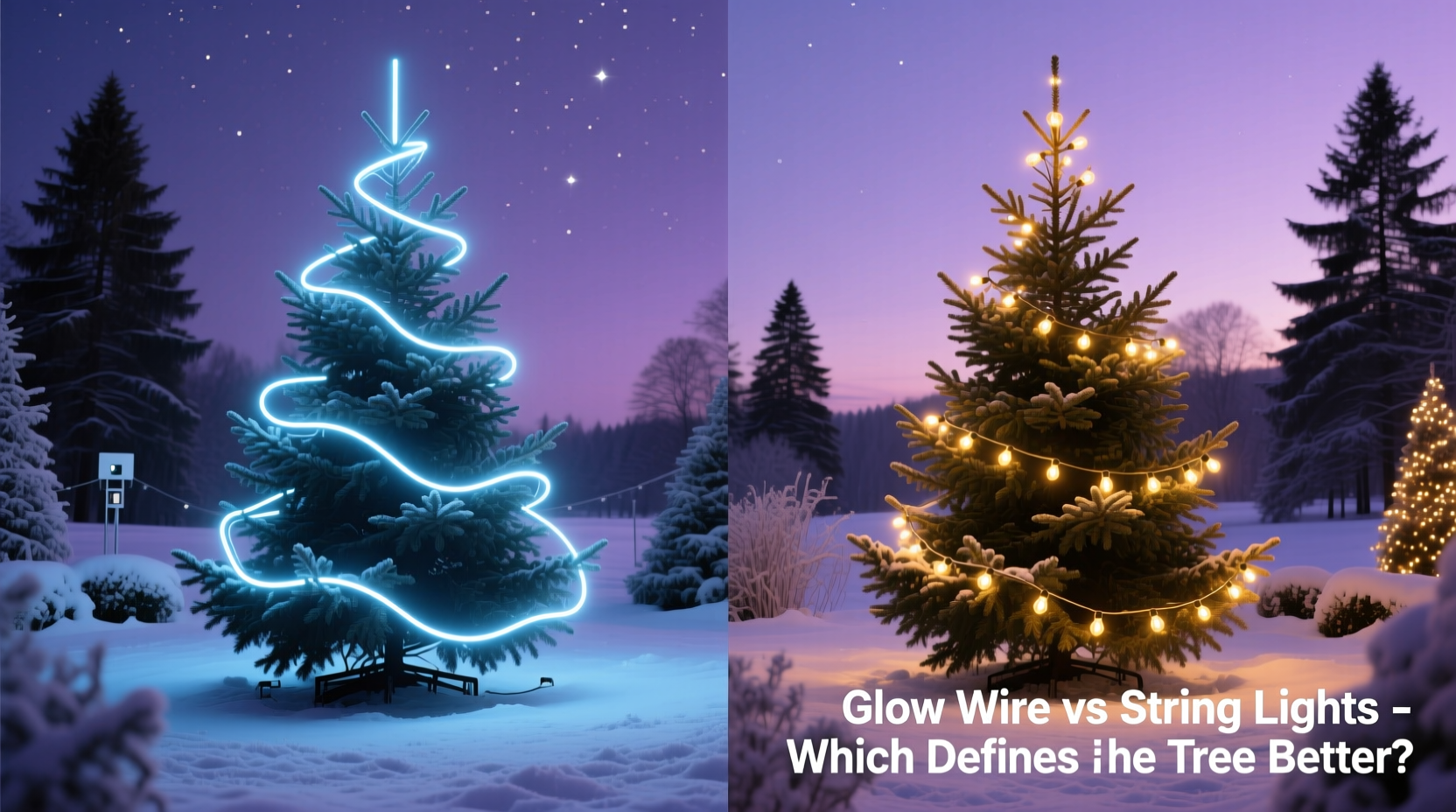
Glow wire and string lights are often used interchangeably in holiday decor, but they are fundamentally different in construction and performance.
Glow wire, sometimes referred to as LED neon flex or rope lighting, consists of a continuous line of LEDs encased in a flexible silicone or PVC tube. This creates a uniform, diffused glow along its entire length. It’s commonly available in fixed lengths or spools and can be cut to size at designated points. Because of its even illumination, it's ideal for creating clean lines and defined shapes such as trees, stars, or letters.
String lights, on the other hand, are a series of individual bulbs spaced apart—typically 2 to 12 inches—connected by a thin insulated wire. They come in various bulb types (mini, fairy, C7, C9) and offer a more traditional twinkling effect. While versatile, their segmented lighting can result in a dotted rather than solid outline when used for shaping.
Key Factors in Choosing Between Glow Wire and String Lights
Selecting the best option isn’t just about preference—it’s about matching the product to your project’s technical and visual needs. Consider these five factors before making a decision.
1. Light Uniformity and Visual Effect
The primary purpose of outlining a Christmas tree is to define its shape clearly. Here, glow wire has a distinct advantage. Its continuous glow produces a smooth, unbroken line that mimics the look of real neon. This makes it perfect for sharp silhouettes, especially when viewed from a distance or in low-light conditions.
String lights, while charming, create a dotted effect due to the gaps between bulbs. Even with tightly spaced mini lights, the outline appears fragmented up close. If you're aiming for a modern, clean aesthetic, this may not deliver the desired impact.
2. Flexibility and Ease of Shaping
Both options are flexible, but in different ways. Glow wire maintains consistent rigidity—it can be bent into curves and angles but holds its shape well once formed. Many models include mounting clips or adhesive backing, simplifying installation on walls or eaves.
String lights are more pliable but harder to control. Without support, they tend to sag or droop over time, especially outdoors. Creating a precise tree shape requires careful pinning or stapling at multiple points, increasing labor and setup time.
3. Durability and Weather Resistance
If your tree outline will be displayed outdoors, durability becomes critical. Most modern glow wire is rated IP65 or higher, meaning it’s fully sealed against dust and water. This makes it suitable for rain, snow, and temperature fluctuations.
String lights vary widely. While many are marketed as “outdoor-safe,” the connections between bulbs and the plug end are common failure points. Moisture infiltration can lead to short circuits or complete strand failure. Look for commercial-grade C9 or C7 strings with molded sockets if using outdoors—but expect higher cost and weight.
4. Power Efficiency and Heat Output
LED-based glow wire consumes very little power—often under 5 watts per meter—and generates almost no heat. This makes it safe for indoor use near fabrics, curtains, or dry foliage. You can run longer runs without overloading circuits.
String lights, particularly incandescent versions, consume significantly more power and emit noticeable heat. Even LED string lights, while efficient, have slightly higher cumulative draw when multiple strands are connected. Overheating at connection points remains a concern with cheaper models.
5. Installation and Maintenance
Glow wire typically requires fewer attachment points and can be installed faster. Some versions come with pre-drilled holes or magnetic backing for metal surfaces. Since it’s a single continuous unit, there are fewer connectors to fail.
String lights require meticulous alignment to maintain shape. Each bulb must be secured, and multiple strands often need to be linked together, increasing the number of potential failure points. Replacing a single dead bulb in a series can be time-consuming, especially in older incandescent sets.
“Outlining architectural features like trees or rooflines demands consistency in light output. Glow wire delivers professional-grade results with less effort.” — Marcus Reed, Holiday Lighting Designer & Contractor
Comparison Table: Glow Wire vs String Lights
| Feature | Glow Wire | String Lights |
|---|---|---|
| Light Uniformity | Continuous, even glow | Segmented, dotted appearance |
| Ease of Shaping | Bends smoothly; holds shape | Flexible but prone to sagging |
| Weather Resistance | High (IP65+ common) | Varies; often lower |
| Power Consumption | Low (efficient LEDs) | Moderate to high |
| Heat Output | Minimal | Noticeable (especially incandescent) |
| Installation Time | Faster, fewer supports | Slower, frequent securing needed |
| Lifespan | 30,000–50,000 hours | 10,000–25,000 hours |
Step-by-Step Guide: How to Outline a Christmas Tree Using Either Option
Regardless of which lighting type you choose, proper planning ensures a professional finish. Follow this sequence for best results.
- Measure and Plan the Layout
Determine the height and width of your tree. Sketch the outline on paper or use painter’s tape on the wall to visualize the final shape. - Choose Mounting Location
Decide whether the tree will go on a wall, fence, window frame, or free-standing surface. Ensure the area is clean and dry. - Select the Right Length
For glow wire, buy a length that matches your total perimeter plus 10% extra for adjustments. For string lights, calculate how many strands you’ll need based on bulb spacing and connectable length limits. - Test Before Installing
Plug in the lights indoors to verify all sections work. Check for dark spots or flickering. - Secure the Lights
Use appropriate fasteners: plastic clips for vinyl siding, gutter hooks for roofs, or adhesive mounts for smooth walls. Avoid nails or staples that could damage wires. - Bend and Shape Carefully
For glow wire, gently bend around corners using a minimum radius (check manufacturer specs). For string lights, space supports every 6–12 inches to prevent sagging. - Connect to Power
Use a GFCI-protected outlet outdoors. Plug into a timer to automate daily operation and save energy. - Final Inspection
View the tree from multiple distances and angles. Adjust any uneven sections or loose segments.
Real Example: Community Center Holiday Display Upgrade
A small-town community center had used traditional C7 string lights for years to outline a 12-foot Christmas tree on its front lawn. Volunteers spent over six hours each season installing and troubleshooting flickering sections. After three seasons of failed bulbs and weather damage, the facilities manager decided to switch to commercial-grade LED glow wire.
The new installation took under three hours with only two people. The continuous glow created a sharper, more visible silhouette at night, drawing compliments from passersby. Over the next four holiday seasons, maintenance was limited to wiping down the tubes with a damp cloth. Despite freezing temperatures and heavy snowfall, the lights performed flawlessly.
The initial investment was 30% higher than replacing old string lights, but energy savings and reduced labor paid back the difference within two years. The center now uses the same glow wire for other seasonal displays, including snowflakes and reindeer outlines.
Checklist: Choosing the Right Option for Your Project
- ☐ Define where the tree will be placed (indoor/outdoor)
- ☐ Measure the total linear feet needed for the outline
- ☐ Decide on color: warm white, cool white, or multicolor
- ☐ Confirm power source availability and circuit capacity
- ☐ Choose between plug-in or battery-powered (battery limits length)
- ☐ Verify weather rating if used outside (IP65 or higher recommended)
- ☐ Consider visibility goals—sharp line (glow wire) vs. twinkling effect (string lights)
- ☐ Estimate installation time and helper availability
- ☐ Check return policy in case of defects or sizing issues
- ☐ Plan for storage after the season—avoid tight coiling of glow wire
Frequently Asked Questions
Can I cut glow wire to fit my tree size?
Yes, most LED glow wire can be cut at designated cut marks, usually every 1–3 feet. Cutting elsewhere may damage the circuit. Always seal the cut end with a provided cap or waterproof silicone.
Are string lights safer than glow wire?
Safety depends on quality and usage. Modern LED glow wire runs cooler and uses lower voltage, reducing fire risk. Cheap string lights—especially older incandescent sets—can overheat. Always look for UL certification regardless of type.
Which option is more energy-efficient?
Glow wire is generally more efficient because it uses high-density, low-wattage LEDs in a sealed system. String lights, even LED versions, have higher resistance across longer wire runs and multiple connectors, leading to slightly higher consumption over large installations.
Final Recommendation: When to Choose Which
For **outlining a Christmas tree shape**, glow wire is the superior choice in nearly every practical category. Its continuous glow ensures a crisp, professional-looking silhouette. It’s easier to install, more durable, and safer for long-term use—especially outdoors. If you value clean lines, minimal maintenance, and energy efficiency, glow wire should be your default pick.
String lights still have their place. If you prefer a classic, twinkling effect or are layering lights within a physical tree rather than outlining a shape, string lights add charm and depth. They’re also more affordable upfront for small projects and widely available at retail stores.
However, for dedicated architectural outlining—particularly on walls, windows, or facades—glow wire offers unmatched consistency and longevity. As LED technology becomes more accessible, the price gap continues to narrow, making it a smart long-term investment.




 浙公网安备
33010002000092号
浙公网安备
33010002000092号 浙B2-20120091-4
Comments
No comments yet. Why don't you start the discussion?