
The choice between golden and silver buttons on a coat might seem minor, but it can significantly influence the overall impression of a garment. Buttons are more than functional—they're finishing details that speak to craftsmanship, intention, and aesthetic harmony. Whether you're selecting a tailored overcoat, a trench, or a wool peacoat, the metal tone of your buttons affects formality, cohesion with accessories, and perceived quality. Understanding the nuances helps avoid the trap of looking unintentional—or worse, tacky.
The Role of Button Finish in Coat Design
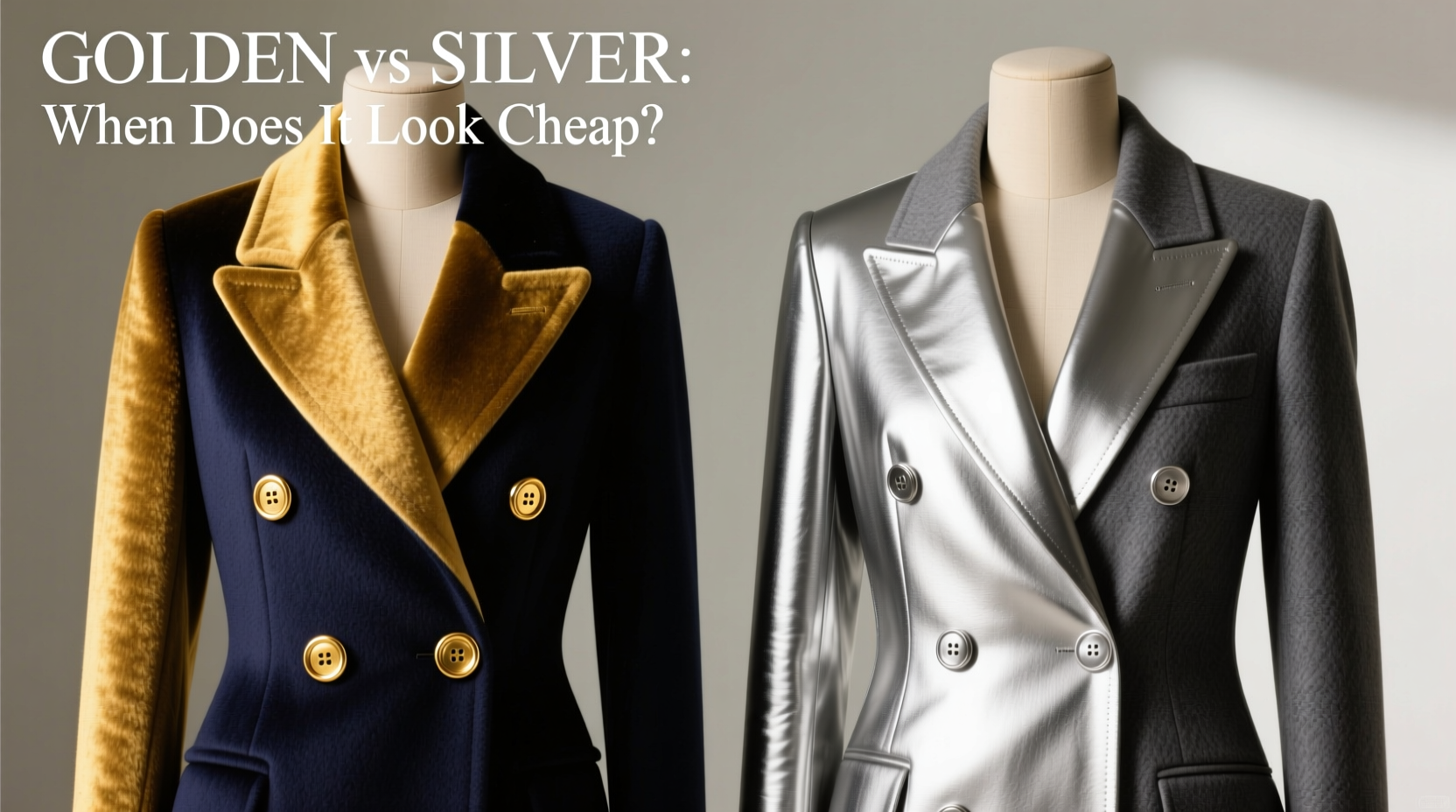
Buttons serve both practical and symbolic purposes. They fasten the coat, yes, but they also anchor the visual weight of the front panel. A well-chosen button complements the fabric, cut, and context of wear. The finish—whether gold, silver, brass, or matte black metal—must align with the coat’s character.
Gold-toned buttons typically suggest warmth, richness, and tradition. They’re common on heritage-style coats like Chesterfields, double-breasted overcoats, and vintage-inspired designs. Silver-toned buttons, by contrast, convey coolness, precision, and modernity. You’ll often find them on minimalist trenches, military-inspired greatcoats, or technical outerwear.
The key isn’t just color—it’s finish quality. A poorly cast golden button with uneven plating will look cheap regardless of the coat’s price tag. Likewise, flimsy silver buttons with visible seams or chipping paint undermine an otherwise elegant design.
When Gold Works—and When It Backfires
Golden buttons shine (literally) on coats with warm undertones: camel, chocolate brown, olive green, or rust. They harmonize with brass zippers, leather trims, or engraved monograms. Traditional menswear brands like Barbour, Aquascutum, and Belstaff often use gold-tone buttons to reinforce a rugged yet refined identity.
However, gold can appear gaudy if not executed with restraint. Common pitfalls include:
- Overuse: Too many large golden buttons on a lightweight jacket can feel costume-like.
- Poor plating: Thin coatings that wear off after a season expose base metal, signaling low durability.
- Mismatched tone: Yellow-gold buttons on a steel-gray coat may clash unless balanced with other warm accents.
“Button selection is one of the last details designers finalize—because it’s the punctuation mark of the garment.” — Julian Hartwell, Menswear Designer & Educator
Silver Buttons: Modern Edge or Cold Impersonality?
Silver buttons suit cooler palettes: navy, charcoal, black, or stone gray. Their reflective surface adds crispness, making them ideal for urban tailoring and streamlined silhouettes. High-end brands like Max Mara or Acne Studios often use polished silver or gunmetal buttons to emphasize architectural lines.
But silver carries its own risks. Overly shiny chrome buttons on a wool-blend coat can resemble department store uniforms. Matte silver or brushed nickel avoids this, offering subtlety without dullness.
The issue isn’t the metal itself—it’s execution. A silver button should feel substantial, not hollow. It should be securely shanked or stitched with reinforced thread. If it wobbles or leaves green residue on fabric, the quality is subpar, no matter the coat’s label.
Comparing Quality Cues: What Makes Buttons Look Expensive or Cheap
It’s not just gold vs silver—it’s how the buttons are made. Below is a comparison of high-quality versus low-quality indicators across both finishes.
| Feature | High-Quality Buttons | Low-Quality Buttons |
|---|---|---|
| Material | Solid brass with PVD or enamel coating | Plastic core with electroplated film |
| Weight | Substantial, dense feel | Lightweight, hollow |
| Finish | Even, scratch-resistant, no edge chipping | Peeling, cloudy, or inconsistent tone |
| Backing | Secure shank or reinforced stitching | Flimsy loop or weak thread |
| Detailing | Engraved logo, fine texture, brand stamp | Generic mold, no branding |
A $500 coat with plastic-core golden buttons will look cheaper than a $300 coat with authentic horn-toned resin or solid alloy. The material honesty matters more than the hue.
Real-World Example: The Trench Coat Dilemma
Consider two identical cotton gabardine trench coats. One has matte gold-toned buttons, the other polished silver. Both are from reputable retailers. A customer chooses the gold version, drawn to its “classic” appeal. But within three months, the buttons begin to tarnish and lose luster. Why?
Investigation reveals the gold buttons are made from zinc alloy with a thin lacquer coating. Exposure to rain and humidity causes oxidation. The silver version, meanwhile, uses ion-plated stainless steel—resistant to corrosion and fading. Despite initial appearance, the silver option proves more durable and visually consistent over time.
This case underscores that finish longevity matters more than trend alignment. A beautiful button must survive real-world conditions without degrading.
How to Choose the Right Button Finish: A Practical Checklist
Before buying a coat, evaluate the buttons with this checklist:
- ✅ Hold the coat under natural light—does the button reflect consistently?
- ✅ Press the edge—can you see base metal or rough casting lines?
- ✅ Compare to your accessories—are they gold, silver, or mixed?
- ✅ Assess the coat’s color temperature—is it warm or cool?
- ✅ Research the brand—do they specify button materials in product details?
- ✅ Test weight—do the buttons feel like part of a premium garment?
FAQ: Golden vs Silver Buttons on Coats
Does gold always look more formal than silver?
Not necessarily. Formality depends on context. A polished silver button on a black wool topcoat can be more formal than a flashy gold one on a casual field jacket. It’s about proportion, finish, and coordination with the rest of the outfit.
Can I mix gold and silver buttons on the same coat?
Rarely advisable. Mixed metals on a single garment can appear haphazard unless intentionally designed (e.g., fashion-forward asymmetry). Stick to one dominant metal tone for coherence.
Are horn or corozo buttons better than metal?
They serve different purposes. Horn and corozo offer organic texture and are common on sport coats or casual wear. Metal buttons provide structure and shine, ideal for outerwear. Neither is inherently superior—choose based on style intent.
Final Guidance: Prioritize Integrity Over Hue
The debate between golden and silver buttons isn't about which is objectively better—it's about alignment. A golden button should enhance warmth and tradition without veering into ostentation. A silver button should add crispness without coldness. The true marker of quality lies beneath the surface: material density, plating integrity, and construction care.
When in doubt, opt for subdued finishes—antique gold, brushed silver, or gunmetal—over high-polish options. These age gracefully and resist looking cheap as they develop a natural patina. And always consider your wardrobe ecosystem: if your watch, belt buckle, and glasses are silver-toned, a coat with matching buttons will look intentional, not incidental.
“The best details go unnoticed—not because they’re invisible, but because they feel inevitable.” — Clara Nguyen, Fashion Editor, *The Wardrobe Review*




 浙公网安备
33010002000092号
浙公网安备
33010002000092号 浙B2-20120091-4
Comments
No comments yet. Why don't you start the discussion?