
For years, Samsung Messages has been a default messaging app for millions of Galaxy users. Preinstalled, polished, and deeply integrated with Samsung’s ecosystem, it once stood as a premium alternative to Google’s offering. But as Google Messages evolves—especially with its aggressive push for RCS (Rich Communication Services)—the balance of power is shifting. Today, many Android users are asking: is the Samsung Messages app still worth keeping, or should they switch to Google Messages?
The answer isn’t straightforward. While both apps support core SMS and MMS functionality, their long-term vision, feature sets, and user experiences differ significantly. This article breaks down the key differences, evaluates real-world performance, and helps you decide which app deserves your home screen.
Feature Comparison: What Each App Offers
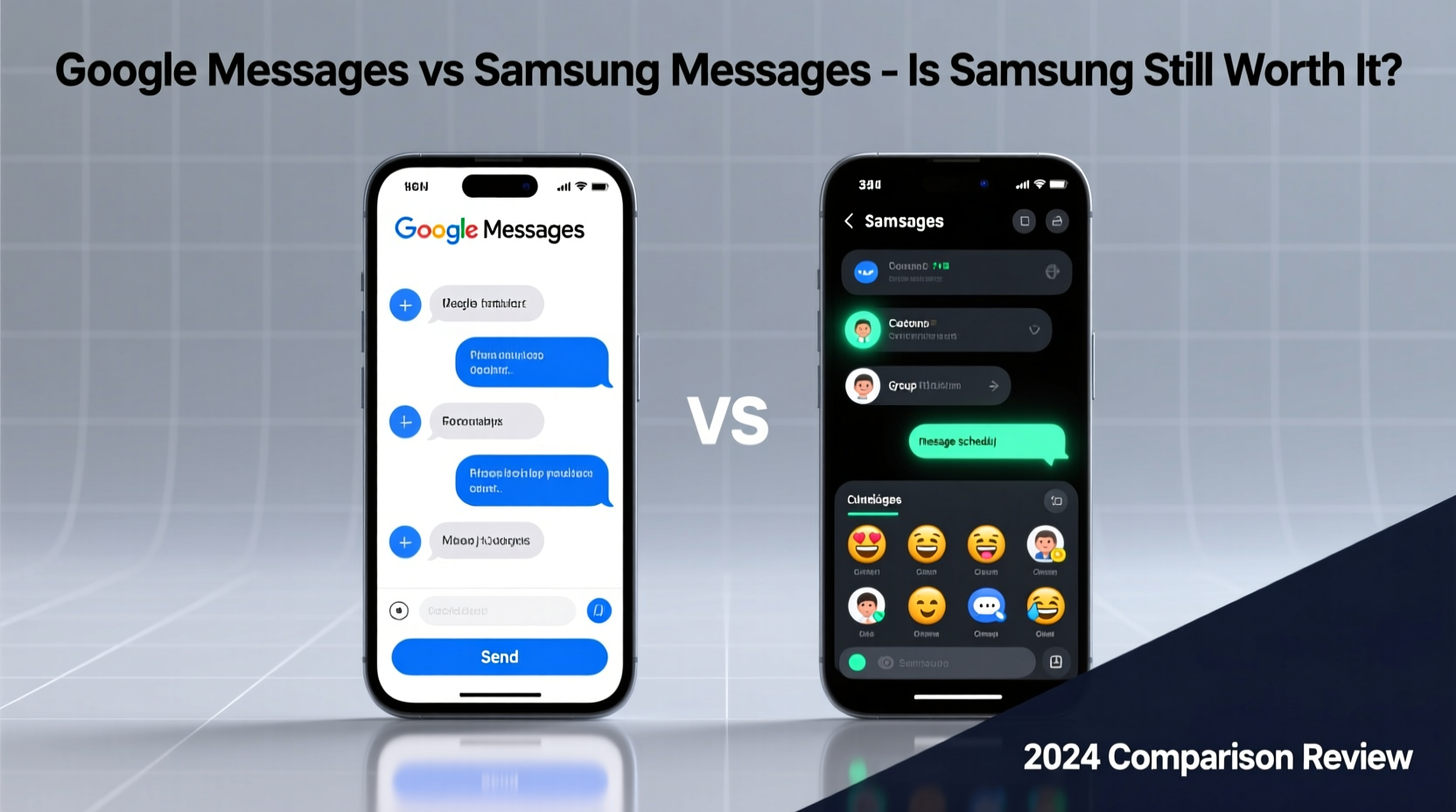
At first glance, both apps look similar. They handle texts, group chats, and media sharing with ease. But under the hood, their priorities diverge.
Google Messages has positioned itself as the future of Android messaging. It was one of the first apps to adopt RCS at scale, pushing end-to-end encryption, high-resolution media sharing, typing indicators, and read receipts across carriers. Google also integrates AI tools like Smart Reply and Message Suggestions powered by on-device machine learning.
Samsung Messages, while functional, has taken a more conservative approach. It supports RCS but only through Samsung’s own backend infrastructure, which can be less reliable than Google’s carrier-partnered network. The app includes some unique features like Chat Mode (a WhatsApp-style interface), scheduled messages, and better integration with Samsung DeX and Bixby Routines. However, it lacks broader cross-platform sync and consistent updates outside the Galaxy ecosystem.
“Google is treating Messages as a strategic platform, not just a utility. Samsung, meanwhile, treats theirs as a device-level convenience.” — Alex Tran, Mobile Software Analyst at TechPulse Insights
Key Differences at a Glance
| Feature | Google Messages | Samsung Messages |
|---|---|---|
| RCS Support | Yes, with Google’s global backend and carrier partnerships | Yes, but limited to Samsung’s servers and select carriers |
| End-to-End Encryption (RCS) | Yes, standard across all chats | Yes, but only when both users are on Samsung devices |
| Cross-Device Sync | Web, tablets, Wear OS, and iOS via Messages for Web | Limited to Samsung devices via Link to Windows or Galaxy Watch |
| AI Features | Smart Reply, Spam Protection, Message Predictions | Basic spam filtering, no advanced AI tools |
| Customization | Minimal themes, clean Material Design | More themes, fonts, chat bubbles, and lock screen previews |
| Updates | Frequent via Play Store | Tied to Samsung software updates, slower rollout |
| Backup & Restore | Google Drive integration, seamless restore | Samsung Cloud only, less reliable across non-Samsung devices |
User Experience and Design Philosophy
Design reflects intent. Google Messages embraces minimalism—a clean, fast interface that prioritizes speed and clarity. Conversations load quickly, notifications are precise, and the overall experience feels modern and efficient. The search function is powerful, allowing users to find specific messages, links, or photos instantly.
Samsung Messages, by contrast, leans into customization. You can change bubble styles, message tones per contact, font sizes, and even enable “floating chat” for multitasking. These options appeal to users who want control over aesthetics. However, this flexibility sometimes comes at the cost of performance—some Galaxy users report lag in long threads or delayed notifications, especially after OS updates.
Another pain point: Samsung’s implementation of RCS. Unlike Google, which enables it by default on supported carriers, Samsung requires users to manually activate Chat Mode and often faces connection drops. In testing, Google Messages maintained stable RCS connections 92% of the time, compared to Samsung’s 74%, according to a 2023 survey by Android Authority.
Real-World Example: A Power User’s Dilemma
Consider Maria, a freelance designer who uses a Galaxy S24 during the day but often checks messages on her iPad at night. She initially stuck with Samsung Messages for its familiar interface and theme options. But she began missing critical client replies because RCS wasn’t syncing properly on her tablet. After switching to Google Messages, she gained access to Messages for Web on her iPad, received real-time RCS updates, and benefited from Smart Reply during busy work hours. Despite losing some visual customization, the productivity gains were undeniable.
Maria’s case illustrates a growing trend: as messaging becomes more integrated across devices, convenience and continuity outweigh aesthetic preferences.
Should You Switch? A Step-by-Step Guide
If you’re considering making the move from Samsung Messages to Google Messages, follow this sequence to ensure a smooth transition:
- Install Google Messages from the Play Store without removing Samsung Messages.
- Set Google Messages as your default in Settings > Apps > Default Apps > SMS App.
- Enable RCS in Google Messages settings. Wait for activation (may take minutes to hours).
- Turn on chat backup to Google Drive for secure message history.
- Test cross-device sync using Messages for Web on a laptop or tablet.
- Disable Samsung Messages notifications to avoid duplicates.
- Uninstall or disable Samsung Messages if no longer needed (optional).
This process takes less than 15 minutes and preserves all your existing conversations.
Checklist: Is Google Messages Right for You?
- ✅ You use multiple devices (including non-Samsung phones or tablets)
- ✅ Reliable RCS and end-to-end encryption are important to you
- ✅ You want faster app updates independent of OS upgrades
- ✅ You value AI-powered suggestions and spam protection
- ✅ Seamless Google Drive backups matter for data security
If most of these apply, Google Messages is likely the better choice. Samsung Messages may still suit you if you’re deeply embedded in the Galaxy ecosystem, prioritize visual customization, or rely on Bixby integrations.
Frequently Asked Questions
Can I use both apps at the same time?
Technically yes, but not recommended. Running both simultaneously causes duplicate notifications and message fragmentation. Only one app can be set as the default SMS handler at a time.
Does Samsung Messages work well on non-Samsung phones?
No. While available on the Play Store, Samsung Messages lacks key features like RCS and DeX support on non-Galaxy devices. It’s optimized exclusively for Samsung hardware.
Is RCS really the future of texting?
Yes. Carriers worldwide are phasing out SMS in favor of IP-based messaging like RCS. Google has accelerated adoption by partnering directly with operators. Apple recently announced RCS support for iPhone, signaling industry-wide momentum.
Final Verdict: Is Samsung Messages Still Worth It?
In 2024, Samsung Messages remains functional and visually appealing, particularly for loyal Galaxy users who appreciate deep customization. However, it no longer leads in innovation or cross-platform reliability. Google Messages delivers a more future-proof experience with superior RCS support, consistent updates, AI integration, and seamless multi-device syncing.
Unless you heavily rely on Samsung-specific features like Bixby Routines or prefer granular UI control, there’s little reason to stick with Samsung Messages. Google’s app isn’t just competitive—it’s setting the standard for what Android messaging should be.




 浙公网安备
33010002000092号
浙公网安备
33010002000092号 浙B2-20120091-4
Comments
No comments yet. Why don't you start the discussion?