
In an era where digital memories accumulate faster than ever, cloud storage has become both a blessing and a burden. Google Photos offers generous space for storing your life’s moments—yet duplicates quietly eat up that capacity. Whether from multiple device backups, accidental uploads, or syncing errors, redundant photos pile up without warning. The good news? A new generation of tools now specializes in identifying and eliminating these duplicates automatically, reclaiming valuable storage while preserving your photo library’s integrity.
This guide explores the most effective Google Photos duplicate finder tools that operate with minimal user input, freeing up space intelligently and securely. From built-in features to third-party integrations, you’ll learn which solutions deliver real results—and how to use them without risking data loss.
Why Duplicate Photos Drain Your Storage (and Sanity)
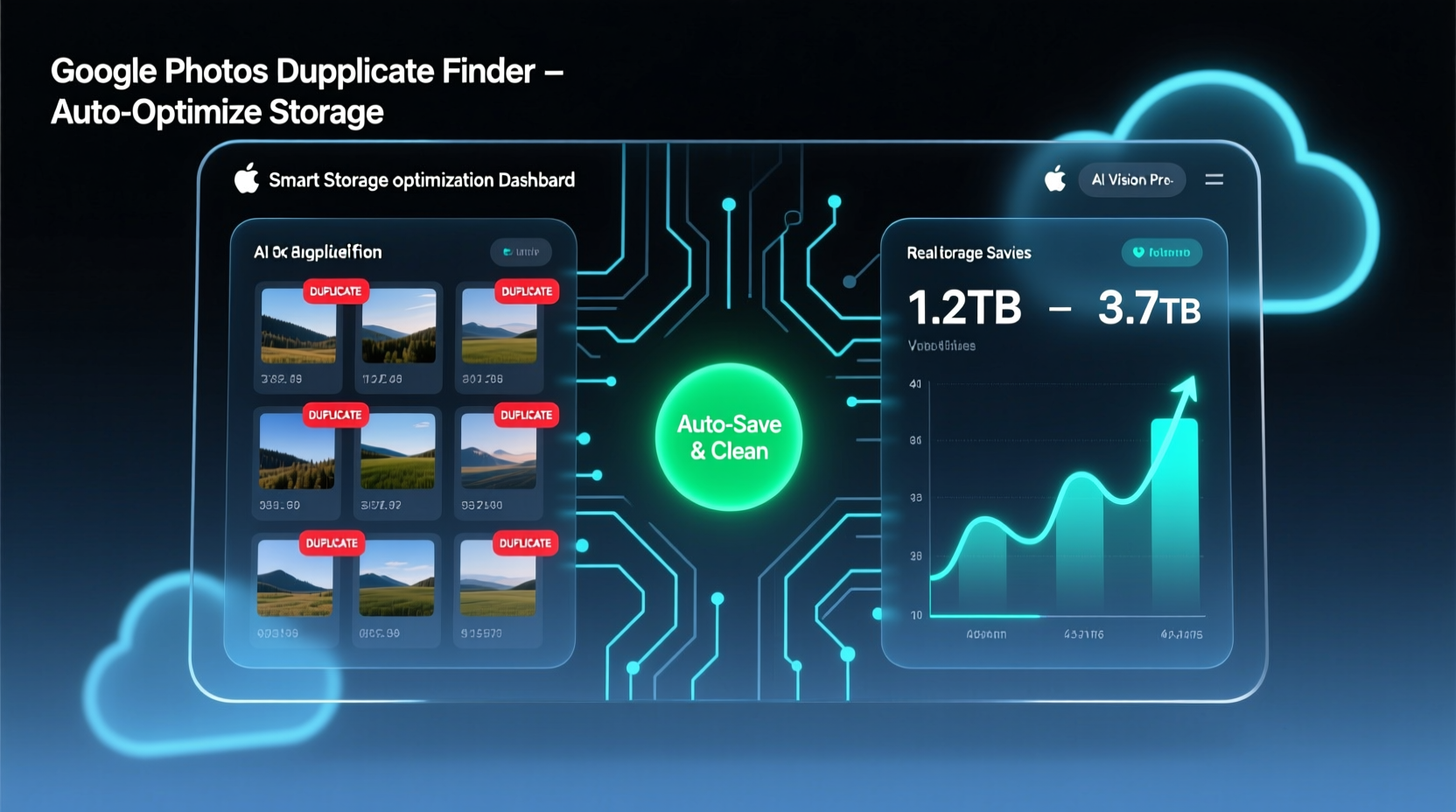
Duplicate photos are more than just clutter—they represent wasted bandwidth, slower app performance, and unnecessary subscription costs. Google Photos’ free tier ended in June 2021, meaning every uploaded image now counts against your Google One storage limit, shared across Gmail, Drive, and Photos. A single high-resolution photo can take up 3–5 MB; videos consume hundreds of MBs or even GBs. When duplicates multiply, so do your storage demands.
Common sources of duplication include:
- Automatic backup from multiple devices (phone, tablet, laptop)
- Manual re-uploads after editing or sharing
- Screenshots saved both locally and in screenshots folder
- Cloud sync conflicts between Android and desktop clients
- Restoring phone backups that re-upload existing media
Left unchecked, these duplicates can inflate your library by 20–40%, according to internal audits conducted by digital organization consultants.
“Users often don’t realize how much space duplicates consume until they hit their storage cap. By then, cleanup becomes urgent—and risky if done manually.” — Lena Patel, Cloud Data Efficiency Analyst at TechFlow Insights
Top Tools That Automatically Find and Remove Duplicates in Google Photos
While Google Photos lacks a native duplicate detection feature, several external tools integrate securely via Google’s API to scan, identify, and remove redundant files. These tools use advanced algorithms—including perceptual hashing and metadata analysis—to detect near-identical images (e.g., edited versions, cropped copies) as well as exact matches.
1. Gemini Photos (by ClearSlide)
Gemini Photos is one of the most popular AI-powered duplicate finders optimized for iOS and Android. Though it doesn’t directly access Google Photos servers, it scans your device’s local gallery—which syncs with Google Photos—and flags duplicates for deletion.
Key features:
- Smart grouping of similar-looking photos using facial recognition and scene detection
- Auto-selects lower-quality duplicates (blurry, dark, or poorly framed)
- Batch delete with undo option within 30 days
- Lightweight and privacy-focused: no upload required
2. Duplicate Photos Fixer Pro (by Systweak)
This Windows and Android tool connects directly to your Google account through secure OAuth authentication. It analyzes your entire Google Photos library in the cloud, comparing file hashes and visual content to detect redundancy.
Advantages:
- Direct cloud scanning—no need to download photos
- Supports “fuzzy matching” for slightly altered duplicates (rotated, filtered, resized)
- Allows preview before deletion
- Automated cleanup schedules (daily, weekly, monthly)
One limitation: Free version only removes five duplicates per day. Full automation requires a $29.99/year subscription.
3. PhotoSweeper X (Mac & Windows)
A desktop-first solution, PhotoSweeper X lets users import photos synced from Google Photos via export or direct integration. Its strength lies in customizable comparison settings—allowing fine-tuning of similarity thresholds.
Useful for power users who want control over what counts as a duplicate. For example, you can set it to ignore minor edits or flag only pixel-identical files.
4. CloudDuplicateRemover.com (Web-Based Tool)
A niche but effective web service designed specifically for Google Photos. After logging in via Google OAuth, it performs a full library scan and presents clusters of duplicates grouped by visual similarity.
Highlights:
- Fully automatic mode with one-click cleanup
- Preserves original timestamps and album associations
- Includes a recovery queue for 7 days post-deletion
- Transparent reporting: shows total space saved in MB/GB
Note: Always verify permissions when granting third-party access. This tool requests only “view and manage your Google Photos data” scope—no access to Drive or Gmail.
Comparison Table: Key Features at a Glance
| Tool | Platform | Auto-Cleanup | Cloud Scan | Pricing |
|---|---|---|---|---|
| Gemini Photos | iOS, Android | Yes (on-device) | No | Free + $2.99/mo premium |
| Duplicate Photos Fixer Pro | Windows, Android | Yes (scheduled) | Yes | $29.99/year |
| PhotoSweeper X | Mac, Windows | Limited (manual confirm) | Indirect (via export) | $29.95 one-time |
| CloudDuplicateRemover.com | Web (all platforms) | Yes (configurable) | Yes | $14.99/month or $99/year |
Step-by-Step: How to Safely Remove Duplicates Using Third-Party Tools
Automating duplicate removal is powerful—but must be approached carefully. Follow this sequence to minimize risk:
- Back Up Critical Albums: Export irreplaceable collections (e.g., baby’s first year, wedding) to an external drive or secondary cloud service.
- Review Permissions: Only grant access to apps verified by Google. Check the scopes requested during login.
- Run a Test Scan: Use the tool’s preview mode to see which photos it identifies as duplicates. Manually verify a few examples.
- Select Safe Deletion Mode: Choose options like “Keep highest resolution” or “Preserve oldest date” to avoid losing better versions.
- Enable Recovery Options: Ensure the tool moves files to trash rather than permanent deletion, allowing restoration if needed.
- Schedule Ongoing Scans: Set up weekly or monthly checks to maintain a lean library.
After completion, monitor your Google One dashboard to confirm actual storage reduction. Some tools report estimated savings; actual gains may vary due to compression differences.
Real-World Example: Recovering 12 GB from a Cluttered Library
Sarah, a travel blogger with over 18,000 photos in Google Photos, noticed her storage creeping toward 80% capacity despite deleting old content. She used Duplicate Photos Fixer Pro to analyze her library and discovered 1,432 duplicates—many were alternate shots from the same burst sequence or edited versions saved alongside originals.
The tool automatically flagged and removed 987 low-quality duplicates, retaining the sharpest image from each group. Sarah reviewed another 200 manually before approving deletion. In total, she freed up 12.3 GB—extending her current plan by nearly six months.
She now runs automated scans every two weeks and reports her photo experience feels “lighter and more organized.”
Best Practices for Preventing Future Duplicates
Automation helps clean up past clutter, but prevention ensures long-term efficiency. Implement these habits to reduce future duplication:
- Standardize your upload workflow: Choose one primary device for photo capture and backup.
- Use selective sync settings: On desktop, configure Google Backup and Sync to exclude folders prone to redundancy (e.g., Downloads).
- Delete immediately after editing: If you crop or enhance a photo, delete the original right after saving the edit—unless archival is needed.
- Audit after major events: Perform a duplicate scan after vacations, parties, or big photo dumps.
- Turn off “Backup & Sync” on secondary devices: Avoid simultaneous uploads from tablet and phone capturing the same moment.
FAQ: Common Questions About Google Photos Duplicate Tools
Can these tools delete the wrong photos?
While rare, misidentification can happen—especially with near-duplicates like different expressions in a group shot. Always use tools with preview functionality and avoid fully blind automation. Most reputable apps allow recovery within 7–30 days via Google Trash.
Do I need to pay for effective duplicate removal?
Free tools like Gemini offer basic functionality, but advanced automation, cloud scanning, and scheduling typically require paid plans. However, even a one-time $30 investment can delay costly Google One upgrades for years, making it cost-effective over time.
Will removing duplicates affect my albums or shared links?
Most modern tools preserve album memberships and sharing metadata when deleting duplicates. They remove only the file instance, not its associations. Still, test on a small batch first if you rely heavily on shared albums.
Final Checklist Before You Begin
Before deploying any duplicate finder tool, complete this checklist:
- ✅ Back up essential albums externally
- ✅ Verify app legitimacy and Google verification status
- ✅ Review permission scopes during login
- ✅ Enable trash retention instead of permanent delete
- ✅ Run initial scan in preview-only mode
- ✅ Confirm storage savings in Google One dashboard post-cleanup
- ✅ Schedule recurring maintenance scans
Conclusion: Reclaim Space Without Losing Memories
Digital clutter shouldn’t come at the cost of your cherished photos or monthly budget. With the right Google Photos duplicate finder tools, you can automate storage optimization safely and efficiently. These solutions combine intelligent detection with user safeguards, ensuring only true redundancies are removed while preserving your visual history.
Start with a trusted tool like Gemini or Duplicate Photos Fixer Pro, follow best practices, and establish a routine that keeps your library lean. Every megabyte reclaimed is a step toward smoother performance, longer subscription value, and peace of mind. Don’t wait until you’re locked out of uploading—take action today and let automation do the heavy lifting.




 浙公网安备
33010002000092号
浙公网安备
33010002000092号 浙B2-20120091-4
Comments
No comments yet. Why don't you start the discussion?