
In 2017, two smartphones stood at the forefront of Android innovation: the Google Pixel 2 and the Samsung Galaxy S8. While both launched within months of each other, they represented different philosophies in design, software, and user experience. For users considering an upgrade from the S8 to the Pixel 2—or wondering whether the S8 still holds up today—the question isn't just about specs. It's about real-world performance, longevity, camera quality, and overall value.
This article breaks down the key differences between these two iconic devices, evaluates whether the upgrade was worth it at the time, and assesses if the Galaxy S8 remains a decent option even years later.
Design and Build: Form Meets Function
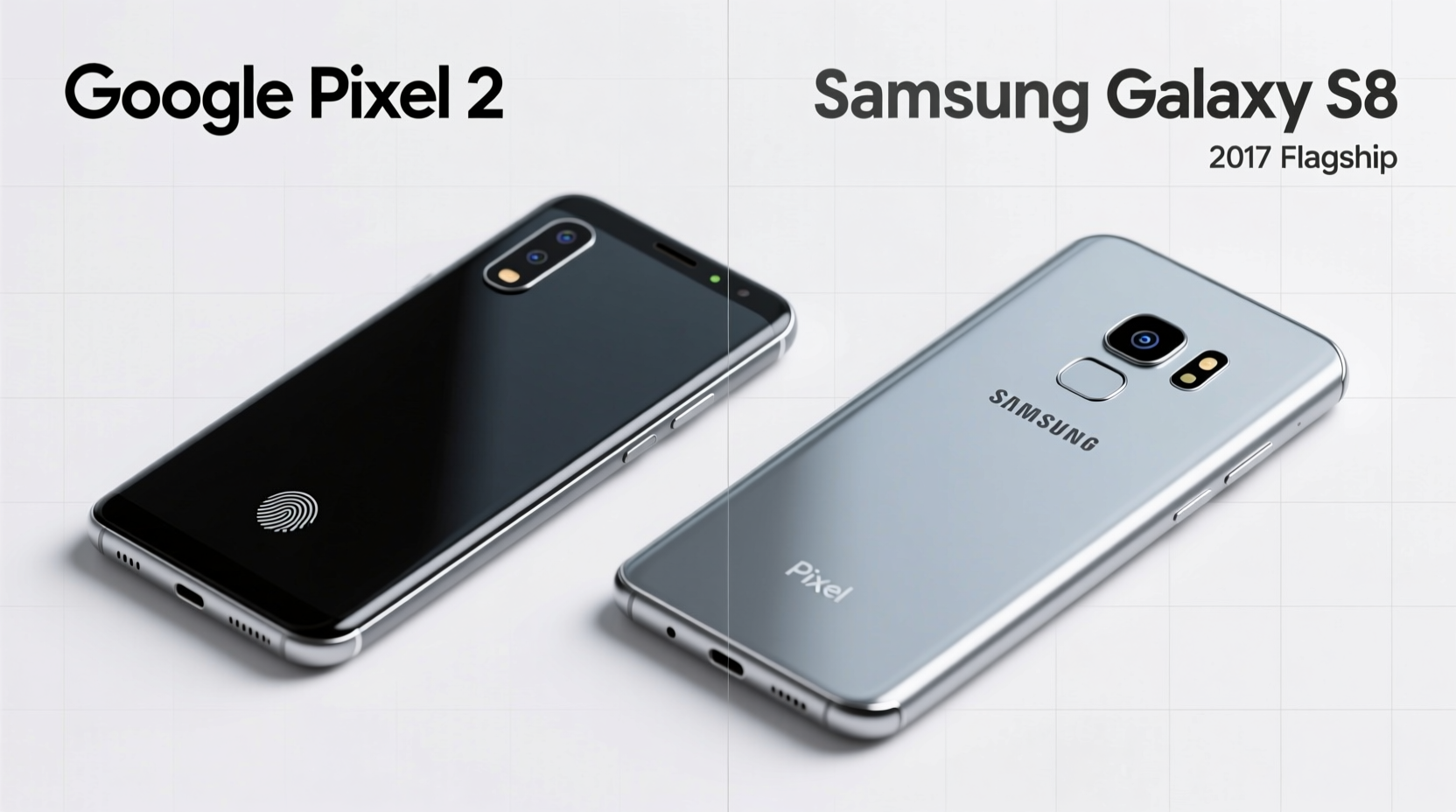
The Galaxy S8 introduced a radical redesign for Samsung, embracing a near-bezel-less “Infinity Display” with curved edges and an elongated 18.5:9 aspect ratio. The glass-and-metal construction felt premium, though it was prone to fingerprints and required careful handling due to its slippery nature. At the time, it set a new benchmark for smartphone aesthetics.
The Pixel 2, by contrast, took a more conservative approach. It featured a compact aluminum frame with a polished glass panel on the back—primarily for wireless charging—but retained visible bezels on the top and bottom. While not as visually striking as the S8, the Pixel 2 offered better ergonomics for one-handed use, especially in its smaller form factor (Pixel 2 vs Pixel 2 XL).
Display Quality: Immersive vs Accurate
The S8’s 5.8-inch Quad HD+ Super AMOLED display delivered vibrant colors, deep blacks, and excellent outdoor visibility. Its dynamic tone mapping and HDR support made it ideal for media consumption. Samsung’s display tuning favored bold saturation, which appealed to most users but wasn’t always color-accurate.
The Pixel 2 used a 5.0-inch Full HD OLED panel (on the base model), which, while smaller and lower resolution, was tuned for accuracy. Google prioritized natural color reproduction, aligning closely with DCI-P3 standards. This made the Pixel 2 a favorite among photographers and creatives who valued fidelity over flashiness.
Though objectively outgunned in resolution and size, the Pixel 2’s display held its own thanks to excellent calibration and brightness consistency. However, for sheer visual impact, the S8 remained unmatched in its class.
Performance and Software Experience
Both phones ran on the Qualcomm Snapdragon 835 processor with 4GB of RAM—identical hardware under the hood. In benchmarks and day-to-day tasks, there was little to separate them. Apps launched quickly, multitasking was smooth, and both handled gaming without issue.
Where they diverged significantly was in software. The Pixel 2 shipped with pure Android 8.0 Oreo, offering seamless integration with Google services, timely updates, and exclusive features like Active Edge (squeezing the phone to launch Assistant) and Now Playing (automatic song recognition). It received three years of OS and security updates, ending in late 2020.
The Galaxy S8 launched with Android 7.0 Nougat and Samsung’s TouchWiz UI (later rebranded to Experience). While functional, Samsung’s skin added bloatware and delayed update rollouts. Though it eventually received updates up to Android 9 Pie, the process was slower and less consistent than on Pixel devices.
“Stock Android gives you cleaner performance and faster updates—critical for long-term usability.” — David Kim, Mobile Software Analyst at TechPulse Insights
Camera Comparison: Computational Photography vs Hardware Flexibility
This is where the Pixel 2 made headlines. Despite having a single 12.2MP rear camera, it consistently outperformed dual-lens competitors—including the S8—thanks to Google’s advanced computational photography. Features like HDR+, portrait mode (via software depth mapping), and exceptional low-light performance gave it an edge in real-world shooting.
The Galaxy S8 also had a capable 12MP sensor with Dual Pixel autofocus and optical image stabilization. Its photos were sharp and vivid, but struggled in mixed lighting and shadow recovery compared to the Pixel 2. Video recording was strong on both, though the S8 supported 4K at 60fps versus the Pixel 2’s 30fps limit.
| Feature | Google Pixel 2 | Samsung Galaxy S8 |
|---|---|---|
| Rear Camera | 12.2MP, f/1.8, OIS | 12MP, f/1.7, Dual Pixel AF, OIS |
| Front Camera | 8MP, f/2.4 | 8MP, f/1.7 |
| Low-Light Performance | Excellent (HDR+) | Good, but noisier |
| Portrait Mode | Software-based (2017 update) | No native support |
| Video Recording | 4K @ 30fps | 4K @ 60fps |
In head-to-head photo tests, the Pixel 2 produced more balanced exposures, better dynamic range, and superior detail retention. For users who valued photography above all, upgrading from the S8 to the Pixel 2 resulted in a noticeable improvement—even though the hardware appeared less impressive on paper.
Battery Life and Long-Term Usability
The S8 packed a 3000mAh battery, while the Pixel 2 came with a slightly smaller 2700mAh unit. In practice, both lasted a full day with moderate use, though heavy users often needed a midday charge. Neither included fast charging in the box (though the S8 supported it via USB-C adapter), and wireless charging worked reliably on both.
Fast forward to today, and battery degradation is a significant factor. After five+ years, many original units have experienced reduced capacity. However, users who replaced batteries reported that both phones remain functional for light tasks like calls, messaging, and web browsing.
Mini Case Study: Sarah’s Upgrade Decision in 2018
Sarah purchased a Galaxy S8 at launch and loved its sleek design and bright display. By early 2018, she noticed her phone slowing down, apps crashing more frequently, and the camera struggling in dim lighting. She considered upgrading to the Pixel 2 after reading reviews praising its camera.
After testing both side by side, she found the Pixel 2’s camera vastly superior in indoor settings and appreciated the cleaner interface. Though she missed the S8’s larger screen, the smoother software experience and faster updates convinced her to switch. Two years later, she noted that the Pixel 2 continued receiving updates while her friends with S8s were stuck on older Android versions.
For Sarah, the upgrade made a tangible difference—not because the hardware was drastically better, but because the software and camera improvements enhanced her daily usage.
Is the Galaxy S8 Still Decent Today?
As of 2024, neither phone receives official software updates. Security patches ended years ago, making both vulnerable to emerging threats. That said, for secondary use—such as a music player, dedicated GPS device, or kid’s tablet—the S8 remains surprisingly capable.
- Pros: Beautiful display, water resistance (IP68), expandable storage (microSD), headphone jack.
- Cons: Outdated software, limited app optimization for older OS, degraded battery life.
If you’re holding onto an S8 purely for nostalgia or basic functions, it can still serve. But as a primary smartphone connected to banking apps or personal data, it’s no longer advisable.
Checklist: Should You Still Use Either Phone in 2024?
- ✅ Is the battery health above 75%? (Check in settings or service menu)
- ✅ Are you using it offline or for non-sensitive tasks?
- ✅ Have you disabled auto-updates for apps that demand newer OS versions?
- ✅ Do you avoid downloading unknown apps or visiting untrusted websites?
- ✅ Have you backed up important data regularly?
If you answered “no” to any of these, it’s time to retire the device or repurpose it safely.
Frequently Asked Questions
Was the Pixel 2 worth upgrading to from the S8?
Yes—for users who valued camera quality, clean software, and timely updates. While the S8 looked more futuristic, the Pixel 2 delivered a more refined, future-proof experience despite its modest hardware upgrades.
Can the Galaxy S8 run modern apps in 2024?
Some can, but many—including newer versions of Instagram, WhatsApp, and banking apps—require Android 8.0 or higher. Since the S8 topped out at Android 9 with limited patching, compatibility is increasingly spotty.
Which phone lasted longer overall?
Hardware-wise, the S8 had a slight edge due to its larger battery and microSD support. But software longevity favored the Pixel 2, which received updates for three full years—compared to Samsung’s inconsistent rollout schedule.
Final Thoughts: Upgrading Was Worth It—But Context Matters
For power users and photography enthusiasts, upgrading from the Galaxy S8 to the Pixel 2 represented a meaningful step forward. The combination of superior imaging algorithms, stock Android, and guaranteed updates created a more cohesive and reliable experience.
However, for casual users who cherished the S8’s display and design, the upgrade might have felt less impactful. The S8 wasn’t broken; it was simply optimized for a different kind of user—one who valued form and multimedia over functionality and long-term support.




 浙公网安备
33010002000092号
浙公网安备
33010002000092号 浙B2-20120091-4
Comments
No comments yet. Why don't you start the discussion?