
When it comes to smartphone photography, two names consistently dominate the conversation: Google’s Pixel series and Apple’s iPhone Pro lineup. The Google Pixel 5 and iPhone 12 Pro Max represent flagship offerings from their respective brands in late 2020 — one emphasizing computational photography, the other leaning on hardware power and ecosystem integration. But when you compare their cameras side by side, does the iPhone’s premium price tag translate into noticeably better photos? Or is much of the perceived advantage simply “Apple tax” — a premium paid for branding and polish rather than raw performance?
This isn’t just about megapixels or lens count. It’s about how these devices perform in real life: low light, dynamic range, portrait mode accuracy, video stability, and post-processing intelligence. Let’s cut through the marketing and examine what each phone actually delivers.
Hardware Showdown: Specs Don’t Tell the Whole Story
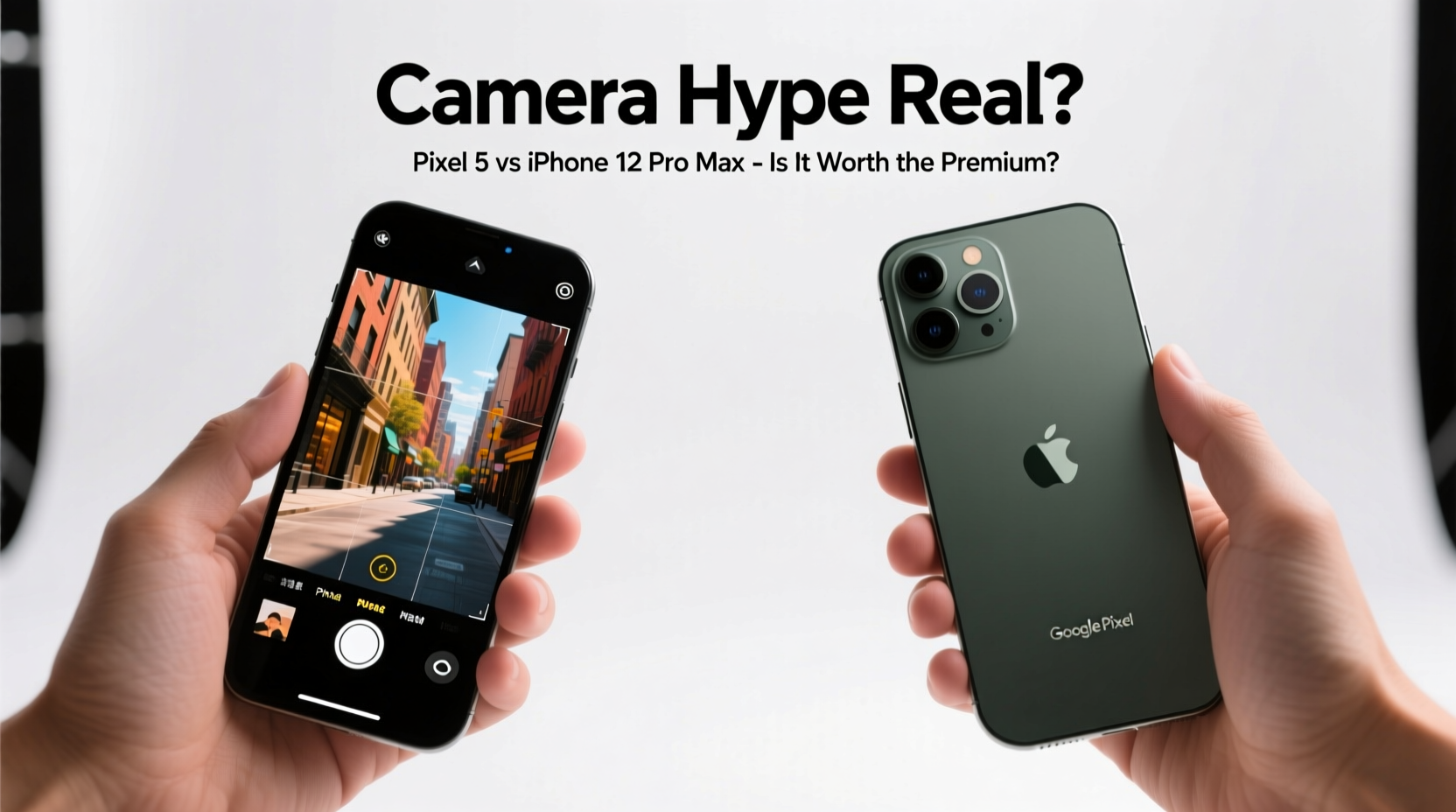
The iPhone 12 Pro Max features a triple-camera system: a 12MP main sensor with sensor-shift stabilization (a first for iPhones), a 12MP ultra-wide, and a 12MP telephoto with 2x optical zoom. Its large sensor captures more light, and Apple’s LiDAR scanner enhances autofocus in dim conditions. On paper, this setup is robust, especially for professional-grade videography and stills.
In contrast, the Pixel 5 has a dual-camera system: a 12.2MP primary sensor (same as the Pixel 4) and a 16MP ultra-wide. No telephoto lens means digital zoom beyond 2x degrades quality quickly. However, Google compensates with aggressive software optimization. The smaller hardware footprint doesn’t mean inferior results — at least not always.
“Hardware gets you to the starting line. Software determines how far you go.” — Dr. Lena Torres, Computational Photography Researcher, MIT Media Lab
Google has long relied on machine learning and HDR+ algorithms to extract detail from challenging scenes. The Pixel 5 continues that tradition, using Night Sight, Super Res Zoom, and advanced noise reduction to punch above its hardware weight. Meanwhile, Apple focuses on natural color science and consistent processing across devices, prioritizing realism over dramatic enhancement.
Real-World Photo Performance: Where Each Excels
In daylight, both phones produce excellent images, but with distinct styles. The iPhone 12 Pro Max favors true-to-life colors and balanced exposure. Shadows retain detail, and highlights rarely blow out thanks to superior dynamic range. Its Smart HDR 3 intelligently adjusts tone mapping per subject, making faces pop without oversaturating backgrounds.
The Pixel 5 tends to boost contrast and saturation slightly, giving photos a more “magazine-ready” look straight out of the camera. Its HDR+ with Bracketing handles high-contrast scenes well, though occasionally at the cost of natural skin tones. In backlit scenarios, the Pixel sometimes darkens subjects too aggressively, while the iPhone maintains better facial exposure.
Night photography is where the Pixel traditionally shines. Night Sight on the Pixel 5 produces brighter, cleaner low-light images with less noise than the iPhone’s Night Mode — especially in extremely dark environments. The iPhone improves brightness gradually, preserving ambient mood, while the Pixel often turns night into near-daylight, which some users love and others find unnatural.
Portrait Mode & Depth Accuracy
The iPhone’s dual-depth mapping — combining data from multiple lenses and the LiDAR scanner — creates remarkably accurate depth maps. Hair strands, glasses, and complex edges are preserved with precision. Bokeh effects look cinematic, and edge detection rarely fails.
The Pixel 5 relies entirely on software-based depth estimation. While generally effective, it occasionally misjudges boundaries, especially around fast-moving subjects or fine textures like lace or fur. That said, its portrait lighting effects (such as studio light or contour) are more creative and customizable than Apple’s subtle options.
Video Quality: A Clear Winner Emerges
If you prioritize video, the iPhone 12 Pro Max is in another league. It supports Dolby Vision HDR recording up to 4K at 60fps — a feature unmatched by any Android phone at the time. Footage has richer contrast, smoother stabilization, and professional-grade color grading capabilities.
The Pixel 5 records 4K at 30fps with decent stabilization, but lacks HDR video capture. In motion, footage can appear softer, and audio processing isn’t as refined. While perfectly adequate for social media, it doesn’t meet the bar for creators seeking broadcast-level output.
| Feature | Pixel 5 | iPhone 12 Pro Max |
|---|---|---|
| Main Sensor | 12.2MP, f/1.7 | 12MP, f/1.6, sensor-shift OIS |
| Ultra-Wide | 16MP, f/2.2 | 12MP, f/2.4 |
| Telephoto | No | 12MP, f/2.0, 2x optical zoom |
| Night Mode | HDR+ with Night Sight | Night Mode with Smart HDR |
| Video Recording | 4K @ 30fps, no HDR | 4K @ 60fps, Dolby Vision HDR |
| Front Camera | 8MP, f/2.0 | 12MP, f/2.2, 4K video |
Software Intelligence: Google’s Secret Weapon
Where the Pixel 5 truly differentiates itself is in post-capture features. Magic Eraser (introduced later via software update), Photo Unblur, and Adaptive Tone use AI to fix common photo flaws automatically. You can remove photobombers, sharpen blurry shots, or enhance underexposed areas with minimal effort.
Apple offers fewer automated editing tools within the native Photos app. Adjustments require manual tweaking in apps like Lightroom or Snapseed. However, iCloud integration ensures seamless cross-device access, and on-device processing protects user privacy during facial recognition and scene analysis.
One underrated aspect: consistency. The iPhone produces predictable results across different lighting conditions. There’s less guesswork about how a photo will turn out. The Pixel, while capable of stunning outliers, can vary in tone and sharpness depending on scene complexity and processing speed.
Mini Case Study: Concert Photography Test
A music journalist tested both phones at an indoor concert with mixed lighting — red stage lights, strobes, and audience spotlights. The Pixel 5 captured brighter images with clearer facial details in shadows, thanks to Night Sight activation. However, color fidelity suffered; green hair appeared yellowish, and red tones bled.
The iPhone 12 Pro Max preserved accurate colors but underexposed some performers. Video clips were dramatically better on the iPhone, with smooth stabilization and clear audio separation. For stills, the Pixel won on usability; for storytelling through video, the iPhone was clearly superior.
Value Proposition: Is the Apple Tax Justified?
The iPhone 12 Pro Max launched at $1,099. The Pixel 5 retailed for $699 — a $400 difference. For many consumers, that gap represents nearly half a month’s salary. So, does the extra cost deliver proportional benefits?
- For casual photographers: The Pixel 5 is more than sufficient. Its point-and-shoot excellence, strong low-light performance, and intuitive interface make it ideal for everyday use.
- For content creators: The iPhone 12 Pro Max justifies its price with Dolby Vision, ProRAW support, and superior microphone arrays. These features matter for professionals uploading to YouTube or producing branded content.
- For ecosystem users: If you own a Mac, iPad, or AirPods, the iPhone integrates seamlessly. Handoff, QuickTake, and iCloud syncing add convenience that transcends camera specs.
Checklist: Choosing the Right Phone for Your Needs
- ✅ Do you shoot lots of video? → iPhone 12 Pro Max
- ✅ Is low-light photo clarity your top priority? → Pixel 5
- ✅ Do you edit photos heavily? → iPhone (ProRAW gives more flexibility)
- ✅ Are you budget-conscious? → Pixel 5 offers best value
- ✅ Do you already use Apple devices? → iPhone enhances productivity
Frequently Asked Questions
Does the Pixel 5 have optical zoom?
No, the Pixel 5 lacks a telephoto lens. It uses Super Res Zoom, a software-based method that combines multiple frames for improved digital zoom up to 7x, but quality drops significantly beyond 2x.
Can the iPhone 12 Pro Max shoot RAW photos?
Yes, with iOS 14.3 and later, the iPhone 12 Pro Max supports Apple ProRAW, allowing lossless 12-bit DNG capture. This gives professional photographers greater control in post-production.
Which phone has better front-facing camera quality?
The iPhone 12 Pro Max has a 12MP TrueDepth camera with 4K video recording and wider field of view. The Pixel 5’s 8MP selfie cam performs well in good light but struggles in low light and lacks advanced autofocus.
Final Verdict: Hype vs. Reality
The hype around the iPhone 12 Pro Max’s camera is real — but so is the Apple tax. You’re paying for a complete imaging ecosystem: hardware refinement, video leadership, software longevity, and seamless integration. It’s a premium product for users who demand consistency and creative flexibility.
The Pixel 5 proves that exceptional photography doesn’t require the highest price tag. With smarter software and thoughtful design, it matches or exceeds the iPhone in key photographic areas — particularly still photography in challenging light. For most people, it’s not just “good enough”; it’s genuinely excellent.
Ultimately, the choice depends on your priorities. If you value standout stills and AI-powered enhancements at a fair price, the Pixel 5 delivers. If you need pro-level video, optical zoom, and long-term support, the iPhone 12 Pro Max earns its premium.




 浙公网安备
33010002000092号
浙公网安备
33010002000092号 浙B2-20120091-4
Comments
No comments yet. Why don't you start the discussion?