
The smartphone market in 2023 is dominated by two flagship giants: Google’s Pixel 7 Pro and Apple’s iPhone 14 Pro Max. Both devices command attention—and premium prices—but they cater to different philosophies. The iPhone 14 Pro Max represents polished ecosystem integration, brand loyalty, and industry-leading processing power. The Pixel 7 Pro counters with cutting-edge AI photography, pure Android experience, and a more accessible price tag. But with all the marketing buzz around Apple, is the iPhone truly worth the hype compared to its most compelling Android rival?
This isn’t just about specs on paper. It’s about daily usability, long-term satisfaction, ecosystem lock-in, and whether paying extra for Apple’s polish delivers tangible benefits. Let’s break down the key differences where it actually matters.
Camera Performance: Computational Photography vs. Consistency
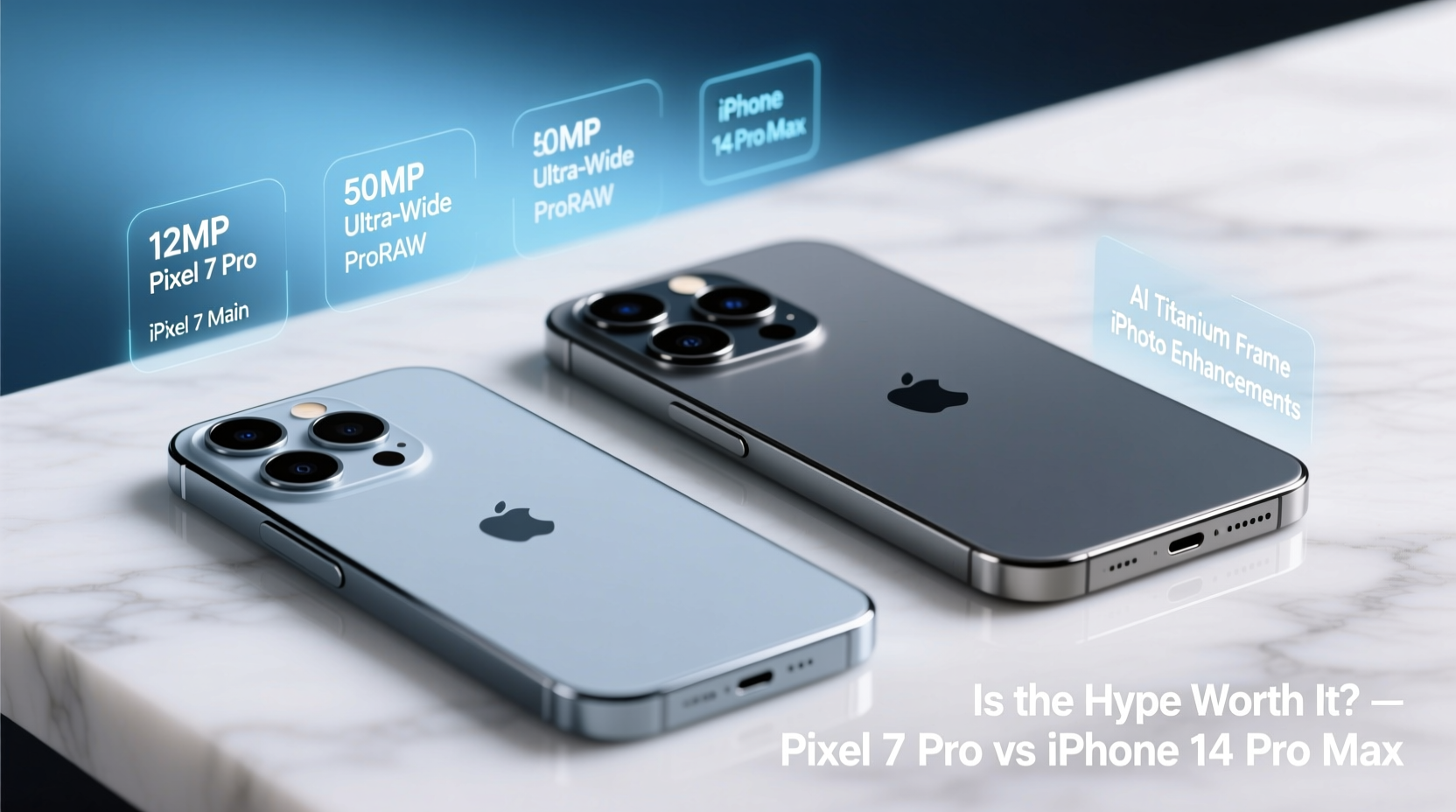
When it comes to mobile photography, Google has spent years refining its computational imaging algorithms. The Pixel 7 Pro continues this legacy with a triple-lens setup: a 50MP main sensor, 48MP telephoto with 5x optical zoom, and a 12MP ultrawide. Its standout feature remains HDR+ with Night Sight, which consistently produces vibrant, balanced photos—even in low light—without requiring user intervention.
Apple’s iPhone 14 Pro Max introduced the 48MP Main Camera with second-generation sensor-shift stabilization. While the higher resolution offers more detail, Apple leans toward natural color reproduction and dynamic range rather than aggressive enhancement. In direct sunlight, both phones deliver excellent results, but in mixed lighting or dim environments, the Pixel often pulls ahead with brighter shadows and cleaner noise reduction.
However, video recording is where the iPhone shines. With Dolby Vision HDR at up to 4K/60fps across all lenses, seamless switching between cameras, and superior audio stabilization, the 14 Pro Max remains the gold standard for vloggers and filmmakers. The Pixel supports 4K/60fps too, but lacks the cinematic fluidity and post-processing depth available in Apple’s ecosystem.
Performance & Software Experience
The iPhone 14 Pro Max runs on Apple’s A16 Bionic chip—an engineering marvel that leads in single-core performance and energy efficiency. Apps launch instantly, multitasking is effortless, and even intensive tasks like 4K video editing feel smooth. iOS 16 offers a clean interface with robust privacy controls, Focus modes, and deep integration with other Apple devices like Macs, iPads, and AirPods.
On the other side, the Pixel 7 Pro uses Google’s Tensor G2—a chip designed specifically for machine learning and AI workloads. While not as raw-powerful as the A16, it enables unique features like real-time call screening, voice-to-text transcription, and enhanced speech recognition. Android 13 on the Pixel is clean, fast, and receives guaranteed updates until 2025 (including OS and security).
“Apple’s hardware-software synergy gives it an edge in responsiveness, but Google’s focus on contextual AI makes the Pixel feel smarter over time.” — David Kim, Mobile Systems Analyst at TechInsight Weekly
iOS is known for stability and long-term support—iPhones routinely receive 5–6 years of updates. Pixel phones get strong support, but only three guaranteed major OS upgrades. That said, Pixels offer greater customization, native Google Assistant integration, and faster adoption of new Android features.
Battery Life and Charging Realities
Battery endurance is critical for large smartphones used throughout the day. The iPhone 14 Pro Max boasts up to 29 hours of video playback, translating to solid all-day use, even with heavy streaming or navigation. However, charging remains a pain point: no charger in the box, and even with fast charging, it takes over an hour to reach full capacity using a 20W adapter.
The Pixel 7 Pro packs a 5000mAh battery and generally lasts a full day under moderate use, though intensive camera or 5G usage can drain it faster. It supports faster wired charging (up to 30W) and convenient wireless charging, including reverse charging for accessories. In real-world testing, the Pixel often recovers quicker when you need a top-up during the day.
| Feature | iPhone 14 Pro Max | Pixel 7 Pro |
|---|---|---|
| Battery Capacity | ~4323mAh | 5000mAh |
| Max Charging Speed | 20W (wired) | 30W (wired), 23W (wireless) |
| All-Day Battery (Real Use) | Yes (Heavy use: borderline) | Yes (Moderate-heavy use) |
| Fast Charge Time (0–50%) | ~30 mins | ~25 mins |
Ecosystem Integration: Locked-In Loyalty vs. Open Flexibility
If you’re already invested in Apple’s ecosystem—using a MacBook, iPad, Apple Watch, or AirPods—the iPhone 14 Pro Max becomes almost indispensable. Features like AirDrop, Universal Clipboard, Handoff, and seamless FaceTime calling create a frictionless digital life. iMessage remains a social currency for many users, despite its walled-garden limitations.
Google’s approach is more open. The Pixel integrates well with Chromebooks, Wear OS watches, and Android tablets, but the experience isn’t as tightly woven. Where the Pixel excels is in smart assistant functionality, live captioning across apps, and AI-powered summarization in messages and recordings—features that anticipate needs rather than just react.
Mini Case Study: Sarah, Digital Nomad & Content Creator
Sarah switched from an iPhone 14 Pro Max to a Pixel 7 Pro after six months of travel. She found that while her iPhone videos looked great, editing them on her non-Mac laptop was cumbersome due to HEVC encoding. Transferring files required iCloud subscriptions or third-party tools. On the Pixel, she could plug in a USB-C drive directly, back up automatically to Google Photos (with searchable AI tagging), and use Live Translate during interviews—all without leaving Android.
“I missed iMessage at first,” she admits, “but the freedom to move files, charge quickly from any power bank, and get reliable photo results without editing saved me hours each week.”
Value Proposition: Is the iPhone Worth the Premium?
The iPhone 14 Pro Max starts at $1,099. The Pixel 7 Pro launched at $899—$200 less. That gap buys you Apple’s superior build quality, best-in-class video capabilities, longer software support, and unmatched ecosystem cohesion. But it also means accepting slower charging, limited port options (still Lightning on some models), and fewer hardware innovations year-over-year.
The Pixel 7 Pro doesn’t match Apple’s resale value or brand prestige, but it delivers 90% of the flagship experience at a lower cost. For photographers, AI enthusiasts, and those who prefer stock Android, it’s a compelling alternative. And with Google offering regular Feature Drops—free software enhancements months after launch—the Pixel feels like it evolves more dynamically post-purchase.
📋 **Checklist: Choosing Between Pixel 7 Pro and iPhone 14 Pro Max**- ✅ Need seamless Mac/iPad integration? → iPhone 14 Pro Max
- ✅ Prioritize point-and-shoot photo quality? → Pixel 7 Pro
- ✅ Edit videos professionally? → iPhone 14 Pro Max
- ✅ Want faster charging and USB-C convenience? → Pixel 7 Pro
- ✅ Already own multiple Apple devices? → iPhone 14 Pro Max
- ✅ Prefer frequent free software updates? → Pixel 7 Pro
- ✅ Budget-conscious but want flagship features? → Pixel 7 Pro
Frequently Asked Questions
Is the iPhone 14 Pro Max camera better than the Pixel 7 Pro?
It depends on your priorities. The iPhone captures more natural colors and excels in video. The Pixel produces more vivid, detailed stills in challenging lighting and offers superior zoom and night photography. For still photography, many experts favor the Pixel; for video, the iPhone leads.
Does the Pixel 7 Pro get as many updates as the iPhone?
No. iPhones typically receive 5–6 years of iOS updates. The Pixel 7 Pro is guaranteed three major Android OS upgrades and five years of security patches (until 2027). While shorter, this is competitive for Android flagships.
Can the Pixel replace an iPhone in a fully Apple household?
Possible, but inconvenient. You’ll lose iMessage, AirDrop, and seamless Handoff. Family Sharing, Find My, and health data syncing become fragmented. Dual-device setups (iPhone + Pixel) are increasingly common among tech-savvy users who want the best of both worlds.
Final Verdict: Hype vs. Reality
The hype around the iPhone 14 Pro Max is real—and partially justified. Apple delivers a refined, powerful, and reliable device backed by one of the strongest ecosystems in tech. Its performance, build quality, and video capabilities remain benchmarks.
But the Pixel 7 Pro proves that Android can compete—and sometimes surpass—in intelligence, innovation, and value. For users who don’t need iMessage or aren’t tied to Apple’s world, the extra $200 for the iPhone may not translate into meaningful daily benefits.
In the end, the decision isn't about which phone is objectively \"better.\" It's about what kind of user you are. If you value consistency, longevity, and ecosystem harmony, the iPhone’s hype holds weight. If you crave innovation, AI-driven features, and flexibility, the Pixel offers a quietly revolutionary experience that deserves equal attention.




 浙公网安备
33010002000092号
浙公网安备
33010002000092号 浙B2-20120091-4
Comments
No comments yet. Why don't you start the discussion?