
Choosing between the Google Pixel 8a and the iPhone 15 Plus isn’t just about brand loyalty—it’s a decision shaped by real differences in performance, software experience, camera quality, and long-term value. While both devices deliver flagship-level features in their respective ecosystems, they occupy very different price brackets. The Pixel 8a starts at $499, while the iPhone 15 Plus begins at $899—a $400 gap that demands justification. So, is the iPhone truly worth the extra investment? Let’s break it down.
Performance and Hardware: Power vs Efficiency
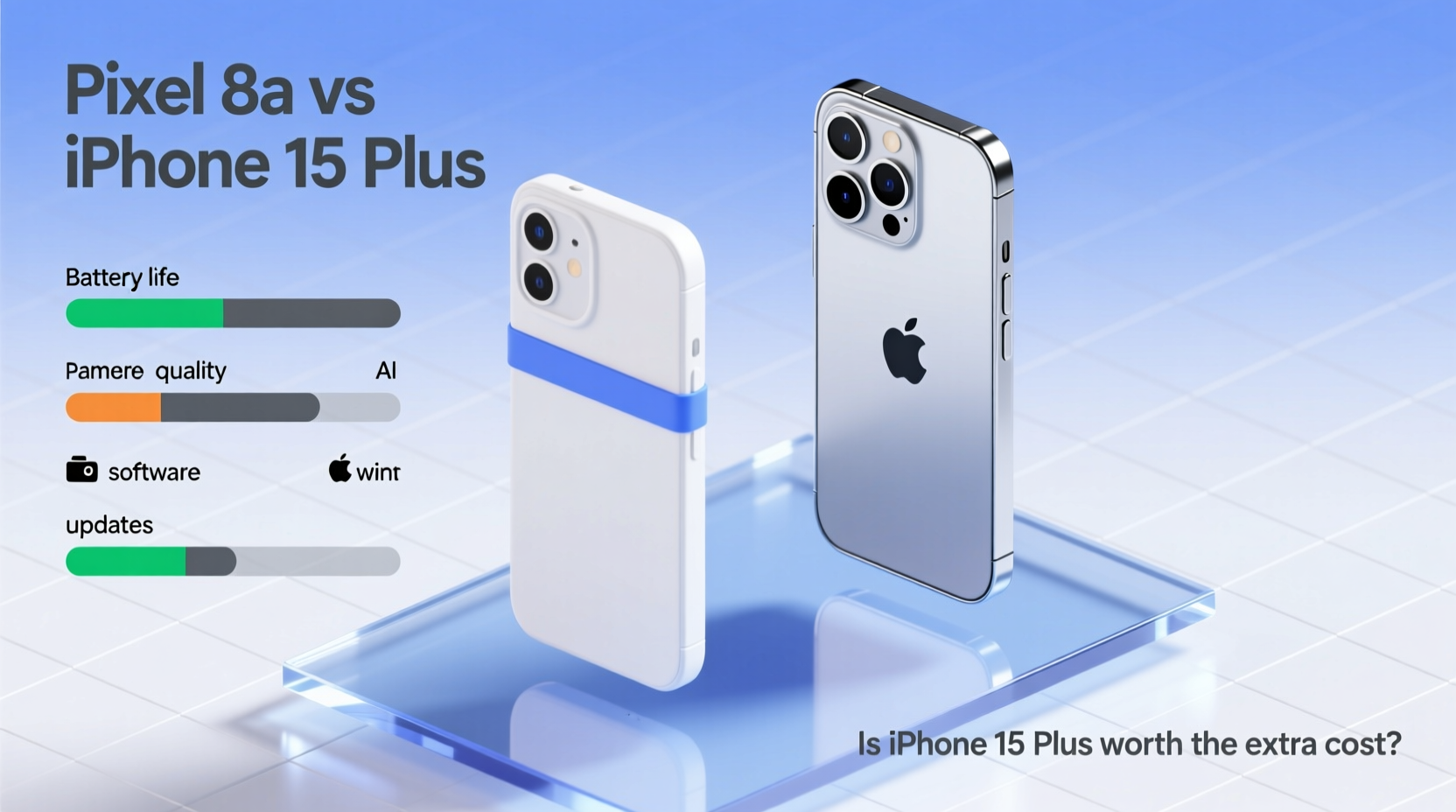
The iPhone 15 Plus runs on Apple’s A16 Bionic chip, a processor originally introduced in the iPhone 14 Pro but still among the most powerful mobile chips available. It handles intensive tasks like video editing, gaming, and multitasking with ease. Paired with iOS optimization, the device maintains smooth performance even after years of use.
In contrast, the Pixel 8a uses Google’s Tensor G3, a custom-built chip focused more on AI capabilities than raw speed. While it performs well for everyday tasks—web browsing, social media, streaming—the G3 doesn’t match the A16 in benchmarks or sustained workloads. However, it excels in machine learning tasks such as real-time language translation, voice processing, and photo enhancement through computational photography.
Camera Comparison: Computational Magic vs Consistency
Both phones feature impressive camera systems, but their approaches differ significantly. The Pixel 8a continues Google’s legacy of computational photography excellence. Its 64MP main sensor produces vibrant, detailed images with accurate colors and excellent dynamic range. Night Sight, Super Res Zoom, and Magic Eraser offer practical tools that enhance usability without requiring technical expertise.
The iPhone 15 Plus takes a more balanced approach. Its 48MP main sensor captures natural-looking photos with superb color science and depth handling. Portrait mode works reliably across subjects, including pets and objects, thanks to advanced depth mapping. Video recording is where the iPhone pulls ahead—supporting 4K Dolby Vision HDR at up to 60fps, making it ideal for creators who want studio-quality footage straight from their phone.
“Apple’s consistency across lighting conditions gives it an edge for users who want reliable results without tweaking settings.” — David Lin, Mobile Photographer & Tech Reviewer
While Pixel owners often praise the “wow factor” of enhanced shots, iPhone users appreciate predictability and professional-grade video. For casual photographers, either phone delivers great results. For content creators, the iPhone offers broader creative flexibility.
Battery Life and Charging: Real-World Endurance
Battery performance favors the iPhone 15 Plus. With its larger 4,323mAh battery and efficient A16 chip, it consistently lasts over 24 hours of mixed usage. Streaming video, GPS navigation, and background app refresh are handled with minimal drain.
The Pixel 8a packs a 4,410mAh battery—slightly larger on paper—but sees shorter endurance due to less efficient power management and a 60Hz OLED display (compared to the iPhone’s adaptive 60–120Hz ProMotion). In real-world testing, the 8a typically lasts around 18–20 hours under moderate use.
Charging is another divergence. The iPhone supports only 20W wired charging and MagSafe wireless, meaning a full charge takes nearly two hours. The Pixel 8a supports faster 18W wired and 7.5W wireless charging but includes fewer accessories in-box. Neither phone offers ultra-fast charging out of the box, but the iPhone’s slower pace feels outdated at this price point.
Software Experience and Longevity
This is where the divide becomes most apparent. The Pixel 8a runs stock Android with guaranteed updates until 2028—seven years of security patches and OS upgrades. That’s unprecedented in the Android world and matches Apple’s update policy. Google also rolls out new AI-powered features first on Pixels, such as Call Screen, Assistant Voice Typing, and Now Playing.
iOS on the iPhone 15 Plus offers unmatched ecosystem integration. Handoff, AirDrop, iCloud syncing, and seamless pairing with Macs, iPads, and Apple Watches create a frictionless user experience. App developers often optimize for iOS first, resulting in better stability and earlier access to new features.
However, iOS is less customizable than Android. You can’t change default apps easily, organize home screens freely, or sideload apps without jumping through hoops. Pixel users enjoy greater control over notifications, widgets, and digital wellbeing tools.
| Feature | Google Pixel 8a | iPhone 15 Plus |
|---|---|---|
| Starting Price | $499 | $899 |
| Processor | Google Tensor G3 | Apple A16 Bionic |
| Rear Cameras | 64MP Main + 13MP Ultrawide | 48MP Main + 12MP Ultrawide |
| Video Recording | 4K @ 30fps | 4K @ 24/30/60fps, Dolby Vision HDR |
| Battery Life (Typical) | 18–20 hours | 24+ hours |
| OS Update Support | Until 2028 | Estimated 5–6 years |
| Water Resistance | IP67 | IP68 |
Real-World Decision: Who Should Choose Which?
Consider Sarah, a freelance graphic designer who travels frequently. She owns a MacBook and iPad for work and values seamless file sharing and screen continuity. After testing both phones, she chose the iPhone 15 Plus despite the cost. “Being able to drag a photo from my phone to my Mac saves me minutes every day,” she says. “Over a year, that adds up. Plus, my clients expect iPhone-quality video reels.”
On the other hand, Mark, a budget-conscious teacher and photography enthusiast, opted for the Pixel 8a. “I love how the camera makes my vacation photos look magazine-ready,” he explains. “And I don’t need all the Apple extras. At half the price, I saved enough to buy noise-canceling headphones and a tripod.”
Their stories highlight a key truth: value depends on context. If you’re already invested in Apple’s ecosystem, the iPhone 15 Plus integrates effortlessly and justifies its premium. But if you want top-tier Android innovation at a fraction of the cost, the Pixel 8a delivers exceptional bang for the buck.
Checklist: Choosing Your Next Phone
- ✅ Assess your current device ecosystem (Mac, Windows, iPad, Wear OS, etc.)
- ✅ Prioritize camera needs: stills vs. video
- ✅ Evaluate daily usage patterns—do you need multi-day battery life?
- ✅ Consider long-term software support and resale value
- ✅ Test both devices in-store if possible, focusing on screen feel and weight
- ✅ Decide whether customization (Android) or consistency (iOS) matters more to you
FAQ
Is the iPhone 15 Plus camera better than the Pixel 8a?
It depends on use case. The Pixel 8a produces more vivid, AI-enhanced stills, especially in low light. The iPhone 15 Plus offers superior video quality, consistent color accuracy, and better ultrawide performance. For photographers, the Pixel may impress more; for videographers, the iPhone wins.
Can the Pixel 8a last five years?
Yes. With seven years of guaranteed updates and robust build quality, the Pixel 8a is designed for longevity. Regular backups and proper battery care will help maintain performance over time.
Does the iPhone 15 Plus justify its price over mid-range Androids?
For users deeply embedded in Apple’s ecosystem or those requiring professional-grade tools, yes. For others, the high entry cost may not align with actual usage, especially when capable alternatives like the Pixel 8a exist.
Conclusion: Making the Right Choice for You
The iPhone 15 Plus is undeniably a premium device with elite performance, best-in-class video, and deep ecosystem advantages. But premium doesn’t always mean “better for everyone.” The Google Pixel 8a proves that flagship experiences no longer require flagship prices. It offers cutting-edge AI features, strong cameras, and long-term support at a compelling cost.
Ultimately, the question isn’t whether the iPhone is technically superior—it often is—but whether those advantages translate into meaningful benefits for your lifestyle. If they do, the extra cost may be justified. If not, the Pixel 8a stands as one of the smartest smartphone values on the market today.




 浙公网安备
33010002000092号
浙公网安备
33010002000092号 浙B2-20120091-4
Comments
No comments yet. Why don't you start the discussion?