
In 2025, the Android tablet market has evolved beyond simple media consumption devices. With advancements in AI integration, productivity tools, and ecosystem synergy, tablets now serve as primary workstations, creative studios, and entertainment hubs. At the forefront of this transformation are two major contenders: Google’s Pixel Tablet and Samsung’s Galaxy Tab series. While both offer compelling features, their philosophies diverge significantly—leading to a nuanced competition where one may dominate depending on user priorities.
Design and Build Quality: Form Meets Function
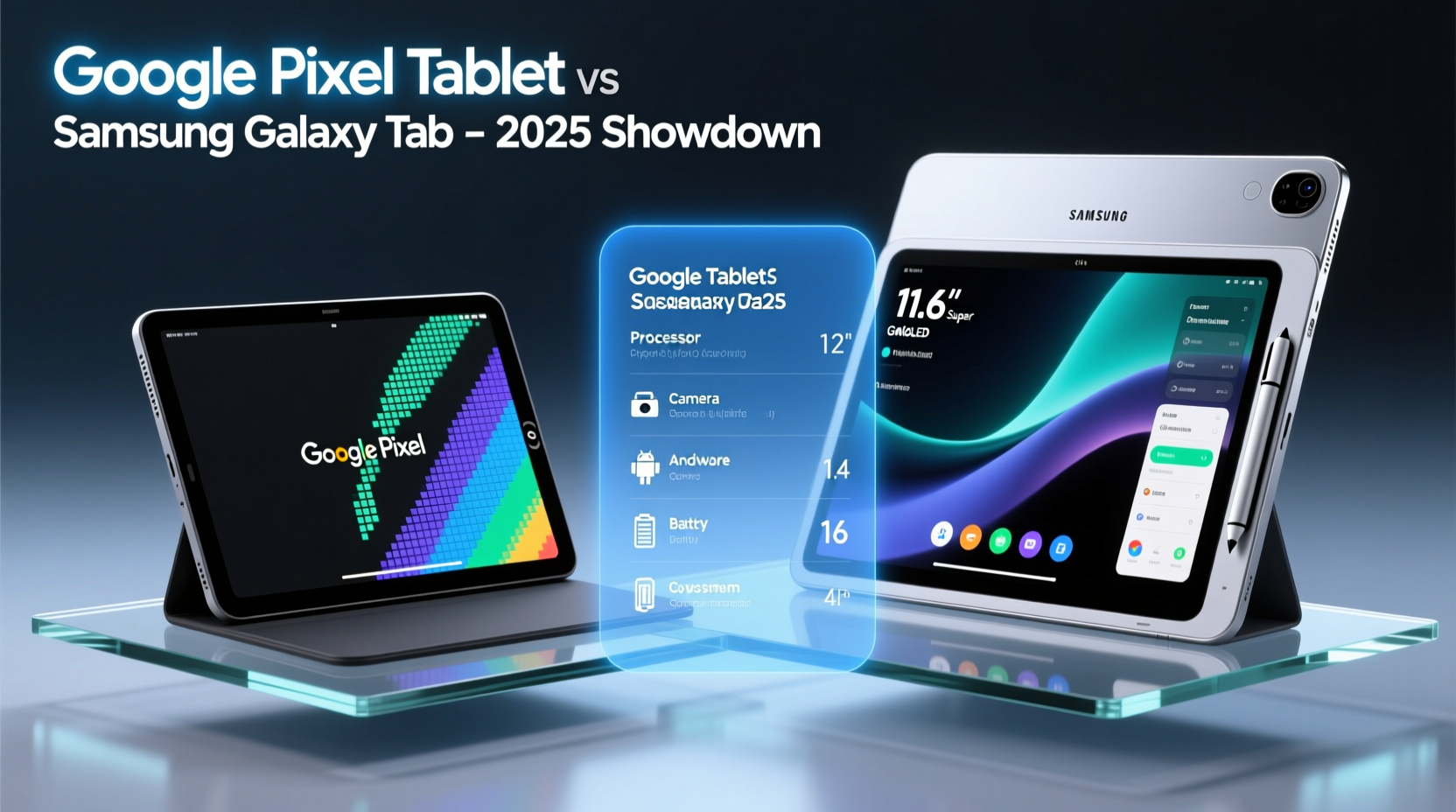
The Google Pixel Tablet embraces minimalist design with a unibody aluminum chassis, rounded edges, and a centered front camera optimized for video calls. Its compact 10.9-inch display makes it highly portable, while the optional desktop dock transforms it into a smart home hub when idle—a unique dual-role approach not seen elsewhere.
Samsung’s Galaxy Tab S10+ (released Q1 2024), by contrast, leans into premium versatility. With a sleek titanium frame, ultra-slim bezels, and an IP68 rating for dust and water resistance, it targets professionals and creatives who demand durability and elegance. The larger 12.4-inch Dynamic AMOLED 2X display delivers deeper blacks and higher peak brightness, making it ideal for outdoor use or HDR content.
Performance and Hardware Comparison
Under the hood, both tablets leverage cutting-edge silicon tailored to their ecosystems. The Pixel Tablet uses Google’s second-generation Tensor G3 chip, fine-tuned for machine learning tasks like real-time transcription, voice recognition, and photo enhancement via Google Photos AI. While not the fastest in raw benchmarks, its optimization within Android 14 ensures smooth multitasking and extended battery efficiency.
The Galaxy Tab S10+ runs on the Snapdragon 8 Gen 3 for Galaxy, a customized variant offering superior graphics performance—especially beneficial for gaming, 3D modeling, and multi-window workflows. Paired with up to 16GB RAM and expandable storage via microSD, it outpaces the Pixel in heavy-duty scenarios.
“Hardware excellence means nothing without ecosystem alignment. Samsung wins on specs, but Google excels in contextual intelligence.” — Lena Tran, Senior Analyst at MobileTech Review
Software Experience and Ecosystem Integration
This is where the battle lines truly form. The Pixel Tablet ships with stock Android 14, updated directly from Google. It benefits from immediate security patches, exclusive AI-powered features like “Hold for Me” and “Live Translate,” and seamless integration with Nest devices, YouTube Music, and Google Workspace apps. For users embedded in Google’s ecosystem—especially those using Pixel phones—the experience feels cohesive and intuitive.
Samsung’s One UI 6.1, layered over Android 14, offers far more customization. Features like DeX mode turn the tablet into a desktop-like environment, supporting drag-and-drop file management, window tiling, and external monitor output. Multi-active window support allows up to four apps running simultaneously—a boon for multitaskers. Moreover, Galaxy AI tools such as Generative Edit, Live Translate during calls, and note summarization rival Google’s offerings while being deeply integrated with Microsoft 365 and Samsung Notes.
Real-World Example: Creative Workflow Showdown
Consider Maya, a freelance graphic designer working remotely. She uses her tablet daily for sketching, client meetings, and editing presentations. On the Galaxy Tab S10+, she leverages the S Pen for precise illustrations, docks the device to her monitor via DeX for spreadsheet work, and uses Samsung Health to track screen time and posture alerts. When traveling, she appreciates the ability to edit RAW photos directly on the go using Adobe Fresco, powered by the Snapdragon GPU.
In contrast, James, a university lecturer, prefers the Pixel Tablet. He uses it mainly for organizing lectures, recording audio notes, and streaming educational videos. The automatic transcription feature captures key points during meetings, and his calendar syncs flawlessly across his Pixel phone and Chromebook. When he leaves the tablet docked at home, it becomes a visual assistant showing weather, reminders, and family photos—enhancing household utility without extra cost.
Battery Life and Charging Capabilities
Battery performance remains critical for all-day usage. The Pixel Tablet packs a 27,000 mAh battery, delivering approximately 12 hours of mixed use (video playback, browsing, light productivity). However, charging tops out at 30W wired and 20W wireless, meaning full recharges take nearly 90 minutes.
The Galaxy Tab S10+ counters with a 10,090 mAh cell (smaller capacity due to efficiency gains) but achieves similar endurance thanks to adaptive refresh rates (1–120Hz) and power-efficient AMOLED technology. More importantly, it supports 45W fast charging, reaching 70% in just 30 minutes—an advantage for users on tight schedules.
Charging Speed Comparison Table
| Device | Battery Capacity | Max Charging Speed | Time to 70% |
|---|---|---|---|
| Google Pixel Tablet | 27,000 mAh | 30W Wired / 20W Wireless | ~65 minutes |
| Samsung Galaxy Tab S10+ | 10,090 mAh | 45W Fast Charging | ~30 minutes |
Camera and Audio Performance
While tablets aren’t primarily camera devices, video conferencing quality matters more than ever. The Pixel Tablet features an 8MP front-facing camera with Center Stage tracking, ensuring users stay framed during Zoom or Meet sessions. The dual rear cameras (13MP main + 8MP ultrawide) perform adequately in daylight but struggle in low light.
The Galaxy Tab S10+ elevates standards with a 13MP front shooter featuring auto-framing, eye contact correction, and studio lighting effects. Dual 13MP rear cameras support laser autofocus and 4K@60fps video recording—making them suitable for creators documenting projects or vlogging. Quad speakers tuned by AKG deliver richer stereo separation, particularly noticeable when watching Dolby Atmos content.
Accessories and Expandability
- Stylus Support: Galaxy Tab includes S Pen (now magnetically attached); Pixel Tablet requires separate purchase of stylus with limited app compatibility.
- Keyboard Options: Samsung offers the Book Cover Keyboard with trackpad; Google partners with third-party manufacturers for foldable Bluetooth keyboards.
- Expandable Storage: Only Galaxy Tab supports microSD cards (up to 1TB), crucial for photographers and videographers.
- Ecosystem Sync: Galaxy Tab pairs effortlessly with Galaxy Buds3 Pro and SmartThings; Pixel Tablet integrates best with Nest Hub Max and Pixel Buds Pro.
Actionable Checklist Before Buying
- Determine primary use case: productivity, creativity, media, or hybrid?
- Check compatibility with existing devices (phone, laptop, earbuds).
- Evaluate need for S Pen or keyboard attachments.
- Assess importance of fast charging and expandable storage.
- Test software feel—try stock Android vs One UI demos if possible.
- Review warranty and repair options in your region.
Frequently Asked Questions
Is the Google Pixel Tablet worth it if I don’t own other Google devices?
Possibly, but only if you prioritize clean software, AI-driven features, and smart home integration. Without a Pixel phone or Nest ecosystem, many standout functions remain underutilized.
Can the Galaxy Tab S10+ replace a laptop?
Yes—for many users. With DeX mode, USB-C hub support, Microsoft 365 apps, and robust multitasking, it handles document editing, email management, and even light coding effectively. Power users may still require full desktop OS capabilities, but for everyday tasks, the line is blurring.
Which tablet has better long-term software support?
Both promise four years of OS updates and five years of security patches. However, Google typically delivers updates faster. Samsung has improved update velocity significantly since 2023, closing the historical gap.
The Verdict: Who’s Winning in 2025?
In head-to-head analysis, the Samsung Galaxy Tab S10+ emerges as the overall leader in 2025—not because it’s perfect, but because it addresses a broader range of needs. From superior hardware, faster charging, advanced stylus integration, to a mature productivity suite, it caters to professionals, students, and creatives alike. Its ecosystem flexibility with Windows, Android, and iOS devices enhances cross-platform appeal.
The Google Pixel Tablet shines in niche areas: households invested in Google Assistant, users seeking ambient computing experiences, and minimalists who value simplicity over configurability. Yet, its lack of stylus inclusion, slower charging, and limited multitasking hinder competitiveness in high-performance environments.
Ultimately, “winning” depends on context. For most consumers seeking a do-it-all Android tablet in 2025, the Galaxy Tab series holds the edge. But for those deeply aligned with Google’s vision of AI-first, ambient computing, the Pixel Tablet remains a compelling, forward-thinking choice.




 浙公网安备
33010002000092号
浙公网安备
33010002000092号 浙B2-20120091-4
Comments
No comments yet. Why don't you start the discussion?