
The Samsung Galaxy S8 was a flagship powerhouse when it launched in 2017. With its sleek design, Infinity Display, and top-tier specs for the time, it set a new standard for Android smartphones. Fast forward to 2024, and Google Pixel devices have become synonymous with clean Android experiences, excellent cameras, and long-term software support. But if you're still holding onto an S8—or considering switching from one to a modern Pixel—is the move truly worthwhile? Or can the Galaxy S8 still hold up today?
This isn’t just about nostalgia. For many users, especially those on tight budgets or who value device longevity, keeping older phones running is both practical and sustainable. However, real-world usability in 2024 demands more than just basic functionality. Let’s break down how these two phones stack up across key areas: performance, software, camera quality, battery life, and overall user experience.
Performance: From Flagship Power to Obsolescence
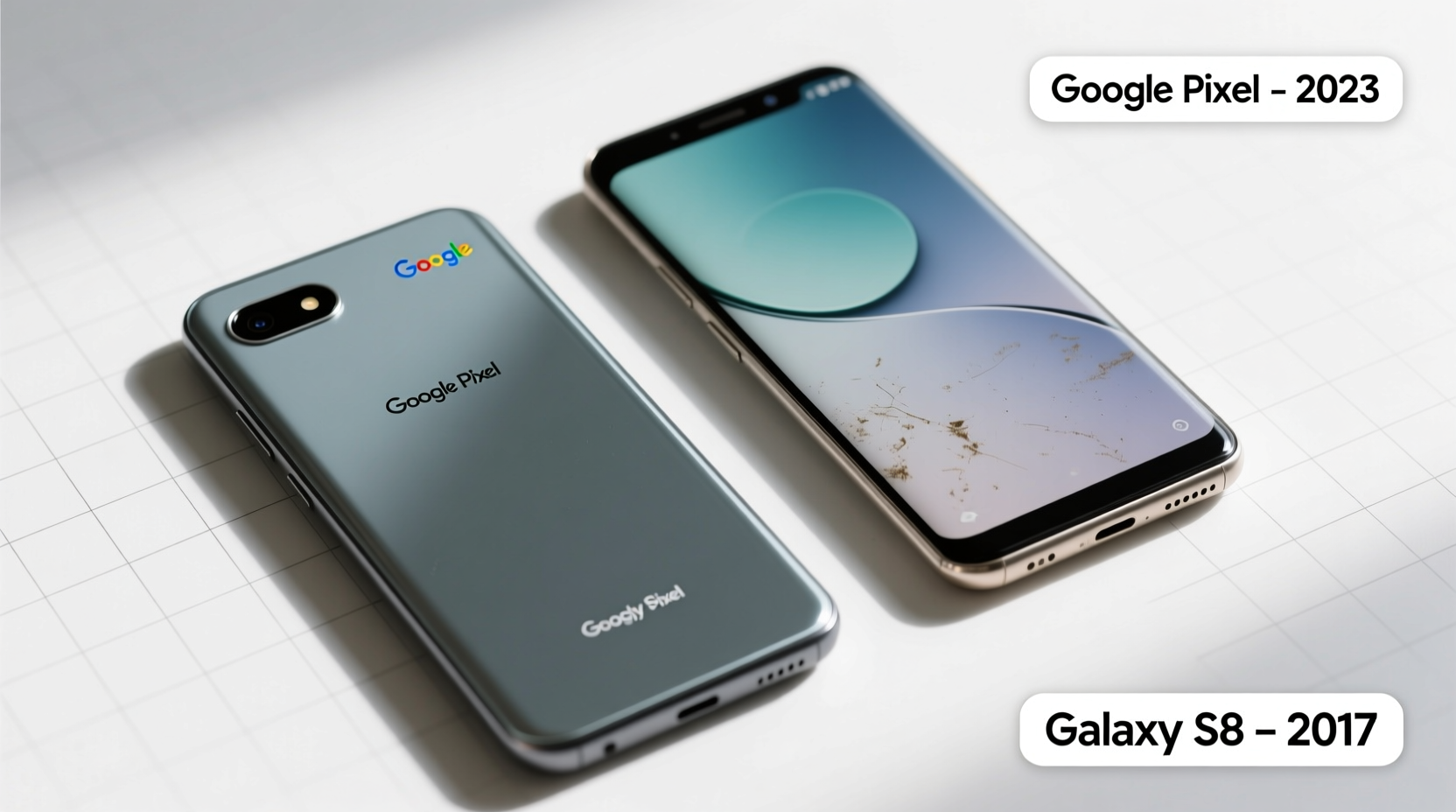
In its prime, the Galaxy S8 ran on Qualcomm’s Snapdragon 835 (or Exynos 8895 in some regions), which was among the fastest mobile chipsets available. Paired with 4GB of RAM, it handled multitasking and gaming smoothly—even by 2019 standards. Today, that same hardware struggles with modern apps. Basic functions like web browsing and messaging work, but heavier tasks such as streaming in HD, using social media apps with video feeds, or even updating apps often result in lag, crashes, or timeout errors.
Modern Google Pixel phones—like the Pixel 6a, 7, or 8 series—run on Google’s Tensor chips, designed specifically for AI-driven features, efficient multitasking, and sustained performance. Even entry-level Pixels now come with at least 6GB of RAM and far superior processing power. The difference in app launch speed, background task handling, and general responsiveness is night and day.
Software & Security: Where the S8 Falls Behind
Samsung officially ended major Android updates for the Galaxy S8 after Android 9 Pie. While it received security patches intermittently until late 2020, it hasn’t seen any official updates since. That means no Android 10, 11, 12, or beyond—and certainly no access to critical security fixes released in recent years.
In contrast, Google guarantees at least five years of OS and security updates for most Pixel devices launched from 2021 onward. This ensures not only longer usability but also protection against emerging threats. On a practical level, outdated software means:
- Lack of support for newer app versions (e.g., banking apps, messaging platforms)
- Incompatibility with modern authentication methods (biometric APIs, secure enclaves)
- No dark mode, gesture navigation, or accessibility improvements introduced post-Android 9
“Devices stuck on Android 9 or earlier are increasingly vulnerable. Without regular security patches, they’re easy targets for phishing and malware.” — David Lin, Mobile Security Analyst at CyberShield Labs
Camera Comparison: Computational Photography vs. Legacy Hardware
The Galaxy S8 had a solid 12MP rear camera with Dual Pixel autofocus and optical image stabilization. In good lighting, it produced sharp, vibrant images. However, low-light performance was average, and there was no Night Mode, HDR+ enhancements, or advanced portrait controls.
Fast forward to current Google Pixel models, where computational photography dominates. Features like Magic Eraser, Real Tone optimization, enhanced Night Sight, and AI-powered zoom transform photo quality—even in challenging conditions. The software does much of the heavy lifting, compensating for smaller sensors with intelligent processing.
| Feature | Galaxy S8 (2017) | Google Pixel 7 (2022) |
|---|---|---|
| Rear Camera | 12MP, f/1.7, OIS | 50MP main + 10MP telephoto |
| Low-Light Performance | Moderate, noisy in dim light | Excellent with Night Sight |
| Portrait Mode | Basic edge detection | Precision depth mapping with editing |
| Video Recording | 4K@30fps | 4K@60fps with cinematic pans |
| Software Enhancements | Limited | AI denoising, HDR+, Face Unblur |
If photography matters to you, upgrading from the S8 to even a mid-range Pixel will feel like moving from film to digital.
Real-World Example: Sarah’s Switch After Five Years
Sarah used her Galaxy S8 daily from 2017 through 2022. By early 2023, she noticed issues: WhatsApp stopped working unless she cleared cache weekly, her bank app wouldn’t open, and Google Maps took over a minute to load. She bought a Pixel 6a for $400, transferring her data via Google Sync.
Within days, she reported faster app launches, smoother scrolling, and better call quality thanks to improved noise cancellation. Most notably, her photos of family events were dramatically clearer—especially indoors. “I didn’t realize how much I’d been missing,” she said. “The Pixel makes everything feel instant again.”
For Sarah, the switch wasn’t about chasing trends—it was about regaining reliability.
Battery Life and Charging: Degradation Over Time
The Galaxy S8 came with a 3000mAh battery—respectable in 2017. But lithium-ion batteries degrade significantly after 3–4 years of daily charging. Even if the phone turns on, many S8 units today suffer from poor battery retention, dropping from 100% to 50% within hours of light use.
While replacement batteries exist, third-party options vary in quality, and professional servicing is hard to find. Meanwhile, modern Pixels include adaptive battery technology, optimized charging cycles, and larger capacities (e.g., 4300–5000mAh). They also support faster wired and wireless charging—something the S8 lacks beyond 15W fast charging.
Checklist: Is Your Galaxy S8 Still Viable in 2024?
Use this checklist to assess whether your S8 can continue serving as a primary device:
- ✅ Can it install and run the latest version of essential apps (WhatsApp, Gmail, banking)?
- ✅ Does the battery last at least half a day with moderate use?
- ✅ Are you receiving security updates (check Settings > About phone > Software info)?
- ✅ Does the screen respond accurately without ghost touches or flickering?
- ✅ Can you back up data easily to cloud services?
If you answered “no” to two or more, consider upgrading.
Frequently Asked Questions
Can the Galaxy S8 run Android 13 or 14?
No. Samsung capped official updates at Android 9 Pie. While custom ROMs like LineageOS may offer newer Android versions, they lack official security support and can introduce instability.
Is a used Pixel better than keeping my S8?
Yes, even a used Pixel 5 or Pixel 6 offers significant advantages: longer software support, better cameras, stronger performance, and modern connectivity like 5G and UWB (on newer models).
Will apps stop working on my S8 eventually?
Yes. Developers increasingly require Android 10 or higher. Apps like TikTok, Zoom, and certain games already limit functionality or refuse installation on older OS versions.
Conclusion: To Switch or Not to Switch?
The Galaxy S8 was a landmark device—one of the first true bezel-less smartphones with a futuristic design. It served millions well for years. But by 2024 standards, it’s functionally obsolete. Limited software support, degraded hardware, and compatibility gaps make it unsuitable as a daily driver for most users.
Switching to a Google Pixel brings tangible benefits: timely updates, superior cameras, seamless Google integration, and peace of mind knowing your device won’t fall off the update cliff in a year. Even budget-friendly Pixels outperform the S8 in every meaningful category.
That said, if you’re using the S8 as a backup phone, media player, or offline device, it can still serve a niche role. But for anyone relying on their phone for communication, productivity, or safety, upgrading is not just worth it—it’s necessary.




 浙公网安备
33010002000092号
浙公网安备
33010002000092号 浙B2-20120091-4
Comments
No comments yet. Why don't you start the discussion?