
Smartphones have transformed mobile photography. Today’s iPhones capture stunning 4K video with advanced computational imaging, HDR, and cinematic modes that rival professional gear. At the same time, GoPro has spent years refining its action cameras for rugged, hands-free shooting—ideal for dynamic vlogging in motion. So when it comes to vlogging, which device truly delivers? Is the iPhone camera now powerful enough to replace a GoPro, or does the dedicated action cam still hold critical advantages?
The answer depends on your style, environment, and priorities. Both devices excel in different scenarios, and understanding their strengths can help you make a smarter choice—or even use both strategically.
Image Quality and Dynamic Range
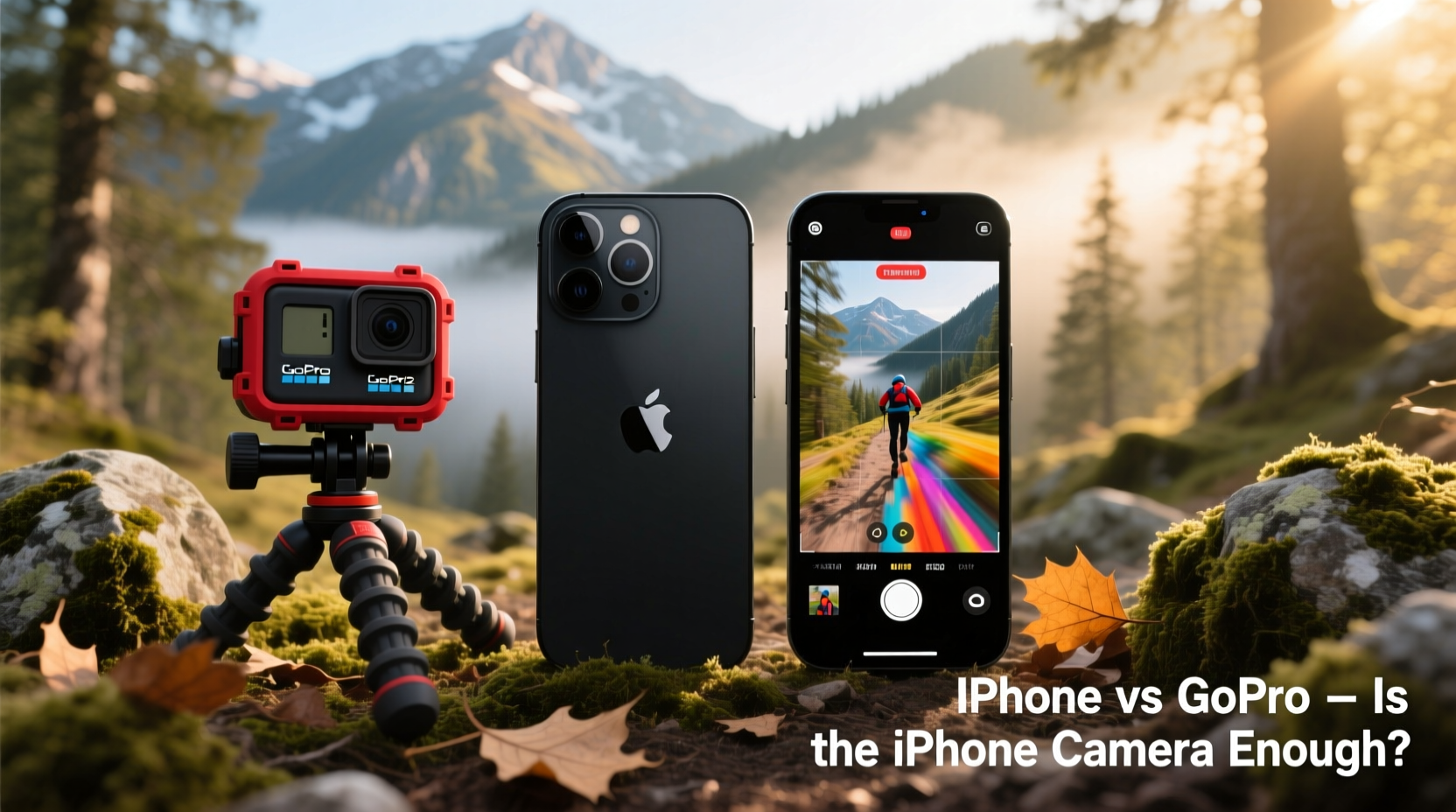
Modern iPhones, especially Pro models, offer exceptional video quality. With Dolby Vision HDR, sensor-shift stabilization, and Smart HDR 4, they capture rich colors, deep contrast, and excellent detail in well-lit conditions. The 48MP main sensor (on iPhone 15 Pro and later) allows for high-resolution 4K recording at 60fps with impressive clarity.
However, GoPro’s HERO12 Black also records 5.3K video at 60fps and supports 10-bit color and Log profiles for greater post-production flexibility. This gives videographers more control over color grading—something crucial for creators who edit professionally.
In low-light environments, the iPhone generally outperforms the GoPro due to larger pixel size and advanced noise reduction. But in bright daylight, particularly outdoors or underwater, GoPro’s flat color profile and superior dynamic range handling prevent blown-out skies and retain shadow detail better than the iPhone’s often aggressive tone mapping.
“While smartphones are catching up, dedicated action cams like GoPro still offer more consistent exposure across challenging lighting.” — Jordan Lee, Cinematographer & Tech Reviewer
Stabilization and Motion Handling
Vlogging often involves walking, biking, or moving through unpredictable terrain. Camera shake can ruin otherwise great footage. Here, GoPro continues to lead with HyperSmooth 6.0, an industry benchmark for digital stabilization. It uses advanced algorithms and gyroscopic data to deliver near-gimbal-like smoothness—even without external hardware.
iPhones have improved dramatically with cinematic mode and sensor-based stabilization, but they still rely heavily on software cropping and smoothing. In side-by-side tests, iPhone footage tends to exhibit more “jello effect” during rapid movement and less consistency when switching between lenses.
If your vlogs involve hiking, travel, or active scenes, GoPro’s stabilization offers noticeably smoother results. For static talking-head vlogs or indoor setups, the iPhone performs admirably.
Durability and Versatility in Real-World Conditions
This is where GoPro shines. All recent models are waterproof up to 33 feet (10 meters) without a housing. They’re dustproof, shock-resistant, and built for extreme conditions—whether you're filming in rain, snow, or underwater.
An iPhone, even with a rugged case, isn’t inherently waterproof. Submerging it risks damage, and prolonged exposure to moisture or sand can degrade performance. While some users film near water with caution, it’s not designed for those environments.
GoPros are also significantly smaller and lighter, making them ideal for helmet mounts, chest straps, or selfie sticks. Their wide-angle lens captures more context, perfect for showing your surroundings while vlogging adventures.
Meanwhile, the iPhone offers versatility beyond video—it’s your communication hub, editing station, and upload platform all in one. You can shoot, edit in iMovie or LumaFusion, and publish directly to YouTube or Instagram. No extra devices needed.
Use Case Comparison: Travel Vlogging Abroad
Consider Sarah, a travel vlogger documenting a two-week trek through Southeast Asia. She starts with just her iPhone, capturing city tours and food reviews. Footage looks great, but after wading through a jungle stream, her phone suffers water damage. She switches to a GoPro for the remainder of the trip. Now she films kayaking, snorkeling, and mountain biking—all without worry. The GoPro survives mud, rain, and drops, delivering reliable footage every day.
Sarah’s experience highlights a key insight: convenience favors the iPhone, but reliability under stress belongs to the GoPro.
Audio Quality and External Options
Both devices have built-in mics, but neither excels in noisy environments. Wind noise plagues outdoor recordings, especially with GoPro’s exposed microphone. However, GoPro supports external mics via the Media Mod, allowing connection to lavalier or shotgun mics for cleaner audio.
iPhones also support external microphones, including popular options like Rode’s VideoMic Me-L. Since most vloggers already carry their phone, connecting a compact mic is straightforward. Plus, iOS integrates seamlessly with recording apps like Ferrite or Voice Memos for backup audio.
For crisp voiceovers and interviews, the iPhone holds a slight edge due to better default audio processing and wider accessory compatibility.
Key Differences at a Glance
| Feature | iPhone (Pro) | GoPro HERO12 |
|---|---|---|
| Max Video Resolution | 4K at 60fps (Dolby Vision) | 5.3K at 60fps, 4K at 120fps |
| Stabilization | Advanced Sensor + Software | HyperSmooth 6.0 (Best-in-class) |
| Water Resistance | Up to 6m (IP68) | 10m (No case needed) |
| Battery Life | ~2–3 hours continuous | ~1.5–2 hours (extendable with mods) |
| External Mic Support | Yes (Lightning/USB-C) | Yes (via Media Mod) |
| Editing & Upload Workflow | Seamless (on-device) | Requires transfer to phone/computer |
| Price (Starting) | $999+ (device cost) | $399 (camera only) |
When the iPhone Is Enough
- You film mostly indoors or in controlled environments. Lighting is consistent, and motion is minimal.
- You want an all-in-one solution. Shoot, edit, and share from one device without extra gear.
- Your budget doesn’t allow for additional equipment. If you already own an iPhone 14 Pro or newer, leveraging its camera makes financial sense.
- You prioritize audio clarity and ease of use. Built-in apps and mic support simplify production.
When a GoPro Is Still Worth It
- You’re filming action-heavy content. Running, biking, skiing, or any fast-paced activity benefits from GoPro’s stabilization.
- You shoot in harsh conditions. Rain, dust, or underwater scenes demand ruggedness.
- You need flexible mounting options. Chest harnesses, helmet clips, or dash mounts work seamlessly with GoPro.
- You value consistent exposure and color science. Log profiles and flat gamma give pros more editing headroom.
Frequently Asked Questions
Can I use my iPhone instead of a GoPro for daily vlogging?
Absolutely—if your vlogs are stationary, well-lit, and you don’t need extreme durability. For casual creators, the iPhone is often sufficient and more convenient.
Does the GoPro battery last long enough for extended shoots?
Not always. Standard batteries last about 1.5–2 hours depending on resolution and temperature. However, using a dual-battery pack or portable power bank via USB-C can extend runtime significantly.
Is the iPhone’s cinematic mode good for vlogging?
It adds a professional depth-of-field effect, but it’s best suited for close-up, static shots. In dynamic situations, the focus transitions can be distracting, and the narrow field of view may not capture enough context.
Practical Checklist: Choosing Your Vlogging Setup
- Define your primary vlogging environment (indoor/outdoor/action/studio).
- Evaluate how much movement is involved in your typical shoot.
- Assess your post-production workflow (do you edit on mobile or computer)?
- Determine your budget for accessories (mics, mounts, cases).
- Test both devices in real conditions before committing.
- Consider using both: iPhone for interviews, GoPro for action sequences.
Final Verdict: Complement, Don’t Replace
The iPhone camera is remarkably capable and may be all you need for lifestyle vlogs, product reviews, or studio-style content. Its integration with Apple’s ecosystem, superior low-light performance, and intuitive editing tools make it a powerful tool.
But the GoPro remains unmatched for durability, stabilization, and adaptability in motion. It’s not about whether the iPhone has “caught up”—it’s about purpose. A Swiss Army knife is versatile, but sometimes you need a scalpel.
Many top vloggers now use both: the iPhone for polished segments and voiceovers, the GoPro for immersive, on-the-go footage. Rather than choosing one over the other, consider how they can work together to elevate your storytelling.




 浙公网安备
33010002000092号
浙公网安备
33010002000092号 浙B2-20120091-4
Comments
No comments yet. Why don't you start the discussion?