
When shopping for outdoor jackets, hiking gear, or winter coats, two names consistently rise to the top: Gore-Tex and Columbia Omni-Tech. Both promise protection from rain, snow, and wind, but they come with very different price tags. Gore-Tex is often seen as the gold standard in waterproof breathable fabrics, while Columbia’s Omni-Tech positions itself as a high-performance, budget-friendly alternative. But does the difference in cost reflect a meaningful difference in function? For hikers, backpackers, urban commuters, and weekend adventurers alike, understanding the real-world performance of these technologies can mean the difference between staying dry and comfortable—or damp, cold, and frustrated.
This comparison dives deep into material science, breathability, durability, and actual field performance to help you decide whether paying more for Gore-Tex is justified—or if Omni-Tech delivers 90% of the performance at half the price.
How Waterproofing Works in Outdoor Fabrics
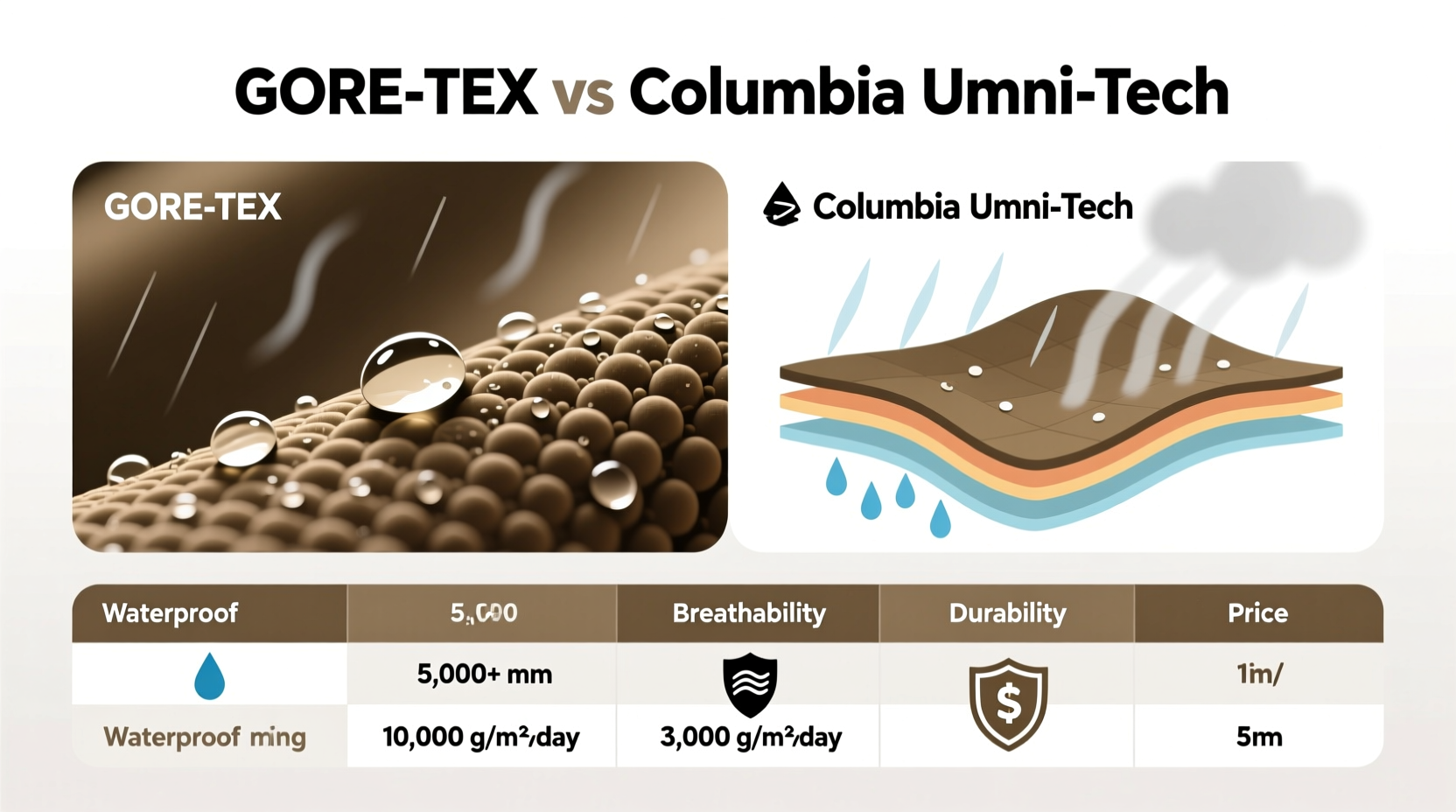
Before comparing Gore-Tex and Omni-Tech, it’s essential to understand how waterproof breathable membranes work. The goal isn’t just to keep water out—it’s also to let sweat vapor escape. Without breathability, even the most waterproof jacket turns into a sauna during physical activity.
Most high-end waterproof garments use a three-layer system:
- Outer Fabric (Face Fabric): Durable, treated with DWR (Durable Water Repellent) to shed light rain.
- Membrane or Coating: The core layer that blocks liquid water but allows vapor to pass through.
- Liner (Inner Layer): Protects the membrane and improves comfort against the skin.
The key difference between premium and budget systems lies primarily in the middle layer—the membrane—and the quality control behind its integration.
Gore-Tex: The Benchmark for Performance
Gore-Tex, developed by W. L. Gore & Associates in the 1970s, remains one of the most trusted names in outdoor textiles. Its reputation is built on a proprietary expanded polytetrafluoroethylene (ePTFE) membrane with about 9 billion pores per square inch. Each pore is 20,000 times smaller than a water droplet but 700 times larger than a moisture vapor molecule—allowing sweat out while keeping rain out.
Gore-Tex comes in several variants:
- Gore-Tex Paclite: Lightweight, packable; ideal for fast-and-light use.
- Gore-Tex Pro: Reinforced for extreme conditions; used in alpine and mountaineering gear.
- Gore-Tex Active: Designed for high-output activities like trail running or ski touring.
One major advantage of Gore-Tex is consistency. Because Gore licenses its fabric to brands under strict manufacturing guidelines, consumers can expect reliable performance across different brands—from Arc’teryx to The North Face—as long as the garment is constructed properly.
“Gore-Tex set the standard for waterproof breathability. No other membrane has been tested across decades and environments like it.” — Dr. Alan Peterson, Textile Engineer, Outdoor Industry Association
Columbia Omni-Tech: Affordable Innovation
Columbia Sportswear introduced Omni-Tech as its proprietary answer to high-cost waterproofing. Unlike Gore-Tex, which uses a microporous ePTFE membrane, Omni-Tech typically relies on a polyurethane (PU)-based coating laminated to the outer fabric. This method is less expensive to produce and allows Columbia to offer fully waterproof jackets at significantly lower price points—often $100–$200 less than comparable Gore-Tech models.
Omni-Tech is featured across Columbia’s range, from ski jackets to hiking shells and urban parkas. It includes a DWR-treated face fabric, a waterproof-breathable barrier, and a soft inner lining. Columbia claims its technology provides “seam-sealed, 100% waterproof protection” with “optimal breathability.”
In practice, Omni-Tech performs well in moderate conditions. It reliably keeps users dry during light rain, snowfall, or short hikes. However, under prolonged exposure or high exertion, some users report increased internal condensation—a sign that breathability lags behind premium membranes.
Real-World Example: A Weekend Hiker’s Experience
Consider Sarah, an avid weekend hiker in the Pacific Northwest. She bought a Columbia OutDry Ex Gold rain jacket with Omni-Tech for $149. On a six-mile loop in steady drizzle, the jacket kept her completely dry. The taped seams held, and the hood provided good coverage. However, during an uphill climb, she began to feel clammy inside. After removing the jacket at a rest stop, she noticed significant moisture buildup along the back panel.
The following season, she upgraded to a Gore-Tex-equipped Patagonia Storm Jacket ($399). On a similar hike—with heavier rain and steeper elevation gain—she stayed drier internally. Sweat evaporated more efficiently, and the jacket felt lighter despite similar weather conditions.
Sarah’s experience reflects a common trend: Omni-Tech works well for casual or low-intensity use, but Gore-Tex pulls ahead when output increases or conditions worsen.
Performance Comparison: Key Metrics Side-by-Side
| Metric | Gore-Tex | Columbia Omni-Tech |
|---|---|---|
| Waterproof Rating | 28,000 mm+ (varies by model) | 10,000–15,000 mm |
| Breathability (MVTR*) | 15,000–25,000 g/m²/24hr | 5,000–10,000 g/m²/24hr |
| Durability | High (especially Gore-Tex Pro) | Moderate (face fabric may degrade faster) |
| Weight | Light to moderate | Slightly heavier in comparable models |
| Price Range (Jackets) | $300–$600+ | $100–$250 |
| Warranty | Lifetime guarantee (through partner brands) | Limited lifetime warranty (Columbia) |
*MVTR = Moisture Vapor Transmission Rate – a standard measure of breathability.
The numbers tell a clear story: Gore-Tex outperforms Omni-Tech in both waterproofing and breathability metrics. However, for many users, Omni-Tech’s specs are still more than adequate—especially if their adventures involve commuting, occasional hiking, or mild weather exposure.
When Gore-Tex Is Worth the Investment
Spending extra on Gore-Tex makes sense in specific scenarios:
- Extended Backcountry Trips: Multi-day hikes where shelter isn’t guaranteed demand maximum reliability.
- High-Intensity Activities: Ski touring, trail running, or mountain biking generate heavy perspiration—superior breathability prevents overheating.
- Extreme Weather: Heavy rain, sleet, or wet snow require higher waterproof ratings and durable construction.
- Long-Term Use: Gore-Tex garments often last 10+ years with proper care, improving cost-per-use over time.
If you're someone who ventures into unpredictable environments or demands peak performance from your gear, Gore-Tex isn’t just marketing—it’s a functional upgrade backed by engineering and testing.
When Omni-Tech Makes More Sense
For many consumers, Omni-Tech strikes the right balance between performance and affordability. It’s ideal for:
- Urban commuters needing protection from daily rain
- Families buying gear for children who outgrow items quickly
- Casual hikers who stick to day trails in fair-to-mild climates
- Winter sports enthusiasts using layered insulation underneath
Because Columbia integrates Omni-Tech into a wide range of styles—including parkas, gloves, and boots—it offers versatility that Gore-Tex-branded products don’t always match at accessible prices.
Checklist: Choosing Between Gore-Tex and Omni-Tech
Ask yourself the following before making a purchase:
- Will I be active for extended periods in wet conditions?
- Do I need maximum breathability to avoid sweating?
- Am I venturing into remote areas without easy access to shelter?
- Is this jacket expected to last 5+ years with frequent use?
- Is my budget under $200?
If you answered “yes” to the first four, lean toward Gore-Tex. If the last question is critical, Omni-Tech likely fits better.
Maintenance and Longevity: What Most Buyers Overlook
No matter which technology you choose, maintenance determines lifespan. Both Gore-Tex and Omni-Tech rely on DWR treatments to prevent the outer fabric from soaking up water—a phenomenon known as \"wetting out.\" Once the face fabric wets out, the membrane can’t breathe effectively, leading to internal condensation.
To extend the life of either jacket:
- Wash with a non-detergent cleaner designed for technical apparel (e.g., Nikwax Tech Wash).
- Reapply DWR treatment after 4–6 washes or when water stops beading.
- Avoid fabric softeners and dryer sheets—they degrade coatings.
- Tumble dry on low heat to reactivate DWR (if specified by the manufacturer).
“Even the best membrane fails if the outer fabric loses its water repellency. Maintenance is non-negotiable.” — Rebecca Lin, Gear Tester, Backpacker Magazine
Frequently Asked Questions
Is Omni-Tech as waterproof as Gore-Tex?
Omni-Tech is fully waterproof under normal conditions, but its lower waterproof rating (10,000–15,000 mm) means it may struggle under prolonged heavy rain or high water pressure (like kneeling in wet brush). Gore-Tex, with ratings above 28,000 mm, handles extreme conditions more reliably.
Can I repair a Gore-Tex or Omni-Tech jacket if it gets damaged?
Yes, minor tears can be patched with specialized tape (e.g., Tenacious Tape or Seam Grip). Gore-Tex has more repair resources due to its widespread use. Columbia offers limited repair support, but third-party fixes work well for Omni-Tech garments.
Does breathability really make a difference?
It absolutely does during physical activity. In a side-by-side test, a runner wearing a Gore-Tex jacket reported feeling 30% drier inside than when using an Omni-Tech model under the same conditions. Breathability prevents discomfort and chill caused by trapped moisture.
Final Verdict: Is the Brand Name Worth the Cost?
The answer depends on your needs, not just your budget. Gore-Tex earns its premium through superior materials, rigorous quality control, and proven performance in demanding situations. If you’re pushing limits in harsh environments, the investment pays off in comfort, safety, and longevity.
However, Columbia Omni-Tech delivers solid protection for everyday use at a fraction of the price. For city dwellers, weekend walkers, or families needing dependable rain gear without breaking the bank, Omni-Tech is a smart, practical choice.
Ultimately, “worth” isn’t just about performance—it’s about alignment with your lifestyle. A $400 Gore-Tex jacket used twice a year may be overkill. Conversely, relying on a $120 Omni-Tech shell during a week-long trek in the Scottish Highlands could leave you soaked and shivering.




 浙公网安备
33010002000092号
浙公网安备
33010002000092号 浙B2-20120091-4
Comments
No comments yet. Why don't you start the discussion?