
When shopping for outdoor gear—especially jackets, hiking boots, or gloves—you’ll often see “Gore-Tex” prominently displayed. It’s a badge of honor in the outdoor world, promising dry feet on muddy trails and comfort during downpours. But with prices sometimes double those of similar-looking alternatives using “generic waterproof fabric,” many buyers wonder: Is the brand name really worth it?
The answer isn’t always straightforward. While Gore-Tex has earned its reputation through decades of innovation, performance, and rigorous testing, generic waterproof membranes have improved dramatically in recent years. The decision ultimately depends on how you use your gear, how long you expect it to last, and what trade-offs you’re willing to make.
How Waterproof Fabrics Work: The Basics
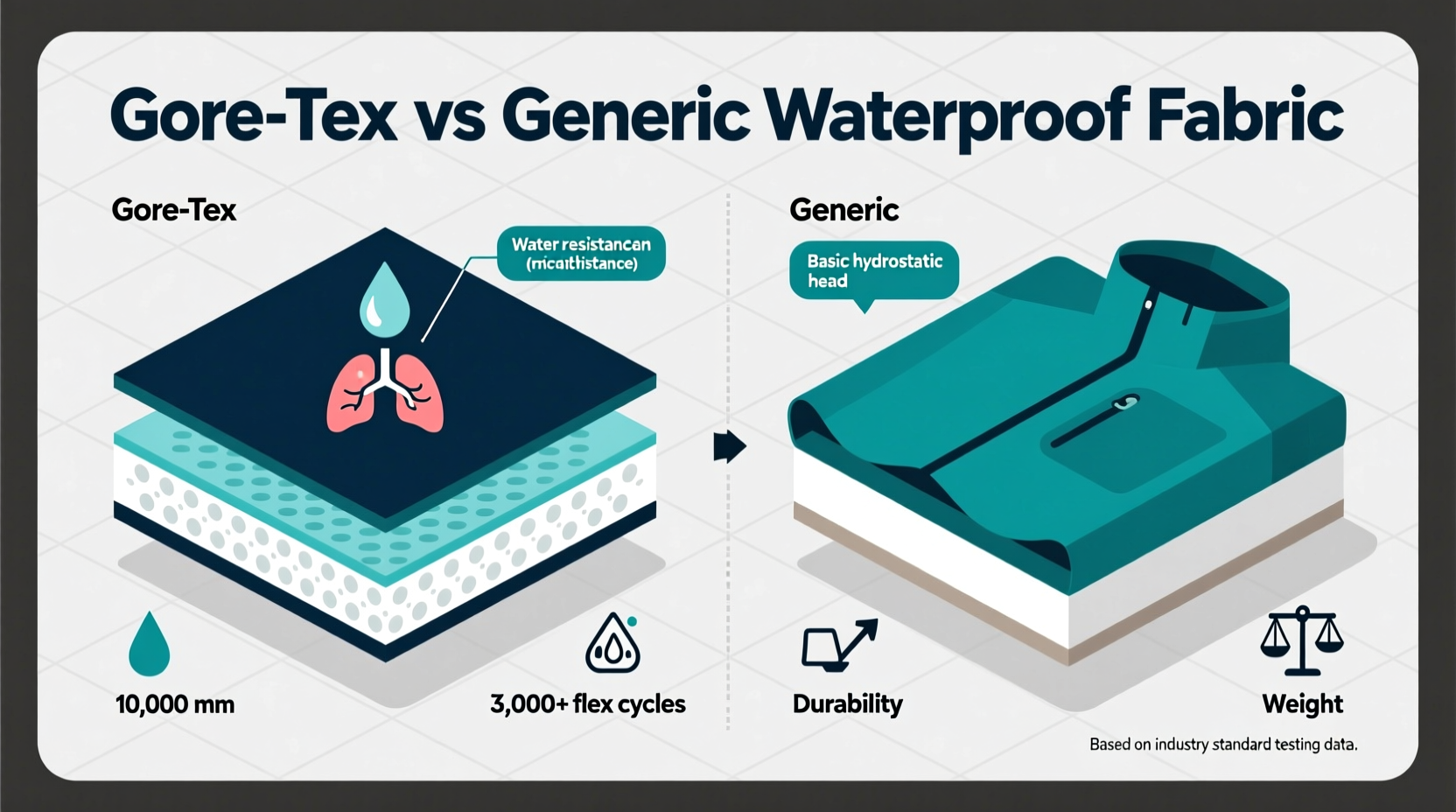
All waterproof breathable fabrics aim to do two opposing things: keep water out while letting sweat escape. This is achieved through a membrane or coating applied to the inner layer of the fabric. The science hinges on molecular size—water vapor molecules (from sweat) are much smaller than liquid water droplets (rain). A good membrane blocks the larger droplets but allows the smaller ones to pass through.
Gore-Tex uses a proprietary expanded polytetrafluoroethylene (ePTFE) membrane with about 9 billion microscopic pores per square inch. Each pore is roughly 20,000 times smaller than a water droplet but 700 times larger than a water vapor molecule. This structure enables effective moisture management under pressure—like when you're hiking uphill in wet conditions.
Generic waterproof fabrics typically rely on one of three technologies:
- Polyurethane (PU) coatings: Cost-effective and widely used, but less durable and breathable over time.
- TPU (thermoplastic polyurethane) films: More elastic and abrasion-resistant than PU, often found in mid-tier performance gear.
- Non-ePTFE microporous membranes: Some budget brands use alternative polymers that mimic breathability but degrade faster.
The core difference lies not just in materials, but in consistency, long-term performance, and environmental resilience.
Performance Comparison: Real-World Testing Insights
To assess whether Gore-Tex justifies its cost, we need to examine key performance metrics across real-world scenarios. Here's a breakdown based on lab data and field reports from hikers, mountaineers, and outdoor guides.
| Metric | Gore-Tex (Standard) | Generic Membrane (Average) | Notes |
|---|---|---|---|
| Waterproof Rating (mm) | 28,000+ | 5,000–10,000 | Higher = more resistance to water penetration under pressure |
| Breathability (RET score) | RET 9–12 | RET 15–30+ | Lower RET = better breathability; above 20 is poor |
| Durability (abrasion cycles) | 30,000+ cycles | 5,000–10,000 cycles | Based on Martindale abrasion tests |
| Long-term Hydrolysis Resistance | Excellent (no degradation) | Fair to Poor (PU degrades in humidity) | PU coatings can delaminate after 2–3 years even unused |
| Wind Resistance | High (fully windproof) | Variable (some allow airflow) | Critical for cold-weather performance |
The numbers tell a clear story: Gore-Tex outperforms generic alternatives across nearly every measurable category. But does this matter for casual users?
If you’re walking the dog in light rain or commuting in drizzle, a well-made jacket with a decent PU coating may suffice. However, once you venture into sustained rain, high exertion, or extreme environments, the gap widens significantly. Generic membranes often fail under prolonged stress—not by leaking outright, but by becoming clammy due to poor breathability.
“In alpine environments, breathability is as important as waterproofing. A jacket that traps sweat becomes a liability within an hour.” — Lars Madsen, IFMGA-certified Mountain Guide
Case Study: The Weekend Hiker vs. The Expedition Leader
Consider two individuals buying a waterproof shell:
Alex, a weekend hiker, buys a $120 rain jacket with a generic waterproof membrane. It performs well on short trails in moderate weather. After two seasons of occasional use, the inside feels sticky during hikes, and condensation builds up during climbs. By year three, the jacket starts peeling at the seams. Alex replaces it.
Jamie, a backcountry guide, invests $450 in a Gore-Tex Pro jacket. They wear it daily during guiding season—through torrential rain, snowstorms, and weeks-long expeditions. Five years later, the jacket still performs flawlessly. It’s been washed regularly, reproofed twice, and shows only minor scuffing.
Jamie spent nearly four times as much upfront—but over five years, that’s about $90 per year versus Alex’s $60 per year. Yet Jamie gets superior comfort, reliability, and safety in critical conditions. For professionals or serious enthusiasts, the longevity and consistent performance offset the initial cost.
This scenario illustrates a key principle: value is determined by usage intensity and duration.
Cost Breakdown and Long-Term Value
Let’s analyze the financial math behind the markup.
A typical Gore-Tex jacket retails between $350 and $600. A comparable-looking generic version might cost $90 to $180. That’s a $200–$400 difference. But price alone doesn’t reveal the full picture.
Factor in lifespan:
- Gore-Tex garments commonly last 8–15 years with proper care, especially in professional or heavy-use settings.
- Generic waterproof jackets often begin to degrade after 2–4 years, even with light use, due to membrane breakdown or DWR (durable water repellent) failure.
Additionally, Gore-Tex offers lifetime guarantees on many products through manufacturers. If a Gore-Tex garment fails due to material defect, it can be repaired or replaced—something rarely offered with generic alternatives.
Then there’s resale value. Used Gore-Tex gear holds its market value significantly better. A five-year-old Patagonia Gore-Tex jacket can sell for 40–60% of retail on platforms like eBay or Geartrade. Generic brands often fetch under 20%, if they sell at all.
Environmental and Ethical Considerations
The conversation around Gore-Tex isn’t just about performance—it also touches on sustainability. Historically, ePTFE was criticized for being energy-intensive to produce and non-biodegradable. However, Gore has made significant strides:
- Since 2020, all consumer Gore-Tex products are PFC-free in their DWR treatments, reducing environmental toxicity.
- Gore launched Gore-Tex Shakedry and Recycled lines using recycled nylon and reduced carbon footprint manufacturing.
- The company operates a closed-loop recycling program in Europe for end-of-life garments.
Meanwhile, many generic membranes still rely on cheaper, less sustainable PU coatings that degrade faster and contribute to microplastic pollution when washed.
While no synthetic waterproof fabric is truly eco-neutral, Gore-Tex’s investment in R&D and circular systems gives it an edge in responsible innovation—something increasingly valued by environmentally conscious consumers.
When Generic Can Be Good Enough
Gore-Tex isn’t always the best choice. There are legitimate cases where generic waterproof fabrics offer smart value:
- Occasional use: Rain ponchos, festival gear, or emergency packable shells don’t need elite performance.
- Budget constraints: Families buying gear for growing kids may prefer affordable options they can replace frequently.
- Short-term needs: Travelers needing a single-use rain layer for a trip may not benefit from long-term durability.
Some brands now offer hybrid solutions—like Hyvent (The North Face), Omni-Tech (Columbia), or Conduit (Marmot)—that blend proprietary membranes with decent performance at lower prices. These occupy a middle ground, offering better reliability than basic generics while falling short of Gore-Tex’s benchmark.
However, even these mid-tier brands vary widely in quality control. One user might get three great years from a Columbia jacket; another might experience delamination in six months. With Gore-Tex, consistency is part of the premium.
Checklist: How to Decide What’s Right for You
Use this checklist to determine whether Gore-Tex is worth the investment:
- Will I wear this gear more than 20 days per year in wet conditions? → Yes favors Gore-Tex.
- Do I engage in high-exertion activities (running, skiing, climbing)? → Breathability matters; Gore-Tex wins.
- Am I relying on this for safety in remote or extreme environments? → Reliability is critical; choose Gore-Tex.
- Is my budget under $200 for a jacket or $150 for boots? → Generic or mid-tier may be necessary.
- Do I plan to keep the item longer than 3 years? → Gore-Tex offers better long-term value.
- Am I sensitive to clamminess or overheating? → Test breathability; Gore-Tex reduces internal moisture buildup.
Frequently Asked Questions
Can I wash a Gore-Tex jacket without damaging it?
Yes, and you should. Regular washing removes dirt and oils that clog the membrane. Use a technical cleaner (like Nikwax Tech-Wash), avoid fabric softeners, and tumble dry on low to reactivate the DWR coating.
Do all Gore-Tex products perform the same?
No. Gore-Tex comes in several variants: Paclite (lightweight, for minimalists), Performance Shell (balanced), and Pro (heavy-duty, for extreme use). Choose based on your activity level and expected conditions.
Why do some people say Gore-Tex isn’t breathable?
This myth persists because early versions (1980s–90s) had limitations, and counterfeit or poorly maintained garments perform poorly. Modern Gore-Tex, especially when paired with proper ventilation (pit zips, adjustable hoods), manages moisture effectively. Perceived lack of breathability often results from wearing too many layers underneath.
Final Verdict: Is the Markup Justified?
The Gore-Tex markup reflects more than branding—it represents decades of research, strict manufacturing standards, global warranty support, and proven performance under duress. For casual users who face light rain a few times a year, a well-chosen generic or mid-tier alternative can deliver adequate protection at a fraction of the cost.
But for anyone who depends on their gear—backpackers, climbers, skiers, emergency responders, or frequent travelers in unpredictable climates—the investment pays off. You’re not just paying for dryness; you’re paying for confidence. Confidence that your jacket won’t fail mid-storm, that your boots will keep your feet comfortable on a 12-hour trek, and that your gear will last for years, not seasons.
Ultimately, Gore-Tex isn’t worth it for everyone. But for those who demand reliability, durability, and performance, the brand name isn’t a markup—it’s a promise kept.




 浙公网安备
33010002000092号
浙公网安备
33010002000092号 浙B2-20120091-4
Comments
No comments yet. Why don't you start the discussion?