
For years, gamers, content creators, and PC builders have faced a frustrating reality: high-end graphics cards are nearly impossible to find at retail price. Whether you're upgrading your rig or building a new system, encountering “Out of Stock” messages has become routine. This shortage isn’t due to a single cause but rather a complex web of global supply constraints, economic shifts, and technological demand surges. Understanding why GPUs remain scarce helps consumers make informed decisions—and prepares them for what may come next.
The Global Semiconductor Shortage
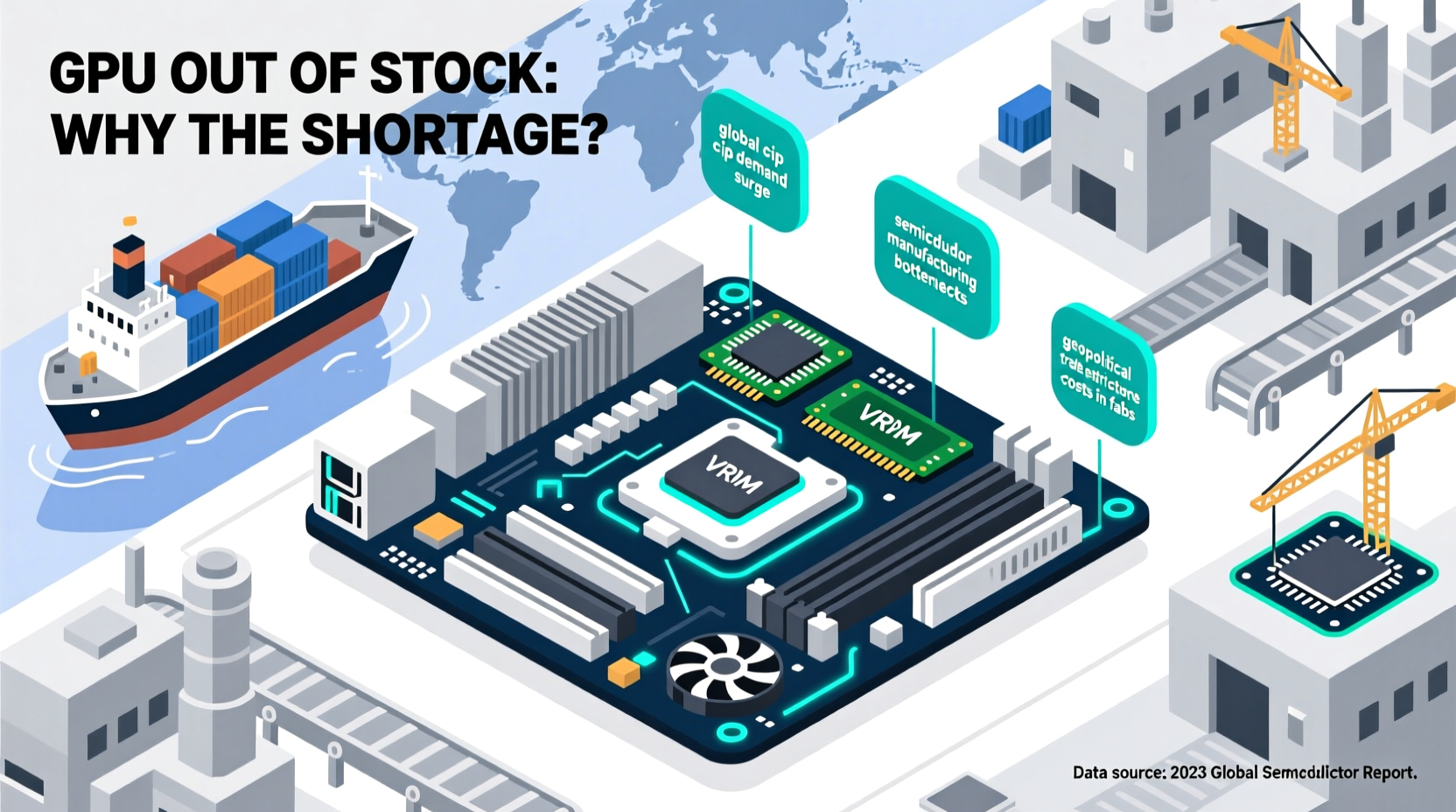
At the heart of the GPU shortage lies a broader crisis in semiconductor manufacturing. Graphics processing units require advanced silicon wafers produced using cutting-edge fabrication processes. Most of these chips are made by a handful of foundries—primarily TSMC and Samsung—operating at near-full capacity.
When the pandemic hit in 2020, automotive and industrial sectors reduced chip orders, expecting lower demand. Simultaneously, consumer electronics surged as people worked and studied from home. Factories pivoted to produce laptops, tablets, and networking gear, leaving little room for GPU production. By the time carmakers tried to resume operations, semiconductor lines were already booked for months.
This imbalance created a bottleneck that affected everything from smartphones to gaming consoles—and especially discrete GPUs, which rely on premium process nodes like 7nm and 5nm.
Cryptocurrency Mining Demand
One of the most significant drivers of GPU scarcity has been cryptocurrency mining. Coins like Ethereum (prior to its move to proof-of-stake) relied on GPU-based mining, rewarding users who contributed computing power. As coin values spiked in 2021 and early 2022, miners bought up vast quantities of consumer-grade graphics cards to build mining farms.
A single miner might purchase 6–8 GPUs at once—orders that dwarf typical consumer buys. Retailers couldn’t keep pace, and scalpers exploited this demand by using bots to hoard inventory within seconds of restocks.
While Ethereum’s transition to proof-of-stake reduced mining pressure, other privacy-focused coins still use GPU-minable algorithms. Additionally, some miners repurposed their hardware during lulls, only to reactivate when profitability returned.
“During peak mining cycles, over 30% of mid-to-high-tier GPU sales went directly into mining operations.” — Dr. Linus Lee, Senior Analyst at TechInsight Research
Supply Chain Disruptions and Logistics Challenges
Beyond chip fabrication, logistics played a critical role. The pandemic disrupted shipping routes, closed ports, and caused container shortages. Components like memory modules (GDDR6), voltage regulators, and PCBs often came from different regions, requiring coordination across China, Southeast Asia, Europe, and North America.
Lockdowns in Shanghai and Shenzhen—key hubs for electronics assembly—halted production lines in 2022. Even when GPUs were manufactured, they sat in warehouses due to port congestion or air freight limitations. Shipping costs quadrupled at times, forcing manufacturers to delay or reduce shipments.
Geopolitical tensions further complicated matters. Export restrictions, trade tariffs, and regional conflicts introduced uncertainty into long-term planning, making it harder for companies to commit to stable GPU output.
Scalping and Artificial Demand
Even when supply trickled in, many consumers never saw it. Automated bots allowed scalpers to buy entire inventories within seconds of release. These individuals resold cards at 2x–3x MSRP on secondary markets like eBay and Facebook groups.
Manufacturers responded with anti-bot measures, such as CAPTCHA systems and purchase limits. NVIDIA even introduced Lite Hash Rate (LHR) versions of RTX 30-series cards to deter miners. However, determined scalpers adapted quickly, using residential proxy networks and human-operated teams to bypass restrictions.
The psychological impact was profound: constant “out of stock” alerts led buyers to panic-purchase whenever stock appeared, reinforcing artificial scarcity.
| Factor | Impact on GPU Availability | Duration of Influence |
|---|---|---|
| Semiconductor Shortage | Severe – limited wafer capacity | 2020–2023+ |
| Crypto Mining Surge | High – diverted consumer stock | 2020–2022 (peaked) |
| Logistics Bottlenecks | Moderate to High – delayed shipments | 2020–2022 |
| Scalper Bots | High – restricted access | Ongoing issue |
| Geopolitical Instability | Moderate – disrupted sourcing | Recurring risk |
How to Navigate the Current Market: A Practical Guide
Despite improvements in 2023 and 2024, certain models—especially high-performance GPUs like the RTX 4090 or Radeon RX 7900 XTX—still face intermittent shortages. Here’s how to improve your chances of securing one:
- Set up restock alerts: Use services like NowInStock.net or CamelCamelCamel to monitor major retailers (Newegg, Best Buy, Amazon).
- Register for launch lotteries: Companies like NVIDIA and ASUS occasionally run verified purchase programs to block bots.
- Consider open-box or refurbished units: Reputable retailers often sell tested returns at discounts.
- Buy during seasonal sales: Black Friday, Prime Day, and back-to-school periods sometimes see unexpected drops.
- Join community forums: Subreddits like r/hardwareswap and Discord channels share real-time stock updates.
Mini Case Study: Alex’s Successful RTX 4070 Purchase
Alex, a video editor in Chicago, spent six months trying to buy an RTX 4070 without paying a markup. He signed up for email alerts from eight retailers and used a browser extension that notified him of page changes. On a Tuesday morning, he received a ping from Micro Center two minutes after a restock. Because he had his payment info saved and acted immediately, he secured the card at $599—below the inflated market rate of $800+.
His strategy? Persistence, preparation, and avoiding third-party sellers until absolutely necessary. Six weeks later, he sold his old GTX 1080 via r/hardwareswap to offset costs.
What the Future Holds
The situation is improving, but not uniformly. Newer architectures like NVIDIA’s Ada Lovelace and AMD’s RDNA 3 are gradually stabilizing supply. Foundries have expanded capacity, and AI-driven forecasting helps balance production better than before.
However, emerging technologies could create new pressures. Generative AI tools require massive parallel computing—often powered by the same GPUs gamers want. Data centers are now competing with consumers for similar hardware, particularly in entry-level AI training setups.
As hybrid work continues and VR/AR development grows, demand for powerful GPUs will persist. Manufacturers are responding with more segmented product lines—separating prosumer, workstation, and gaming SKUs—but overlaps remain.
Frequently Asked Questions
Will GPUs ever return to normal pricing?
Yes, but selectively. Mid-range models have largely stabilized at or near MSRP. High-end cards may stay volatile due to niche demand from creators and AI hobbyists. Long-term, increased competition and improved yields should help normalize prices.
Are there still scalpers affecting availability?
Yes, though less aggressively than in 2021. Some scalpers shifted focus to CPUs and SSDs, but popular GPU launches still attract bot activity. Retailer verification systems have reduced their reach, but vigilance remains necessary.
Should I buy a prebuilt system instead?
If timing is critical, yes. OEMs receive bulk allocations and can bundle GPUs at fair prices. However, upgrades may be harder later, and component transparency varies. Weigh customization needs against urgency.
Conclusion: Stay Informed, Stay Ready
The era of instant GPU access may not return soon, but understanding the forces behind shortages puts you ahead of the curve. From semiconductor bottlenecks to crypto swings and AI competition, the market reflects larger tech trends. By staying alert, leveraging tools, and knowing where to look, you can avoid overpaying and build your dream system on budget.




 浙公网安备
33010002000092号
浙公网安备
33010002000092号 浙B2-20120091-4
Comments
No comments yet. Why don't you start the discussion?