
When choosing a countertop material for your kitchen or bathroom, few factors matter more than stain resistance—especially if you regularly enjoy red wine, coffee, or other deeply pigmented beverages. Two of the most popular options on the market today are granite and quartz. Both offer durability, elegance, and long-term value, but they differ significantly in how they respond to spills. Understanding these differences is key to making an informed decision that aligns with your lifestyle.
Granite, a natural stone quarried from the earth, has been a staple in high-end kitchens for decades. Quartz, on the other hand, is an engineered composite made from ground quartz and resin binders. While both materials can enhance the look of a space, their behavior when exposed to common household liquids like wine and coffee varies due to composition, porosity, and maintenance requirements.
Understanding Porosity and Stain Formation
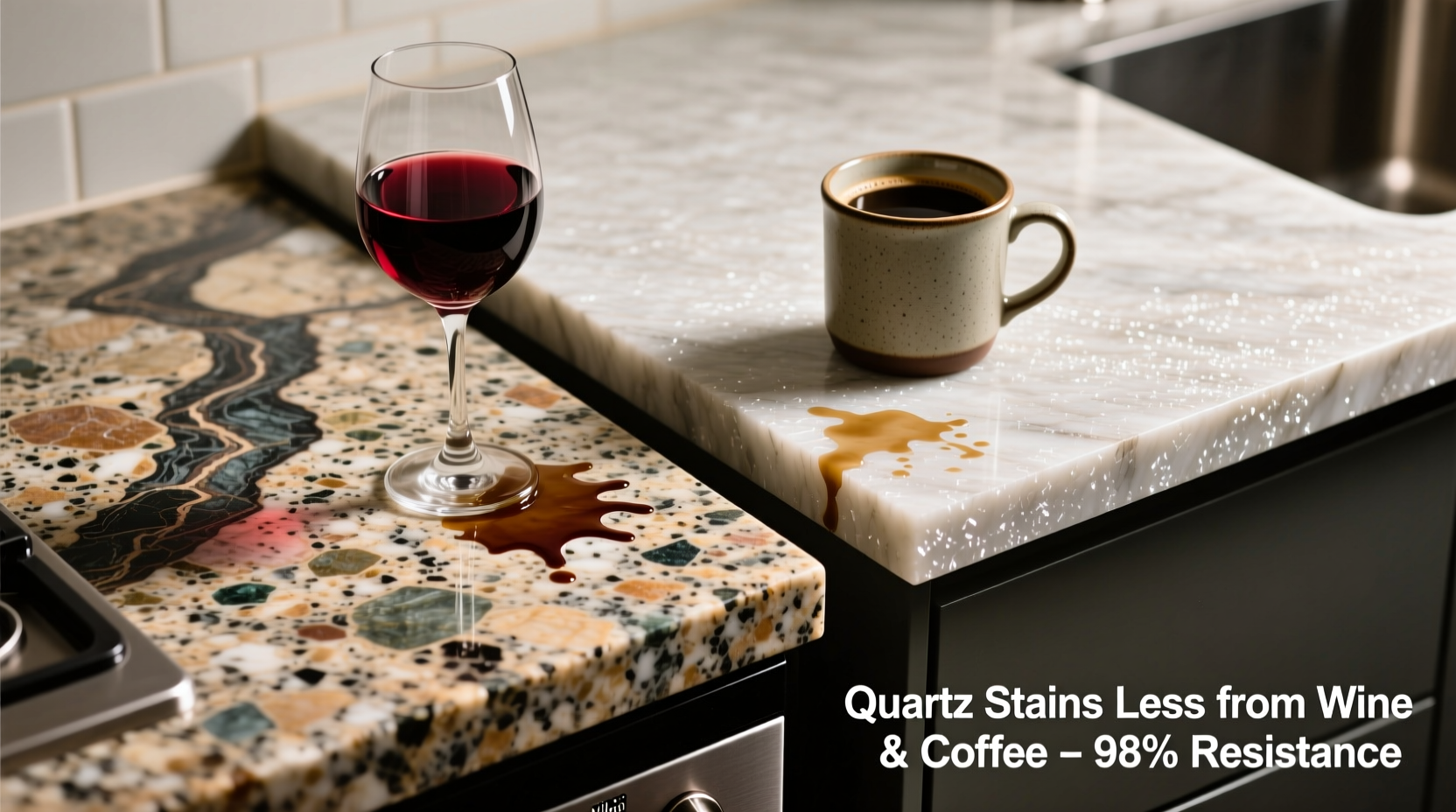
Staining occurs when a liquid penetrates the surface of a material and leaves behind a discoloration. The likelihood of this happening depends largely on the material’s porosity—the degree to which it can absorb liquids. More porous surfaces are more vulnerable to staining, especially from substances like red wine (which contains tannins and dyes) and coffee (which contains oils and dark pigments).
Natural stones like granite are inherently porous. Even though granite is dense compared to many other stones, microscopic pores exist throughout its structure. Without proper sealing, these pores allow liquids to seep in over time. Once inside, the liquid reacts with minerals in the stone or simply remains trapped, causing a visible stain.
Quartz, by contrast, is non-porous. Because it's manufactured using approximately 90–95% crushed quartz and 5–10% polymer resins, the resulting slab is solid and impermeable. There are no natural fissures or capillaries for liquids to penetrate. This makes quartz highly resistant to staining under normal conditions—even without sealing.
How Granite Reacts to Wine and Coffee
Granite’s reaction to wine and coffee depends heavily on two factors: the specific slab’s mineral composition and whether it has been properly sealed.
Some granites are denser and less absorbent than others. For example, darker granites with tightly packed crystals tend to resist staining better than lighter, more crystalline varieties. However, even the densest granite will eventually absorb liquids if left unsealed. A single glass of red wine spilled and left overnight on an unsealed countertop can leave a permanent pinkish or brownish mark.
Sealing granite creates a protective barrier that repels liquids. Most manufacturers recommend resealing every 1–3 years, depending on usage and the quality of the sealant. You can test if your granite needs resealing by performing a water test: place a few drops of water on the surface and observe for 10 minutes. If the water beads up, the seal is intact. If it darkens the stone or soaks in, it’s time to reseal.
Coffee poses a dual threat. In addition to potential staining, acidic coffee can gradually dull the polish on some types of granite, particularly those with calcite content. While not a stain per se, this etching can create spots that appear discolored or hazy.
“Granite is beautiful and durable, but its vulnerability to staining means homeowners must be diligent about sealing and spill cleanup.” — Daniel Reyes, Certified Kitchen Designer and Stone Consultant
How Quartz Handles Wine and Coffee Exposure
Quartz excels in stain resistance because it doesn’t require sealing and is non-porous. Spills from red wine, coffee, juice, or oil sit on the surface rather than soaking in. As long as the spill is cleaned within a reasonable timeframe—say, a few hours—it won’t leave a trace.
The resin binders used in quartz production fill all gaps between the quartz particles, creating a seamless, impervious surface. This engineering advantage makes quartz ideal for busy households where spills happen frequently and immediate cleanup isn’t always possible.
However, quartz isn’t completely immune to damage. Prolonged exposure to highly pigmented liquids (e.g., leaving a red wine glass ring for days) may lead to temporary discoloration or residue buildup along edges or seams. While this isn’t true staining, it can look unsightly and requires scrubbing with a mild cleanser. Additionally, while quartz resists stains well, it is more sensitive to heat than granite. Placing a hot coffee mug directly from the microwave onto a quartz surface may cause thermal shock or scorching of the resin, especially near seams.
Comparative Performance: Granite vs Quartz
To illustrate the practical differences between granite and quartz in resisting wine and coffee stains, consider the following comparison table:
| Feature | Granite | Quartz |
|---|---|---|
| Porosity | Porous – requires sealing | Non-porous – no sealing needed |
| Wine Stain Resistance | Moderate to good (if sealed) | Excellent |
| Coffee Stain Resistance | Good with regular sealing | Excellent |
| Maintenance | Annual or biannual sealing required | None beyond routine cleaning |
| Heat Resistance | High – safe for hot pans | Moderate – use trivets |
| Lifespan | 30+ years with care | 25+ years |
| Cost (per sq ft installed) | $75–$150 | $85–$140 |
This table highlights quartz’s superior performance in stain resistance, primarily due to its engineered, non-porous nature. Granite can perform well too—but only with consistent maintenance.
Real-World Scenario: The Weekend Brunch Test
Consider Sarah, a homeowner who loves hosting weekend brunches. Her kitchen sees frequent use: mimosas, Bloody Marys, strong brewed coffee, and red wine often linger on countertops during lively gatherings. She initially chose a light speckled granite for its natural beauty but found that after six months, small dark spots appeared near the coffee station and dining area.
Upon inspection, a stone specialist confirmed these were coffee and wine stains that had penetrated the surface. Although Sarah had sealed the granite at installation, she hadn’t repeated the process, assuming one application would last years. After deep cleaning and resealing, the stains faded but didn’t fully disappear.
When remodeling her second home, Sarah opted for a matte-finish quartz in a warm gray tone. Over the next two years, she spilled wine multiple times, left coffee mugs sitting for hours, and even dropped turmeric-laden curry sauce. Each time, a quick wipe with soapy water removed the mess without a trace. No sealing, no special products—just consistency in cleaning.
Sarah’s experience reflects a broader trend: quartz performs more reliably in high-traffic, spill-prone environments, while granite demands more vigilance to maintain its appearance.
Actionable Checklist: Choosing the Right Countertop for Stain Resistance
If minimizing stains from wine and coffee is your top priority, follow this checklist to guide your decision:
- ✅ Assess your lifestyle: Do you cook often? Host guests? Have children? High-activity kitchens benefit from low-maintenance quartz.
- ✅ Evaluate your willingness to maintain: Are you prepared to reseal granite every 1–2 years?
- ✅ Consider lighting: Light-colored granites show stains more easily than darker ones or quartz slabs with integrated speckles.
- ✅ Test samples: Bring a red wine sample and coffee to the showroom. Pour a few drops on sealed granite and quartz, wait 10 minutes, then wipe. Observe any absorption or residue.
- ✅ Check warranty: Many quartz brands offer 10–15 year warranties covering stains and structural defects. Granite warranties vary by fabricator.
- ✅ Think long-term: Quartz holds its appearance with minimal effort; granite rewards care but shows neglect faster.
Step-by-Step Guide to Preventing Countertop Stains
Regardless of your choice, follow this five-step protocol to protect your investment:
- Immediate Wipe-Up: Clean wine and coffee spills within 10–15 minutes using a soft cloth and mild dish soap.
- Daily Cleaning: Use a pH-neutral cleaner. Avoid vinegar, lemon, or abrasive powders—they can degrade sealants or scratch surfaces.
- Weekly Inspection: Look for dull spots or darkening, especially near sinks and stovetops, which may indicate early staining or seal failure.
- Sealing Schedule (for granite): Reapply a high-quality impregnating sealer every 12–24 months. Follow manufacturer instructions precisely.
- Use Barriers: Place coasters under wine glasses and use trays for coffee makers to contain drips and reduce direct contact.
Frequently Asked Questions
Can sealed granite resist coffee stains indefinitely?
No sealant offers permanent protection. Even high-quality sealers degrade over time due to cleaning, heat, and chemical exposure. Sealed granite resists stains much better than unsealed, but periodic reapplication is essential. Expect protection to last 1–3 years depending on usage.
Does quartz ever stain from red wine?
In typical use, no. Quartz is non-porous and highly resistant to wine. However, if wine is left for several days and allowed to dry into crevices or along seam lines, it may leave a residue that looks like a stain. This can usually be removed with a damp cloth and gentle scrubbing. True penetration does not occur.
Is there a granite that doesn’t need sealing?
All natural granite is porous to some degree and benefits from sealing. Some denser granites (like absolute black) absorb very little and may go longer between sealings, but no granite is completely maintenance-free. Claims of “self-sealing” granite are misleading.
Final Recommendation: Which Is Better for Stain Resistance?
For homeowners prioritizing minimal maintenance and maximum resistance to wine and coffee stains, quartz is the superior choice. Its non-porous, engineered surface eliminates the guesswork of sealing and delivers consistent performance over time. It’s especially well-suited for modern kitchens where ease of care and visual uniformity matter.
Granite remains a strong contender for those who value natural beauty, unique patterning, and heat resilience. With proper sealing and attentive care, it can resist stains effectively. However, it demands commitment. If you’re unwilling or unable to maintain a regular sealing schedule, granite may disappoint in the long run.
In summary: choose quartz for hassle-free, reliable stain resistance. Choose granite if you appreciate natural stone and are ready to invest time in upkeep.




 浙公网安备
33010002000092号
浙公网安备
33010002000092号 浙B2-20120091-4
Comments
No comments yet. Why don't you start the discussion?