
When building savory depth in soups, stews, rubs, or sauces, dried onion products are indispensable. Yet confusion persists between granulated and powdered onion—two forms often mistaken as interchangeable. While both originate from dehydrated onions, their physical properties, solubility, and impact on dishes differ significantly. Choosing the wrong form can alter texture, release timing of flavor, and even mouthfeel. Understanding these distinctions empowers cooks to make precise decisions, whether crafting a silky gravy or a dry spice blend. This guide dissects granulated and powdered onion at the level of culinary science, application, and sensory outcome.
Definition & Overview
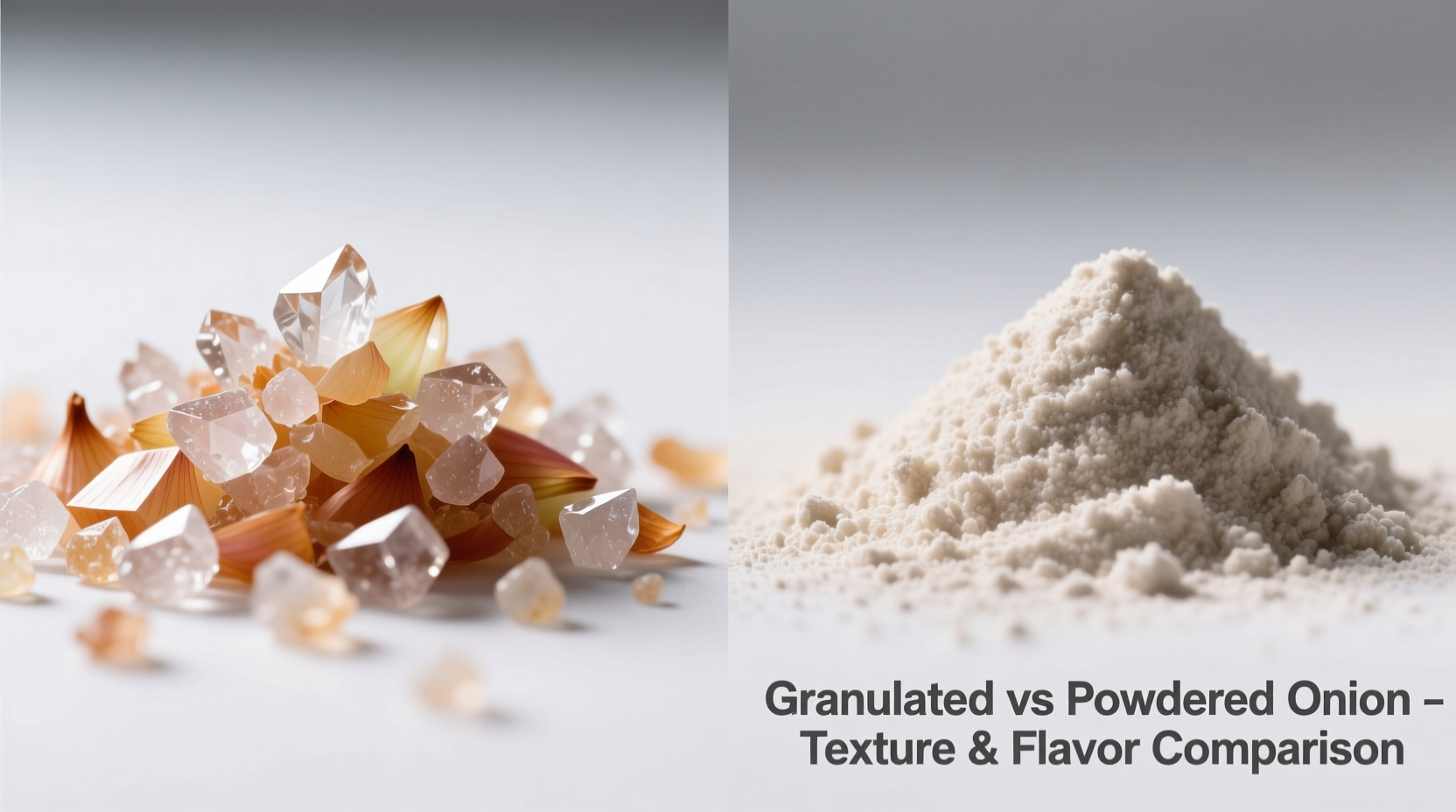
Dried onion products are concentrated forms of fresh Allium cepa, processed to remove moisture while preserving flavor compounds. They serve as shelf-stable alternatives that deliver consistent onion essence without the prep work or spoilage concerns of fresh bulbs. The two most common commercial forms are granulated onion and powdered onion, each defined by particle size and method of production.
Granulated onion consists of finely chopped or milled dehydrated onion pieces that retain a coarse, sand-like texture. Particles typically range from 0.5 to 2 millimeters in diameter, allowing them to rehydrate slowly during cooking. It maintains visible flecks in finished dishes and offers a gradual release of flavor.
Powdered onion, by contrast, is ground to a fine, flour-like consistency—often passing through a 60-mesh sieve. This ultra-fine powder dissolves more readily in liquids and integrates seamlessly into batters, dressings, and emulsions. Its high surface area accelerates flavor dispersion but may result in a sharper initial bite if not properly dispersed.
Both forms originate from pungent yellow or white onions, though some specialty powders use sweeter varieties like Vidalia. Neither contains additives unless labeled as seasoned blends (e.g., onion powder with salt or anti-caking agents). In professional kitchens and food manufacturing, these ingredients are selected not just for convenience but for reproducibility across batches.
Key Characteristics
| Characteristic | Granulated Onion | Powdered Onion |
|---|---|---|
| Particle Size | 0.5–2 mm; coarse, gritty texture | <0.5 mm; fine, dust-like powder |
| Solubility | Slow rehydration; retains structure | High solubility; disperses quickly in liquids |
| Flavor Release | Gradual; builds over time | Immediate; peaks early in cooking |
| Aroma Intensity | Moderate; earthy, slightly sweet when dry | Sharper, more pungent due to oxidation exposure |
| Color Impact | Visible golden specks in mixtures | Uniform pale yellow tint; no visible particles |
| Culinary Function | Bulk addition, texture contributor | Flavor integration, blending agent |
| Shelf Life | 2–3 years (stored airtight, cool, dark) | 1.5–2 years (more prone to clumping and aroma loss) |
Practical Usage: How to Use Each Form
The choice between granulated and powdered onion hinges on desired texture, cooking time, and final product consistency. Substituting one for the other without adjustment risks compromising mouthfeel or flavor balance.
When to Use Granulated Onion
- Dry Rubs and Seasoning Blends: Granules adhere well to meat surfaces, providing textural contrast and slow flavor release during grilling or roasting. Ideal for barbecue rubs where you want perceptible seasoning bits.
- Long-Simmered Dishes: Stews, chili, and braises benefit from granulated onion’s gradual hydration. It mimics the behavior of fresh onion added at the start, releasing sugars and sulfur compounds over time.
- Bulk Baking Mixes: In crackers, breadsticks, or savory scones, granulated onion adds visual interest and a slight crunch when underbaked.
- Vegetable Broths and Dry Soup Bases: When reconstituted in hot water, granulated onion provides body and fibrous mouthfeel closer to real onion.
When to Use Powdered Onion
- Sauces and Gravies: For smooth, lump-free textures, powdered onion dissolves completely. Add it with flour in roux-based sauces or stir into cream reductions at the end.
- Marinades and Wet Brines: Due to rapid solubility, powdered onion integrates instantly into liquid solutions, ensuring even distribution of flavor.
- Batters and Coatings: Tempura, pancake, or fried chicken batters remain uniform without graininess when using onion powder instead of granules.
- Commercial Seasoning Blends: Manufacturers prefer powdered onion for its flowability and mixing efficiency in spice lines like taco seasoning, ranch mix, or instant noodles.
Pro Tip: If substituting granulated for powdered onion, increase cooking time by 3–5 minutes to allow full rehydration. Conversely, when replacing granulated with powder, reduce the amount by 25%—powder delivers more concentrated flavor per volume due to denser packing and faster extraction.
Variants & Types
Beyond basic granulated and powdered forms, several specialized dried onion products exist, each suited to niche applications. Recognizing these helps refine recipe accuracy and expand pantry versatility.
1. Dehydrated Minced Onion
Often confused with granulated onion, minced onion is coarser, with irregular flakes ranging from 2–4 mm. It's commonly used in home cooking for quick sauté mixes or omelets. Rehydrates faster than granules but slower than powder. Not ideal for smooth sauces.
2. Onion Flakes
These are larger, flat pieces of dehydrated onion, sometimes blanched before drying. Used in retro casserole recipes (e.g., green bean casserole topping) or artisanal breads. Require longer soaking or baking to soften.
3. Toasted Onion Powder
Processed at higher temperatures to caramelize natural sugars, this variant has a deeper umami profile and less sharpness. Found in gourmet spice lines and restaurant kitchens aiming for roasted-onion notes without labor.
4. Freeze-Dried Onion
Preserved via lyophilization, retaining cellular structure and volatile aromas better than heat-dehydrated versions. More expensive but superior in fresh-like flavor. Used in high-end instant soups and military rations.
5. Organic and Sprouted Onion Powders
Marketed for health-conscious consumers, these undergo gentler processing and may contain higher levels of allicin precursors. Slight variation in potency; often recommended for raw applications like salad sprinkles.
| Type | Best Used In | Rehydration Time | Substitution Ratio (vs. Fresh Onion) |
|---|---|---|---|
| Granulated Onion | Rubs, stews, casseroles | 8–12 minutes in liquid | 1 tbsp = ¼ cup fresh chopped |
| Powdered Onion | Sauces, marinades, batters | 1–3 minutes in liquid | 1 tsp = ¼ cup fresh chopped |
| Minced Onion | Omelets, stir-fries, pilafs | 5–8 minutes | 2 tbsp = ½ cup fresh chopped |
| Onion Flakes | Toppings, baked dishes | 10+ minutes or with fat | 3 tbsp = ¾ cup fresh chopped |
Comparison with Similar Ingredients
Dried onion products are frequently conflated—not only with each other but also with related allium derivatives. Clarifying distinctions prevents misuse and enhances dish precision.
Granulated vs. Powdered Onion
- Texture: Granulated provides grit; powdered yields smoothness.
- Flavor Onset: Powder acts fast; granulated develops slowly. Use Case Priority: Choose granulated for tactile presence, powdered for invisible infusion.
Onion Powder vs. Garlic Powder
- Though similarly processed, garlic powder is significantly more potent. Never substitute 1:1—onion powder lacks the sulfurous punch of garlic.
- Garlic powder browns faster and can become bitter if overheated; onion powder is more heat-stable.
Dried vs. Fresh Onion
“Dried onions aren’t replacements—they’re tools. They offer concentration and control, but they don’t replicate the juiciness or enzymatic complexity of fresh.”
— Chef Elena Rodriguez, Culinary Institute of America
- Fresh onions contribute water, enzymes, and cell-wall polysaccharides that affect viscosity and browning.
- Dried forms lack moisture, so they won’t caramelize on their own. They need liquid or fat to activate.
- For maximum authenticity, combine both: use dried for base flavor, fresh for finish.
Onion Salt vs. Onion Powder
- Onion salt is typically 75% salt, 25% onion powder. Using it in place of pure powder drastically increases sodium.
- Always check labels. Some brands add anti-caking agents or sugar, altering performance in sensitive recipes.
Practical Tips & FAQs
How much dried onion equals one fresh onion?
As a rule of thumb: one medium fresh onion (about 1 cup chopped) equals 3 tablespoons granulated onion or 1 tablespoon powdered onion. Adjust based on dish moisture and cooking duration.
Can I make my own onion powder at home?
Yes. Thinly slice yellow onions, dehydrate at 135°F (57°C) until brittle (6–10 hours), then grind in a spice mill or blender. Sift for fineness. Store in an airtight jar away from light. Homemade powder lacks preservatives, so use within 6 months.
Why does my onion powder clump?
Moisture absorption is the primary cause. Always use a dry spoon when measuring, and consider adding a rice packet to the container. In humid climates, store in the refrigerator—but allow warming to room temperature before opening to prevent condensation.
Does cooking destroy flavor in dried onions?
No—heat activates thiosulfinates and sulfides responsible for onion aroma. However, prolonged boiling may drive off volatile compounds. For optimal retention, add dried onions midway through simmering rather than at the beginning.
Are there low-FODMAP options?
Onion powder is high in fructans, making it unsuitable for strict low-FODMAP diets. Alternatives include infused onion oil (flavor without solids) or asafoetida (hing), which mimics allium character with digestive tolerance.
What dishes showcase granulated onion best?
Chili, meatloaf, stuffing, and homemade sausage links benefit from the subtle chew and slow bloom of granulated onion. It integrates without disappearing, offering a rustic quality preferred in hearty fare.
Which form works in raw applications?
Powdered onion excels in uncooked uses: salad dressings, compound butters, deviled eggs, or spice rubs left on raw meat. Granulated onion may remain unpleasantly hard unless pre-soaked in vinegar or citrus juice for 10 minutes.
Storage Checklist:
✅ Keep in airtight glass or metal containers
✅ Store in a cool, dark cupboard (not above the stove)
✅ Label with purchase date
✅ Replace after 2 years for peak potency
❌ Avoid plastic bags—they allow oxygen permeation and degrade flavor
Summary & Key Takeaways
Granulated and powdered onion are not interchangeable by default—their differences in particle size, solubility, and flavor kinetics demand thoughtful selection. Granulated onion serves best when texture and gradual flavor release matter, such as in dry rubs, long-cooked dishes, or baked goods where specks are desirable. Powdered onion shines in applications requiring seamless integration—sauces, marinades, batters, and commercial blends—where uniformity and speed are priorities.
Understanding substitution ratios, rehydration needs, and storage requirements ensures consistent results. Remember: 1 teaspoon of powdered onion equals roughly 1 tablespoon of granulated, and neither fully replicates fresh onion but complements it strategically.
Cooks who master these nuances elevate their seasoning game from guesswork to precision. Whether scaling recipes for a family dinner or developing a signature spice blend, choosing the right dried onion form is a small decision with outsized impact on flavor architecture and dining experience.
Next time you reach for the spice rack, pause—granulated or powdered? Your dish depends on it.




 浙公网安备
33010002000092号
浙公网安备
33010002000092号 浙B2-20120091-4
Comments
No comments yet. Why don't you start the discussion?