
Mental clarity—often described as a state of focused awareness, reduced cognitive clutter, and emotional equilibrium—is increasingly elusive in our fast-paced, hyper-connected lives. Many turn to journaling as a tool to regain control over their thoughts, but not all journaling is created equal. Two popular approaches dominate the self-improvement landscape: gratitude journaling and bullet journaling. While both offer tangible psychological benefits, they serve different purposes and cultivate clarity in distinct ways. Understanding their core mechanics, strengths, and ideal use cases can help you determine which method aligns best with your current needs.
The Foundations of Mental Clarity
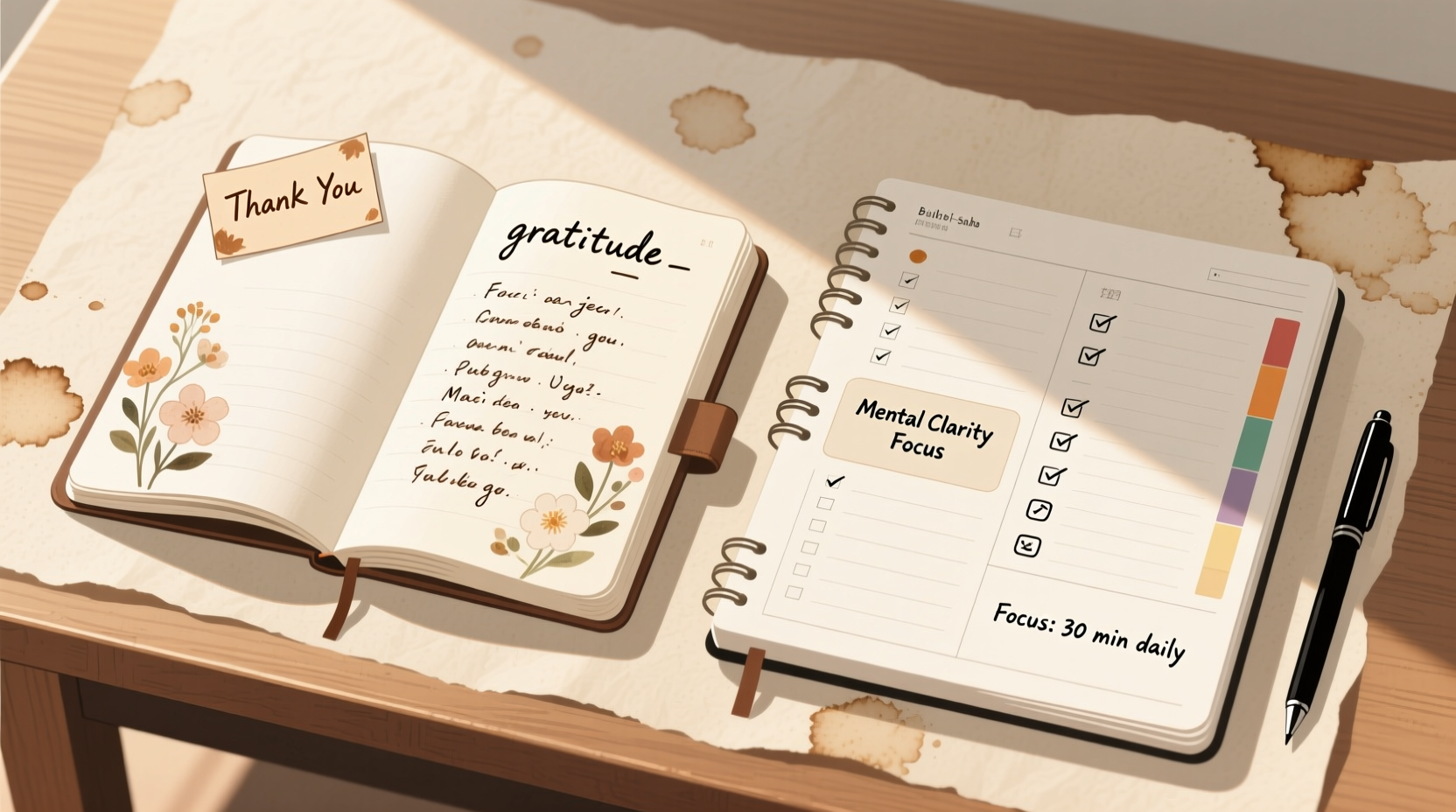
Mental clarity isn’t just about thinking clearly—it’s about creating internal space where decisions feel intentional, emotions are regulated, and distractions lose their grip. Research consistently shows that reflective practices like journaling can enhance cognitive function by reducing rumination, improving emotional regulation, and increasing self-awareness. However, the path to clarity depends on what kind of noise you're trying to quiet.
Are you overwhelmed by scattered tasks and looming deadlines? Or are you weighed down by negative thought patterns and emotional fatigue? The answer shapes whether structure or reflection will serve you better. This distinction lies at the heart of the gratitude versus bullet journaling debate.
What Is Gratitude Journaling?
Gratitude journaling involves regularly recording things for which you are thankful. Entries typically focus on positive experiences, people, moments, or even small pleasures—like a warm cup of coffee, a kind message from a friend, or a moment of peace during a busy day. The practice is rooted in positive psychology and has been linked to measurable improvements in mood, resilience, and overall well-being.
The act of identifying and writing down positive aspects of life trains the brain to scan for good rather than default to negativity—a phenomenon known as the “negativity bias.” Over time, this shift in attention rewires neural pathways, making optimism more accessible and stress less overwhelming.
Benefits of Gratitude Journaling for Mental Clarity
- Reduces mental fog caused by emotional overload: By anchoring attention in positive experiences, gratitude helps break cycles of anxiety and rumination.
- Enhances emotional regulation: Regular reflection fosters greater self-awareness and reduces reactivity to stressors.
- Promotes present-moment awareness: Focusing on current blessings encourages mindfulness, grounding the mind in the now.
- Builds psychological resilience: Studies show consistent gratitude practice increases long-term life satisfaction and decreases symptoms of depression.
“Gratitude turns what we have into enough. It doesn’t deny hardship, but it refuses to let hardship define the whole story.” — Dr. Robert Emmons, Leading Gratitude Researcher
What Is Bullet Journaling?
Bullet journaling, developed by designer Ryder Carroll, is a customizable organization system that combines task management, scheduling, habit tracking, and personal reflection. At its core, it’s a analog productivity tool designed to bring order to chaos through rapid logging, migration, and intentional planning.
Unlike traditional planners, bullet journals use a modular system of symbols (bullets) to categorize tasks, events, and notes. Users create collections—such as monthly calendars, habit trackers, goal roadmaps, or mood logs—that evolve with their needs. The flexibility allows deep personalization, making it appealing to creatives, professionals, and anyone seeking structure without rigidity.
Benefits of Bullet Journaling for Mental Clarity
- Externalizes mental load: Writing down tasks frees up cognitive resources otherwise spent remembering or worrying about them.
- Creates visual order: Seeing priorities laid out spatially improves decision-making and reduces overwhelm.
- Encourages intentionality: The process of migrating unfinished tasks forces regular evaluation of what truly matters.
- Supports goal alignment: Long-term spreads (e.g., yearlies, futures logs) keep actions connected to broader life vision.
Comparative Analysis: Gratitude vs Bullet Journaling
To understand which method better supports mental clarity, consider their primary functions:
| Aspect | Gratitude Journaling | Bullet Journaling |
|---|---|---|
| Primary Focus | Emotional well-being and positivity | Organization and productivity |
| Cognitive Benefit | Reduces rumination, enhances emotional clarity | Reduces mental clutter, improves focus |
| Time Commitment | 3–5 minutes daily | 10–30 minutes weekly + daily check-ins |
| Best For | Stress reduction, emotional balance, mindfulness | Task overload, procrastination, planning |
| Structure Level | Low (freeform writing) | High (modular, symbol-based system) |
| Long-Term Impact | Improved mood, increased resilience | Greater accountability, sustained progress |
The table reveals a crucial insight: neither method is universally superior. Instead, their effectiveness depends on the nature of your mental clutter. If your mind feels heavy with worry, regret, or dissatisfaction, gratitude journaling offers a gentle reset. If your thoughts race with uncompleted tasks and disorganized plans, bullet journaling provides the scaffolding needed to regain control.
Real-World Application: A Mini Case Study
Sarah, a 34-year-old project manager, struggled with insomnia and persistent anxiety. Her days were packed, her to-do list endless, and her sense of accomplishment minimal. Initially, she tried bullet journaling to manage her workload. She set up habit trackers, migrated tasks religiously, and color-coded every priority. While her productivity improved slightly, her anxiety worsened—she began feeling guilty about incomplete entries and frustrated when spreads didn’t look “perfect.”
After consulting a therapist, Sarah shifted focus. She kept a small notebook by her bed and wrote three things she was grateful for each night—no formatting, no rules. Within two weeks, her sleep improved. She noticed herself pausing during the day to appreciate small wins: a productive meeting, a colleague’s encouragement, sunlight through the office window. Over time, this practice softened her inner critic and restored emotional balance. Later, she reintroduced a simplified bullet journal—not as a performance tracker, but as a supportive tool aligned with her calmer mindset.
Sarah’s experience illustrates a key principle: mental clarity often requires emotional stabilization before structural organization can be effective. Trying to impose order on a turbulent mind may backfire. Sometimes, you need to calm the waters before you can see the bottom.
Can You Combine Both Methods?
A growing number of practitioners use a hybrid approach, integrating gratitude into their bullet journal framework. This fusion leverages the strengths of both systems: structure and emotional awareness. Common integrations include:
- A dedicated \"Gratitude Log\" collection updated weekly
- Daily gratitude prompts within the daily log (e.g., “One thing I appreciated today”)
- Mood trackers paired with gratitude reflections
- Monthly reviews that include both task completion and emotional insights
This blended model works particularly well for individuals who thrive on routine but also value emotional depth. It transforms the bullet journal from a mere productivity tool into a holistic self-management system.
Step-by-Step Guide: Building a Hybrid Journal
- Start with a bullet journal foundation: Set up index, future log, monthly calendar, and task lists.
- Add a Gratitude Spread: Create a two-page layout titled “Moments of Appreciation” with space for 10–15 entries.
- Incorporate a daily prompt: In your daily log, add a line: “Today, I’m grateful for…”
- Review weekly: Every Sunday, reflect on both completed tasks and meaningful moments.
- Adjust monthly: During your monthly review, assess not only goals met but also emotional tone and energy levels.
Frequently Asked Questions
Can gratitude journaling really improve focus?
Yes. While it doesn’t directly organize tasks, gratitude journaling reduces emotional interference—the mental static caused by stress, self-doubt, or negativity. When these distractions diminish, cognitive bandwidth opens up, allowing for sharper concentration and clearer thinking.
Is bullet journaling too time-consuming for mental clarity?
It can be—if over-engineered. The original bullet journal method emphasizes simplicity and rapid logging. Spending hours decorating pages defeats its purpose. For clarity, prioritize functionality: clean layouts, consistent migration, and minimalism. Even five minutes a day can yield significant mental relief.
Which should I try first if I’m feeling overwhelmed?
Begin with gratitude journaling if your overwhelm is emotional (e.g., anxiety, burnout, sadness). Start with bullet journaling if your overwhelm is logistical (e.g., missed deadlines, forgotten tasks, constant multitasking). Often, starting with gratitude creates the emotional stability needed to then implement organizational tools effectively.
Actionable Checklist: Choose Your Path
Use this checklist to determine the best starting point for your mental clarity journey:
- ☐ I feel emotionally drained or stuck in negative thoughts → Start with gratitude journaling
- ☐ My mind races with unfinished tasks and responsibilities → Start with bullet journaling
- ☐ I want both emotional balance and better organization → Try a hybrid approach
- ☐ I’ve tried one method without success → Reassess timing and context; consider switching or combining
- ☐ I need quick results → Gratitude journaling often yields faster emotional relief
- ☐ I need long-term structure → Bullet journaling builds sustainable habits
Final Thoughts: Clarity Through Intentional Practice
There is no single “best” journaling method for mental clarity—only the one that meets you where you are. Gratitude journaling excels at softening the mind’s edges, dissolving emotional tension, and restoring perspective. Bullet journaling shines when you need to corral chaos, prioritize action, and build momentum. The most powerful outcomes often come not from choosing one over the other, but from understanding their roles and applying them strategically.
Mental clarity isn’t a permanent state to achieve; it’s a dynamic condition to cultivate. Some days, you’ll need the gentle reminder that good exists amid difficulty. Other days, you’ll need a clear roadmap to navigate complexity. By recognizing which tool serves which purpose, you empower yourself to respond with wisdom rather than react from stress.




 浙公网安备
33010002000092号
浙公网安备
33010002000092号 浙B2-20120091-4
Comments
No comments yet. Why don't you start the discussion?