
Greasy bangs are one of the most common yet frustrating hair concerns—especially for people who style their hair daily or live in humid climates. No matter how clean your hair feels in the morning, by midday, your bangs can appear slick, flat, and weighed down with oil. While this is a natural occurrence to some degree, excessive greasiness can affect confidence and require constant touch-ups. Understanding the root causes and adopting targeted prevention methods can make a significant difference.
The scalp produces sebum, an oily substance that protects and moisturizes hair and skin. However, when sebum production becomes overactive—particularly around the forehead and hairline—bangs absorb this oil quickly due to their short length and proximity to the face. This article breaks down the science behind oily bangs, explores lifestyle and environmental factors, and offers practical, dermatologist-backed solutions to keep your fringe fresh throughout the day.
Why Do Bangs Get Oily So Quickly?
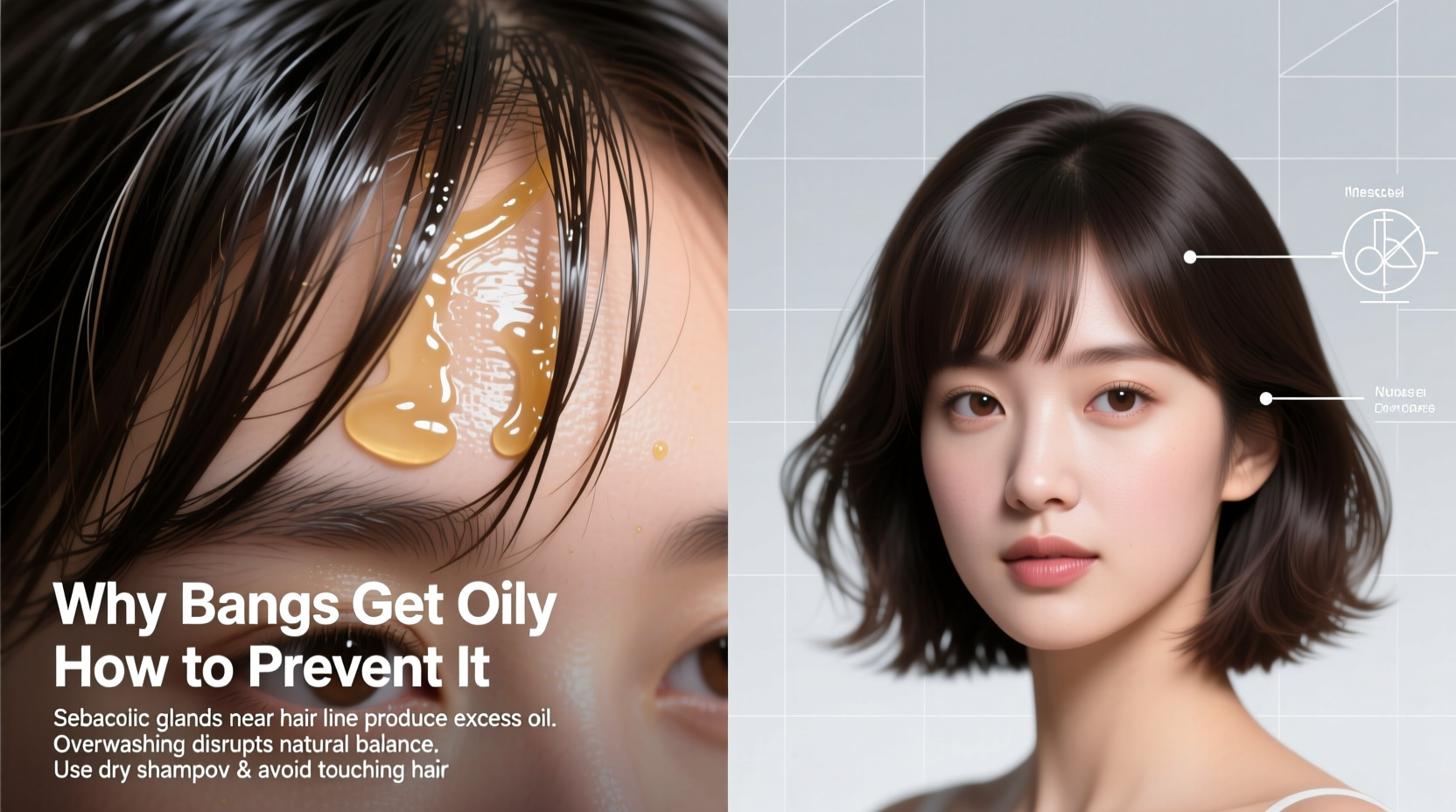
Bangs tend to become greasy faster than the rest of your hair for several physiological and mechanical reasons:
- Proximity to Oil-Producing Glands: The forehead has a high concentration of sebaceous glands. These glands produce sebum continuously, which transfers directly to bangs.
- Short Length and Density: Unlike longer hair, bangs don’t have enough length to distribute oil evenly. They also often grow in thick clusters, trapping oil more easily.
- Frequent Touching: People instinctively brush their bangs aside, tuck them behind ears, or adjust them throughout the day. Each touch transfers natural oils and bacteria from fingers to hair.
- Humidity and Heat: Warm environments increase sebum production. In summer or high-humidity areas, greasiness appears faster.
- Hormonal Fluctuations: Androgens stimulate sebum production. Changes during puberty, menstruation, pregnancy, or stress can lead to oilier hair.
Common Mistakes That Make Greasy Bangs Worse
Many well-intentioned habits actually exacerbate oily bangs. Recognizing these pitfalls is the first step toward better management.
- Overwashing Hair: Washing too frequently strips the scalp of natural oils, prompting it to produce even more sebum to compensate—a cycle known as rebound oiliness.
- Using Heavy Styling Products: Pomades, waxes, and silicon-based serums can build up on bangs, making them look greasier sooner.
- Incorrect Shampoo Choice: Moisturizing or creamy shampoos designed for dry hair may add unnecessary weight and oil to fine or oily hair types.
- Not Rinsing Thoroughly: Residue from shampoo or conditioner left near the hairline can attract oil and dirt.
- Sleeping with Dirty Hair: Overnight, oils and sweat accumulate along the hairline, especially if you sleep on your back or side where bangs press against the pillow.
Step-by-Step Guide to Preventing Oily Bangs
Preventing greasy bangs isn't about eliminating oil entirely—it's about managing sebum production and minimizing external contributors. Follow this routine for long-term improvement:
- Wash Strategically: Limit shampooing to every other day or every two days. Use a gentle, sulfate-free clarifying shampoo focused on the roots and hairline.
- Rinse with Cool Water: Finish your shower with a cool rinse to seal cuticles and reduce excess oil production.
- Blow-Dry Your Roots: After washing, direct cool or warm (not hot) airflow at the roots of your bangs. Dry roots take longer to reabsorb oil.
- Use Dry Shampoo Correctly: Apply dry shampoo to clean, dry bangs in the morning before oil builds up. Spray 6–8 inches away and massage in gently.
- Refresh Midday: Carry blotting papers or a mini dry shampoo to absorb oil without adding product buildup.
- Switch Pillowcases Regularly: Change cotton pillowcases every 3–4 days; opt for silk or satin, which absorb less oil and reduce friction.
- Trim Regularly: Split ends and uneven growth can cause bangs to clump together, trapping oil. Trim every 3–4 weeks.
Product Comparison: What Works Best for Oily Bangs
| Product Type | Best For | Recommended Ingredients | Avoid If... |
|---|---|---|---|
| Clarifying Shampoo | Oily scalp, frequent buildup | Salicylic acid, charcoal, tea tree oil | You have color-treated or very dry hair |
| Dry Shampoo | Midday refresh, oil absorption | Arrowroot powder, rice starch, butane-free formulas | You’re sensitive to aerosols or fragrances |
| Lightweight Conditioner | Maintaining moisture without weight | Glycerin, aloe vera (non-comedogenic) | You apply it to roots instead of ends |
| Oil-Control Serums | Frizz control without grease | Dimethicone (in moderation), niacinamide | You use heavy layers or apply near roots |
Expert Insight: What Dermatologists Say
“The forehead is one of the oiliest areas on the body. When bangs sit right over it, they become a magnet for sebum. The key isn’t aggressive cleansing—it’s balance. Over-drying leads to overproduction. I recommend patients use pH-balanced shampoos and incorporate blotting techniques rather than re-washing.” — Dr. Lena Torres, Board-Certified Dermatologist
Real-Life Example: Managing Oily Bangs in a Busy Office
Sarah, a 29-year-old marketing executive, struggled with her bangs looking greasy by noon—despite washing her hair every morning. Her job required client meetings, and she felt self-conscious constantly pushing her hair back. After consulting a trichologist, she made three key changes: switched to a salicylic acid shampoo used every other day, started applying dry shampoo at night (to absorb oil while sleeping), and replaced her cotton pillowcase with a silk one. Within two weeks, her bangs stayed fresh until evening. She now keeps blotting sheets in her desk drawer for quick midday touch-ups.
This case illustrates that consistent, small adjustments—not extreme measures—are often the most effective way to manage oily bangs.
Checklist: Daily & Weekly Routine for Non-Greasy Bangs
- ✅ Avoid touching your bangs
- ✅ Use dry shampoo in the morning (or night before)
- ✅ Blow-dry bang roots after washing
- ✅ Carry blotting papers or a travel dry shampoo
- ✅ Wash hair 2–3 times per week max
- ✅ Clean hairbrushes and clips weekly
- ✅ Change pillowcase every 3–4 days
- ✅ Trim bangs every 3–4 weeks
Frequently Asked Questions
Can diet affect how oily my bangs get?
Yes. Diets high in refined sugars and saturated fats may increase sebum production. Some studies suggest that reducing dairy and high-glycemic foods can help regulate oiliness. Staying hydrated and consuming omega-3 fatty acids (like flaxseed or fish oil) supports balanced scalp health.
Is it okay to use dry shampoo every day?
While convenient, daily use of dry shampoo can lead to scalp buildup and irritation. Limit usage to 2–3 times per week, and always wash your hair thoroughly afterward to remove residue. Consider non-aerosol versions with natural powders for gentler application.
Should I cut my bangs shorter to reduce oiliness?
Shorter bangs aren’t inherently less oily—they still sit on the same oil-rich area. However, very short bangs (like micro fringes) may be easier to style away from the face or allow more airflow. The real solution lies in care routines, not just length.
Conclusion: Take Control of Your Bangs
Greasy bangs are a common challenge, but they’re far from inevitable. With a deeper understanding of sebum production, smarter product choices, and mindful daily habits, you can significantly extend the time between washes and maintain a fresh, polished look. Remember, healthy hair isn’t about being completely oil-free—it’s about balance. By adjusting your routine based on your scalp’s needs and avoiding counterproductive habits, you’ll keep your bangs looking light, bouncy, and clean all day long.




 浙公网安备
33010002000092号
浙公网安备
33010002000092号 浙B2-20120091-4
Comments
No comments yet. Why don't you start the discussion?