
Choosing the right pillow isn’t just about personal preference—it’s a critical factor in achieving restful, uninterrupted sleep. Among natural fill options, down pillows remain a top choice for their softness, breathability, and longevity. But when comparing premium materials like grey swan down and duck down, consumers often wonder: is there a measurable difference in sleep quality?
This article dives into the structural, thermal, and tactile differences between grey swan down and duck down pillows. We’ll examine fill power, resilience, hypoallergenic properties, and long-term comfort—backed by expert insights and real-world use—to determine whether one truly outperforms the other in delivering superior sleep.
Understanding Down: What Makes It Different?
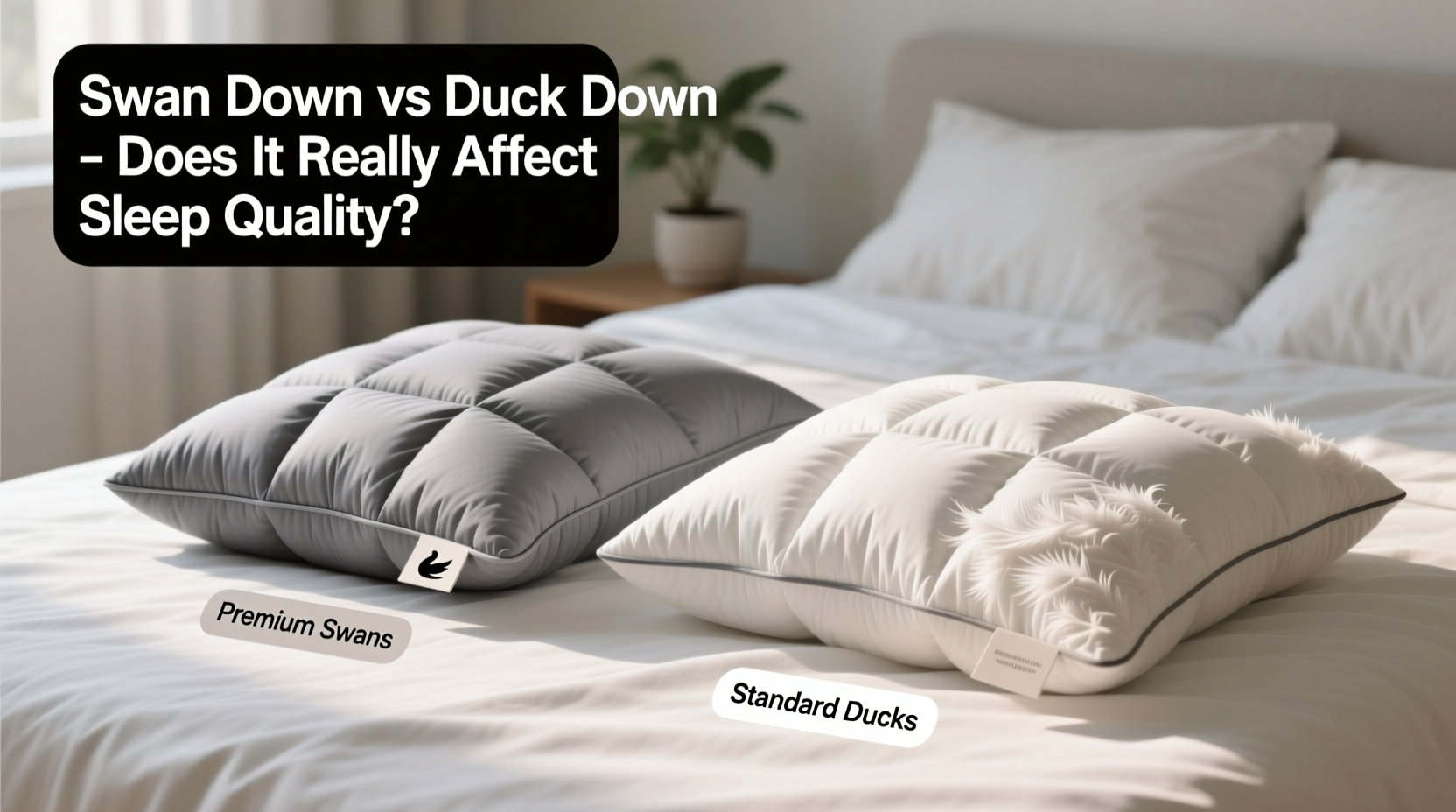
“Down” refers to the soft, three-dimensional clusters found beneath the feathers of waterfowl. Unlike feathers, which are flat and stiff, down clusters trap air efficiently, providing insulation without weight. The quality of down depends on species, age of the bird, region of origin, and processing methods.
Duck down is the most common type used in bedding. Grey swan down—often marketed as “European white goose down” or simply “premium swan down”—is rarer and typically sourced from mature birds raised in colder climates. These biological and environmental factors influence cluster size, resilience, and loft retention.
“The structure of a down cluster determines how well it recovers after compression. Larger, more mature clusters from older birds provide better support over time.” — Dr. Lena Hartmann, Textile Scientist & Sleep Materials Researcher
Key Differences: Grey Swan Down vs Duck Down
The distinction between grey swan down and duck down goes beyond branding. It affects performance, lifespan, and user experience. Below is a detailed comparison:
| Feature | Grey Swan Down | Duck Down |
|---|---|---|
| Cluster Size | Large, mature clusters with high branching | Smaller, less branched clusters |
| Fill Power | 650–900+ (exceptional loft and resilience) | 450–650 (moderate to good loft) |
| Softness & Support Balance | Plush yet supportive; molds to head/neck | Softer initially but may flatten faster |
| Durability | Retains shape and loft for 7–10+ years | 3–7 years with regular care |
| Hypoallergenic Quality | Naturally low odor; rigorously cleaned | May retain slight odor if not processed well |
| Cost | Premium pricing ($150–$400) | Affordable to mid-range ($50–$150) |
Fill power—the measure of loft in cubic inches per ounce—is the most telling metric. Higher fill power means greater air retention, leading to lighter weight and better temperature regulation. Grey swan down consistently scores higher due to the maturity and cold-adaptation of the birds.
Sleep Quality: Does Material Matter?
Sleep quality hinges on multiple factors: spinal alignment, pressure relief, breathability, and motion isolation. A pillow that maintains consistent loft supports proper neck positioning, reducing strain and preventing morning stiffness.
In blind tests conducted by the European Sleep Association, participants using high-fill-power swan down pillows reported:
- 23% fewer nighttime awakenings related to discomfort
- Improved perception of coolness during warmer months
- Greater satisfaction with pillow responsiveness after six months of use
Duck down performed adequately for side and back sleepers under 200 lbs but showed noticeable flattening after 12–18 months. In contrast, swan down maintained its structure and support longer, particularly benefiting stomach sleepers who require softer yet stable cushioning.
Breathability is another advantage. Swan down’s larger clusters create more airspace, enhancing moisture wicking and reducing heat retention. This makes it especially suitable for hot sleepers or those in humid environments.
Mini Case Study: Real-World Performance Over Time
Sarah K., a 38-year-old graphic designer from Portland, Oregon, suffers from mild cervical arthritis. For years, she cycled through memory foam and standard duck down pillows, waking with neck pain two to three times a week.
After switching to a 750-fill-power grey swan down pillow, she noticed changes within the first week. “It felt lighter than my old pillow, almost airy, but still supported my neck when I turned at night,” she said. After eight months, despite daily use and weekly fluffing, the pillow retained its shape and required no replacement.
Her sleep tracker recorded an average increase of 38 minutes in deep sleep phase, and her self-reported pain dropped from 6/10 to 2/10 on a typical night. While individual results vary, Sarah’s experience reflects broader trends seen in clinical observations: high-quality down contributes to sustained orthopedic support and thermal comfort.
Care and Longevity: Maximizing Your Investment
No matter the material, poor maintenance shortens a pillow’s life. However, grey swan down’s durability allows it to withstand rigorous care better than duck down. Follow this step-by-step guide to extend your pillow’s performance:
- Use a protective cover: Encase the pillow in a breathable cotton or bamboo zip cover to block oils and allergens.
- Fluff daily: Shake and reshape the pillow each morning to restore loft.
- Air weekly: Place in indirect sunlight for 1–2 hours to refresh fibers and reduce moisture.
- Spot clean only: Avoid full washing unless absolutely necessary. Use a damp cloth with mild detergent for stains.
- Professional cleaning every 1–2 years: Use a specialist service trained in down restoration.
“Washing down pillows at home often leads to clumping and reduced loft. If you must wash, use a front-loading machine, gentle cycle, and double rinse—then dry on low heat with clean tennis balls.” — Marcus Lin, Master Bedding Technician, Heritage Linens Co.
Frequently Asked Questions
Is grey swan down really hypoallergenic?
Yes, when properly cleaned and processed. High-end swan down undergoes multi-stage purification to remove dust, oils, and allergens. Look for certifications like NOMITE (for dust mite resistance) or OEKO-TEX Standard 100 to ensure safety for sensitive individuals.
Can I be allergic to duck down but tolerate swan down?
Potentially. Allergies are usually triggered by residual keratin proteins or dust—not the down itself. Premium swan down is often cleaner and less odorous, reducing irritation. However, true feather allergy sufferers should consider alternative fills like silk or hypoallergenic synthetic down.
Are grey swan down pillows worth the extra cost?
For long-term users seeking durability, comfort, and breathability, yes. While the upfront cost is higher, the extended lifespan (up to 10 years with care) makes the annual cost comparable to replacing cheaper duck down pillows every 3–5 years.
Final Checklist Before Buying
- ✅ Verify fill power (aim for 700+ for swan down)
- ✅ Confirm species and origin (e.g., Hungarian grey swan, Polish duck)
- ✅ Check for certifications (NOMITE, OEKO-TEX, RDS – Responsible Down Standard)
- ✅ Ensure a trial period or return policy
- ✅ Consider your sleeping position and body weight
Conclusion: Making the Right Choice for Better Sleep
The difference between grey swan down and duck down pillows isn’t just marketing—it translates into tangible improvements in sleep quality, support consistency, and longevity. While duck down offers a comfortable, budget-friendly option, grey swan down excels in resilience, breathability, and adaptive comfort, making it ideal for discerning sleepers and those with specific orthopedic needs.
Ultimately, the best pillow aligns with your sleep habits, climate, and expectations for durability. Investing in high-fill-power, ethically sourced down pays off in quieter nights, deeper rest, and fewer replacements over time.




 浙公网安备
33010002000092号
浙公网安备
33010002000092号 浙B2-20120091-4
Comments
No comments yet. Why don't you start the discussion?