
In an era where smartphones are both tools and personal statements, the case you choose speaks volumes. Beyond protection, it’s a canvas for identity. Among the most debated designs are grid-patterned cases versus solid-colored ones. One offers structure and visual rhythm; the other, minimalism and elegance. But does adding a pattern—specifically a grid—actually enhance how your phone looks? Or is it just a stylistic preference with no real aesthetic advantage?
The answer isn’t as simple as “yes” or “no.” It depends on design principles, psychological perception, context of use, and individual taste. To understand whether a grid case truly elevates your phone’s appearance, we need to examine form, function, and fashion in equal measure.
The Visual Psychology of Patterns
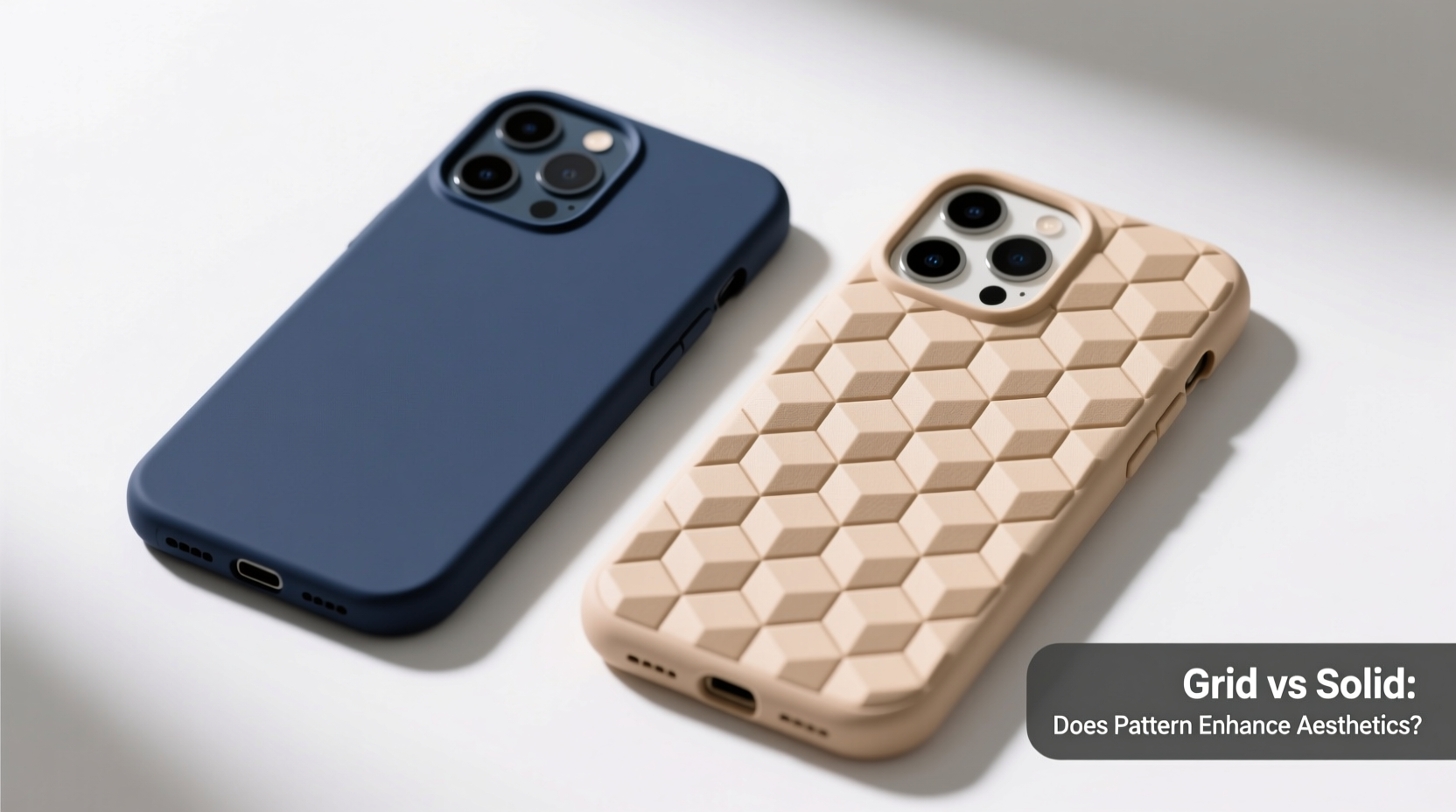
Humans are wired to respond to patterns. From ancient cave art to modern architecture, repetition and symmetry bring order and comfort. A grid—a series of evenly spaced horizontal and vertical lines—taps into this innate preference. Psychologically, grids suggest organization, precision, and control.
When applied to a phone case, a grid can create subtle depth. Even if the lines are faint, they break up the surface, reducing the \"flatness\" that sometimes makes solid cases appear dull under certain lighting. This effect is especially noticeable on glossy or transparent backs, where reflections can distort a uniform color.
However, not all patterns succeed equally. A poorly executed grid—too dense, too bold, or misaligned—can make a phone look cheap or cluttered. The key lies in subtlety. As designer Luca Moretti explains:
“Patterned cases work best when they enhance, not dominate. A well-balanced grid adds texture without shouting for attention. It’s the difference between a tailored suit and a costume.” — Luca Moretti, Industrial Designer at Forma Studio
Design Comparison: Grid vs Solid
To assess which style performs better visually, consider how each behaves in common scenarios: daily carry, social settings, professional environments, and photo visibility.
| Feature | Grid Case | Solid Case |
|---|---|---|
| Visual Interest | High – adds texture and dimension | Low to moderate – relies on color quality |
| Dust & Smudge Visibility | Lower – patterns mask minor wear | Higher – fingerprints show easily on glossy finishes |
| Style Longevity | Moderate – may feel dated over time | High – timeless, especially in neutral tones |
| Professional Appearance | Depends on execution – minimalist grids acceptable | Generally preferred – clean and unobtrusive |
| Personal Expression | High – stands out subtly | Low – unless color is bold |
This comparison reveals that while solid cases win in versatility and longevity, grid cases offer unique advantages in texture and resilience to everyday grime.
A Real-World Example: The Office Commute Test
Consider Sarah, a UX designer in Toronto who switched from a matte black solid case to a transparent one with a faint silver grid. For weeks, she carried both phones—one for work, one personal—and observed reactions during meetings and transit.
Colleagues frequently commented on her new case: “Yours looks cleaner,” or “Is that a new model?” The grid didn’t change the phone’s functionality, but it altered perception. The pattern created the illusion of a newer, more intentional device. Even after three months of use, smudges were less noticeable than on her previous solid black case, which developed oily streaks near the camera cutout.
Interestingly, when she reverted to a solid navy case, people stopped commenting—but she felt the phone looked heavier, almost bulky. The grid had added a sense of lightness through optical design.
This mini case study illustrates a core truth: patterns influence perceived freshness and sophistication, even when the underlying object remains unchanged.
When a Grid Adds Value (and When It Doesn’t)
A grid isn’t universally better—it shines under specific conditions. Here’s a step-by-step guide to help determine if a patterned case suits your needs:
- Evaluate your usage environment. If you're often in public spaces (transit, cafes), a grid helps disguise dirt.
- Assess your phone’s finish. Glossy backs benefit more from patterns than matte ones, which already resist smudges.
- Match to your wardrobe. Grids pair well with structured styles—tailored jackets, minimalist watches. Solids suit casual or eclectic looks.
- Test lighting exposure. In bright offices or outdoor settings, grids reduce glare distortion on reflective surfaces.
- Consider brand alignment. Apple’s design language favors simplicity. A busy grid might clash with that ethos unless kept extremely subtle.
The goal isn’t to follow trends, but to align your accessory with your lifestyle. A grid should serve a purpose—not just fill space.
Checklist: Choosing Between Grid and Solid
- ✅ Do I want my phone to blend in or stand out slightly?
- ✅ Am I prone to leaving fingerprints or pocket lint on my case?
- ✅ Does my phone already have a textured back (e.g., frosted glass)?
- ✅ Will this case be visible in professional or client-facing situations?
- ✅ Is durability more important than aesthetics long-term?
Expert Insight: Beyond Aesthetics
It’s not just about looks—material choice interacts with design. Dr. Naomi Reed, a product ergonomics researcher at MIT, notes:
“The tactile feedback of a grid case can improve grip, especially on smooth surfaces like glass tables. That functional benefit indirectly enhances appearance because users handle their phones more confidently—less fumbling, fewer drops, fewer scratches.” — Dr. Naomi Reed, Human-Device Interaction Lab, MIT
In other words, a grid doesn’t just affect visual appeal—it influences behavior, which in turn affects how well-maintained your device appears over time.
Frequently Asked Questions
Does a grid case make my phone look bigger or smaller?
A fine grid with low contrast can create an optical illusion of slimness by breaking up the silhouette. Conversely, bold grids may add visual weight. For a sleeker look, choose thin, silver, or translucent lines on a neutral base.
Are grid cases harder to clean than solid ones?
No—often easier. Dirt tends to accumulate uniformly across solid surfaces, making streaks obvious. On a grid, debris collects along edges, which can be wiped in directional strokes following the pattern. Use a microfiber cloth dampened with water for best results.
Will a grid case go out of style quickly?
Minimalist grids—like those inspired by Swiss design or Japanese stationery—are enduring. Flashy, colored grids tied to short-lived trends (e.g., holographic checks) may feel outdated in 1–2 years. Stick to monochrome or muted metallics for lasting appeal.
Final Thoughts: Function Meets Perception
The question isn’t whether a grid case is objectively better than a solid one, but whether it better serves your priorities. If you value subtle distinction, reduced maintenance visibility, and a touch of structured flair, a well-designed grid adds tangible aesthetic value. It introduces rhythm, reduces visual fatigue from flat colors, and masks wear in ways solid cases cannot.
Yet, there’s undeniable power in simplicity. A perfectly crafted solid case in deep burgundy, charcoal, or cream conveys confidence through restraint. It says you don’t need distraction to feel complete.
In the end, the best-looking phone case is the one that aligns with how you move through the world. Whether you choose grid or solid, let intention guide you—not impulse.




 浙公网安备
33010002000092号
浙公网安备
33010002000092号 浙B2-20120091-4
Comments
No comments yet. Why don't you start the discussion?