
Bunching onions—also known as green onions, scallions, or spring onions—are a staple in kitchens worldwide, prized for their mild flavor, crisp texture, and versatility. Unlike bulb-forming onions, bunching onions develop slender, elongated stalks with small, underdeveloped bulbs, making them ideal for fresh use in salads, stir-fries, soups, and garnishes. While they’re readily available at markets, growing bunching onions from seed offers superior freshness, cost efficiency, and control over quality. This comprehensive guide provides everything you need to successfully cultivate bunching onions from seed to harvest, whether in a backyard garden, raised bed, or container.
Definition & Overview
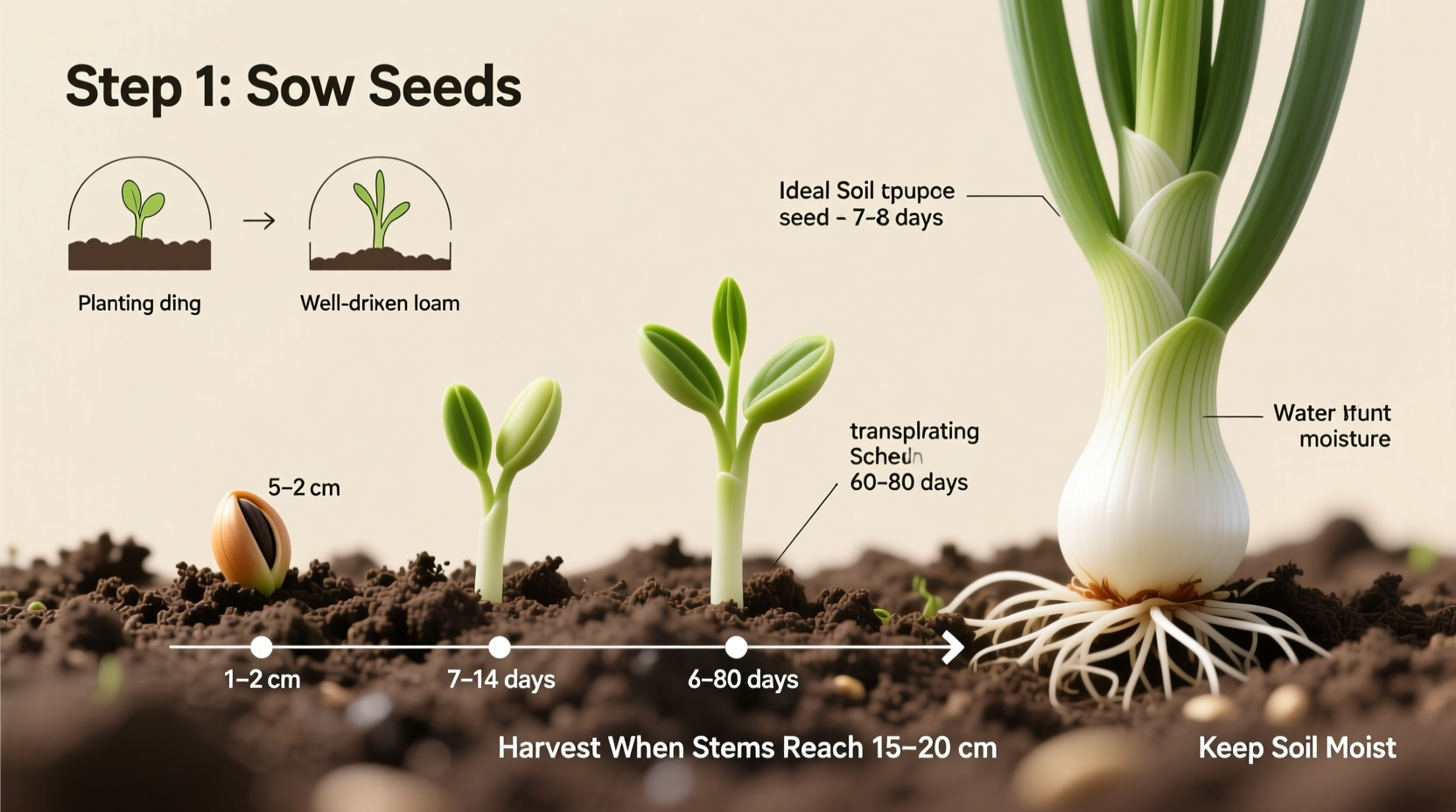
Bunching onions (Allium fistulosum) are perennial members of the Allium genus, closely related to garlic, leeks, and chives. Native to Asia, they’ve been cultivated for thousands of years across China, Japan, and Korea, where they play a central role in traditional cuisines. Unlike common onions (Allium cepa), which form large underground bulbs, bunching onions produce hollow green shoots and minimal swelling at the base. They grow in clusters, hence the name “bunching,” and can be harvested at multiple stages—from pencil-thin seedlings to mature stalks up to 1 inch in diameter.
Their flavor is milder than that of bulb onions, with a clean, slightly sweet taste and a subtle pungency that intensifies toward the white base. Because they don’t require full bulb development, they mature faster and can be succession-planted for continuous harvests throughout the growing season. Their hardiness, low maintenance, and high yield make them an excellent choice for beginner and experienced gardeners alike.
Key Characteristics
- Flavor profile: Mild, slightly sweet, with a gentle onion aroma; more delicate than bulb onions.
- Aroma: Fresh and grassy when cut, with a faint sulfur note typical of alliums.
- Color and form: Long, cylindrical green stalks with white bases; no significant bulb formation.
- Heat level: Low; negligible spiciness compared to shallots or red onions.
- Culinary function: Used raw or lightly cooked as a garnish, aromatic base, or textural component.
- Shelf life (harvested): 7–10 days when refrigerated in a plastic bag with slight moisture.
- Growth habit: Clumping, non-bolting (in most varieties); cold-tolerant and fast-growing.
Tip: For maximum flavor and crunch, harvest bunching onions when the stems are between 6 and 12 inches tall and before flowering occurs.
Practical Usage in Cooking
Bunching onions are culinary workhorses, adding brightness and depth to a wide range of dishes. The entire plant is edible, though the white and light green portions are often used for cooking due to their slightly stronger flavor, while the dark green tops excel as garnishes.
Home Cooking Applications
In home kitchens, bunching onions are commonly sliced thinly and added to:
- Stir-fries: Added in the final minutes of cooking to retain crispness.
- Salads: Tossed into grain bowls, noodle salads, or green salads for a peppery bite.
- Omelets and frittatas: Folded in just before eggs set for a fresh finish.
- Dips and dressings: Chopped finely into sour cream-based dips, vinaigrettes, or chimichurri.
- Soups and ramen: Sprinkled on top for color and aroma after serving.
Professional Kitchen Uses
In restaurant settings, chefs value bunching onions for their consistent size, vibrant appearance, and ability to elevate presentation. They’re often:
- Used as a substitute for chives when a more robust texture is desired.
- Grilled whole for smoky side dishes or charred garnishes.
- Pickled lightly in rice vinegar and sugar for Korean-style banchan.
- Blended into compound butters or herb oils for finishing proteins.
Pairing Suggestions
Bunching onions complement ingredients such as:
- Garlic, ginger, and soy sauce in Asian cuisine.
- Lime, cilantro, and fish sauce in Southeast Asian and Latin American dishes.
- Eggs, potatoes, and smoked fish in breakfast and brunch preparations.
- Beef, pork, and poultry in marinades and rubs.
A general rule: use 1 to 2 tablespoons of finely chopped bunching onion per serving as an aromatic base, or up to ¼ cup when using raw as a primary ingredient.
Variants & Types
While all bunching onions share similar growth habits, several cultivars have been developed for specific climates, harvest times, and culinary uses. Selecting the right variety ensures optimal performance in your garden.
| Variety | Maturity (Days) | Key Features | Best Use Case |
|---|---|---|---|
| White Lisbon | 60–70 | Heirloom, cold-hardy, slow to bolt | Cool-season gardens, overwintering |
| Evergreen Hardy White | 75 | Perennial-like, withstands frost | Northern climates, fall planting |
| Deep Purple | 70 | Vibrant purple base, ornamental appeal | Garnishes, colorful dishes |
| Red Beard | 65 | Red-purple shanks, heat-tolerant | Warmer zones, summer harvests |
| Japanese Bunching Mix | 55–65 | Assorted colors and sizes | Succession planting, cut-and-come-again |
For year-round production, consider combining early-maturing types like ‘Nabechan’ with slower, cold-tolerant varieties such as ‘Winterkeeper’. This staggered approach ensures a steady supply regardless of seasonal shifts.
Comparison with Similar Ingredients
Bunching onions are often confused with other alliums due to overlapping names and appearances. Understanding the differences ensures proper usage and cultivation.
| Ingredient | Botanical Name | Bulb Development | Flavor Intensity | Growing Method |
|---|---|---|---|---|
| Bunching Onion | Allium fistulosum | Minimal; slender base | Mild, sweet | Direct-seeded, clumping |
| Common Onion (Scallion stage) | Allium cepa | Develops into large bulb if left | Sharper, more pungent | Thinned from bulb onion rows |
| Chives | Allium schoenoprasum | No bulb; grass-like | Delicate, herbal | Perennial, seed or division |
| Leek | Allium ampeloprasum | Elongated false stem | Mild, sweet when cooked | Transplanted, long season |
“True bunching onions never form a significant bulb—they’re bred for continuous leaf production. What many call ‘scallions’ in supermarkets are actually immature bulb onions pulled early.” — Dr. Elena Torres, Horticulture Specialist, University of Vermont Extension
Step-by-Step Guide to Growing from Seed
Starting bunching onions from seed is straightforward and economical. A single packet can yield dozens of plants over multiple harvests.
1. Timing and Seasonality
Bunching onions are cool-season crops but tolerate both heat and frost depending on the variety. Optimal soil temperatures for germination are 55°F to 75°F (13°C–24°C).
- Spring planting: Sow 4–6 weeks before last frost date.
- Fall planting: In USDA zones 6+, sow 8–10 weeks before first frost for overwintering.
- Succession planting: Every 3–4 weeks for continuous harvest.
2. Soil Preparation
Choose a location with full sun (6+ hours daily) and well-drained, fertile soil. Amend heavy clay soils with compost or aged manure to improve structure.
- pH range: 6.0–7.0
- Soil should be loose to allow straight stem development.
- Avoid fresh manure, which can cause root deformities.
3. Sowing Seeds
- Plant seeds ¼ inch deep in rows spaced 12–18 inches apart.
- Space seeds ½ inch apart initially; thin later.
- Keep soil consistently moist until germination (7–14 days).
- Use row covers in early spring to protect from pests and temperature swings.
4. Thinning and Spacing
Once seedlings reach 2–3 inches tall, thin to 1–2 inches apart. Use thinnings in salads—they’re tender and flavorful.
- Denser spacing yields smaller, more frequent harvests.
- Wider spacing allows for larger stems and longer-term growth.
5. Watering and Fertilization
Bunching onions have shallow roots and require consistent moisture.
- Water 1 inch per week, increasing during dry spells.
- Apply a balanced liquid fertilizer (10-10-10) every 4–6 weeks.
- Avoid overhead watering to reduce fungal disease risk.
6. Pest and Disease Management
Generally pest-resistant, but watch for:
- Onion maggots: Prevent with floating row covers; rotate crops annually.
- Thrips: Control with insecticidal soap or neem oil.
- Pink root or downy mildew: Choose resistant varieties; ensure good air circulation.
7. Harvesting Techniques
Harvest anytime after plants reach 6 inches in height.
- Cut-and-come-again: Snip outer stalks 1 inch above soil line; inner shoots regrow.
- Whole plant pull: Uproot individual plants for larger stems.
- Continuous harvest: Never remove more than ⅓ of the plant at once to sustain growth.
For storage, bundle and refrigerate unwashed onions in a perforated bag. For long-term use, freeze chopped bunching onions in ice cube trays with water or oil.
Container and Urban Gardening Tips
Bunching onions thrive in containers, making them ideal for balconies, patios, and small-space gardening.
- Use pots at least 8 inches deep with drainage holes.
- Fill with high-quality potting mix; avoid garden soil in containers.
- Place in sunny locations; rotate pots for even growth.
- Water more frequently—containers dry out faster.
- Re-sow every 4–6 weeks for uninterrupted supply.
Urban Tip: Grow bunching onions in recycled food tubs or vertical planters. Pair with herbs like parsley or cilantro for a compact kitchen garden.
Practical Tips & FAQs
Q: Can I grow bunching onions indoors?
A: Yes, provided they receive 6+ hours of direct sunlight or supplemental grow lights. Use a south-facing window and keep soil evenly moist. Indoor-grown onions may be less robust but still usable for garnishes.
Q: Why are my bunching onions flowering?
A: Flowering (bolting) occurs due to temperature stress, day length, or age. While edible, flowering signals the end of peak harvest. Remove flower stalks promptly to prolong leaf production.
Q: How do I prevent slimy stems?
A: Sliminess indicates bacterial soft rot, usually from overwatering or poor drainage. Ensure soil is well-aerated and avoid crowding plants. Harvest promptly and rotate crops yearly.
Q: Are bunching onions perennial?
A: Most are grown as annuals or biennials, but certain varieties (e.g., ‘Evergreen Hardy White’) behave like perennials in zones 5–9, returning each spring from established clumps.
Q: Can I save seeds from my plants?
A: Yes, but only if growing true Allium fistulosum. Allow healthy plants to bolt and produce seed heads. Harvest when capsules turn brown and store in a cool, dry place. Note: cross-pollination with other alliums is rare but possible.
Storage and Shelf Life
- Refrigerate unwashed bunching onions in a breathable bag for up to 10 days.
- Freeze chopped onions for use in cooked dishes (texture changes when thawed).
- Store in a glass of water on the counter for 3–5 days (change water daily).
- Do not wash before storage—moisture accelerates spoilage.
Summary & Key Takeaways
Growing bunching onions from seed is a rewarding, low-effort way to enhance both garden productivity and culinary creativity. These versatile alliums offer a continuous harvest, adaptability to various climates, and unmatched freshness when grown at home. By selecting appropriate varieties, preparing suitable soil, and practicing succession planting, gardeners can enjoy a steady supply from early spring through late fall—and even year-round in mild regions.
- Bunching onions are distinct from bulb onions and are best grown from seed for consistent quality.
- They thrive in full sun, well-drained soil, and benefit from regular thinning and fertilization.
- Multiple harvest methods—including cut-and-come-again—maximize yield and longevity.
- They outperform supermarket scallions in flavor, texture, and sustainability.
- Container gardening makes them accessible to urban growers with limited space.
Start a small patch this season—just one square foot sown with bunching onion seeds can yield enough for weekly kitchen use. Once established, they’ll become a permanent, productive feature of your edible landscape.




 浙公网安备
33010002000092号
浙公网安备
33010002000092号 浙B2-20120091-4
Comments
No comments yet. Why don't you start the discussion?