
The Apple Watch has evolved into a versatile tool that blends health monitoring, fitness tracking, communication, and style. With multiple models available—including the Apple Watch Series 9, Ultra 2, and SE—choosing the right one can be overwhelming. Each model serves different needs, from everyday wellness tracking to extreme outdoor adventures. Understanding the differences in features, performance, and price will help you select the watch that aligns with your lifestyle.
Understanding the Current Apple Watch Lineup
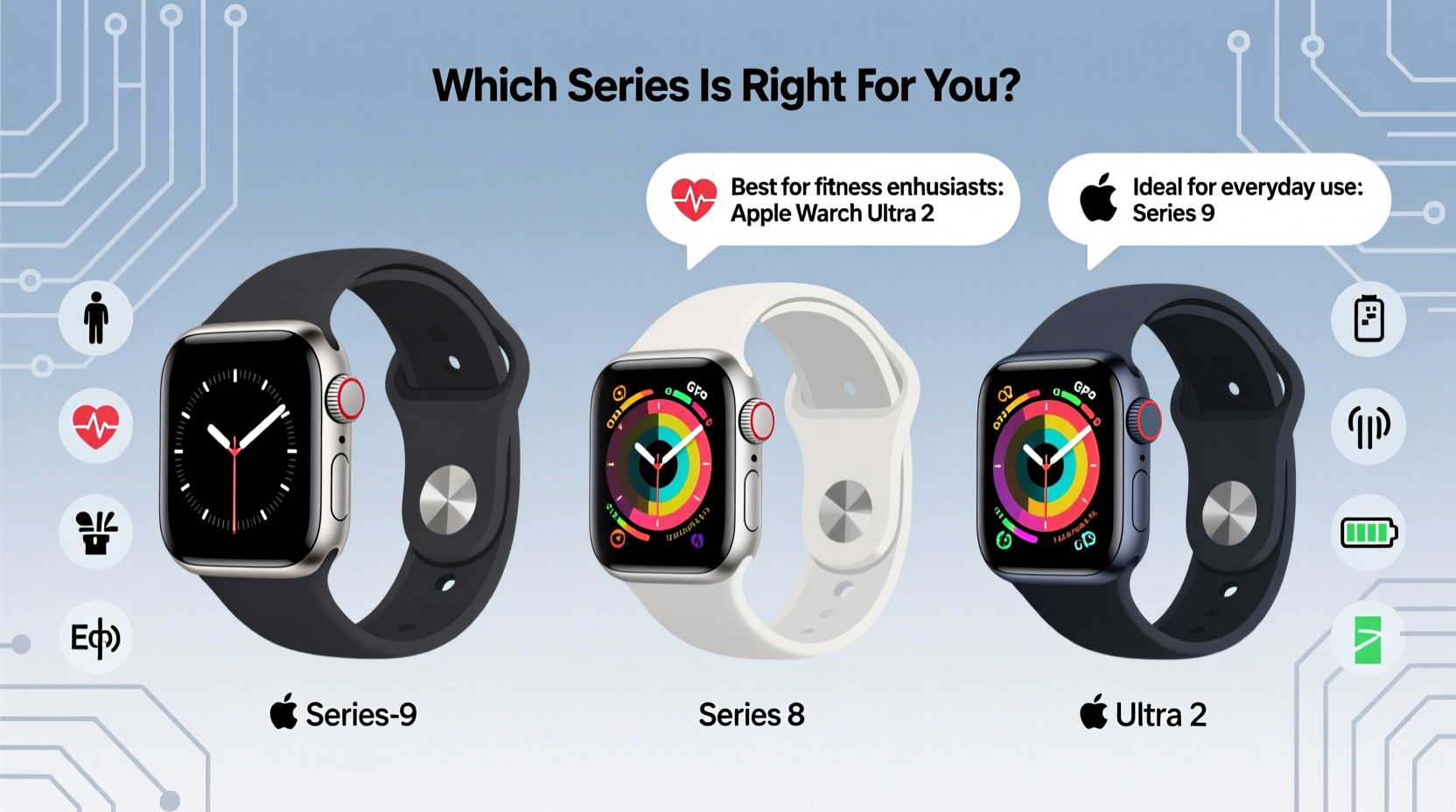
As of 2024, Apple offers three primary models: the Apple Watch Series 9, the Apple Watch Ultra 2, and the Apple Watch SE (2nd generation). While they share core functionality like heart rate monitoring, ECG, and iOS integration, their capabilities diverge significantly based on design, durability, and advanced sensors.
- Apple Watch Series 9: The flagship model with the latest S9 chip, brighter display, and enhanced health features.
- Apple Watch Ultra 2: Built for adventurers with rugged construction, longer battery life, and specialized workout modes.
- Apple Watch SE: A budget-friendly option with essential smartwatch features but fewer advanced health sensors.
Your choice should depend on how you plan to use the device—whether for daily activity tracking, intense workouts, or simply staying connected.
Comparing Key Features Across Models
To make an informed decision, consider the following factors: performance, health tracking, battery life, durability, and price.
| Feature | Series 9 | Ultra 2 | SE (2nd Gen) |
|---|---|---|---|
| Processor | S9 SiP | S9 SiP | S8 SiP |
| Display Brightness | 2000 nits | 3000 nits | 1000 nits |
| Battery Life | Up to 18 hours | Up to 36 hours (72 in low-power mode) | Up to 18 hours |
| Water Resistance | 50m (swimming) | 100m (scuba compatible) | 50m (swimming) |
| ECG & Blood Oxygen | Yes | Yes | No |
| GPS + Cellular Options | Yes | Yes | Yes |
| Durability | Aluminum case, IP6X dust resistant | Titanium case, MIL-SPEC tested | Aluminum case, splash resistant |
| Price (Starting) | $399 | $799 | $249 |
The Series 9 delivers top-tier performance and health insights in a sleek design. The Ultra 2 is engineered for endurance athletes and outdoor enthusiasts who need reliability under extreme conditions. The SE remains a solid entry point for those who want core Apple Watch functionality without the premium price tag.
Who Should Choose Which Model?
Selecting the best Apple Watch isn’t about picking the most expensive or feature-rich model—it’s about matching the device to your daily routine and long-term goals.
Choose the Apple Watch Series 9 if…
- You want the latest technology, including double-tap gesture control and improved Siri accuracy.
- Health monitoring is a priority—ECG, blood oxygen, sleep tracking, and temperature sensing are included.
- You value a balance between premium materials and everyday usability.
- You frequently use apps, notifications, and third-party integrations.
Choose the Apple Watch Ultra 2 if…
- You’re an athlete training for triathlons, trail running, or open-water swimming.
- You spend time hiking, diving, or in remote areas where durability and GPS precision matter.
- You need extended battery life for multi-day trips without charging access.
- You appreciate larger screen real estate and louder speaker for outdoor use.
Choose the Apple Watch SE if…
- You're new to smartwatches and want a simple introduction to fitness and notifications.
- Budget is a key concern, but you still want access to safety features like fall detection and emergency SOS.
- You don’t require advanced health metrics like ECG or blood oxygen levels.
- You're buying for a teenager or family member who needs basic connectivity.
“With the Ultra 2, we’re not just tracking workouts—we’re enabling exploration. It’s built for people pushing limits.” — Greg Maffei, Apple Senior Vice President of Hardware Engineering
Step-by-Step Guide to Choosing Your Ideal Apple Watch
Follow this decision-making process to ensure you pick the right model for your needs:
- Assess Your Daily Use: Do you mainly check messages and track steps, or do you rely on precise GPS and heart rate data during intense training?
- Evaluate Health Priorities: If you have heart conditions or monitor respiratory health, ECG and SpO2 sensors (available on Series 9 and Ultra 2) are essential.
- Consider Battery Needs: Frequent travelers or outdoor adventurers benefit from the Ultra 2’s two-day battery life.
- Determine Budget Range: The SE offers excellent value under $250, while the Ultra 2 is an investment for serious users.
- Think About Durability: If you work outdoors or engage in rugged activities, titanium casing and deeper water resistance justify the higher cost.
- Decide on Cellular: If you leave your phone behind during runs or workouts, opt for GPS + Cellular on any model.
- Test the Fit: Visit an Apple Store to feel the size and weight—especially important when comparing the compact SE to the bulkier Ultra 2.
Real-Life Example: Choosing Based on Lifestyle
Sarah, a 34-year-old marketing executive and yoga instructor, was deciding between the Series 9 and the SE. She wanted to track her stress levels, monitor sleep, and receive calendar alerts during meetings. She also taught weekly outdoor classes and occasionally went on weekend hikes.
After reviewing her needs, she realized the SE lacked ECG and advanced mindfulness tools she valued for managing anxiety. The Series 9 offered better integration with her meditation apps, more accurate heart rate readings during hot yoga sessions, and a brighter screen for reading texts in sunlight—all within her budget.
She chose the Series 9 with GPS + Cellular, allowing her to leave her phone in the car during classes while still receiving urgent messages. For Sarah, the extra $150 over the SE paid off in both functionality and peace of mind.
Frequently Asked Questions
Can I swim with all Apple Watch models?
Yes, all current models are water-resistant up to at least 50 meters and suitable for swimming. The Ultra 2 goes further, supporting scuba diving with depth ratings up to 100 meters and compatibility with dive logging apps.
Is the Apple Watch SE worth it in 2024?
Absolutely—for users who want core features like step counting, fall detection, and iPhone notifications without paying a premium. However, if you anticipate needing advanced health tracking later, upgrading may be necessary.
Do older bands fit new Apple Watches?
Yes, Apple maintains band compatibility across case sizes. Any 41mm/45mm band fits Series 9 and SE models of the same size. Ultra 2 uses 49mm bands, which are unique to that model.
Final Recommendation Checklist
Before purchasing, ask yourself:
- ✅ Do I need ECG and blood oxygen monitoring?
- ✅ Will I use GPS-intensive activities without my phone nearby?
- ✅ Am I active in extreme environments (heat, cold, water, altitude)?
- ✅ Is battery life a limiting factor in my daily routine?
- ✅ What’s my maximum budget for the watch and additional bands?
If most answers are “yes,” the Series 9 or Ultra 2 makes sense. If only a few apply, the SE could be the smarter financial move.
Conclusion
The best Apple Watch isn’t the most expensive or the newest—it’s the one that fits seamlessly into your life. Whether you're monitoring your heart health, conquering mountain trails, or simply staying organized, there’s a model designed for your rhythm. By aligning your priorities with the right combination of features, durability, and price, you’ll get years of value from your wearable investment.




 浙公网安备
33010002000092号
浙公网安备
33010002000092号 浙B2-20120091-4
Comments
No comments yet. Why don't you start the discussion?