
As evenings warm up and outdoor activity increases, so does the presence of flying insects. Mosquitoes, flies, gnats, and other pests can turn a relaxing night on the patio into an itchy, frustrating experience. While chemical repellents offer temporary relief, many homeowners are turning to bug zappers as a long-term, low-maintenance solution. However, not all bug zappers are created equal. With a wide range of models, technologies, and claims flooding the market, selecting the best rated bug zapper for your home requires careful consideration of several key factors.
The most effective bug zappers combine smart design, proven insect attraction methods, and safe operation. Understanding how these devices work—and what features truly matter—can help you make an informed decision that improves comfort and reduces pest populations over time.
How Bug Zappers Work: The Science Behind the Spark
Bug zappers use ultraviolet (UV) light to attract flying insects. Most nocturnal insects are phototactic, meaning they’re naturally drawn to certain wavelengths of light. UV-A light, which is invisible to humans but highly visible to insects, mimics the glow of moonlight or open sky, luring bugs toward the device. Once inside the unit’s electric grid, insects complete a circuit and are quickly electrocuted with a high-voltage charge, producing the familiar “zap” sound.
While effective against a broad spectrum of flying pests—including moths, flies, and beetles—bug zappers are less effective at targeting mosquitoes, which rely more on carbon dioxide and body heat than light. However, newer models now integrate additional attractants like octenol or CO₂ cartridges to enhance mosquito capture rates.
“Bug zappers can reduce general flying insect populations by up to 70% when placed strategically and used consistently.” — Dr. Alan Foster, Entomologist and Pest Control Researcher
Key Features to Look for in a Top-Rated Bug Zapper
Selecting the right bug zapper isn’t just about finding the loudest or brightest model. Consider these essential features to ensure performance, safety, and durability:
- UV Lamp Quality: High-output UV bulbs (typically 365–395 nm wavelength) are most effective. Look for replaceable bulbs to extend the unit’s lifespan.
- Wattage and Coverage Area: Higher wattage generally means greater coverage. A 20-watt zapper may cover 500 sq ft, while 40+ watt models can protect up to 1 acre.
- Design and Safety: Units with protective outer cages prevent accidental contact with the grid. Outdoor models should be weather-resistant (IPX4 or higher).
- Catch Tray or Mesh Bottom: Easy-to-clean trays collect insect debris, minimizing mess and maintenance.
- Additional Attractants: Some models include scent cartridges or fans that mimic human breath to draw in mosquitoes more effectively.
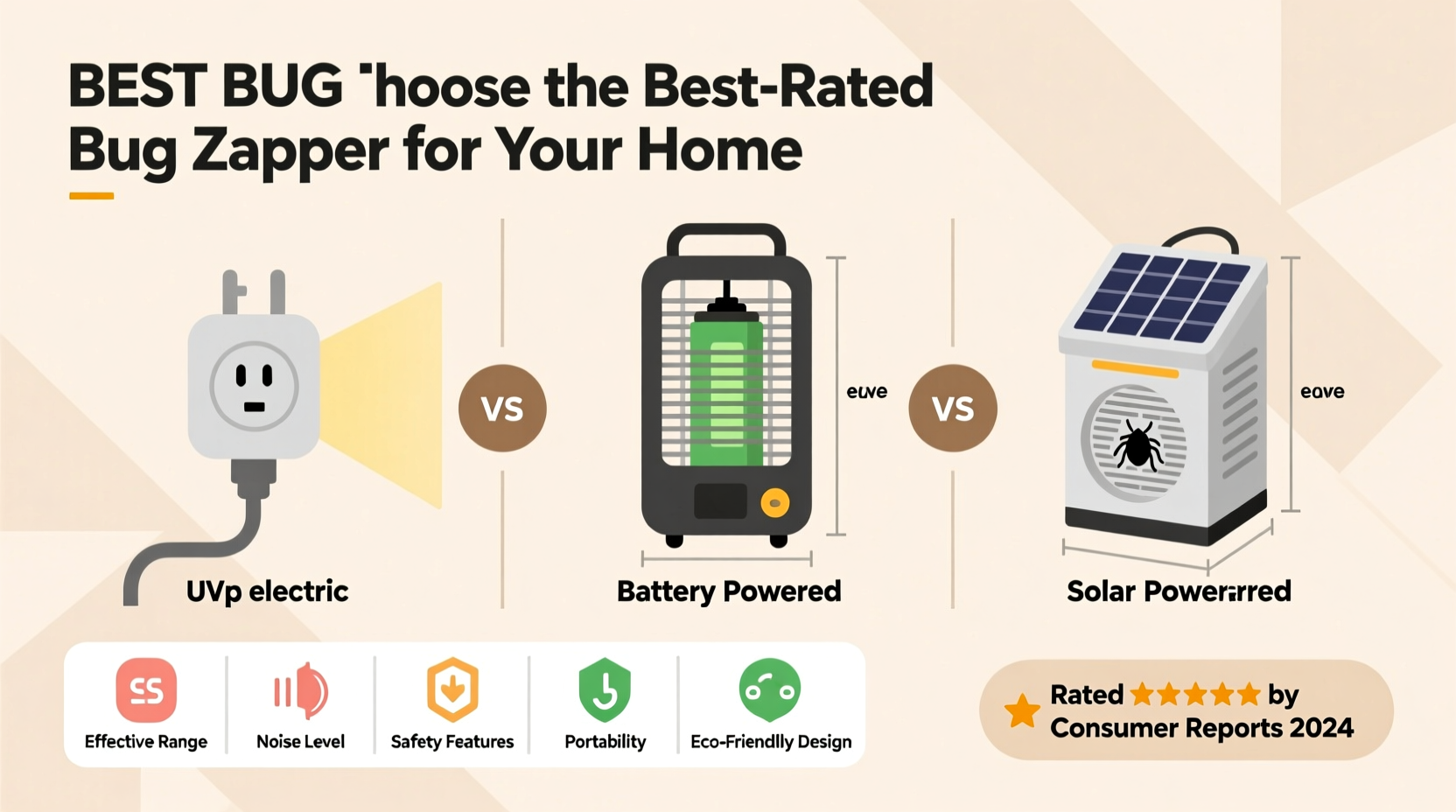
- Power Source: Options include plug-in, solar-powered, or battery-operated units. Plug-in models offer consistent power; solar units are ideal for remote areas.
Comparison Table: Top 5 Bug Zapper Types and Their Best Use Cases
| Type | Coverage | Best For | Pros | Cons |
|---|---|---|---|---|
| Indoor Plug-In | Up to 800 sq ft | Garages, basements, sunrooms | Quiet, discreet, low maintenance | Not suitable outdoors |
| Outdoor Wall-Mount | Up to 1/2 acre | Patios, decks, porches | Durable, weatherproof, wide coverage | Requires electrical outlet nearby |
| Solar-Powered | Up to 1/4 acre | Gardens, sheds, remote areas | Eco-friendly, no wiring needed | Less power on cloudy days |
| Fan-Based Trap | Up to 1 acre | Mosquito-heavy areas | Catches live, silent operation | Higher cost, needs regular emptying |
| Portable Battery | Up to 100 sq ft | Camping, balconies, small patios | Mobility, compact size | Limited runtime, small coverage |
Step-by-Step Guide to Selecting and Installing Your Bug Zapper
- Assess Your Space: Measure your yard, patio, or indoor area to determine the required coverage. Don’t oversize—placing multiple smaller units is often more effective than one oversized one.
- Choose Location Wisely: Install the zapper away from doors and gathering spaces. Insects attracted to the light shouldn’t be pulled through your living area.
- Check Power Access: Ensure there’s a GFCI-protected outlet nearby for outdoor units. Solar models need full sun exposure for 6–8 hours daily.
- Mount at Optimal Height: Most manufacturers recommend 3–6 feet above ground. Avoid placing near competing light sources like porch lights.
- Install and Test: Turn on at dusk and listen for initial zaps. Clean the grid and tray weekly for peak performance.
- Monitor and Adjust: If insect reduction is minimal after two weeks, consider adding a CO₂ lure or relocating the unit farther from human activity zones.
A Real-World Example: How One Family Reduced Mosquitoes by 80%
The Thompson family lives in a lakeside neighborhood in central Florida, where mosquitoes were a nightly nuisance. After trying sprays and citronella candles with limited success, they invested in a dual-technology bug zapper that combined UV light with an octenol cartridge. They mounted the unit on a side fence, 25 feet from their deck, and ran it every evening from May through October.
Within three weeks, they noticed fewer bites and heard significantly fewer zaps each night—a sign that the local mosquito population was declining. By season’s end, their outdoor enjoyment increased dramatically. “We went from needing bug spray every time we stepped outside to hosting dinner parties without a single bite,” said Sarah Thompson. “It wasn’t instant, but consistency made all the difference.”
Common Mistakes to Avoid When Using Bug Zappers
- Placing too close to seating areas: This draws insects toward people instead of away.
- Using indoors near food: Bug zappers can aerosolize bacteria when insects explode, posing a contamination risk.
- Ignoring maintenance: A dirty grid loses efficiency. Clean monthly or as recommended.
- Relying solely on light for mosquito control: Without added attractants, UV alone won’t significantly impact biting populations.
- Installing under eaves or shaded areas: Reduces visibility and effectiveness, especially for solar models.
Frequently Asked Questions
Are bug zappers safe around children and pets?
Most modern units have protective grills that prevent direct contact with the electrified grid. However, it’s best to mount them out of reach, especially for curious pets or young children. Always check product safety ratings before purchase.
Do bug zappers kill beneficial insects?
Yes, some non-pest insects like moths and beetles may be affected. To minimize ecological impact, use zappers only when and where needed, and consider fan-based traps that allow selective release of non-target species.
How often do I need to replace the UV bulb?
UV bulbs typically last 3,000 to 8,000 hours. Replace annually for optimal performance, even if the bulb still lights up—its UV output diminishes over time.
Final Checklist Before You Buy
- ✅ Determine your primary pest (mosquitoes vs. general flying insects)
- Choose models with targeted attractants if mosquitoes are the main concern.
- ✅ Measure your space and match it to coverage specs
- Don’t assume bigger is better—strategic placement matters more.
- ✅ Verify weather resistance for outdoor use
- Look for IPX4 rating or higher to withstand rain and humidity.
- ✅ Check for easy cleaning features
- Removable trays and accessible grids save time and effort.
- ✅ Read recent customer reviews
- Focus on verified purchases and long-term feedback about durability and effectiveness.
Take Control of Your Outdoor Comfort Today
Choosing the best rated bug zapper for your home doesn’t have to be overwhelming. By understanding how these devices work, evaluating your specific needs, and avoiding common pitfalls, you can enjoy a more peaceful, pest-free environment. Whether you’re protecting a small balcony or a sprawling backyard, the right bug zapper offers a quiet, chemical-free way to reclaim your outdoor space.




 浙公网安备
33010002000092号
浙公网安备
33010002000092号 浙B2-20120091-4
Comments
No comments yet. Why don't you start the discussion?