
Selecting the right pair of training shoes is about far more than style or brand loyalty. Whether you're lifting weights, doing HIIT workouts, practicing yoga, or moving through circuit training, your footwear plays a pivotal role in injury prevention, stability, and overall athletic performance. The wrong shoe can lead to discomfort, reduced efficiency, and even long-term joint damage. With so many options on the market—each touting advanced tech and premium materials—it's essential to know what truly matters when making your decision.
Understand Your Training Style and Foot Mechanics
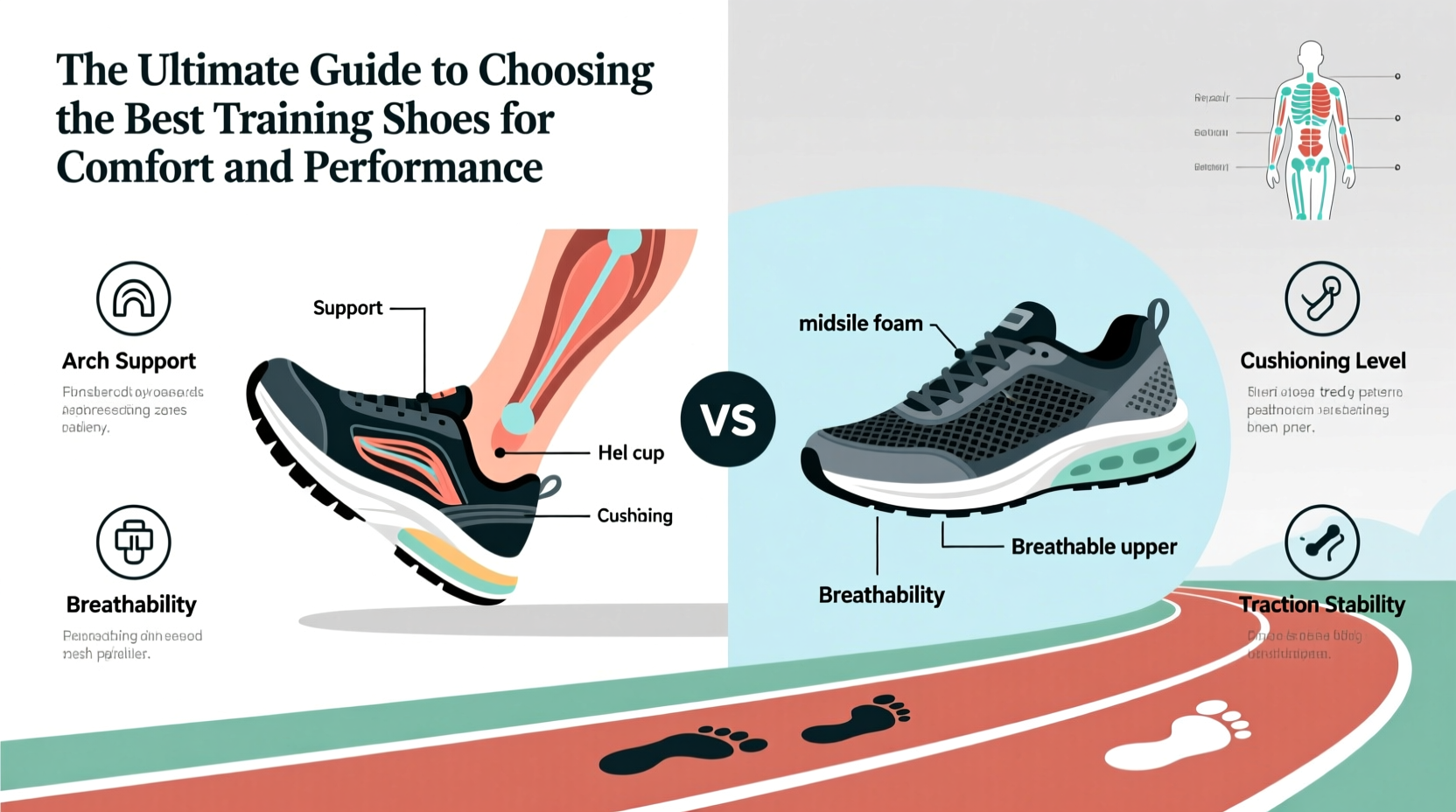
Not all training is created equal, and neither are training shoes. The first step in selecting the right pair is identifying your primary workout type. CrossFit, gym circuits, and boot camps require lateral support and flat soles for stability during dynamic movements. Running-focused sessions need more cushioning and heel-to-toe drop. Meanwhile, strength training benefits from minimal heel elevation to maintain balance during squats and deadlifts.
Your foot type also influences your choice. Overpronators (those whose feet roll inward) benefit from structured midsoles and medial support. Underpronators (supinators) need extra cushioning on the outer edge. Neutral arches typically have more flexibility in shoe selection but still require proper alignment features.
“Matching your shoe to your movement pattern reduces energy waste and lowers injury risk by up to 30%.” — Dr. Lena Torres, Sports Biomechanist at Apex Performance Lab
Key Features That Define Quality Training Shoes
The best training shoes strike a balance between durability, support, breathability, and responsiveness. Here are the critical elements to evaluate:
- Outsole: Look for rubber compounds with multidirectional tread patterns for grip on various surfaces, especially if you train on gym floors or turf.
- Midsole: Should offer firm yet responsive cushioning—too soft, and it compromises stability; too hard, and impact absorption suffers.
- Upper: Breathable mesh panels help regulate temperature, while reinforced zones add structure during side-to-side motions.
- Heel Counter: A stiff heel cup stabilizes the rearfoot and prevents slippage during explosive movements.
- Drop: The difference between heel and forefoot height. Training shoes usually range from 4mm to 8mm; lower drops promote natural foot positioning for lifting.
How to Fit Training Shoes Correctly
A perfect-fitting shoe should feel secure without pressure points. Many people size incorrectly because they measure only length, ignoring width and volume. Follow this step-by-step guide to ensure optimal fit:
- Measure both feet later in the day when they’re slightly swollen.
- Stand while measuring and wear the socks you typically use for training.
- Ensure a thumb’s width (about ½ inch) between your longest toe and the shoe end.
- Check that the midfoot is locked down without constriction.
- Walk and perform a few bodyweight squats to test heel slip and flex point alignment.
Width matters just as much as length. If your feet splay or feel pinched, consider wide-width models. Brands like New Balance, Altra, and Nike offer multiple width options for better customization.
Comparison: Top Shoe Types by Activity
| Activity Type | Ideal Shoe Traits | Recommended Models | Shoe to Avoid |
|---|---|---|---|
| Strength Training | Flat sole, low drop (0–4mm), minimal cushioning | Vivobarefoot Primus, Nike Metcon, Reebok Nano | Maximalist running shoes |
| Circuit Training | Balanced cushioning, lateral support, durable upper | NOBULL Trainer+, Puma Fuse, Adidas Dropset | Fashion sneakers with no support |
| HIIT & Plyometrics | Responsive foam, good shock absorption, flexible forefoot | Reebok Nano X4, Under Armour Tribase Reign 5 | Rigid-soled minimalist shoes |
| Yoga & Mobility Work | Flexible, barefoot-style design, grippy outsole | Merrell Vapor Glove, Vivobarefoot Gobi II Flow | Heavy cross-trainers |
Real-World Example: Choosing Shoes for a Hybrid Athlete
Jamie, a 32-year-old fitness coach, trains five days a week combining weightlifting, kettlebell swings, and sprint intervals. Initially, she used her daily running shoes for everything, leading to ankle instability during box jumps and inefficient force transfer during deadlifts. After consulting a trainer, she switched to a versatile hybrid shoe—the Reebok Nano X4—with a 6mm drop, firm heel, and breathable knit upper. Within two weeks, her lifting form improved, and she reported less fatigue in her calves and knees. Her experience underscores the importance of activity-specific footwear, even for mixed modalities.
Expert Checklist: What to Evaluate Before Buying
Use this checklist before purchasing any training shoe to ensure long-term comfort and performance:
- ✅ Does the shoe match my primary workout type?
- ✅ Is the heel counter firm and supportive?
- ✅ Does the outsole provide grip on gym floors?
- ✅ Is the midfoot snug without cutting off circulation?
- ✅ Can I wiggle my toes freely at the front?
- ✅ Does the shoe allow natural foot flexion during squats?
- ✅ Is the upper breathable enough for high-intensity sessions?
- ✅ Have I tested it with dynamic movements (lateral shuffles, jumps)?
Frequently Asked Questions
Can I use running shoes for general gym training?
Running shoes are designed for forward motion and often lack lateral stability. Using them for agility drills or weight training may increase ankle roll risk. While acceptable for light cardio, dedicated training shoes are safer and more effective for mixed routines.
How often should I replace my training shoes?
Most training shoes last 6–12 months with regular use (3–5 sessions per week). Signs it’s time to replace include worn-out treads, loss of responsiveness, visible creasing in the midsole, or recurring foot or knee pain after workouts.
Are expensive training shoes worth it?
Higher price doesn’t always mean better performance, but premium models often use superior materials, refined engineering, and durability enhancements. Invest in quality if you train frequently—your joints will thank you over time.
Final Thoughts: Prioritize Function Over Fashion
While sleek designs and bold colors are appealing, the foundation of an effective training regimen starts with reliable footwear. Comfort and performance aren’t luxuries—they’re prerequisites for consistency, progression, and injury-free training. Take the time to assess your biomechanics, understand your workout demands, and try shoes in real conditions. Don’t settle for “good enough” when your body relies on stable, supportive gear every time you step into the gym.




 浙公网安备
33010002000092号
浙公网安备
33010002000092号 浙B2-20120091-4
Comments
No comments yet. Why don't you start the discussion?