
Building a competitive or flavorful Golgari (black-green) Commander deck in Magic: The Gathering requires more than just assembling a pile of powerful cards. The foundation lies in selecting the right commander—one that aligns with your strategy, enables key synergies, and enhances both consistency and fun. With dozens of viable options spanning various playstyles, from grindy midrange to combo explosions and aristocrats engines, choosing the ideal leader can be overwhelming. This guide breaks down the critical factors, evaluates top contenders, and provides actionable steps to help you find the perfect Golgari general for your next build.
Understanding Golgari’s Identity in Commander
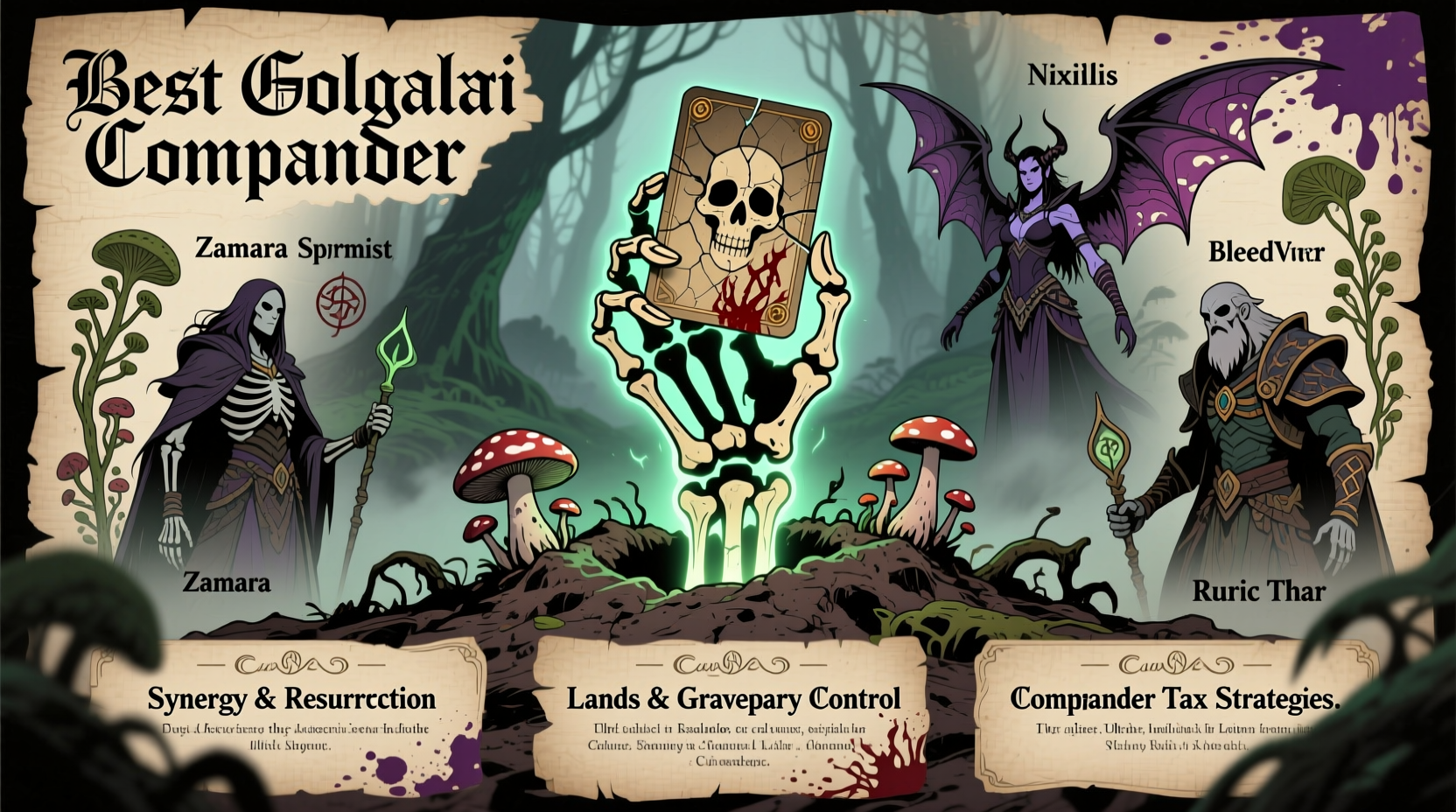
The Golgari guild excels at resource generation through death, recursion, and card advantage. Black contributes discard, sacrifice effects, and targeted removal, while green brings ramp, token generation, and resilient creatures. Together, they form one of the most versatile color combinations in the format, capable of supporting multiple archetypes:
- Midrange/Value Engines: Outlast opponents by generating incremental advantages through creature deaths and graveyard recursion.
- Sacrifice/Aristocrats: Leverage creature death triggers and sacrifice outlets to overwhelm opponents with life loss and card draw.
- Combo: Assemble explosive win conditions using graveyard interactions, mana acceleration, and recursive pieces.
- Stax/Control: Use attrition and disruption to slow the game and control the board state over time.
Your commander should reflect the core of your chosen strategy. A mismatch between commander ability and deck theme leads to inefficiency and missed opportunities.
Top Golgari Commanders by Archetype
Below is a curated comparison of standout Golgari commanders across major strategies. Each has proven effectiveness in competitive and casual environments alike.
| Commander | Archetype | Key Strengths | Toughness Considerations |
|---|---|---|---|
| Kraum, Ludevic's Opus | Storm/Combo | Draws cards on noncreature spell attacks; high storm potential | High risk due to flying but vulnerable to removal |
| Meren of Clan Nel Toth | Grindy Value | Returns creatures from graveyard based on devotion; extremely consistent | Durable recursion engine; less reliant on protection |
| Mayael the Anima | Topdeck Voltron | Pumps biggest creature when you reveal higher power; unique win con | Fragile; needs protection to execute |
| Yarok, the Desecrated | Sacrifice/Tokens | Doubles enters-the-battlefield effects; explosive with tokens | High impact but expensive; weak to board wipes |
| Griselbrand | Combo/Consistency | Draw 7 upon entering; enables fast wins with minimal setup | Expensive to cast; target priority |
“Meren remains one of the most resilient commanders in the format because she turns every loss into a comeback.” — Adrian Sullivan, MTG Strategist
Step-by-Step Guide to Selecting Your Commander
Follow this structured process to identify the best fit for your vision:
- Define Your Strategy: Are you aiming for infinite combos, long-term value, or aggressive sacrifice? Write down your primary goal.
- Evaluate Synergy Potential: Does the commander enable or enhance recurring themes like reanimation, token generation, or mana ramp?
- Assess Mana Curve and Cost: Lower-cost commanders allow faster deployment. High-cost legends may require extra ramp support.
- Check Color Identity Constraints: Ensure your chosen commander allows inclusion of essential utility cards within your two-color limit.
- Analyze Meta Relevance: In competitive pods, consider resilience to hate. In casual groups, prioritize fun and interaction.
- Review Play Patterns: Watch gameplay videos or read deck techs featuring your candidate to observe real-world performance.
- Test and Iterate: Build a prototype list and playtest over several games. Adjust based on consistency and enjoyment.
Real Example: Building Around Meren of Clan Nel Toth
Jamie wanted a budget-friendly Golgari deck that could recover from setbacks and maintain pressure over time. After researching options, they settled on Meren of Clan Nel Toth. Her ability to return creatures from the graveyard whenever a player gains life aligned perfectly with their love for undercosted threats like Phyrexian Arena, Butcher of Malakir, and Carnage Tyrant.
They included cheap enablers such as Sign in Blood and Dark Privilege to trigger her ability early. Over time, Meren returned key pieces turn after turn, creating a relentless stream of threats. Even when wiped off the board, she became stronger through recursion. The deck wasn’t the fastest, but it consistently outlasted opponents through attrition.
This example illustrates how a well-chosen commander can anchor an entire game plan—not through raw power, but through sustained leverage of the Golgari identity.
Checklist: Is Your Commander the Right Fit?
Before finalizing your choice, verify the following:
- ✅ Enables at least two strong synergies within your intended archetype
- ✅ Has reasonable casting cost (ideally 3–5 mana)
- ✅ Interacts positively with the graveyard or sacrifice mechanics
- ✅ Provides card advantage, board presence, or inevitability
- ✅ Fits within your group’s power level expectations
- ✅ Excites you to play and build around
Frequently Asked Questions
Can I run a three-color commander in a Golgari deck?
No. By definition, a Golgari Commander deck must use a commander with only black and green in its color identity. Adding a third color would make it Jund (red-black-green) or another wedge.
Is Griselbrand a good commander despite being expensive?
Yes, in the right meta. While his 7-mana cost is steep, his immediate impact—drawing 7 cards upon entry—can set up a quick win with combos involving Exsanguinate, Underworld Dreams, or Final Fortune. He’s especially effective in slower, less interactive groups.
What makes Meren so popular compared to other Golgari leaders?
Meren offers unmatched durability and scalability. She doesn’t rely on staying on the battlefield, works passively, and rewards playing low-cost creatures that can be recurred repeatedly. Her synergy with devotion-based recursion creates a self-sustaining loop that adapts to nearly any threat level.
Optimizing Your Final Build
Once you’ve selected your commander, refine your list with purpose. Include at least 8–10 forms of ramp to ensure timely deployment. Add 3–4 sacrifice outlets if building around death triggers. Prioritize card draw that doesn’t solely depend on your commander’s presence. And always leave room for interaction—removal spells keep your deck relevant even when your engine stumbles.
Remember, the best Golgari decks don’t just win; they endure. They absorb early aggression, convert losses into resources, and emerge stronger from every exchange. Your commander should embody that philosophy.
Conclusion
Finding the best Golgari commander isn’t about chasing the most broken or popular option—it’s about alignment. Whether you’re drawn to the relentless recursion of Meren, the explosive potential of Yarok, or the raw card advantage of Griselbrand, your choice should serve a clear vision. Take the time to evaluate your goals, test your assumptions, and build with intention. When your commander feels like the natural heart of your deck, everything else falls into place.




 浙公网安备
33010002000092号
浙公网安备
33010002000092号 浙B2-20120091-4
Comments
No comments yet. Why don't you start the discussion?