
In today’s hyper-competitive sales landscape, timing and relevance are everything. Delivering the right message at the right moment can mean the difference between a closed deal and a missed opportunity. Salesforce’s Next Best Action (NBA) leverages artificial intelligence, real-time data, and behavioral insights to guide sales teams toward the most effective customer interactions. It doesn’t just suggest actions—it predicts which ones will yield results based on deep analysis of buyer behavior, historical patterns, and business rules.
NBA transforms reactive selling into proactive engagement by surfacing intelligent recommendations across service, marketing, and sales channels. Whether it’s recommending a product upgrade, initiating a follow-up call, or triggering a personalized email, NBA ensures every interaction is contextually relevant and strategically sound.
How Next Best Action Works in Salesforce
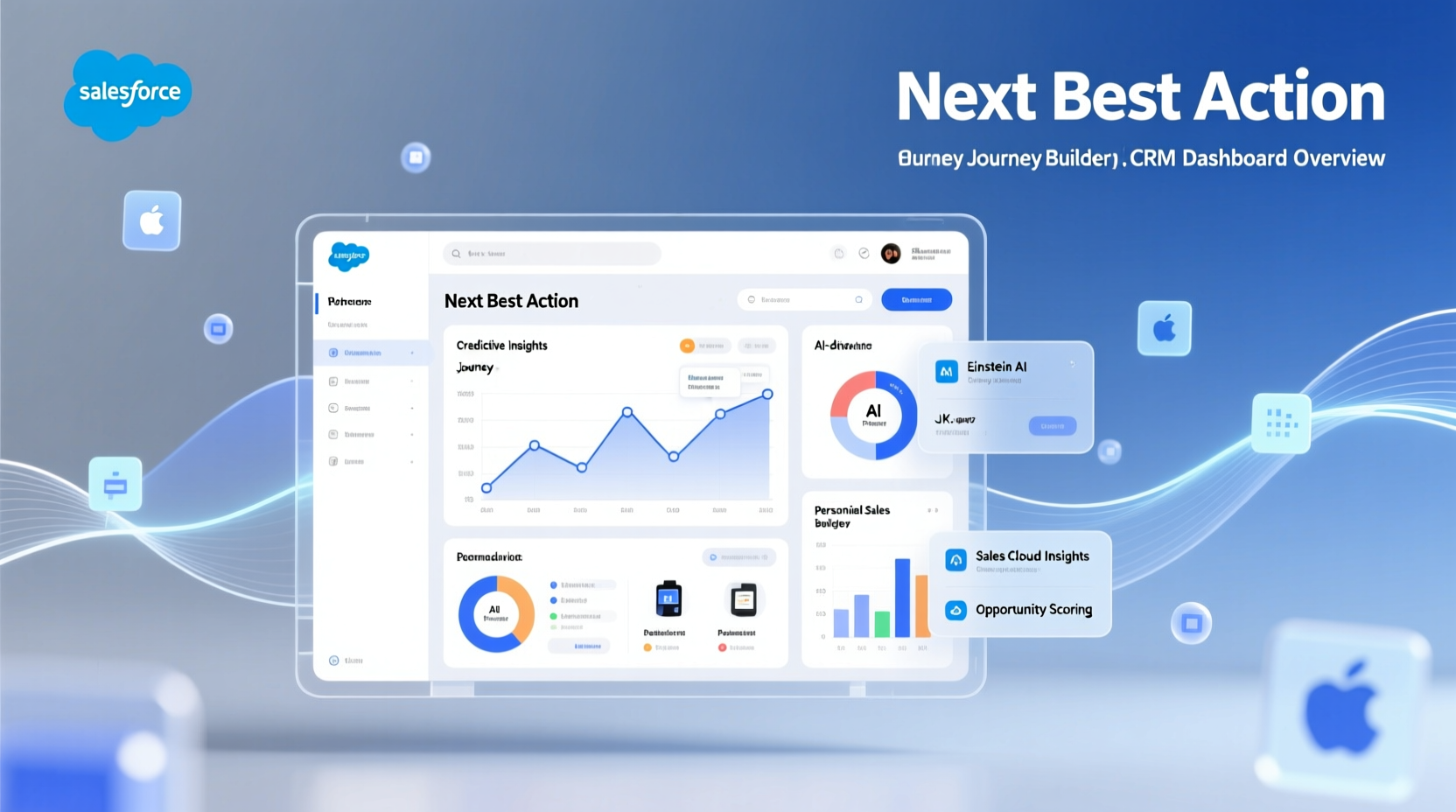
At its core, Next Best Action uses a decision engine powered by Salesforce Einstein AI. This engine evaluates multiple inputs—customer profile, past interactions, current stage in the buyer journey, product affinity, and external triggers—to determine the optimal next move. These recommendations appear directly within Salesforce Lightning, embedded in Sales Cloud, Service Cloud, or Marketing Cloud workflows.
The system operates through three primary components:
- Decision Strategies: Rule-based logic combined with predictive models that define when and why an action should be recommended.
- Actions: Specific tasks such as “Send Discount Offer,” “Schedule Demo,” or “Escalate Case.”
- Channels: Where the recommendation appears—sales dashboards, service consoles, email templates, or even mobile apps.
For example, if a customer views pricing pages repeatedly but hasn’t scheduled a demo, NBA might prompt the account executive to send a personalized video walkthrough. The recommendation appears directly in their task list, complete with suggested talking points and timing.
Key Features That Power Intelligent Recommendations
Salesforce has refined NBA into a robust framework capable of scaling across industries and team sizes. Its strength lies not only in automation but in contextual intelligence.
Einstein Prediction Builder
This tool allows administrators to create custom AI models without coding. For instance, you can train a model to predict which accounts are most likely to churn or which leads have the highest conversion potential. These predictions feed directly into NBA logic, ensuring recommendations are grounded in statistical likelihood rather than guesswork.
Strategy Canvas
A visual interface where business analysts and admins design decision trees using drag-and-drop elements. You can layer conditions (e.g., \"If opportunity stage is Negotiation AND contract value > $50K\"), add AI predictions, and assign priority scores to competing actions.
Real-Time Event Triggers
NBA integrates with Salesforce Flow and Platform Events to respond instantly to customer behaviors. A support case resolution, website visit, or abandoned cart can trigger a follow-up task or offer within seconds.
Multichannel Orchestration
Recommendations aren’t limited to sales reps. NBA drives actions across marketing emails, chatbots, self-service portals, and field service teams, creating a unified experience.
Performance Analytics
Track which recommendations were accepted, completed, or ignored—and measure their impact on conversion rates, deal velocity, and customer satisfaction. Use these insights to refine strategies over time.
Buyer Insights That Shape Effective Actions
What makes NBA truly powerful is its integration with rich buyer data. Rather than treating customers as static profiles, it interprets dynamic signals that reflect intent and readiness.
- Digital Body Language: Tracks page visits, content downloads, email opens, and social engagement to infer interest levels.
- Engagement Scoring: Aggregates touchpoints into a single score that helps prioritize outreach.
- Segment Affinity: Identifies which product categories or messaging resonate most with specific buyer personas.
- Temporal Patterns: Learns when individuals are most responsive (e.g., Tuesday mornings) and schedules actions accordingly.
“Next Best Action turns scattered customer data into coordinated, human-centric experiences. It’s not about automating more—it’s about doing what matters, better.” — Rajiv Srinivas, VP of Product Management, Salesforce
Step-by-Step Guide to Implementing NBA in Your Organization
Deploying NBA effectively requires alignment between sales strategy, data hygiene, and technical configuration. Follow this sequence for successful adoption:
- Define High-Impact Use Cases: Identify 2–3 scenarios where timely intervention improves outcomes (e.g., renewal risk mitigation, upsell identification).
- Map Customer Journeys: Outline key stages and decision points. Determine what data exists at each phase and where gaps need filling.
- Build Predictive Models: Use Einstein Prediction Builder to create models for churn risk, purchase propensity, or engagement level.
- Design Decision Strategies: In Strategy Canvas, combine rules, predictions, and filters to generate relevant actions. Assign priorities to avoid overwhelming users.
- Integrate with Workflows: Embed NBA recommendations into Lightning pages, Flows, or mobile interfaces where reps spend their time.
- Test & Iterate: Run pilot programs with select teams. Monitor acceptance rate and outcome metrics. Refine logic based on feedback.
- Scale Gradually: Expand to additional lines of business once ROI is proven and user confidence grows.
Comparison: Traditional Selling vs. NBA-Driven Engagement
| Aspect | Traditional Selling | NBA-Driven Selling |
|---|---|---|
| Decision Basis | Experience and intuition | Data-driven insights + AI predictions |
| Action Timing | Reactive or scheduled | Triggered by real-time behavior |
| Personalization Level | Basic segmentation | Individual-level relevance |
| Scalability | Limited by rep bandwidth | Automated orchestration across channels |
| Measurement | Outcome-focused (e.g., close rate) | Process + outcome analytics (e.g., recommendation efficacy) |
Mini Case Study: Software Vendor Boosts Upsell Revenue by 37%
A mid-sized SaaS provider struggled with inconsistent upselling despite having a robust product suite. Their sales team often missed cues indicating customer readiness for expansion.
They implemented NBA focused on usage analytics. When a client exceeded 80% of their user license limit or engaged heavily with premium feature documentation, NBA triggered a notification: “Suggest Team Expansion Package” with pre-built talking points and ROI calculators.
Within four months, the acceptance rate of upsell conversations increased from 22% to 59%, and overall expansion revenue rose by 37%. Reps reported feeling more confident initiating discussions because the system validated timing and relevance.
Essential Checklist for Launching Next Best Action
Before going live, ensure your environment supports effective NBA deployment:
- ✅ Clean, unified customer data in Salesforce (no duplicates, updated fields)
- ✅ Defined KPIs for measuring NBA success (e.g., conversion lift, task completion rate)
- ✅ Trained predictive models aligned with business goals
- ✅ User roles and permissions configured for NBA visibility
- ✅ Integration with key systems (web analytics, ERP, marketing automation)
- ✅ Change management plan including training and ongoing support
Frequently Asked Questions
Can Next Best Action work without Einstein AI?
Yes, basic rule-based recommendations can function without AI models. However, incorporating Einstein significantly enhances accuracy and adaptability by identifying non-obvious patterns in customer behavior.
Is NBA only useful for large enterprises?
No. While enterprise teams benefit from complex orchestrations, small and midsize businesses can leverage NBA for simpler use cases like lead follow-up, renewal reminders, or post-purchase onboarding—often seeing rapid ROI due to improved consistency.
How do I prevent recommendation overload?
Use prioritization settings in Strategy Canvas to rank actions. Set thresholds (e.g., only show top 1–2 recommendations) and frequency caps to maintain usability. Monitor user feedback closely during rollout.
Maximize Impact with Continuous Optimization
The true power of Next Best Action emerges over time. As more interactions occur, Einstein learns and refines its predictions. But technology alone isn’t enough—ongoing governance ensures relevance.
Establish a monthly review cycle where stakeholders assess top-performing strategies, retire underused actions, and incorporate new data sources. Encourage frontline feedback: sales reps often spot edge cases or friction points invisible to designers.
Also consider A/B testing different recommendation styles—some teams respond better to direct prompts (“Call now”), while others prefer contextual suggestions (“Customer viewed pricing page twice this week”). Personalizing the *way* advice is delivered increases adoption.
“The best sales tools don’t replace human judgment—they amplify it. Next Best Action gives reps the insight to act confidently in the moment.” — Gartner Research, CRM Technology Insights 2023
Take Action Today
Next Best Action isn’t just another Salesforce feature—it’s a strategic shift toward intelligent, customer-centric selling. By aligning data, AI, and human expertise, organizations can move beyond scripted sequences to meaningful, timely engagement.
Start by auditing your current sales processes. Where do opportunities slip through? Which decisions rely too heavily on memory or luck? Identify one area where smarter guidance could make a tangible difference—and build your first NBA strategy around it.




 浙公网安备
33010002000092号
浙公网安备
33010002000092号 浙B2-20120091-4
Comments
No comments yet. Why don't you start the discussion?